Lexington Buried a Creek Under Vine Street
The film of this episode premieres October 1, 2026 on YouTube. The documents, the transcript and the sources are below now.
Lexington, Kentucky exists because of a creek called Town Branch — and for a hundred years the city used it as a drain. This is the story of how a city killed the stream it was born on, told from the primary record: four lines in the Lexington Leader of May 8, 1911, ending permits to tap the storm sewers; the June 1911 exposé headlined…
Transcript
R01
Lafayette Studios / City of Lexington · UK Special Collections · AI-colorized. View the original.
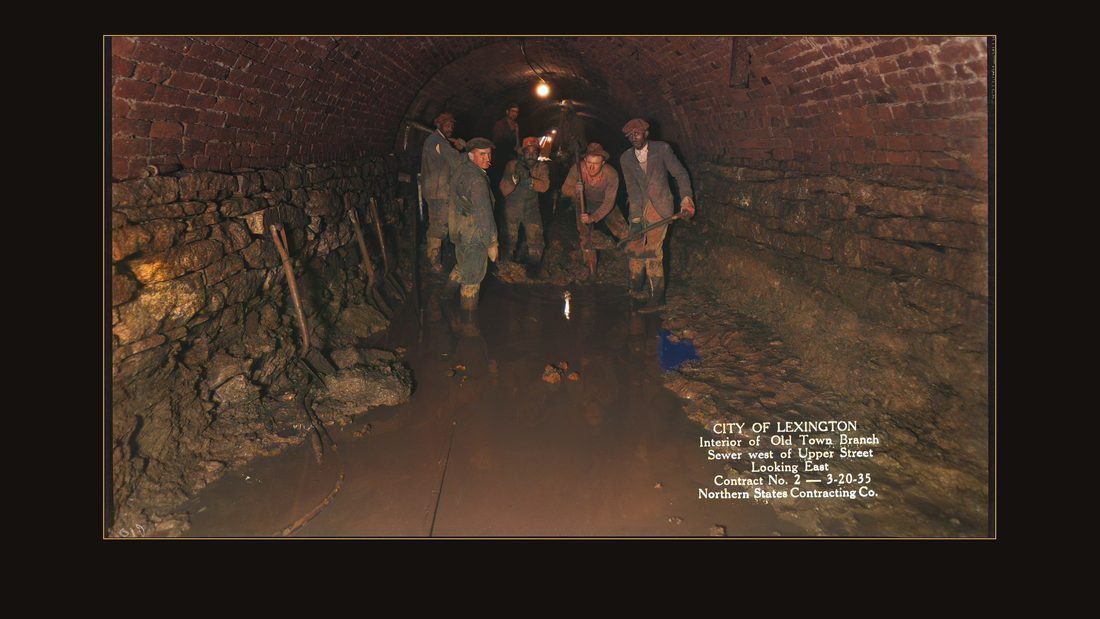
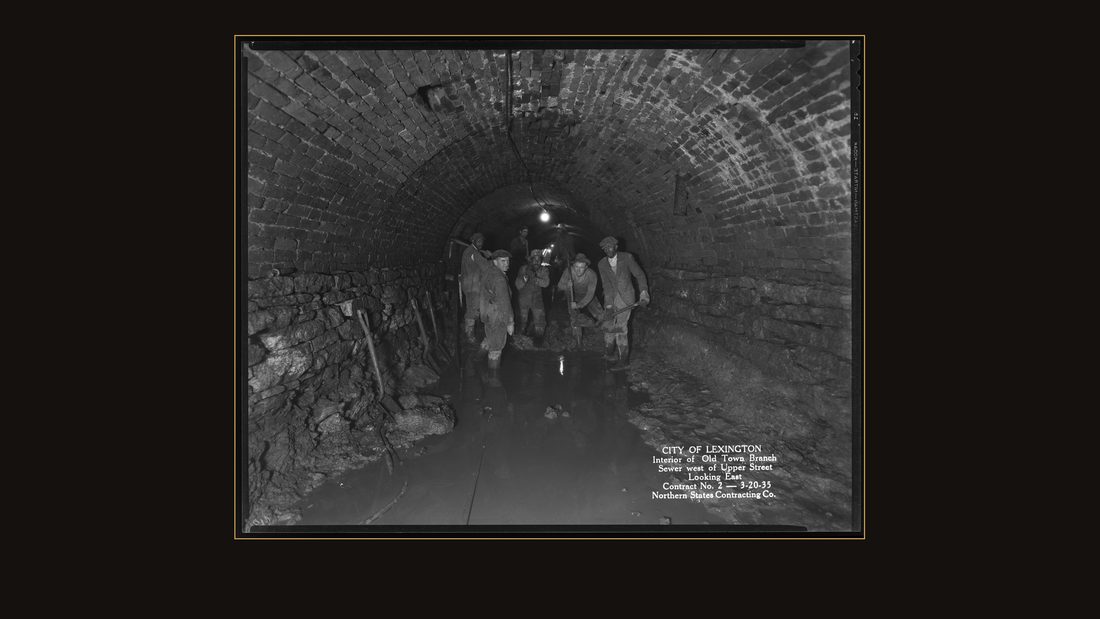
These men are standing inside a creek.
The creek
D01
Lafayette Studios / City of Lexington · UK Special Collections · AI-colorized. View the original.
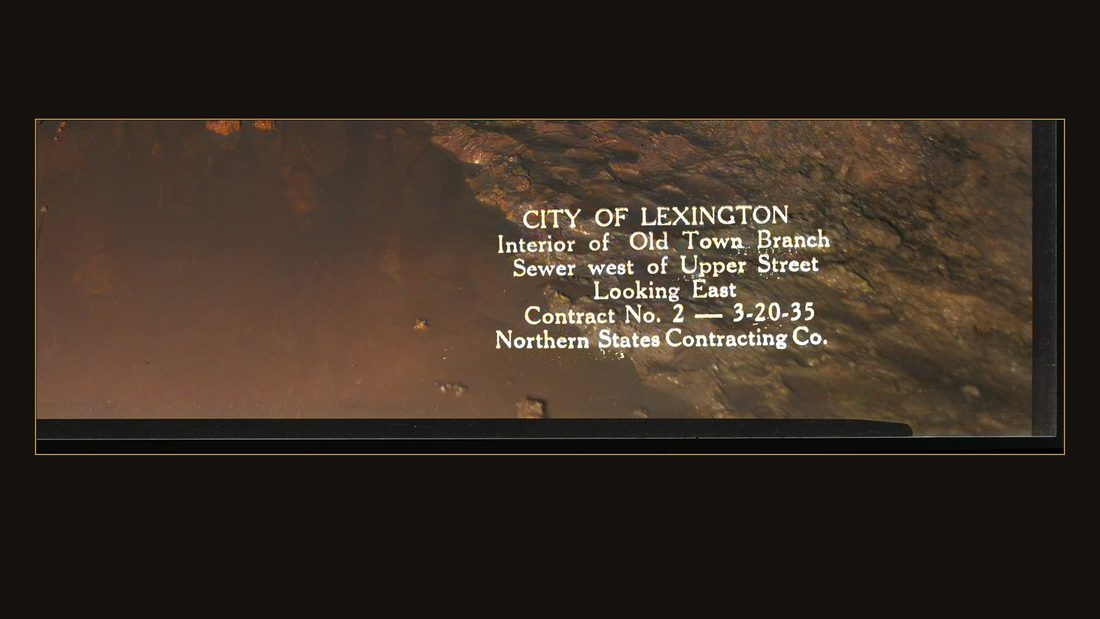
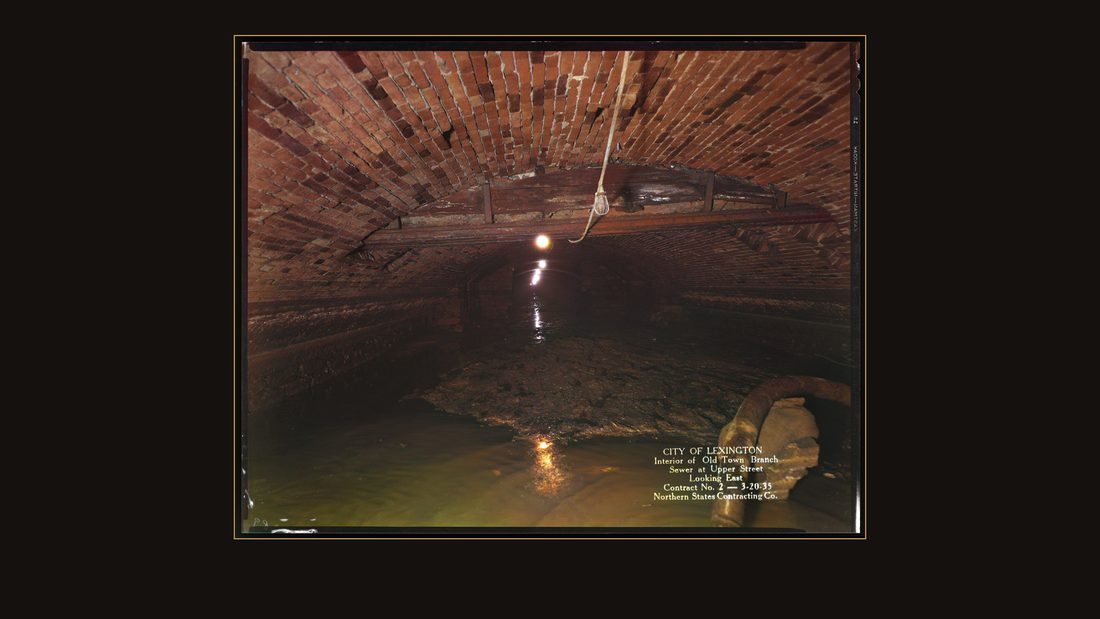
The city photographer wrote it on the negative. "Interior of Old Town Branch Sewer, west of Upper Street." Lexington, Kentucky. March 1935.
R02
Lafayette Studios / City of Lexington · UK Special Collections · AI-colorized. View the original.
The colors in this film are machine estimates, added by a computer model. The original negatives are black and white, and anyone can see them free at the University of Kentucky.
R03
Lafayette Studios / City of Lexington · UK Special Collections · AI-colorized. View the original.
This is the story of how a city killed the stream it was born on — and how long the bill took to arrive.
Lexington exists because of a creek called Town Branch. The first settlers camped beside it in 1775, and the town grew up along its banks.
By 1907, the insurance mapmakers drew a city of forty thousand people on top of it. The creek still ran through the middle of everything.
Two systems
It crossed downtown behind Main Street, along Vine — and the city had been using it as a drain for a hundred years.
In the eighteen-nineties, Lexington built two separate sewer systems. Storm sewers carried rainwater to the creek. Sanitary sewers carried everything else away from it. Rain in one pipe, waste in the other. The design only works if nobody cheats.
People cheated. The sanitary lines were slow to reach new neighborhoods, so property owners tapped the storm sewers instead — with the city's permission, at first, as a temporary measure.
Four lines
On May 8, 1911, the Lexington Leader printed four lines on page nine. "The Board of Public Works will hereafter refuse to issue any more permits to tap storm water sewers."
Six weeks later, the same paper told its readers where the storm sewers went.
Sunday morning, June 25, 1911. "Menace to health of entire city and suburbs."
"Citizens subjected to frightful odors."
The Health Board, the paper reported, was permitting refuse to be hauled on bad nights and dumped into the sewers — quote — "to be distributed by Town Branch."
Distributed. The creek the city was founded on had become its delivery system.
The same page catalogued the "extortionate fees" charged to clean the old privy vaults. Tapping a storm sewer was cheaper. So everyone kept cheating.
Indicted at home
A month after the exposé, the Fayette County grand jury acted.
Front page, Saturday afternoon, July 22, 1911. "City is indicted for Town Branch dump nuisance."
Thirty true bills came back that week. One charged the railroad with maintaining a nuisance at the West Main Street bridge. One charged the city itself — for permitting it.
"The city is also charged with nuisance in that it has permitted the dumping of night soil and other deleterious substances into Town Branch."
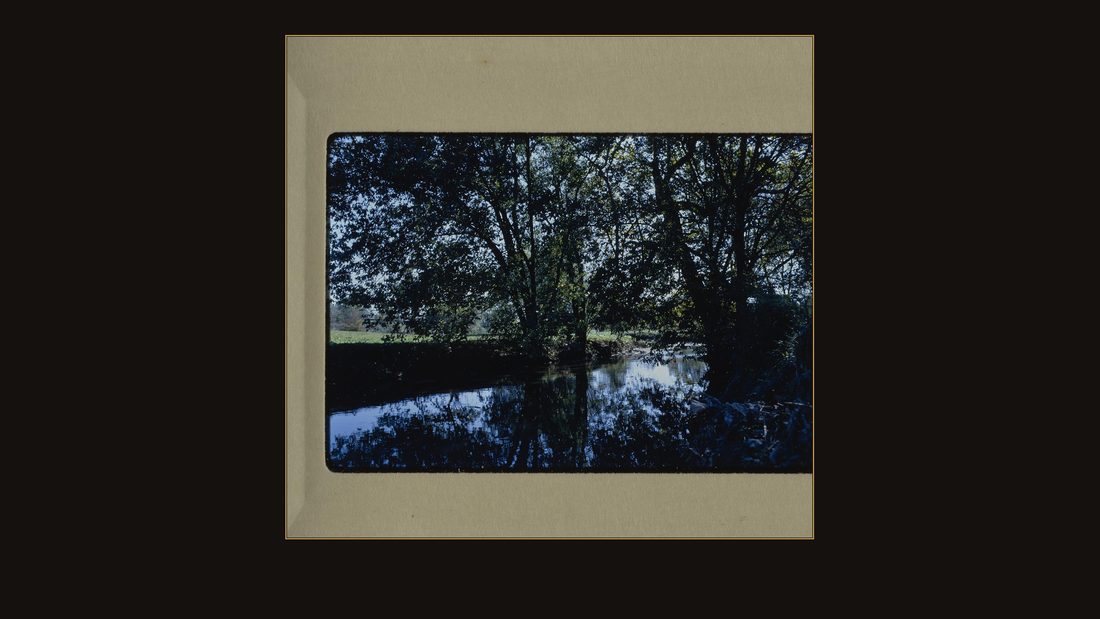
A01
D. Lyle Aten Papers, Oct. 1970 · UK Special Collections. View the original.
A city, indicted by its own county, over its own creek. Not much changed.
The neighbors
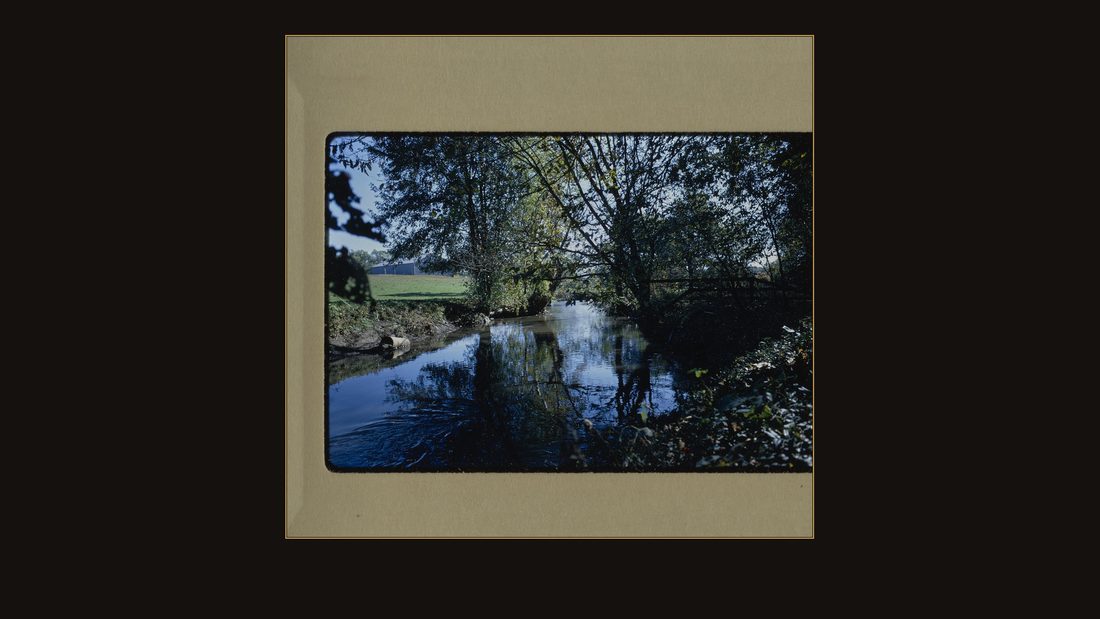
A02
D. Lyle Aten Papers, Oct. 1970 · UK Special Collections. View the original.
Because Town Branch does not stop at the city limit. It leaves Lexington flowing northwest, joins the Elkhorn, and runs on through the farms of Woodford County toward the Kentucky River.
Whatever Lexington put in the water, Woodford County lived with. In May 1915, Woodford County stopped living with it. "Lexington indicted by Woodford grand jury."
"Pollution of Elkhorn by the sewerage from Town Branch alleged."
The indictment, returned at Vur-Sales on May 15, 1915, charged the City of Lexington with "making and maintaining a nuisance" by "emptying sewage into a stream."
The bill said the water had been "rendered foul and unsightly" — and that the pollution was killing the fish in Elkhorn Creek.
The same column of the same newspaper reported that Woodford County officials had spent that very day giving their circuit judge a fish fry, at Scott's Landing on the Kentucky River.
That October, Lexington's own grand jury came back too. Nineteen indictments — and, quote, "the chief of which was against the City of Lexington."
A deputy sheriff walked into city hall that afternoon to serve a bench warrant on Mayor Cassidy. The mayor was out of town.
The Woodford case went to trial at Ver-Sales on November 3, 1915 — and citizens of Lexington went there, as the mayor later admitted to the council, "ready to testify against their home city in favor of Woodford County."
$243.35
Lexington lost.
Ten days after the verdict, the council appropriated exactly two hundred forty-three dollars and thirty-five cents — the damages and costs recovered against the city — payable to the clerk of the Woodford Circuit Court. Remember the number.
Mayor Cassidy warned his colleagues: unless the sewage disposal works were built, the March term in Woodford would bring more indictments, and damages of ten thousand dollars.
The burial
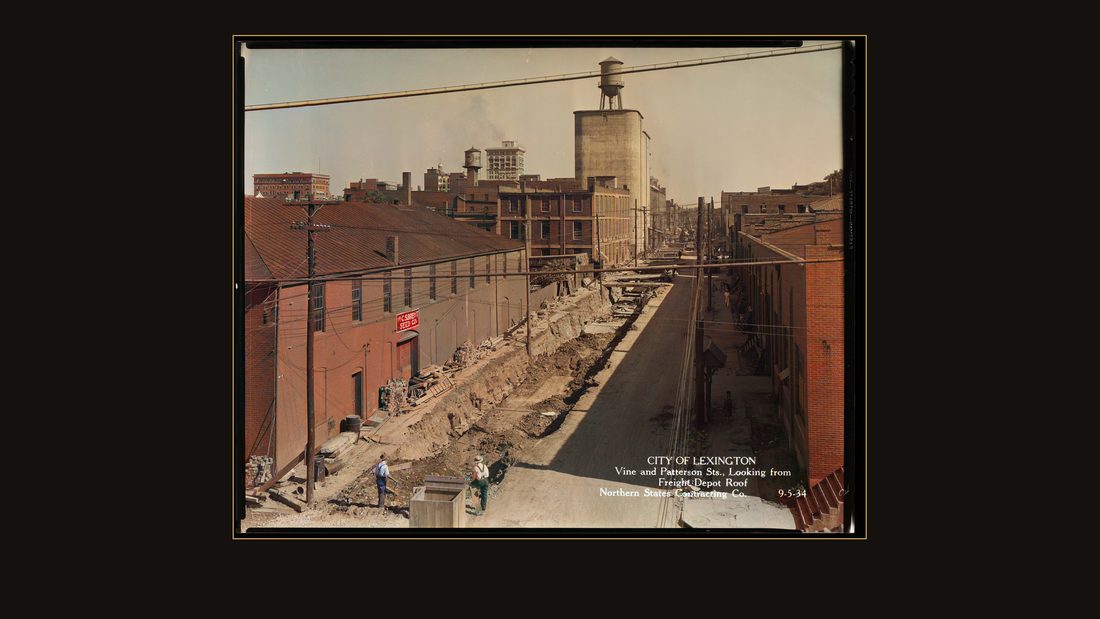
R04
Lafayette Studios / City of Lexington · UK Special Collections · AI-colorized. View the original.
The disposal works did get built. And in the nineteen-thirties, the city went further. It made the creek disappear.
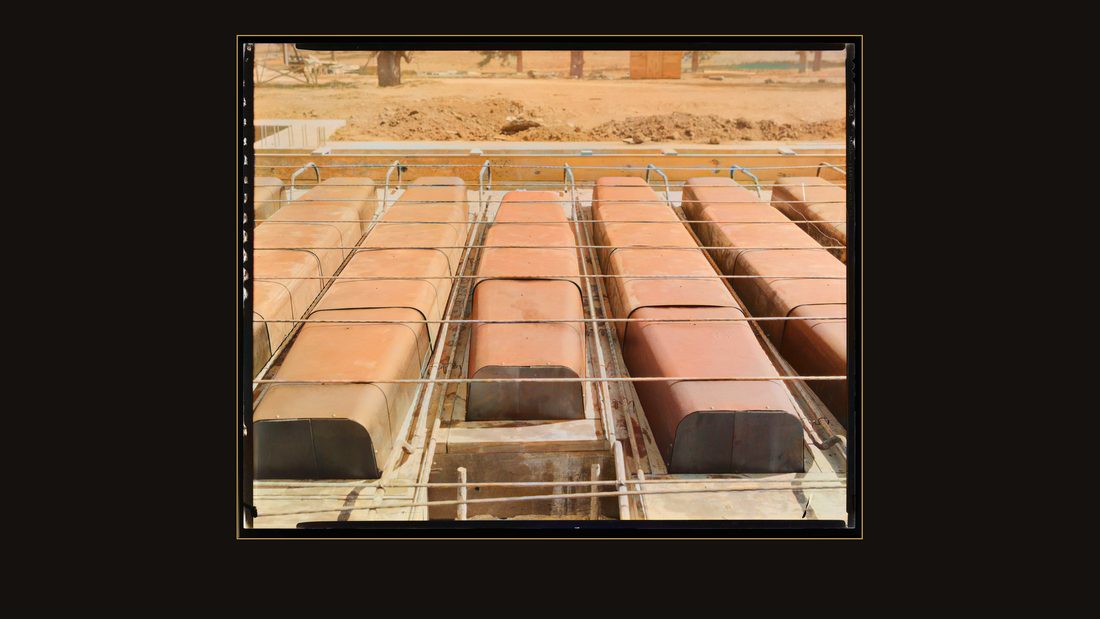
R05
Lafayette Studios / City of Lexington · UK Special Collections · AI-colorized. View the original.
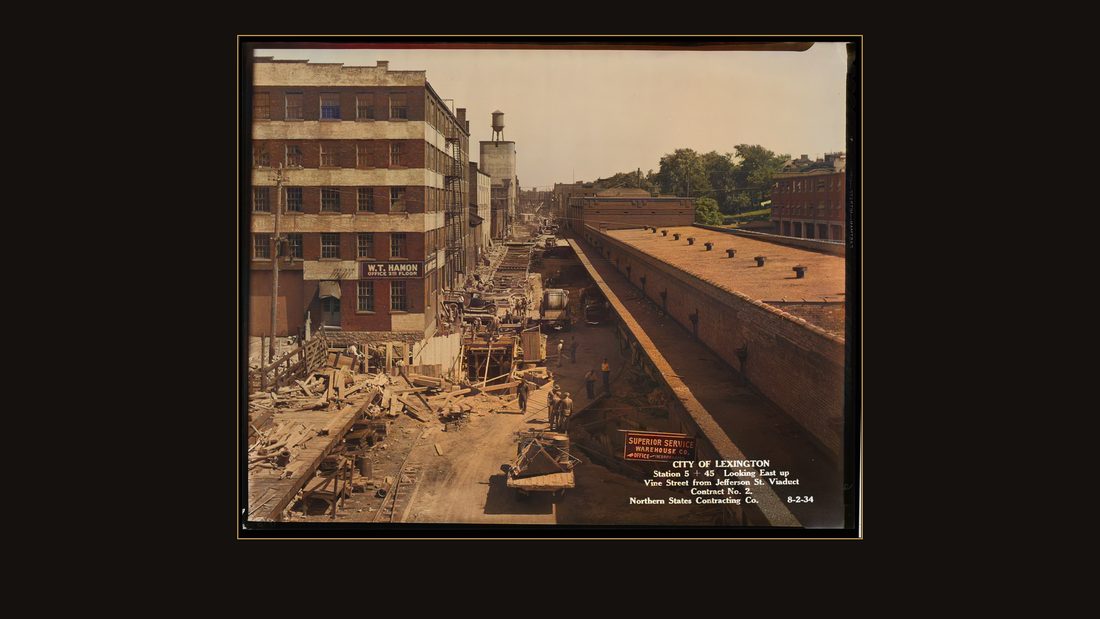
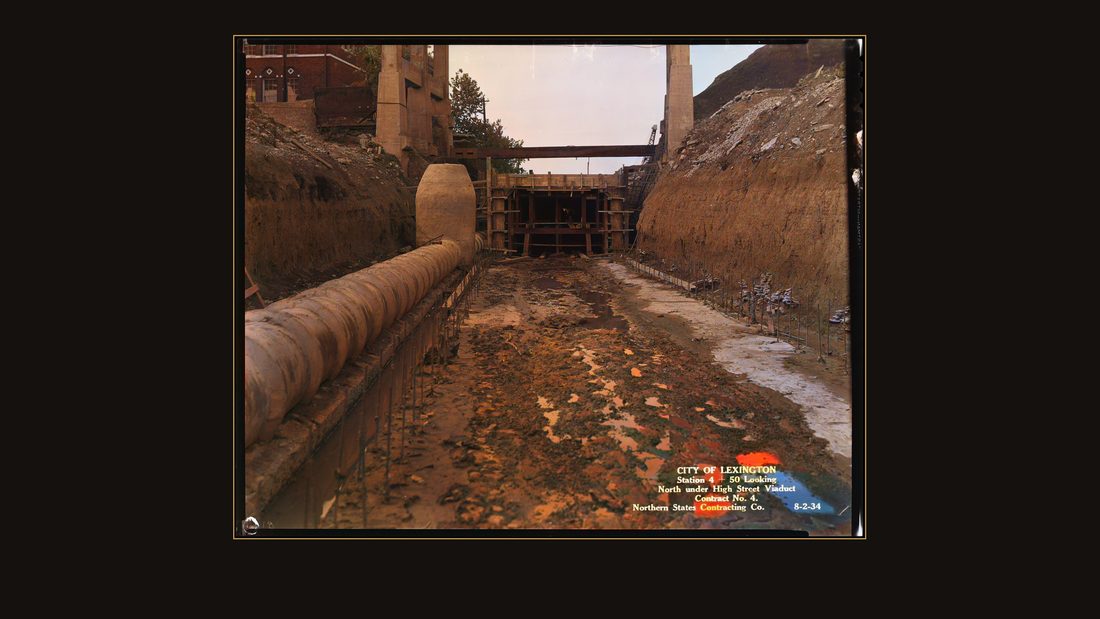
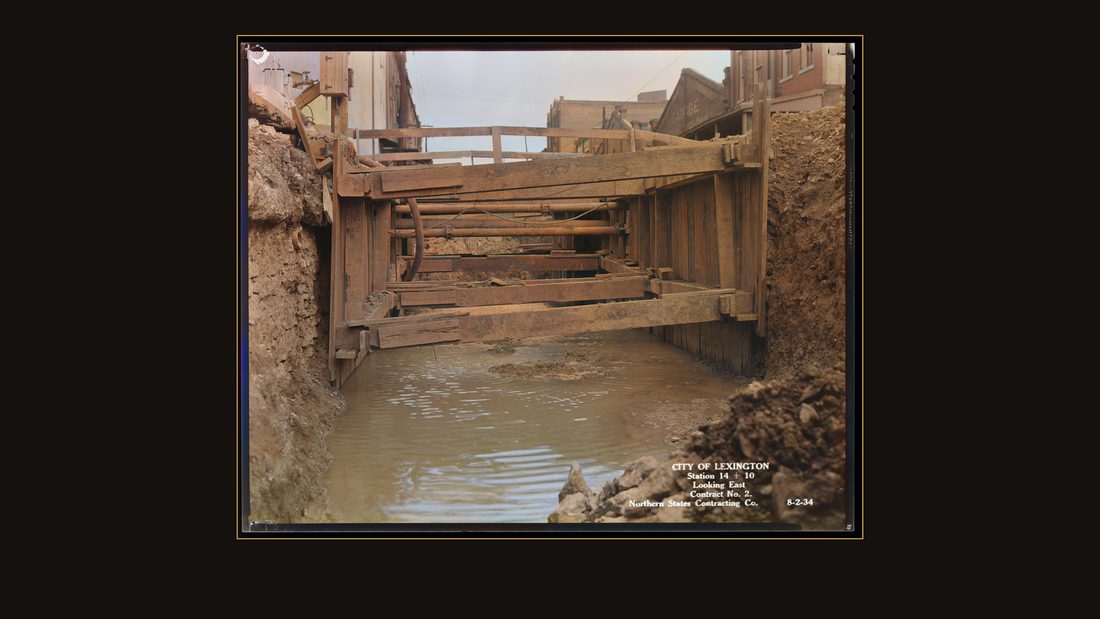
These photographs were made for the City of Lexington by Lafayette Studios, documenting the sewer contracts of 1934 and 1935. The captions are the city's own, written on each negative.
R06
Lafayette Studios / City of Lexington · UK Special Collections · AI-colorized. View the original.
"Station five plus forty-five, looking east up Vine Street from the Jefferson Street viaduct." August 1934.
R07
Lafayette Studios / City of Lexington · UK Special Collections · AI-colorized. View the original.
"Station 4 plus 50, looking north under the High Street viaduct."
R08
Lafayette Studios / City of Lexington · UK Special Collections · AI-colorized. View the original.
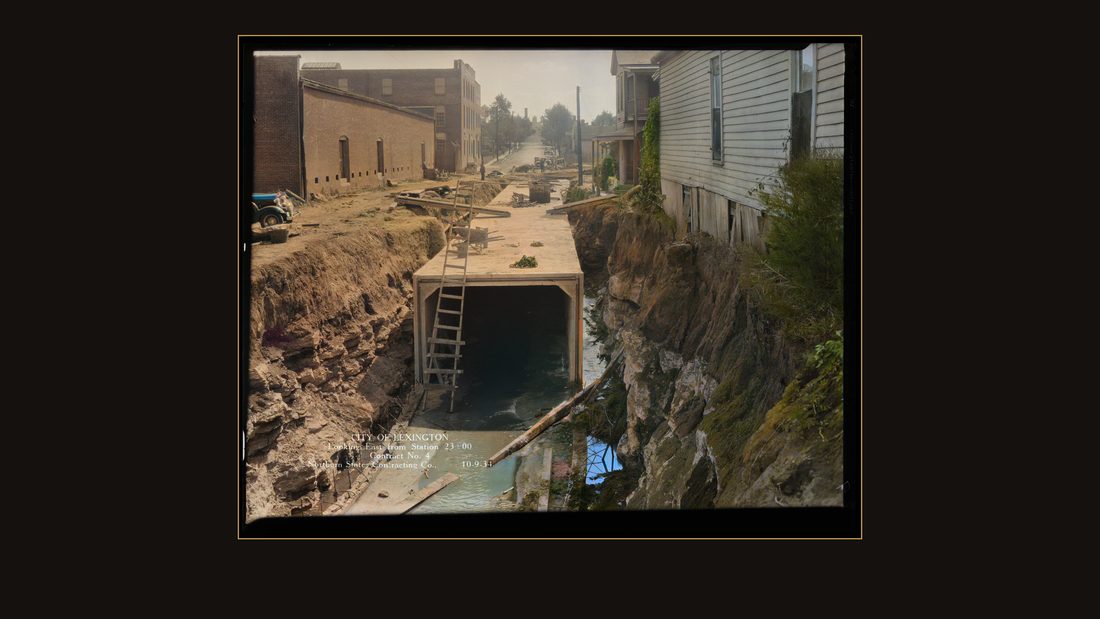
"Station 14 plus 10, looking east." A trench the width of a street, cut through the middle of a city.
R09
Lafayette Studios / City of Lexington · UK Special Collections · AI-colorized. View the original.
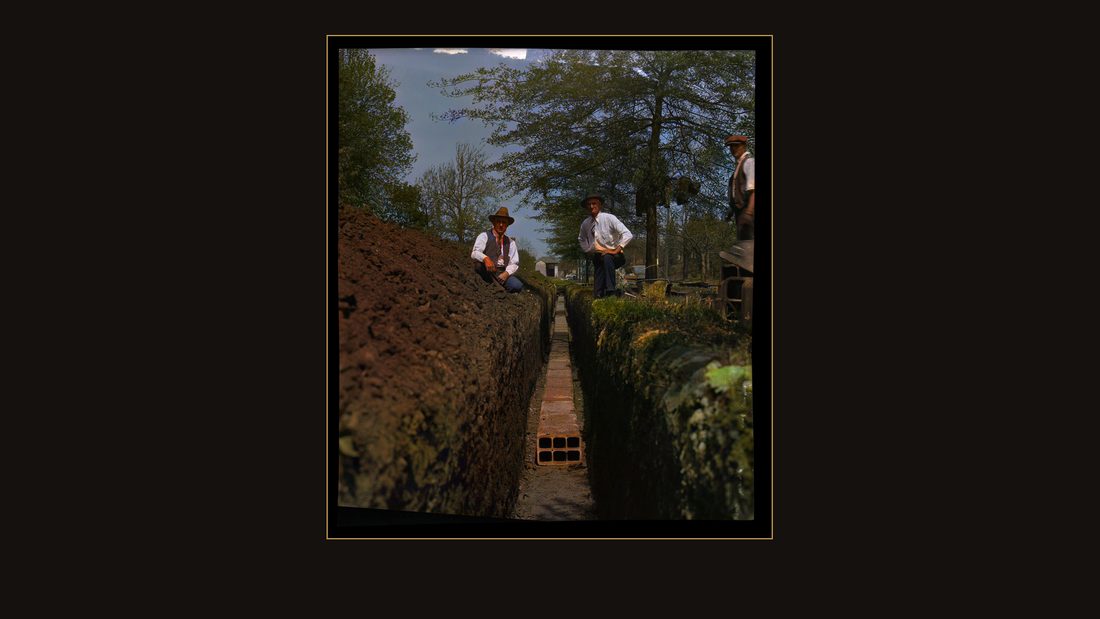
Men worked at the bottom of cuts like this one.
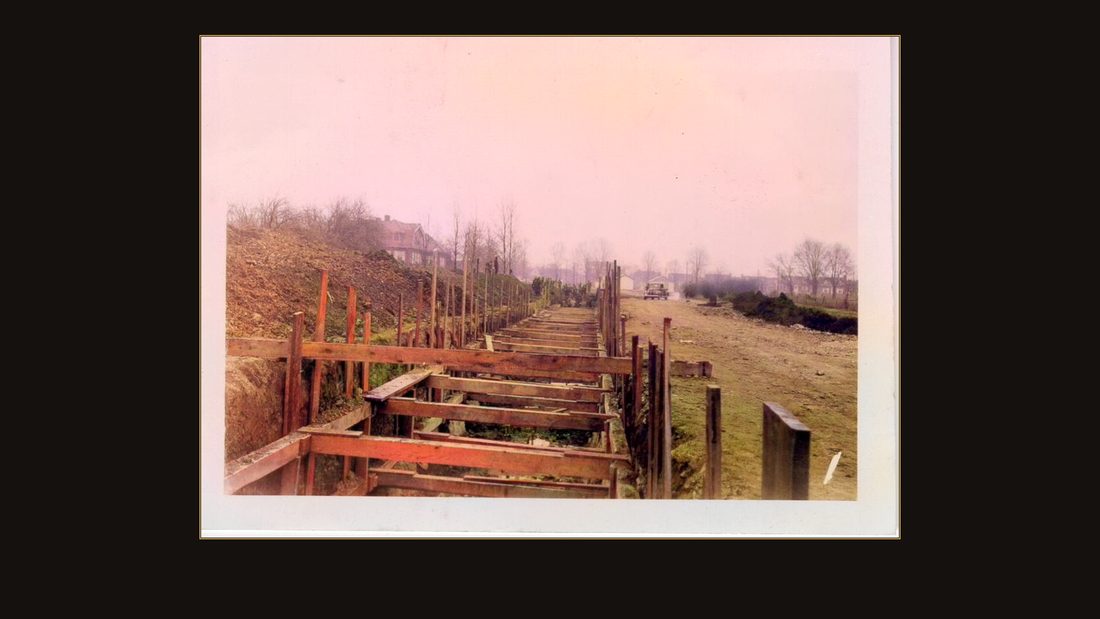
R10
Goodman-Paxton Collection (WPA) · UK Special Collections · AI-colorized. View the original.
The new channel went in as formed concrete, section after section.
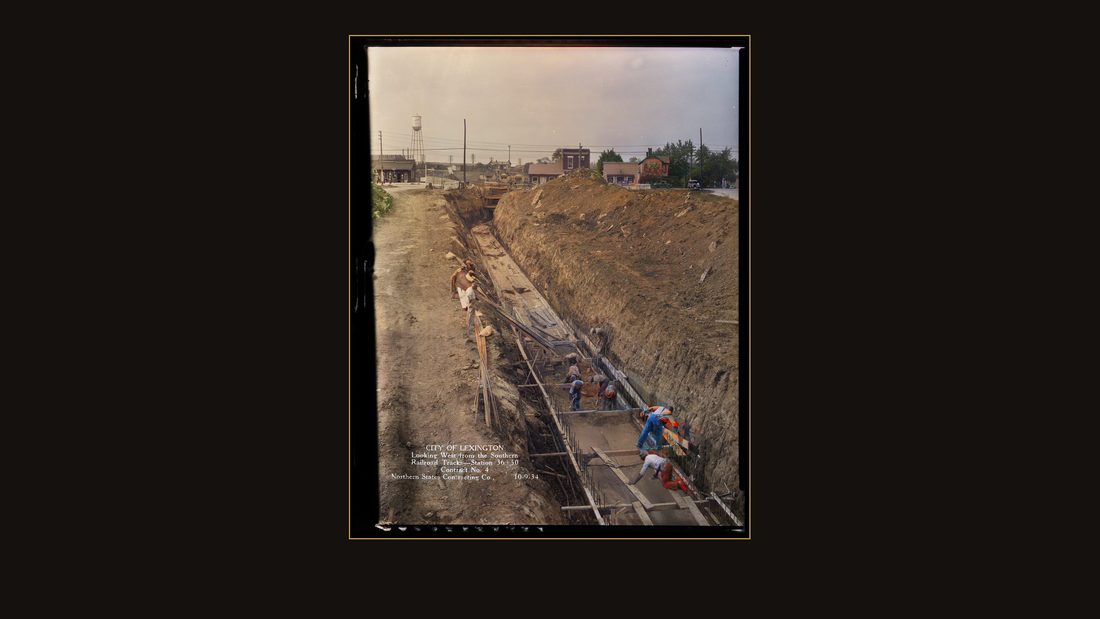
R11
Lafayette Studios / City of Lexington · UK Special Collections · AI-colorized. View the original.
A finisher, smoothing the floor of what used to be a creek bed.
R12
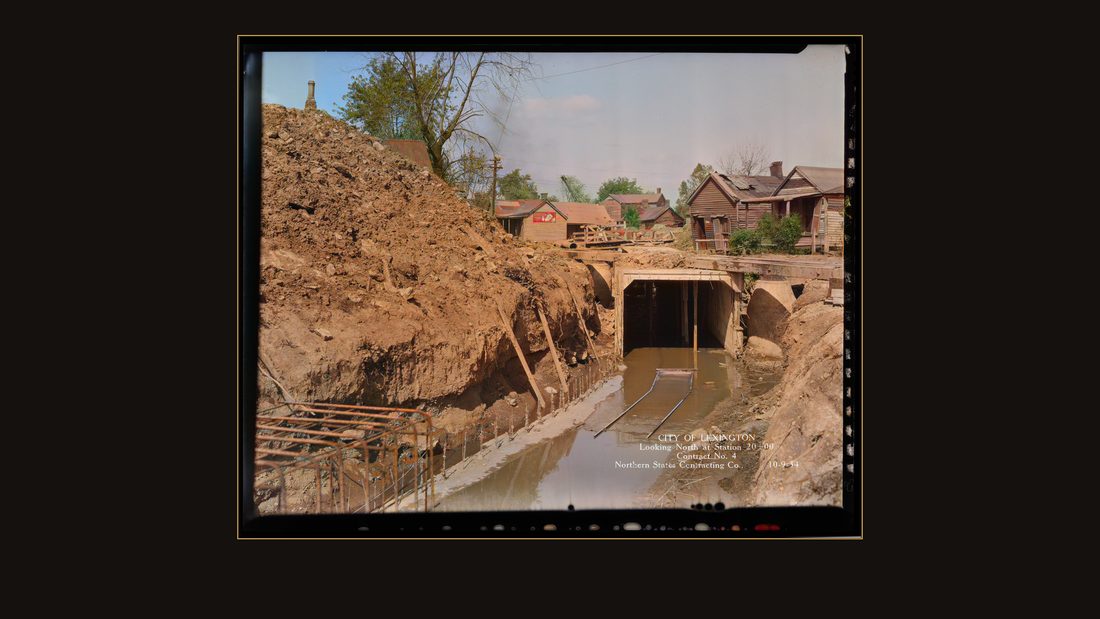
Lafayette Studios / City of Lexington · UK Special Collections · AI-colorized. View the original.
"Looking north at station 26." October 1934.
R13
Lafayette Studios / City of Lexington · UK Special Collections · AI-colorized. View the original.
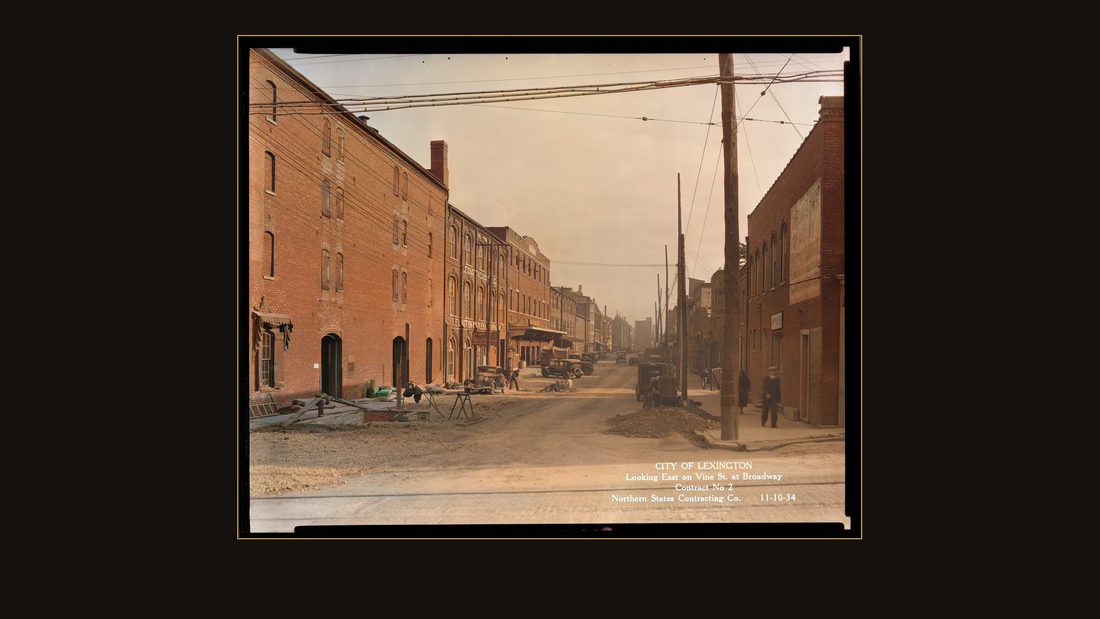
By November the work had reached the heart of downtown. "Looking east on Vine Street at Broadway."
R14
Lafayette Studios / City of Lexington · UK Special Collections · AI-colorized. View the original.
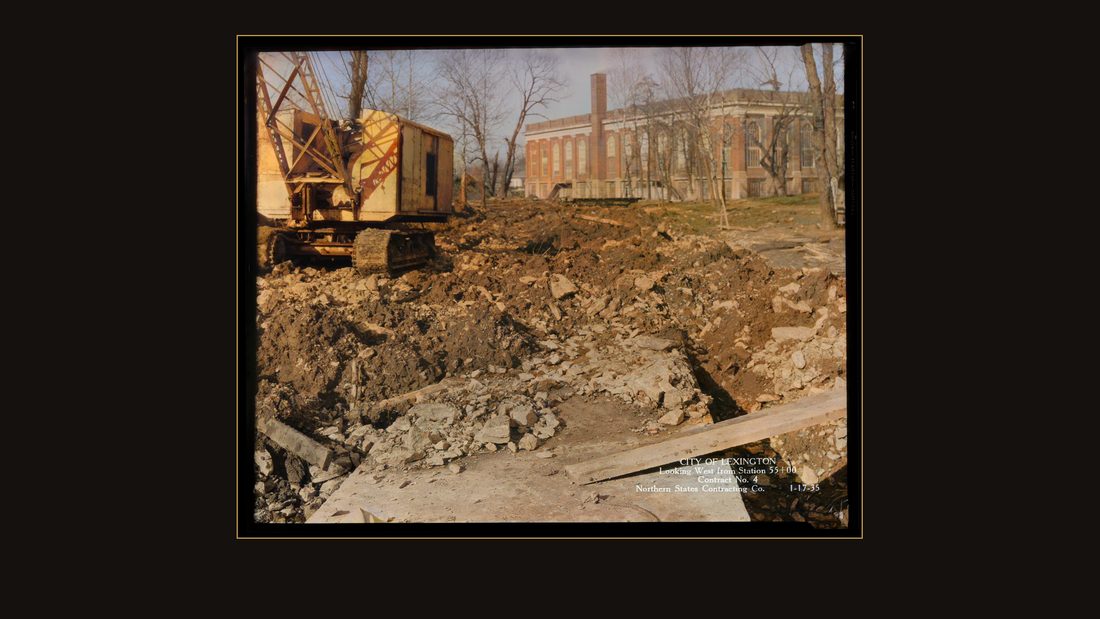
"Looking west from station 55." January 1935.
R15
Lafayette Studios / City of Lexington · UK Special Collections · AI-colorized. View the original.
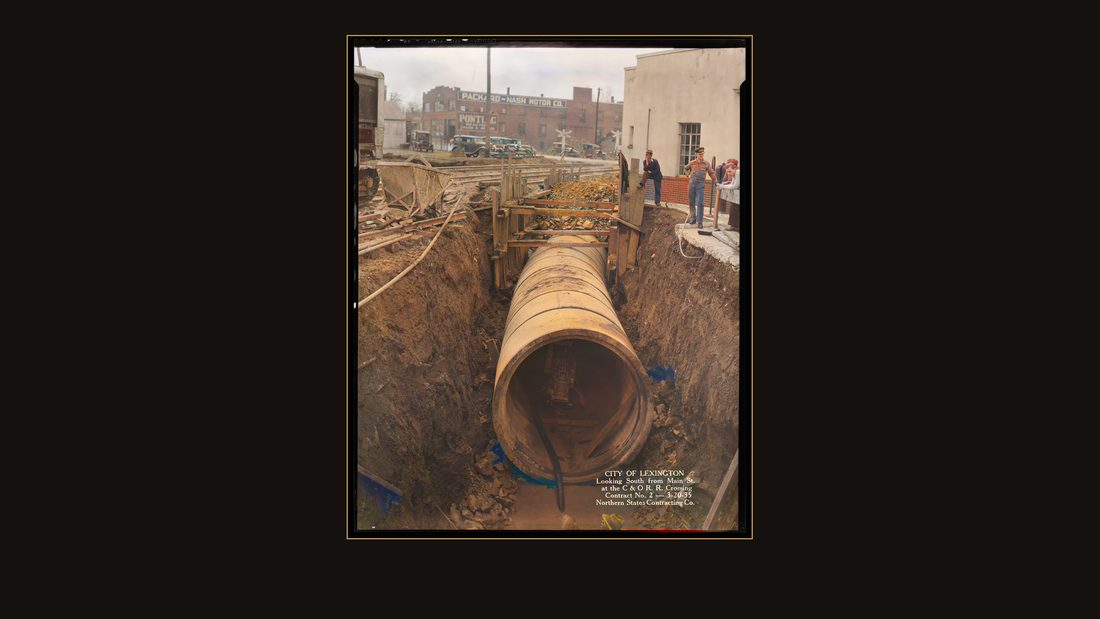
"Looking south from Main Street, at the C and O railroad crossing." March 1935.
R16
Lafayette Studios / City of Lexington · UK Special Collections · AI-colorized. View the original.
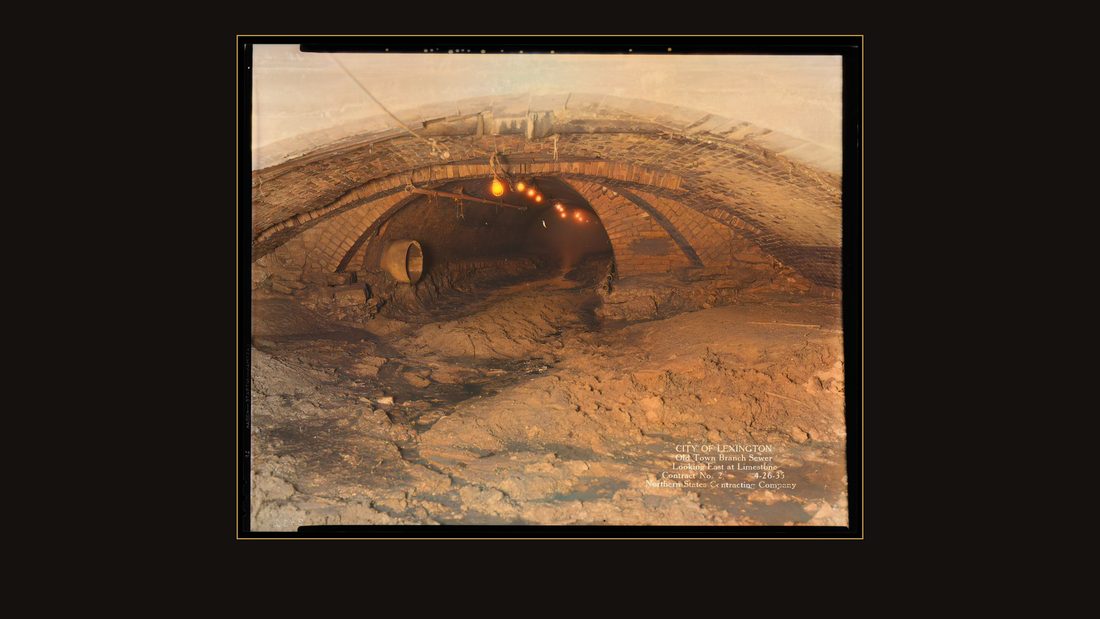
And under the downtown streets, the contractors kept meeting something older — the Old Town Branch Sewer, the arched tunnel the creek had been walled into a generation before.
D04
Lafayette Studios / City of Lexington · UK Special Collections · AI-colorized. View the original.
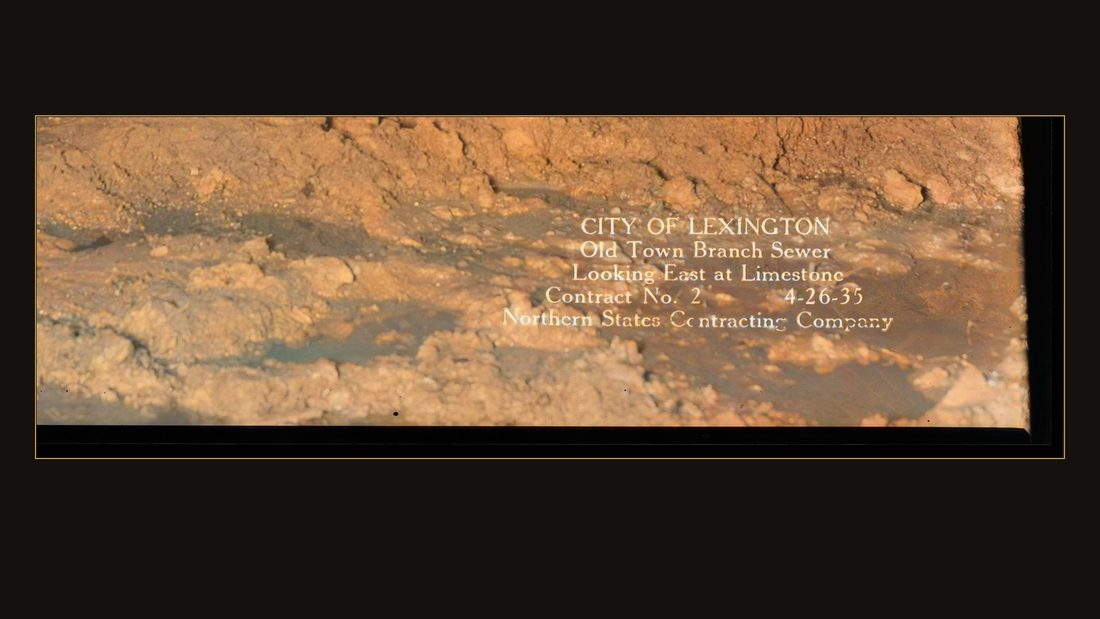
The city's caption reads: "Old Town Branch Sewer, looking east at Limestone."
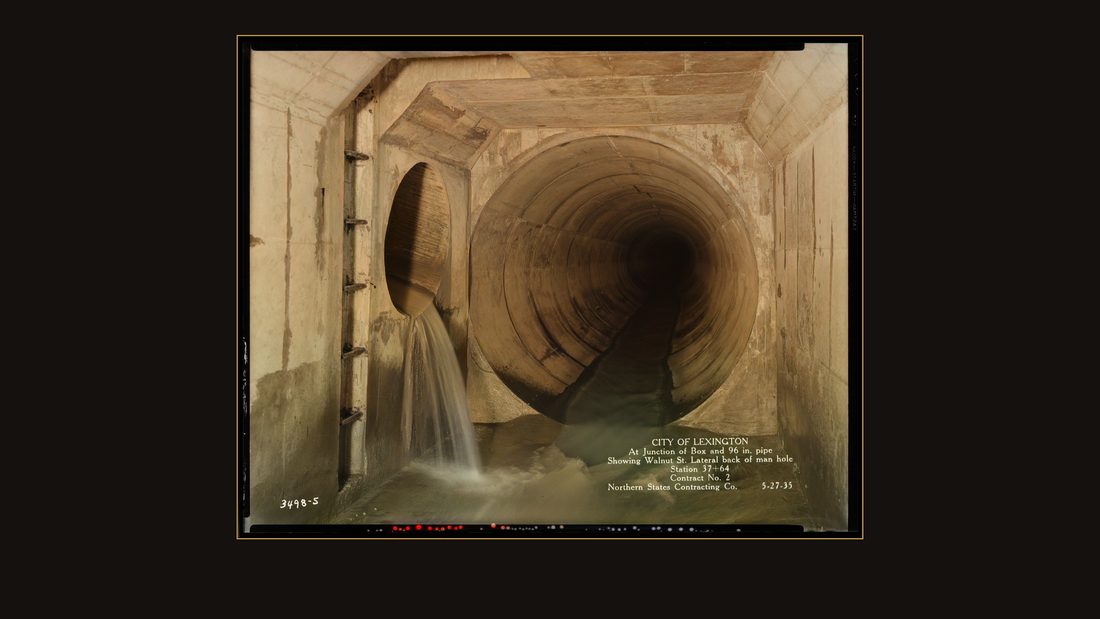
R17
Lafayette Studios / City of Lexington · UK Special Collections · AI-colorized. View the original.
"At junction of box and 96-inch pipe, station 37 plus 64." The creek was becoming plumbing.
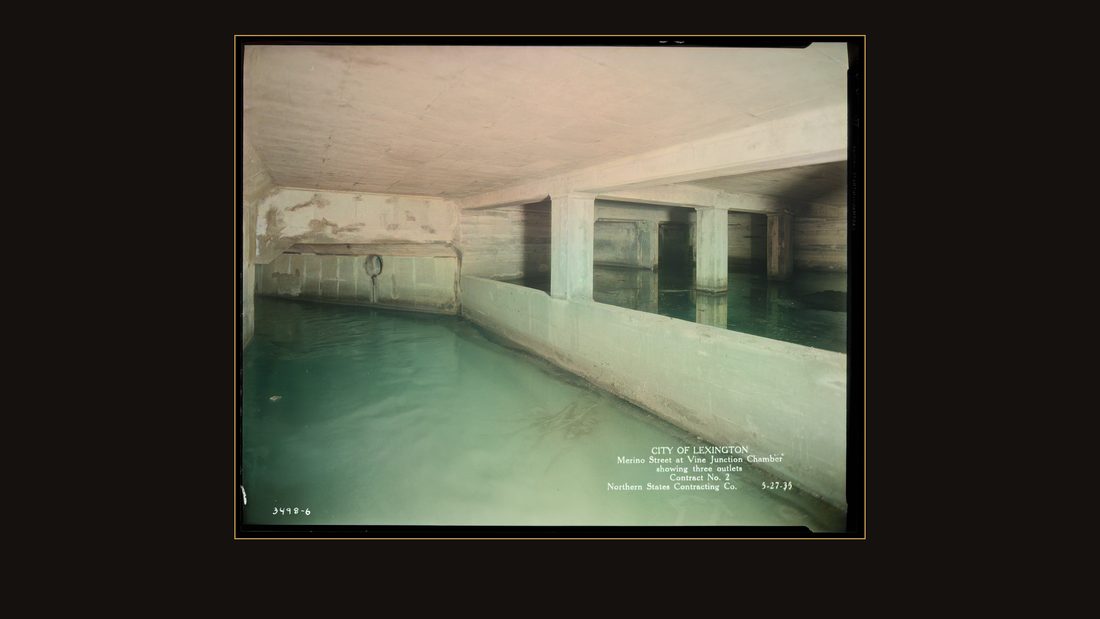
R18
Lafayette Studios / City of Lexington · UK Special Collections · AI-colorized. View the original.
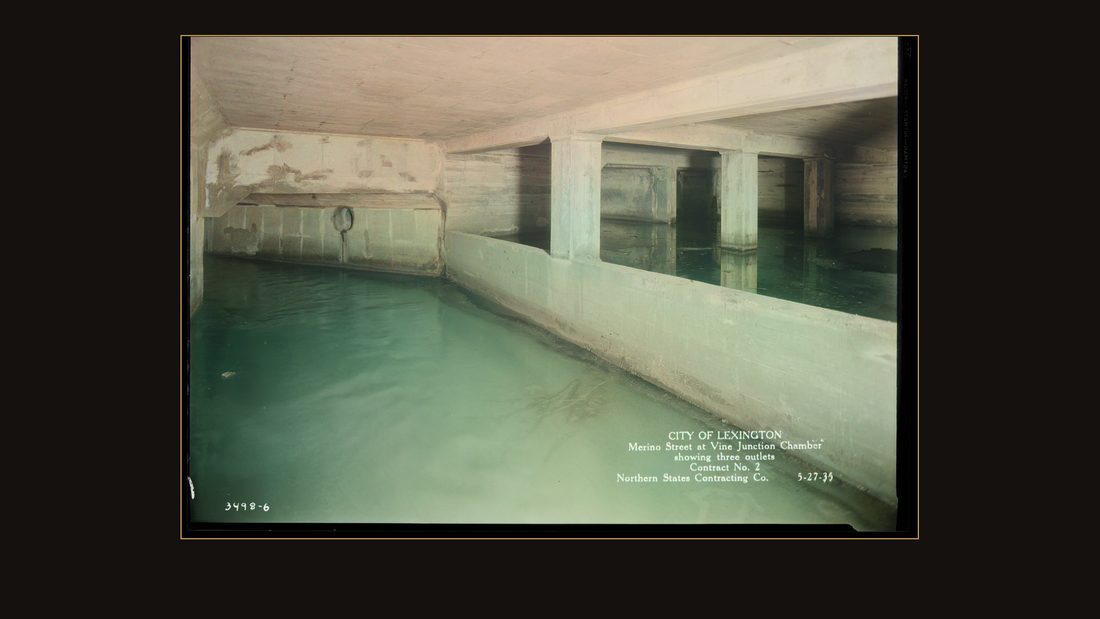
"Merino Street at Vine, junction chamber, showing three outlets." May 1935. This is what a buried river looks like.
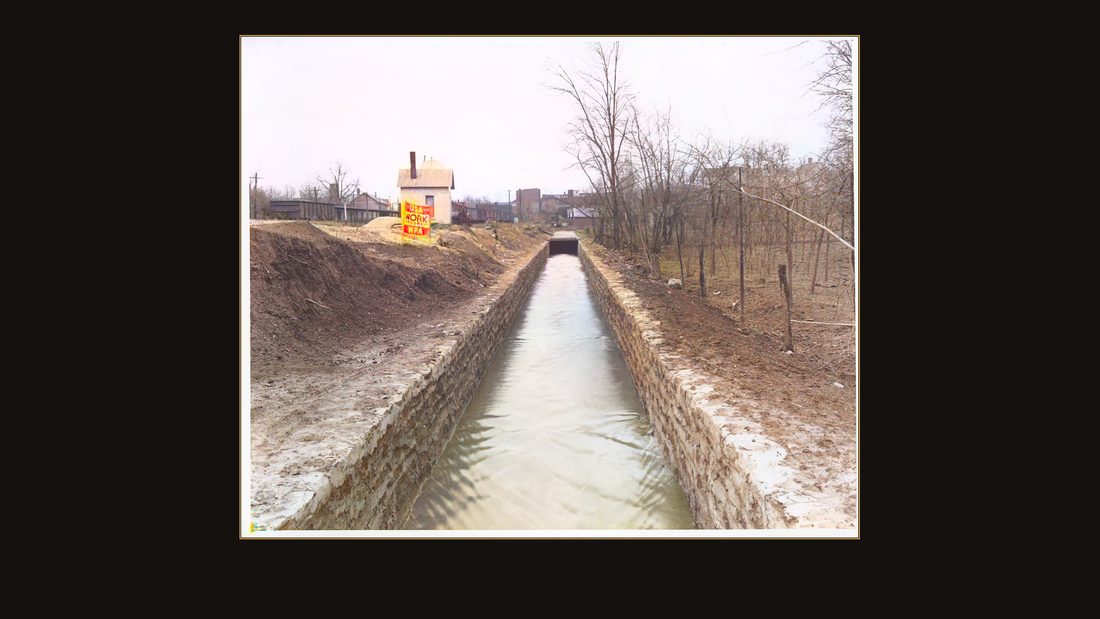
R19
Goodman-Paxton Collection (WPA) · UK Special Collections · AI-colorized. View the original.
West of downtown, relief labor straightened what was left of the open creek into a stone-lined channel.
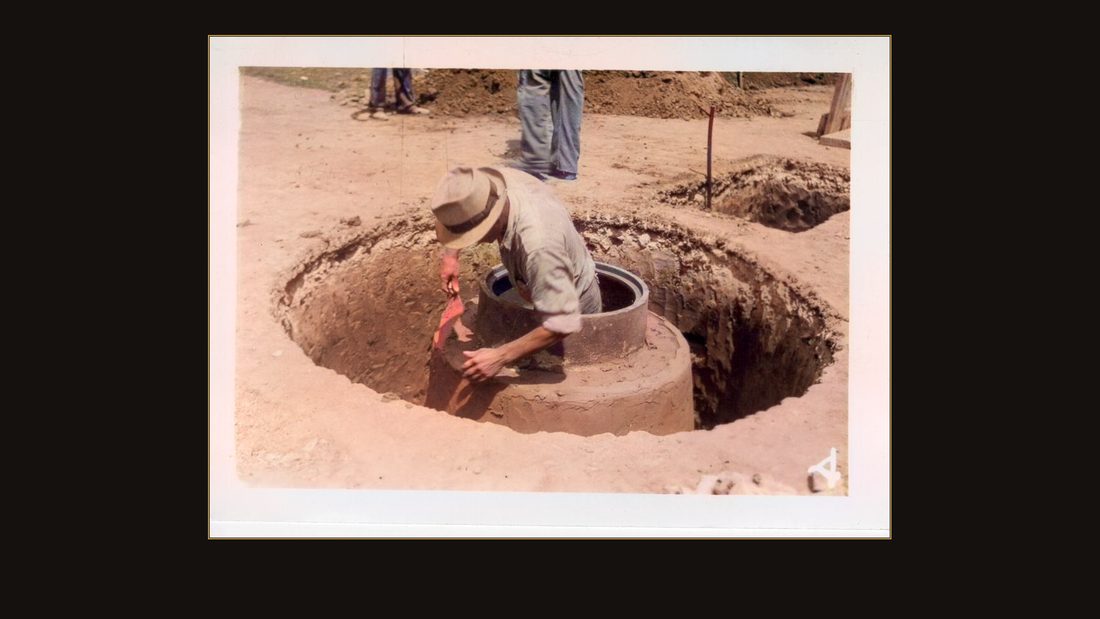
R20
Goodman-Paxton Collection (WPA) · UK Special Collections · AI-colorized. View the original.
By the time the work was done, Town Branch ran beneath Vine Street in a box of concrete, and most of Lexington forgot it was there.
A03
D. Lyle Aten Papers, Oct. 1970 · UK Special Collections. View the original.
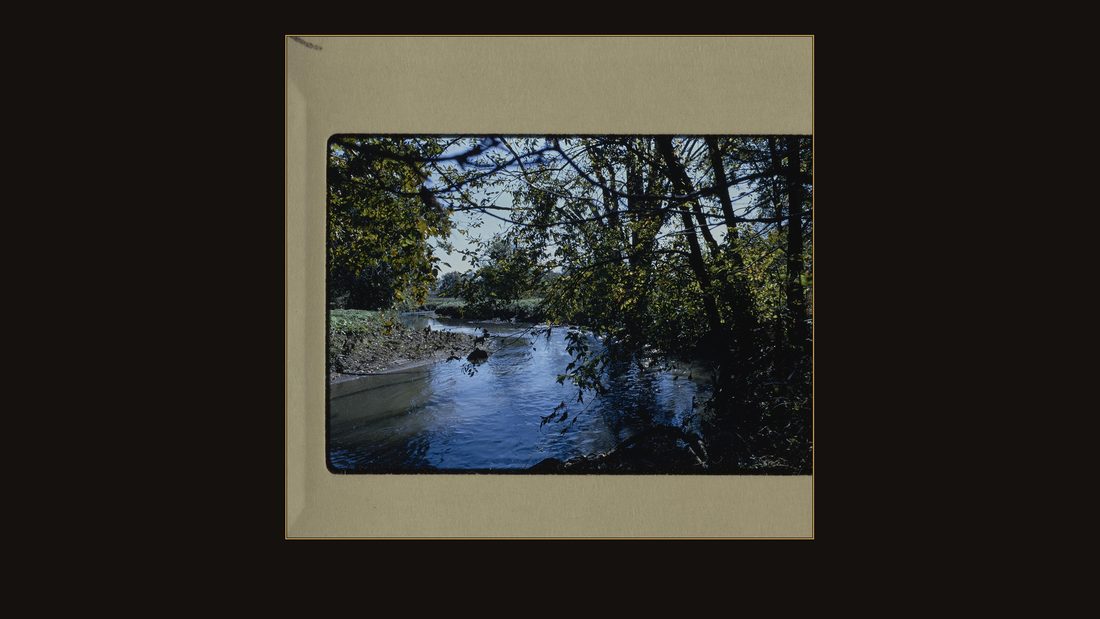
It kept flowing. These color slides were taken in October 1970, out where the creek comes back into daylight west of town.
The bill arrives
S05
E.D. Ky. · 5:06-cv-386 · Dkt. 1 · 2006-11-20.
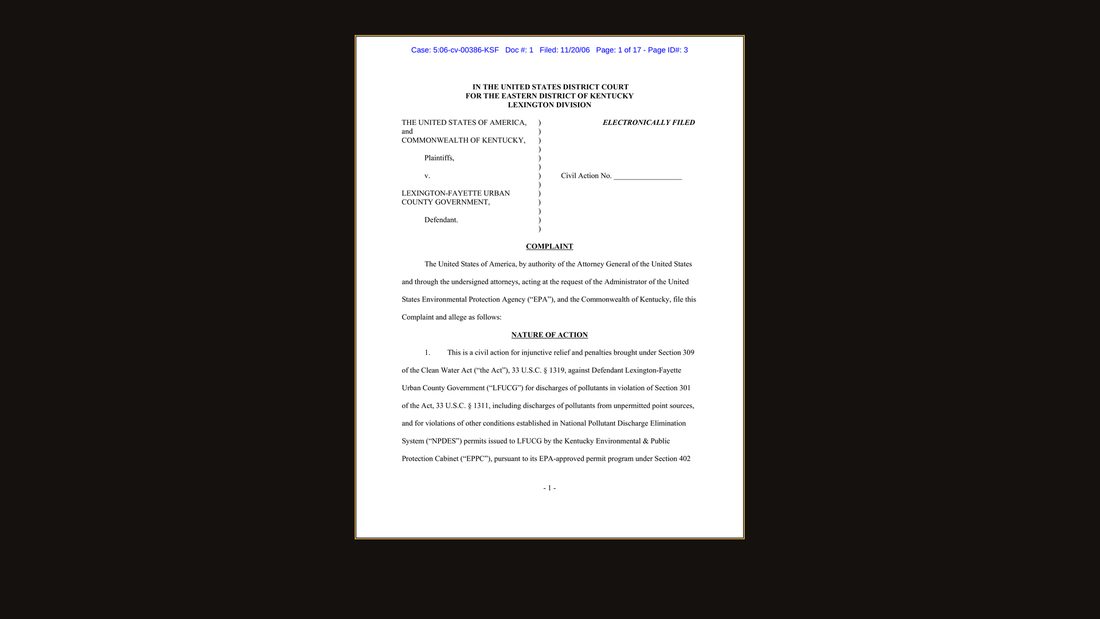
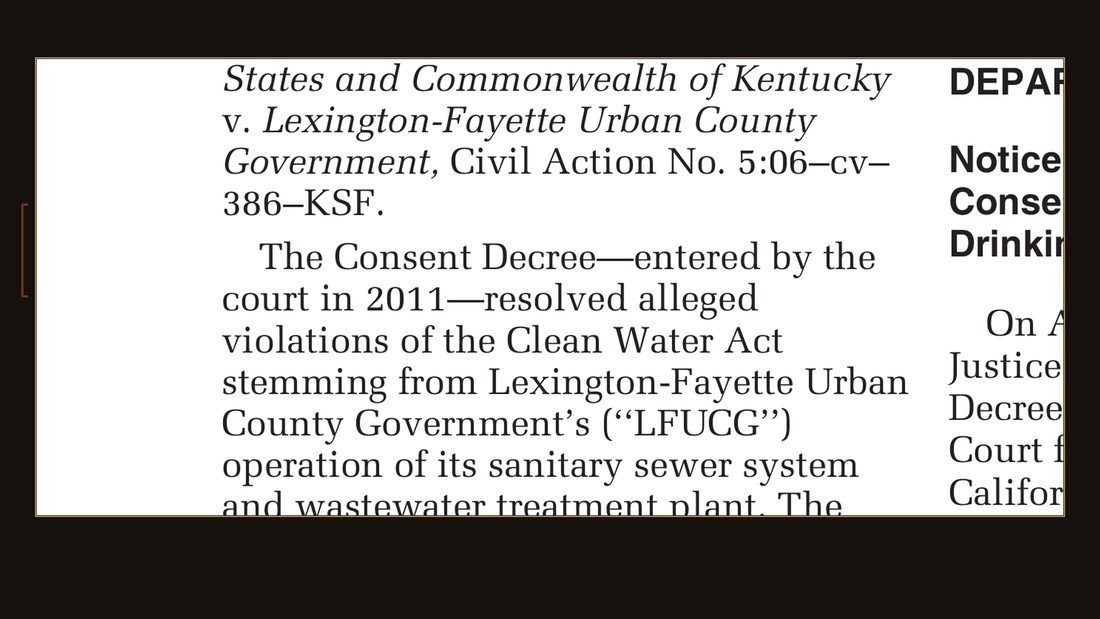
In 2006, the United States and the Commonwealth of Kentucky sued Lexington under the Clean Water Act.
S06
E.D. Ky. · 5:06-cv-386 · Dkt. 1 · 2006-11-20.
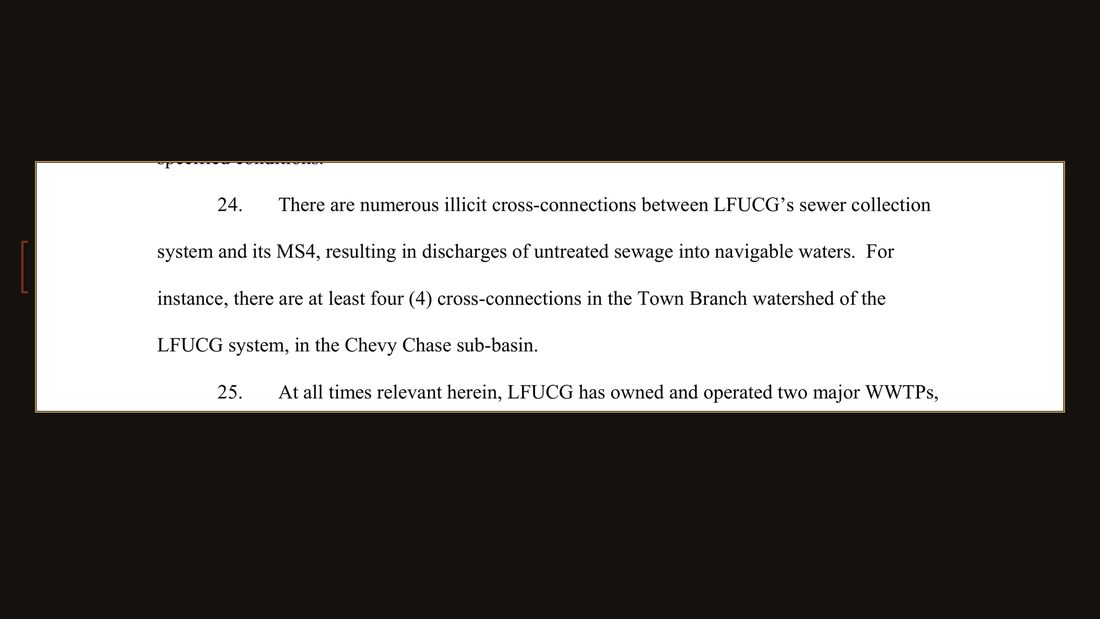
The federal complaint counted the ways sewage was still reaching the water — including, in its words, "at least four cross-connections in the Town Branch watershed." The same creek. The same cheat. Ninety-five years after the four-line notice of 1911.
S07
E.D. Ky. · 5:06-cv-386 · Dkt. 48 · 2008-08-07.
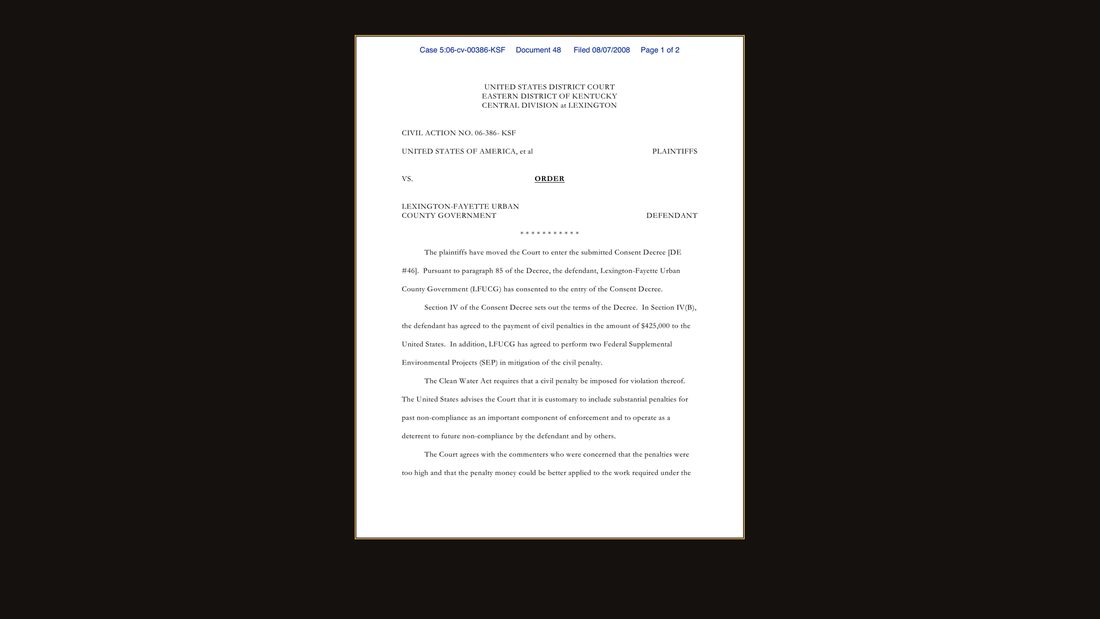
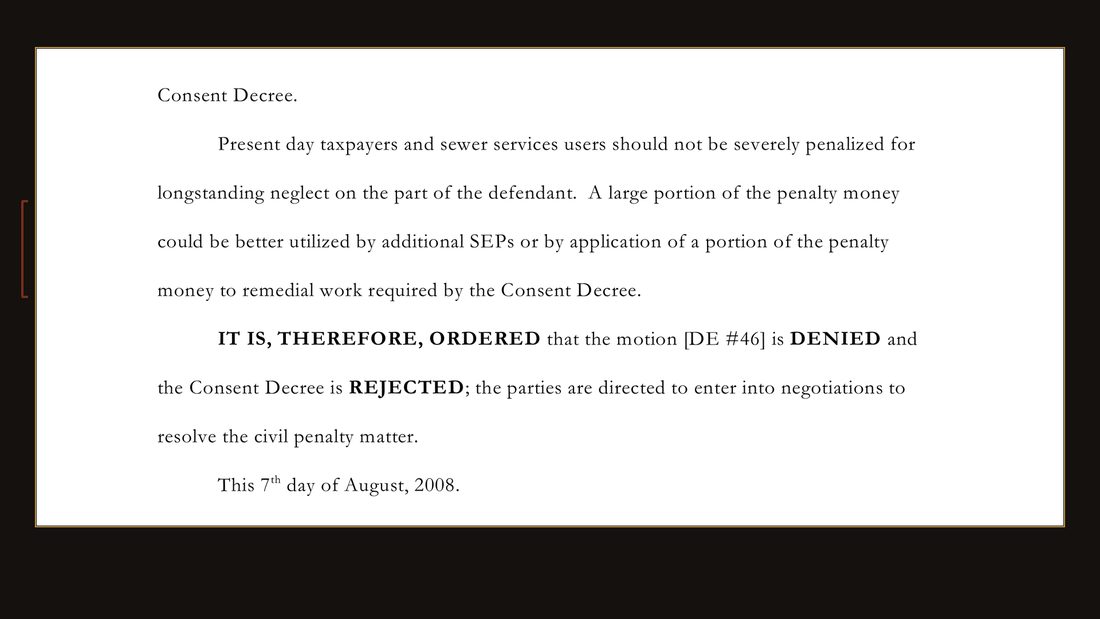
The first settlement collapsed. In 2008 the judge refused to enter it, writing that present-day ratepayers "should not be severely penalized for longstanding neglect on the part of the defendant."
S08
E.D. Ky. · 5:06-cv-386 · Dkt. 48 · 2008-08-07.
Longstanding neglect. The court's phrase, not mine.
S09
89 Fed. Reg. 26722 (Apr. 16, 2024).
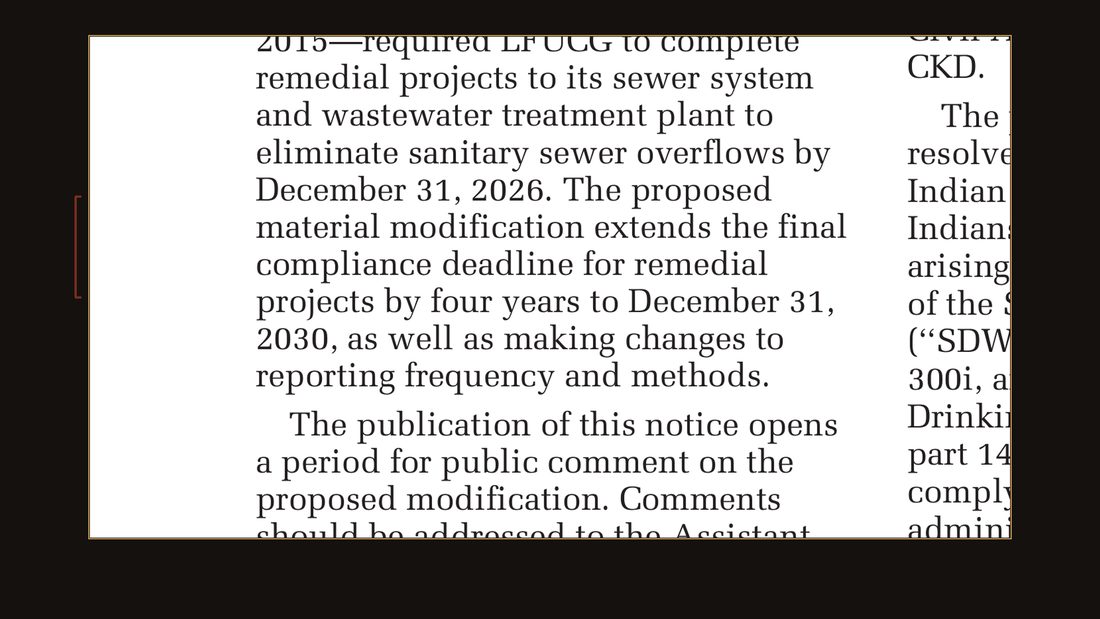
The consent decree finally entered on January 3, 2011 — almost exactly one hundred years after the Board of Public Works stopped signing storm-sewer permits.
S10
89 Fed. Reg. 26722 (Apr. 16, 2024).
It carried a civil penalty of four hundred twenty-five thousand dollars, environmental projects on top, and a program of sewer reconstruction that has run to hundreds of millions — with the deadline now extended to the last day of 2030.
In 1915, the same offense cost Lexington two hundred forty-three dollars and thirty-five cents, paid by check to the clerk of the Woodford Circuit Court.
D06
Lafayette Studios / City of Lexington · UK Special Collections · AI-colorized. View the original.
The creek is still down there — under Vine Street, in the dark, behind these three outlets. Still running through the middle of everything.
R21
Lafayette Studios / City of Lexington · UK Special Collections. View the original.
Sources
- Lexington Leader, May 8, 1911, p. 9 — "No More Storm Water Permits," Board of Public Works notice (public domain; digitized scan via newspapers.com)
- Lexington Leader, June 25, 1911, p. 8 — "Menace to Health of Entire City and Suburbs" / "Citizens Subjected to Frightful Odors" / "Health Board Permits Moving of Refuse on Bad Nights and Dumping It Into Sewers to Be Distributed by Town Branch" / "Extortionate Fees for Cleaning Vaults"
- Lexington Leader, July 22, 1911, p. 1 — "City Is Indicted for Town Branch Dump Nuisance"; thirty true bills; C., N.O. & T.P. Railway and the city charged over the West Main Street bridge; "the city is also charged with nuisance in that it has permitted the dumping of night soil and other deleterious substances into Town Branch"
- Lexington Herald, May 16, 1915, p. 3 — "Lexington Indicted by Woodford Grand Jury — Pollution of Elkhorn by the Sewerage From Town Branch Alleged" (Versailles, May 15): "making and maintaining a nuisance" by "emptying sewage into a stream"; water "rendered foul and unsightly"; "killing of the fish in Elkhorn"; same column, the Woodford officials' fish fry for Circuit Judge Robert L. Stout at Scott's Landing
- Lexington Herald, Oct. 29, 1915, p. 8 — "City Is Indicted for Harboring a Nuisance — Town Branch Is Basis of Action by the Fayette Grand Jury — 19 Bills Returned"; Deputy Sheriff Ben Freckman attempts to serve a bench warrant on Mayor Cassidy, "but that official was out of the city"
- Lexington Herald, Nov. 13, 1915, p. 10 — ordinance appropriating $243.35 "to pay the amount of the damage and costs recovered from Lexington on an indictment returned against it … by the Woodford County grand jury for harboring a nuisance in connection with Town Branch," payable to C. E. Whitt, clerk of the Woodford Circuit Court; trial at Versailles November 3; citizens "ready to testify against their home city in favor of Woodford County"; Mayor Cassidy's warning of March-term indictments and $10,000 in damages
- Sanborn Map Co., Insurance Maps of Lexington, Kentucky, 1907 — title and index sheets (Library of Congress, Geography & Map Division)
- United States and Commonwealth of Kentucky v. Lexington-Fayette Urban County Government, No. 5:06-cv-386 (E.D. Ky.) — Complaint, Nov. 20, 2006 (¶24: "numerous illicit cross-connections … at least four (4) cross-connections in the Town Branch watershed"); Order of Aug. 7, 2008 rejecting the first consent decree ("present day taxpayers and sewer services users should not be severely penalized for longstanding neglect on the part of the defendant"; civil penalty of $425,000 described at Section IV(B)); Consent Decree entered Jan. 3, 2011 (Dkt. 77)
- 89 Fed. Reg. 26722 (Apr. 16, 2024) — notice of proposed second material modification extending the final remedial deadline to December 31, 2030
- Photographs: Lafayette Studios for the City of Lexington, sewer contracts Nos. 2 and 4, Aug. 1934–May 1935 (University of Kentucky Special Collections, Lafayette Studios photographs, 96PA101) — AI-colorized (DDColor); captions quoted are the city's own, written on each negative. Goodman-Paxton Photographic Collection (WPA-era, UK Special Collections, PA64M1) — AI-colorized. D. Lyle Aten Papers (UK Special Collections, 2013MS0843), October 1970 color slides of Town Branch — original color, not colorized. Closing frame is the original black-and-white negative.
- Colorization: DDColor (see tools/colorize.py); colors on 1930s photographs are machine estimates and are disclosed as such on screen and in this description.