Why Is There a Desert in Tennessee?
The film of this episode premieres September 28, 2026 on YouTube. The documents, the transcript and the sources are below now.
There is a desert in the mountains of Polk County, Tennessee — the Ducktown copper basin, around Ducktown and Copperhill, where smelter smoke killed every green thing across tens of square miles.
Transcript
A desert in Tennessee
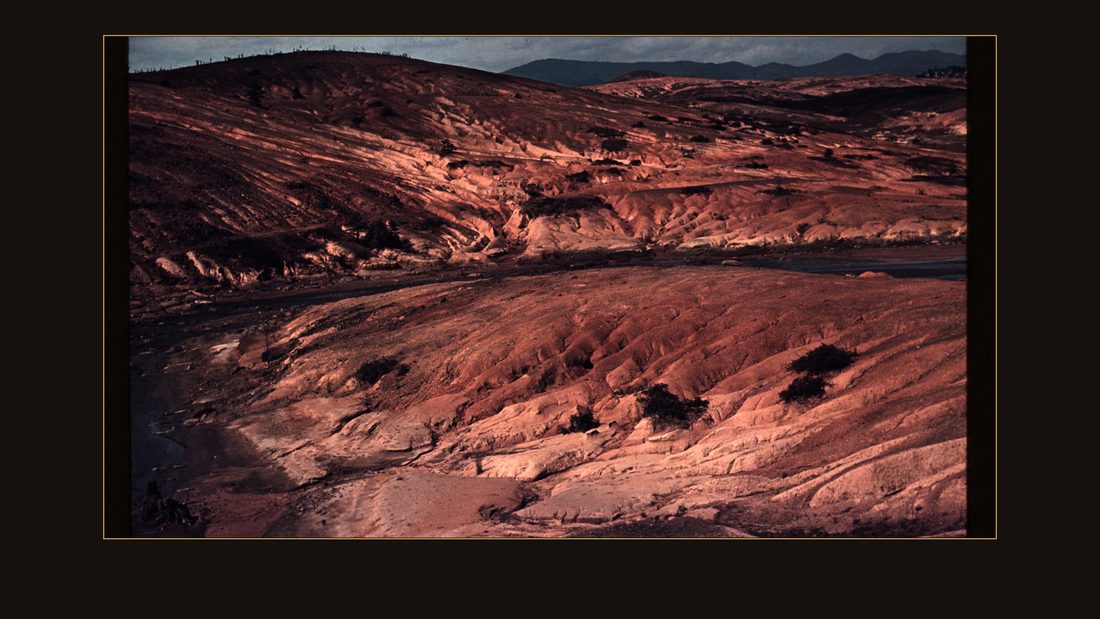
P09 Copper mining section between Ducktown and Copperhill, Tennessee. Fumes from smelting copper for sulfuric acid have destroyed all vegetation
Marion Post Wolcott · between Ducktown and Copperhill, Sept. 1939 · LOC FSA/OWI Color · period colour. View the original.
This is Tennessee — one of the wettest mountain ranges in eastern America. And in September of 1939, almost nothing grew here for miles.
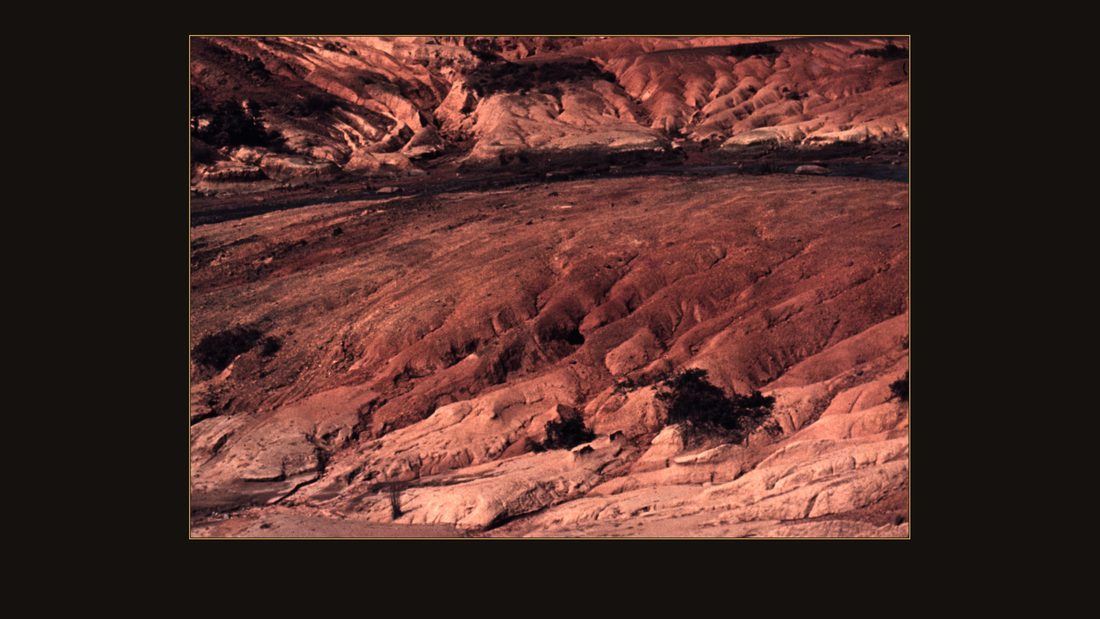
D01
Marion Post Wolcott · Ducktown-Copperhill district, Sept. 1939 · LOC FSA/OWI Color · period colour. View the original.
Nothing in this film is colorized. The color is Kodachrome, loaded into a government photographer's camera in 1939. The earth really was this red.
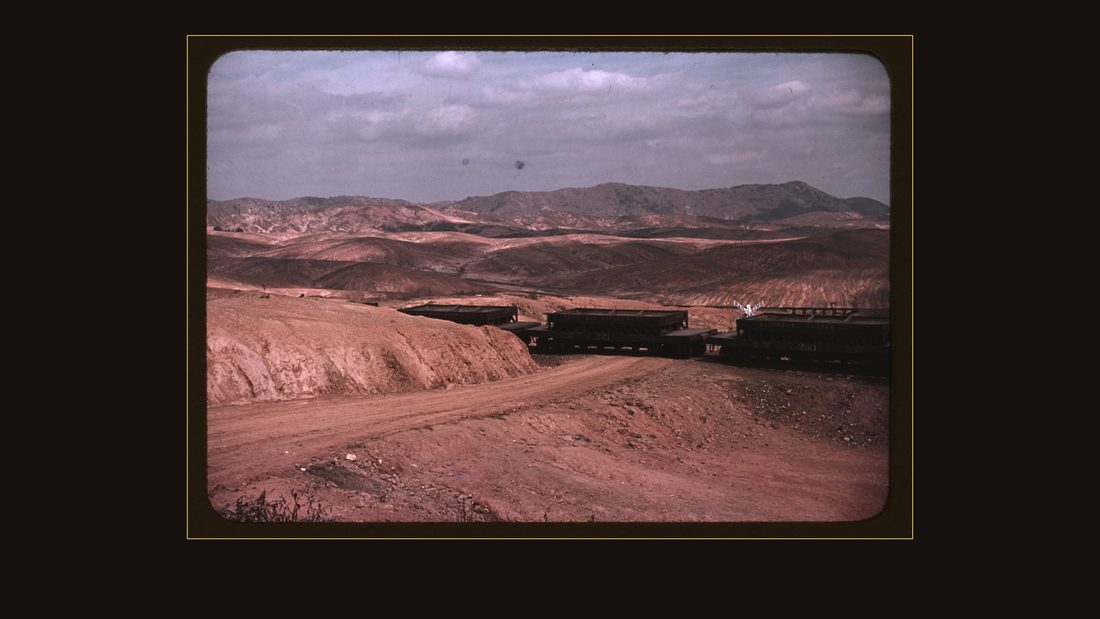
P08 A train bringing copper ore out of the mine, Ducktown, Tenn. Fumes from smelting copper for sulfuric acid have destroyed all vegetation
Marion Post Wolcott · Ducktown, Sept. 1939 · LOC FSA/OWI Color · period colour. View the original.
The caption on this frame reads: a train bringing copper ore out of the mine, Ducktown, Tennessee. Fumes from smelting copper for sulfuric acid have destroyed all vegetation.
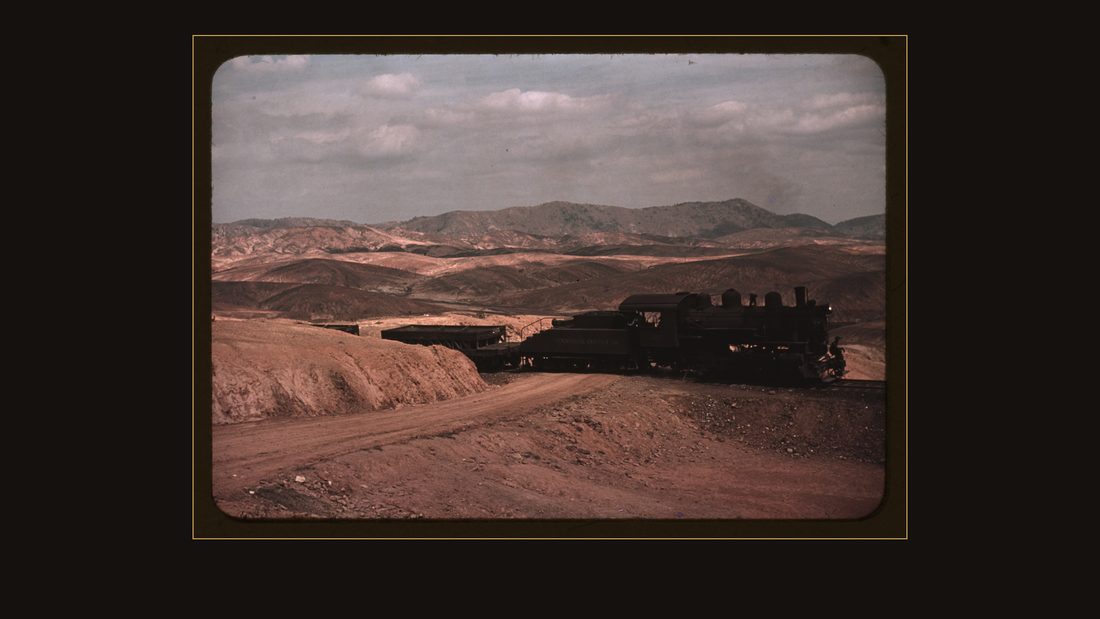
P03 A train bringing copper ore out of the mines, Ducktown, Tenn. Fumes from smelting copper for sulfuric acid have destroyed all vegetation
Marion Post Wolcott · Ducktown, Sept. 1939 · LOC FSA/OWI Color · period colour. View the original.
This film is about how that happened — and about two courtrooms that looked at the same smoke, three years apart, and gave two opposite answers.
The smoke
The smelting plant was built at Copperhill, on the Ocoee River — begun in 1899, first mining in 1901. By 1903: ten million pounds of copper a year.
Mining at Ducktown itself was older. The court record says the business was resumed in 1891 by one company, and that the other began roasting ores in May of 1901.
Roasting is the word that matters. The raw ore was burned in the open air to drive the sulphur off. The courts found that the open-air roast heap was the only method known to the business, or to science, for reducing this ore.
The same finding records what one company spent trying to solve the smoke: two hundred thousand dollars in experiments, to this end — but without result.
What the smoke did to the people living on these hills is in the findings too. Their timber and crop interests have been badly injured. They are prevented from using and enjoying their farms and homes as they did before.
Three farmers
In the September term of 1904, three consolidated cases reached the Supreme Court of Tennessee at Knoxville. Farm families named Madison, McGhee and Farner, against the two copper companies.
The first bill was filed on July 1, 1901. A chancellor dismissed it; the court of chancery appeals reversed him, and awarded a perpetual injunction. The farmers had already won.
The state's highest court took the case, and its findings gave the farmers everything except a remedy. The companies were conducting their business in a lawful way, without any purpose or desire to injure anyone, pursuing the only known method.
The findings also counted the district. Before the companies came, about two hundred people lived here. Now, almost wholly dependent on the copper industries: about twelve thousand.
The arithmetic
Then the court asked its question, and it is worth hearing whole. Shall the complainants be granted damages — or shall we go further, and blot out two great enterprises, destroy half of the taxable values of a county, and drive more than ten thousand people from their homes?
The answer is a single sentence of arithmetic. In order to protect by injunction several small tracts of land, aggregating in value less than one thousand dollars, we are asked to destroy other property worth nearly two million.
The farms were worth less than the smelters, so the farms would take the smoke. The injunction the farmers had won below was taken away. The only proper decree, the court wrote, is a reference for the ascertainment of damages.
That was the law of Tennessee in 1904: the smoke was lawful, and the people inside it could be paid for their ruin, but not rescued from it.
The State of Georgia
The state line runs just south of the smelters, and the smoke did not stop at it. In 1907, Georgia against Tennessee Copper Company reached the Supreme Court of the United States. It was decided on May 13.
Georgia sued as a state — by resolution of its legislature, at the direction of its governor — to stop the companies from discharging noxious gas over its territory.
Its bill said that a wholesale destruction of forests, orchards and crops was going on, and threatened, in five counties of the state.
The syllabus states the principle the case created. The states gave up abating a nuisance across a border by force. They did not agree to submit to whatever might be done. The alternative to force is a suit in this court.
The last word
Justice Oliver Wendell Holmes wrote for the Court. This is a suit by a state, he wrote, for an injury to it in its capacity of quasi-sovereign. In that capacity the state has an interest independent of and behind the titles of its citizens, in all the earth and air within its domain.
It has the last word as to whether its mountains shall be stripped of their forests, and its inhabitants shall breathe pure air.
It is a fair and reasonable demand on the part of a sovereign, Holmes wrote, that the air over its territory should not be polluted on a great scale by sulphurous acid gas.
On the evidence, the pollution of the air, and the magnitude of that pollution, are not open to dispute.
The tall chimneys
The opinion also records what had already been tried. Georgia had come to this Court once before, in 1904. The companies were abandoning the old open roast heaps and promised not to return to them, and on that promise the bill was dismissed.
The replacement made things worse. The tall chimneys in present use, Georgia now found, caused the poisonous gases to be carried to greater distances than ever before.
So the opinion ends in the three words Tennessee's own farmers never got. Injunction to issue.
The same smoke, two courts. The families named on this page lost, because they were worth less than the company. A state — suing over land it mostly did not own — won.
The acid plant
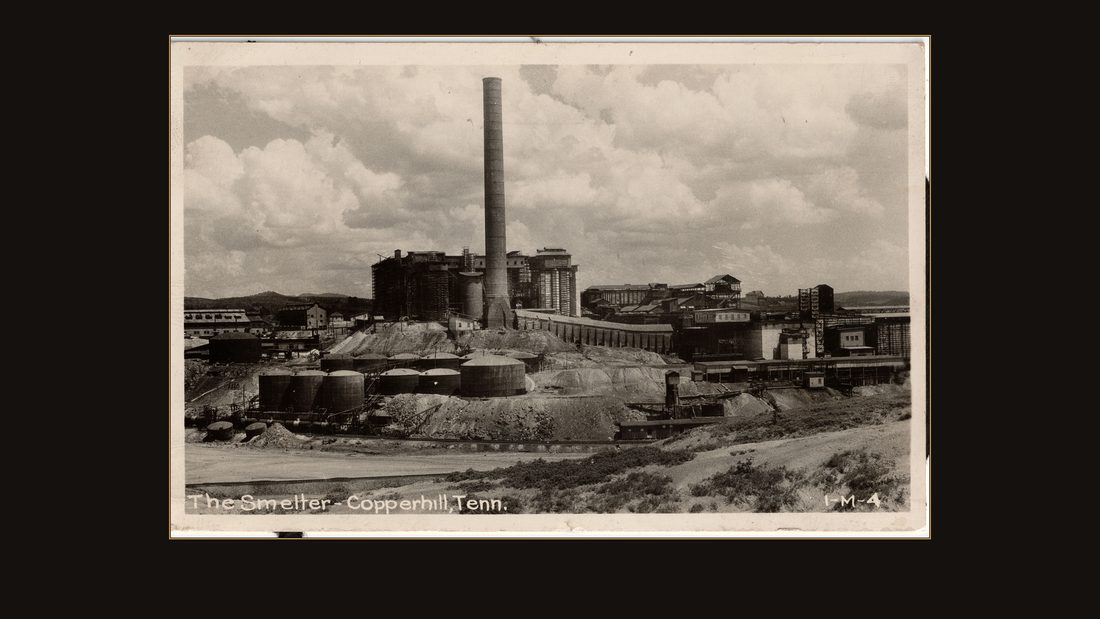
P12 The Smelter - Copperhill, Tenn. (real-photo postcard)
Real-photo postcard, c. 1935 · Copperhill, Tenn. · via Wikimedia Commons. View the original.

The companies did not close. This is the smelter at Copperhill on a real-photo postcard from about 1935 — the works had become the town's own picture of itself.
And this is the federal Bureau of Mines in 1929, describing settled engineering: two mines in the Ducktown district, the Burra Burra much the larger — the ore treated in the company's smelter, and acid plant, at Copperhill.
Acid plant. Holmes had weighed the commercial possibility, or impossibility, of reducing the fumes to sulphuric acid. It became the business: the companies caught their own smoke, and sold it.
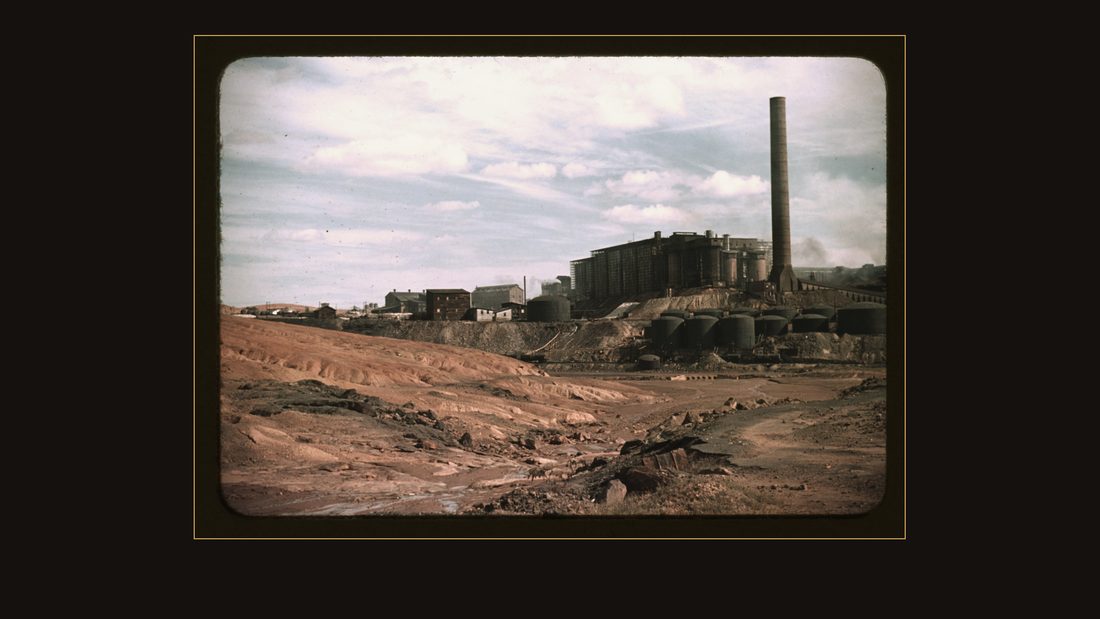
P01 Copper mining and sulfuric acid plant, Copperhill, Tenn.
Marion Post Wolcott · Copperhill, Sept. 1939 · LOC FSA/OWI Color · period colour. View the original.
By 1939, the caption a government file clerk typed for this negative put the answer in the name of the place itself. Copper mining and sulfuric acid plant, Copperhill, Tennessee.
The decree
But Georgia and the smaller company could not agree on how the furnaces should be run, and in April 1915 they were back before the Supreme Court.
The Court held that the furnaces are emitting fumes in excess of what is proper, and that a final decree would now be entered against the company.
It was entered on June 1, 1915. What follows reads less like a judgment than like the operating permit of a factory — written and enforced by the Supreme Court of the United States.
Clause one. The company shall keep daily records, showing fully and in detail the course and result of its operations.
Clause two. Doctor John T. McGill of Vanderbilt University is appointed Inspector, with free and full access to the company's books, records and premises, and careful observations at least once each fortnight.
His pay did not come from the government. The company was directed to deposit five thousand dollars with the Clerk of the Court, to cover the Inspector's costs and his compensation.
Clause three sets a number. The company shall not permit the escape into the air of fumes carrying more than forty-five percent of the sulphur in the green ore.
Clause four sets the number by season. No more than twenty tons of sulphur a day from April tenth to October first — the growing season across the line in Georgia — and no more than forty tons a day the rest of the year. And clause five keeps the case on the docket.
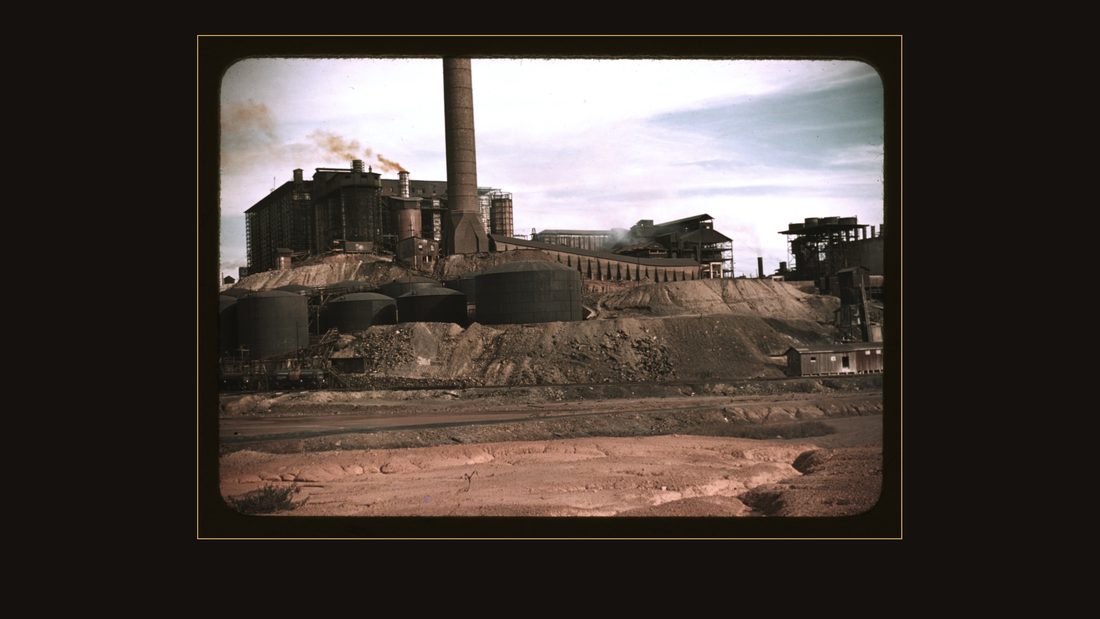
P02 Copper mining and sulfuric acid plant, Copperhill, Tenn.
Marion Post Wolcott · Copperhill, Sept. 1939 · LOC FSA/OWI Color · period colour. View the original.
There was no environmental agency in 1915. There was no clean air act. For this one valley, the Supreme Court improvised all of it: an inspector, a ledger, an emissions cap by season, and a case that never closed.
Kodachrome, 1939
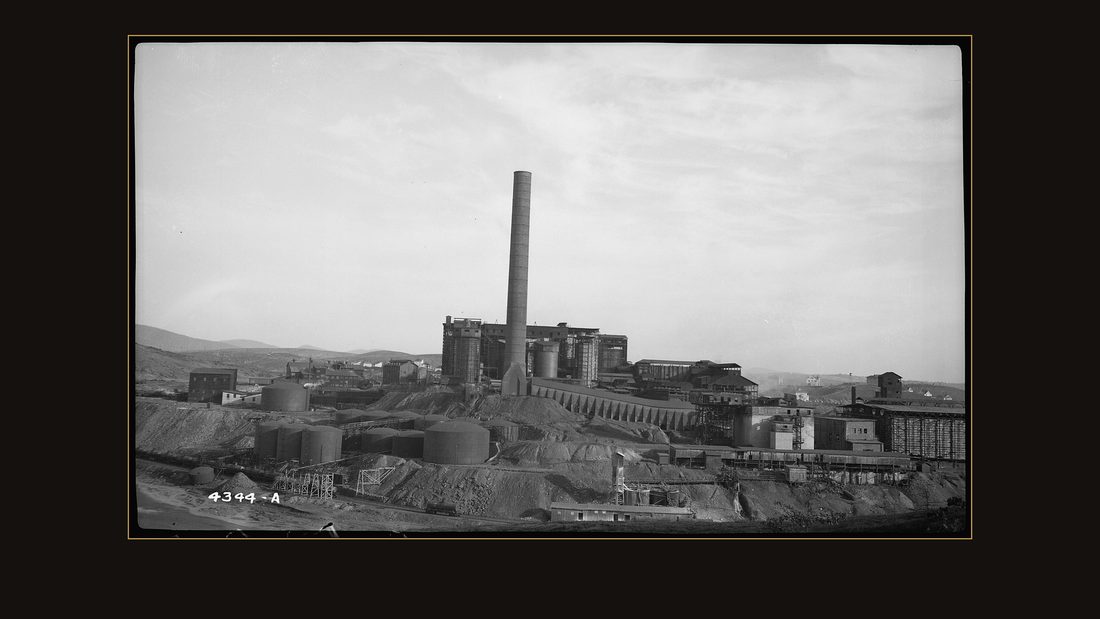
P13 Tennessee Copper Company
TVA photograph, 1938 · National Archives, RG 142. View the original.

A TVA photographer made this frame in 1938, while the Authority was at work on the rivers below the basin. The caption is three words long. Tennessee Copper Company.
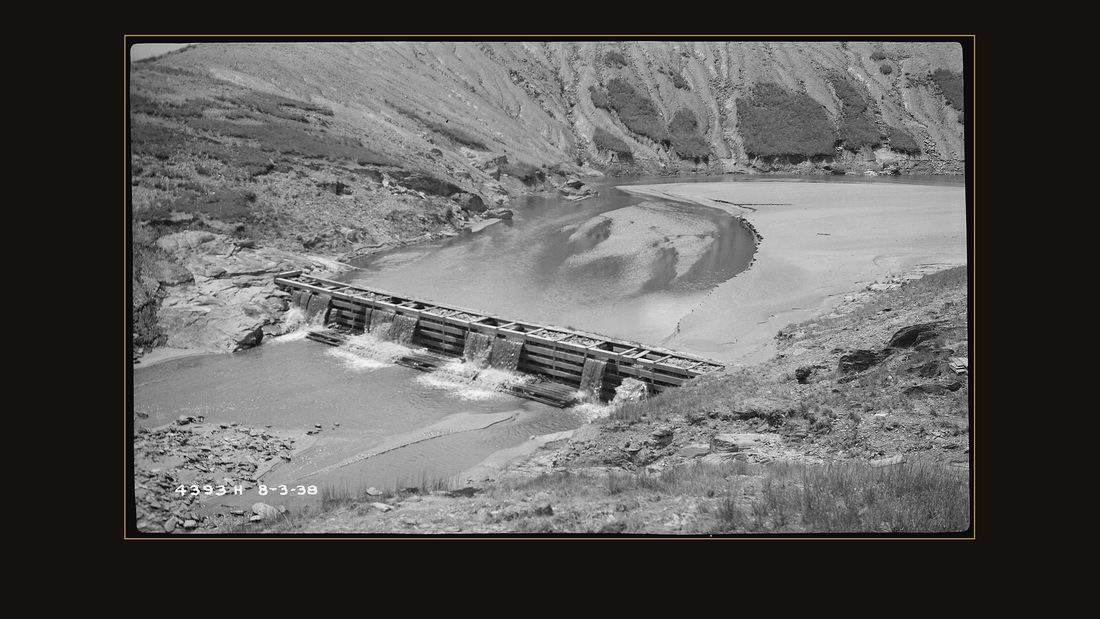
P14 Tennessee Copper Company Dam on Potato Creek
TVA photograph, 1938 · National Archives, RG 142. View the original.

And this one: the company's own dam on Potato Creek. The negative carries its own date mark, 1938.
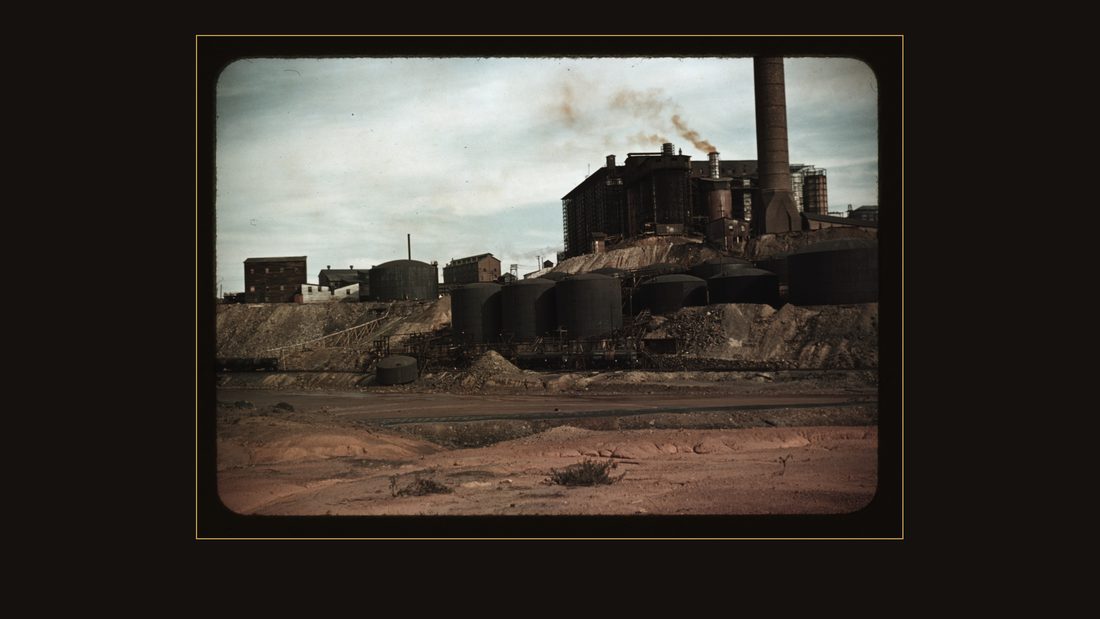
P04 Copper mining and sulfuric acid plant, Copperhill, Tenn.
Marion Post Wolcott · Copperhill, Sept. 1939 · LOC FSA/OWI Color · period colour. View the original.
In September 1939, a photographer named Marion Post Wolcott came through for the Farm Security Administration, carrying color film — Kodachrome, barely three years on the market.
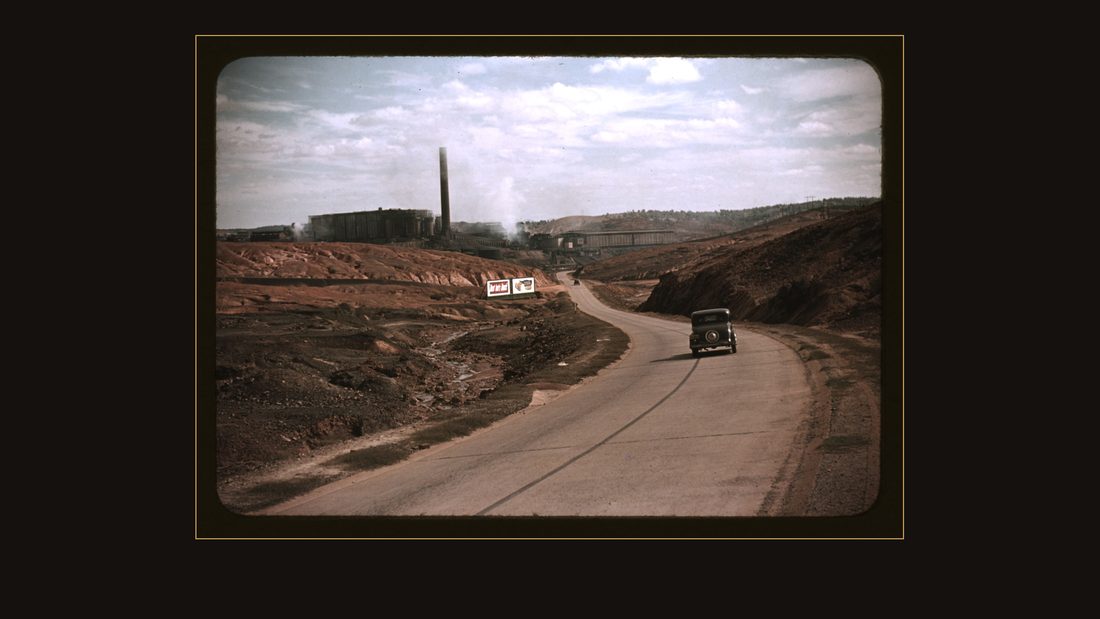
P05 Copper mining and sulfuric acid plant, Copperhill, Tenn.
Marion Post Wolcott · Copperhill, Sept. 1939 · LOC FSA/OWI Color · period colour. View the original.
A paved highway crosses the basin, and a single car is on it. On the horizon, the plant. In between, not one tree.
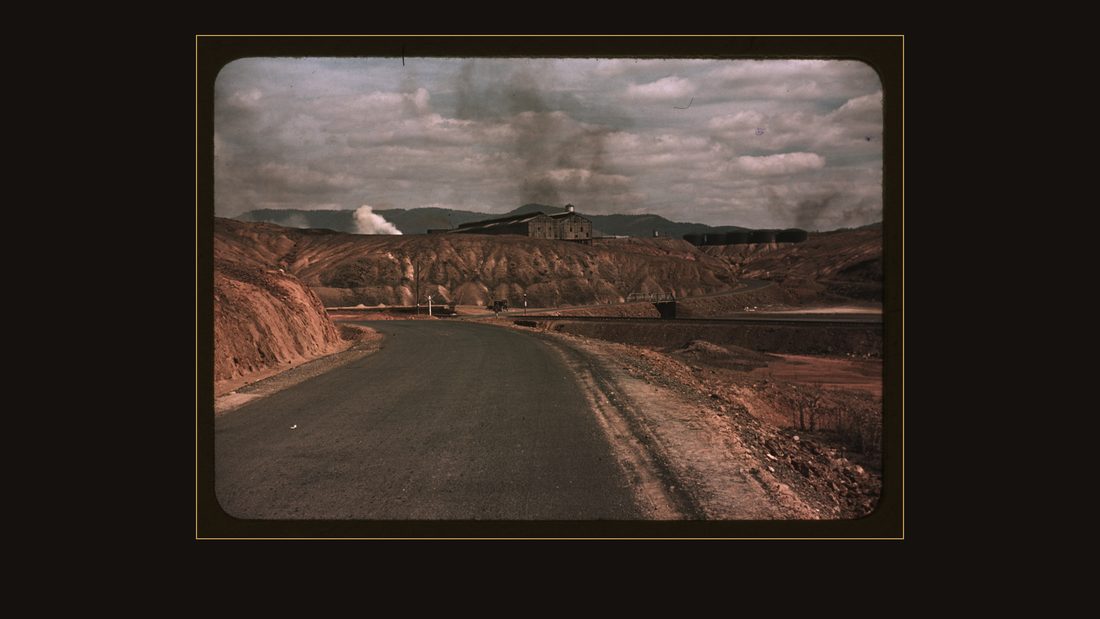
P06 A train bringing copper ore out of the mine, Ducktown, Tenn. Fumes from smelting copper for sulfuric acid have destroyed all vegetation
Marion Post Wolcott · Ducktown, Sept. 1939 · LOC FSA/OWI Color · period colour. View the original.
From the road, the smoke still shows against the sky, rising off the works and drifting with the weather.
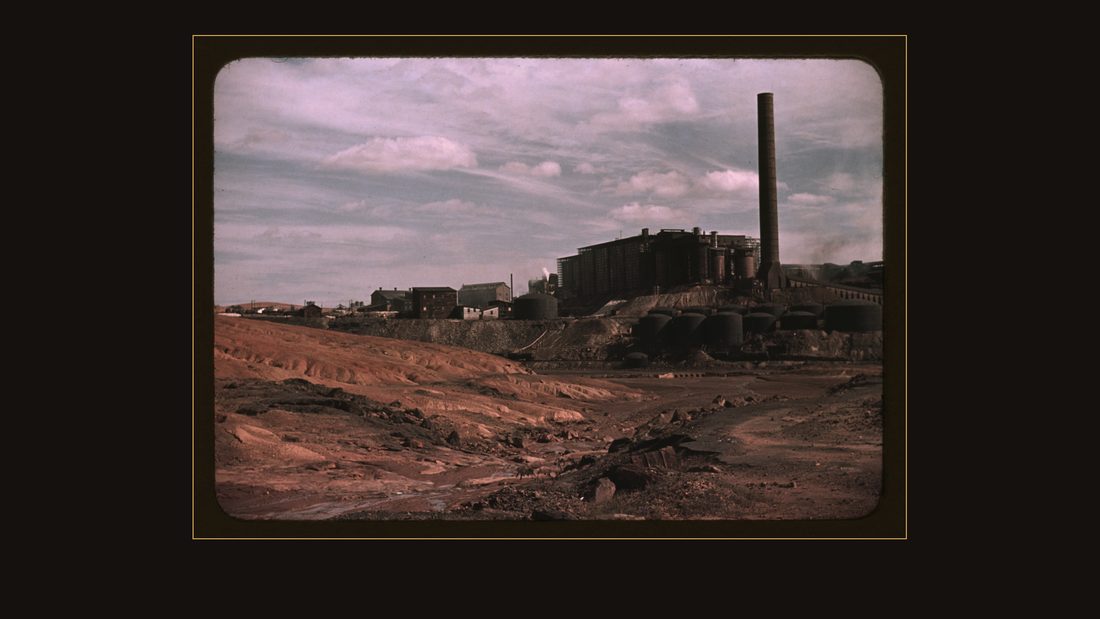
P07 Copper mining and sulfuric acid plant, Copperhill, Tenn.
Marion Post Wolcott · Copperhill, Sept. 1939 · LOC FSA/OWI Color · period colour. View the original.
The works sit on bare ground, ringed by rows of their own storage tanks, in the middle of the country they had unmade.
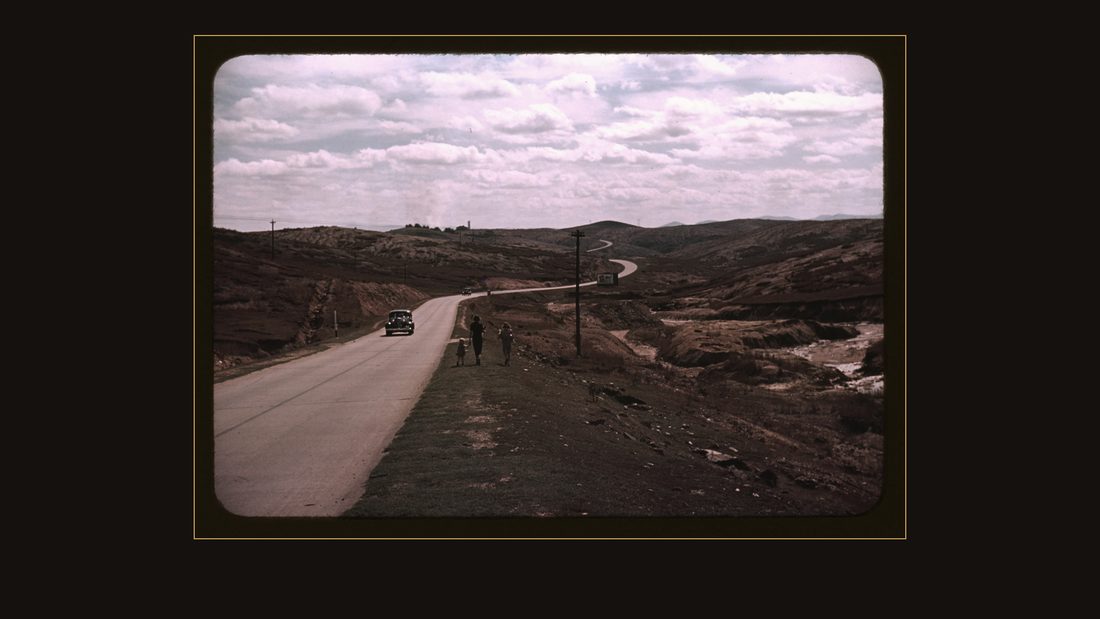
P10 Copper mining section between Ducktown and Copperhill, Tennessee. Fumes from smelting copper for sulfuric acid have destroyed all vegetation
Marion Post Wolcott · between Ducktown and Copperhill, Sept. 1939 · LOC FSA/OWI Color · period colour. View the original.
People lived in this. They walked the highway shoulder between the towns, through country with no shade in it.
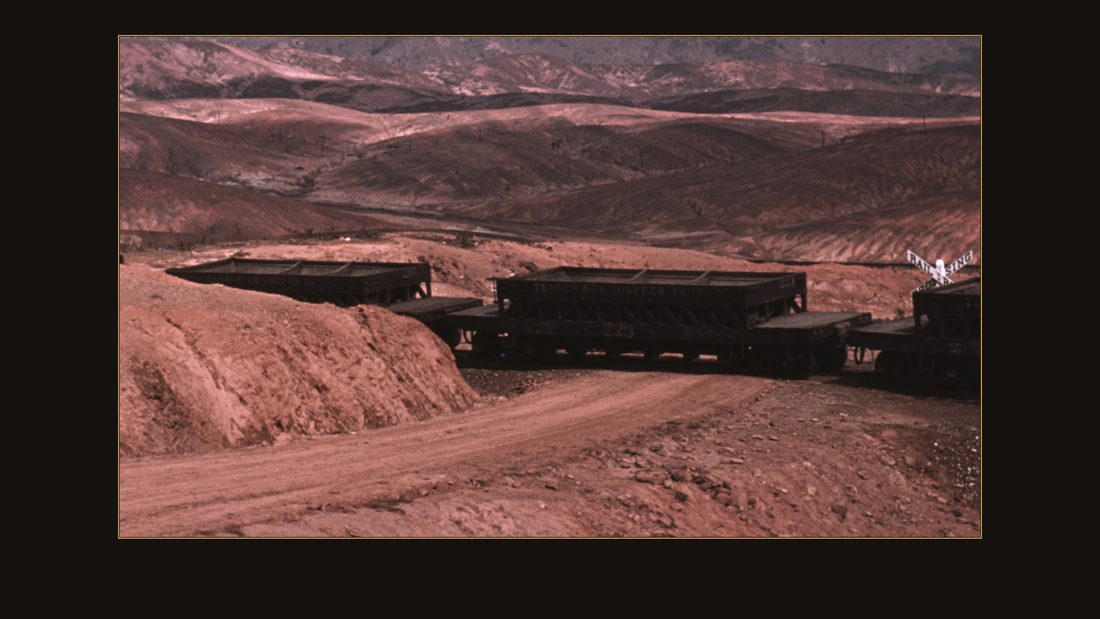
D02
Marion Post Wolcott · Ducktown-Copperhill district, Sept. 1939 · LOC FSA/OWI Color · period colour. View the original.
The ore train still ran, out of the mine and down to the acid plant, through hills the color of a brick.
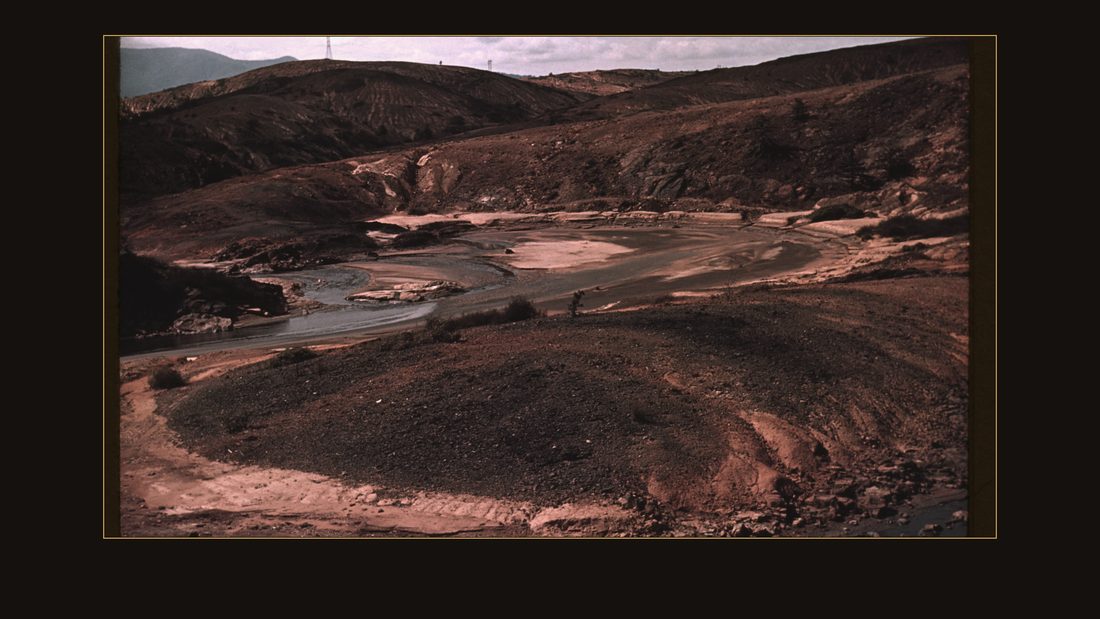
P11 Copper mining section between Ducktown and Copperhill, Tennessee. Fumes from smelting copper for sulfuric acid have destroyed all vegetation
Marion Post Wolcott · between Ducktown and Copperhill, Sept. 1939 · LOC FSA/OWI Color · period colour. View the original.
The courts had capped the smoke a generation earlier. But the soil was already gone, and the rain had cut the bare clay into gullies. Where the water gathered, it sat in still pools on a floor of bare earth.
What the smoke left
In 1904, a court asked what a few small farms were worth against all of this — and answered: less than a thousand dollars, against nearly two million.
In 1907, a different court answered differently: that there are things a sovereign does not have to sell at any price — the forests on its mountains, and the air its people breathe.
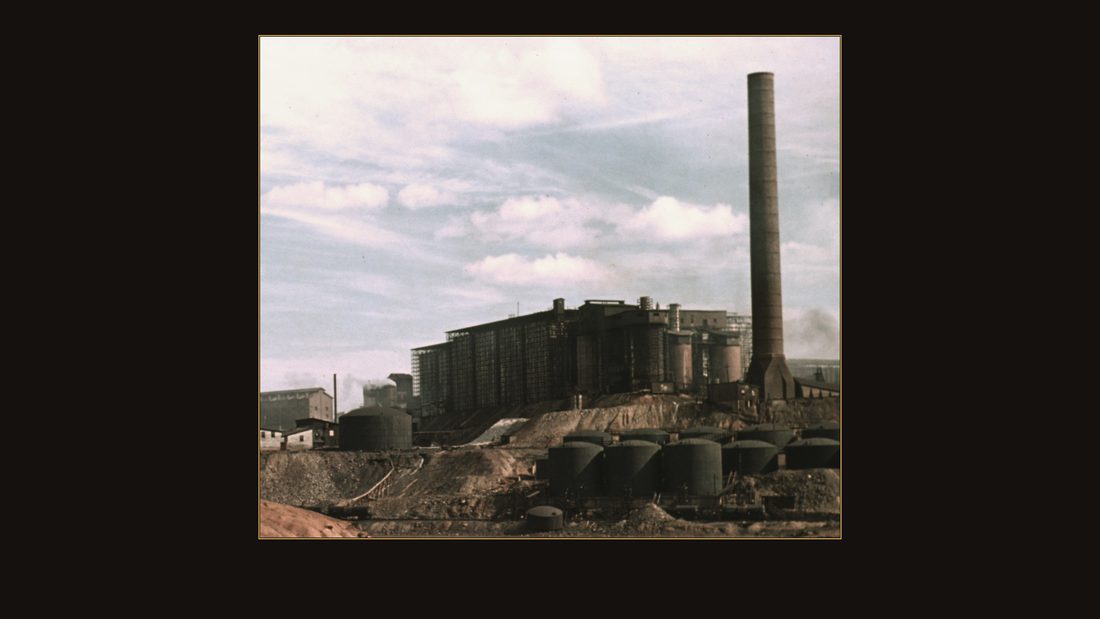
D03
Marion Post Wolcott · Ducktown-Copperhill district, Sept. 1939 · LOC FSA/OWI Color · period colour. View the original.
Thirty-two years after that sentence, this is what the ground still looked like. The law had capped the smoke. Nothing in the law could give the hills back their soil.
P09 Copper mining section between Ducktown and Copperhill, Tennessee. Fumes from smelting copper for sulfuric acid have destroyed all vegetation
Marion Post Wolcott · between Ducktown and Copperhill, Sept. 1939 · LOC FSA/OWI Color · period colour. View the original.
Sources
- Madison v. Ducktown Sulphur, Copper & Iron Co., 113 Tenn. 331 (September term, 1904) — read from the scanned Tennessee Reports volume 113, Caselaw Access Project, static.case.law/tenn/113.pdf (case begins at printed p. 331). The findings quoted (lawful operation, open-air roast heap "the only method known to the business or to science," $200,000 spent in experiments without result, two hundred people before the companies and about 12,000 after, the first bill of July 1, 1901 and the perpetual injunction awarded by the court of chancery appeals), the court's question ("shall we go further..."), the $1,000-against-$2,000,000 sentence, and the disposition ("the only proper decree is to allow the complainants a reference for the ascertainment of damages, and that the injunction must be denied") are all read off the page images, printed pp. 340-367.
- Georgia v. Tennessee Copper Co., 206 U.S. 230 (argued Feb. 25-26, 1907; decided May 13, 1907) — Library of Congress scan of U.S. Reports vol. 206, tile.loc.gov (usrep206230). Quotations: the syllabus principle; "capacity of quasi-sovereign"; "interest independent of and behind the titles of its citizens, in all the earth and air within its domain"; "the last word as to whether its mountains shall be stripped of their forests and its inhabitants shall breathe pure air"; "fair and reasonable demand on the part of a sovereign... sulphurous acid gas"; "the pollution of the air and the magnitude of that pollution are not open to dispute"; the 1904 Georgia bill dismissed on the companies' promise to abandon open-heap roasting; "the tall chimneys in present use cause the poisonous gases to be carried to greater distances than ever before"; "Injunction to issue."
- Georgia v. Tennessee Copper Co., 237 U.S. 474 (decided May 10, 1915) and the final decree, 237 U.S. 678 (ordered entered June 1, 1915) — same LOC usrep scans. The decree's terms as narrated: daily records; Dr. John T. McGill of Vanderbilt University appointed Inspector with fortnightly observations; the company's $5,000 deposit with the Clerk; not more than 45% of the sulphur in the green ore to escape; not more than twenty tons of sulphur a day April 10-October 1 and forty tons a day otherwise; the cause retained on the docket.
- Mining Methods of the Tennessee Copper Co., Ducktown, Tennessee — C. H. McNaughton, U.S. Bureau of Mines, Information Circular 6149 (June 1929), archive.org. Two mines in the district in 1928; the Burra Burra the larger; ore treated in "the company's smelter and acid plant at Copperhill, 4.5 miles from Ducktown"; works begun 1899, first mining 1901; 1903 production 10,000,000 pounds at 8.2 cents a pound.
- Photographs: Marion Post Wolcott, September 1939, FSA/OWI color transparencies (LC-USF35 group, ids 1a34316-1a34328), Library of Congress Prints & Photographs — public domain, and period color: nothing in this episode is colorized. Captions quoted are the agency captions on the slides. High-resolution copies via Wikimedia Commons (LCCN 2017877448 group).
- Real-photo postcard, "The Smelter - Copperhill, Tenn.," c. 1935, public domain (published without notice), via Wikimedia Commons.
- Tennessee Valley Authority photographs, 1938: "Tennessee Copper Company" (NARA naId 280417) and "Photograph of Tennessee Copper Company Dam on Potato Creek" (NARA naId 280428), Record Group 142 (TVA Kodak Negative File), via Wikimedia Commons — U.S. federal works, public domain.
- Copyright notes: both court reports and all federal documents and photographs are public domain. The postcard is pre-1978 and published without notice. No newspapers were used; no renewal check was required for any exhibit.