A Memo Said Inspect This Dike Daily. That Was 1985. It Broke in 2008.
The film of this episode premieres August 27, 2026 on YouTube. The documents, the transcript and the sources are below now.
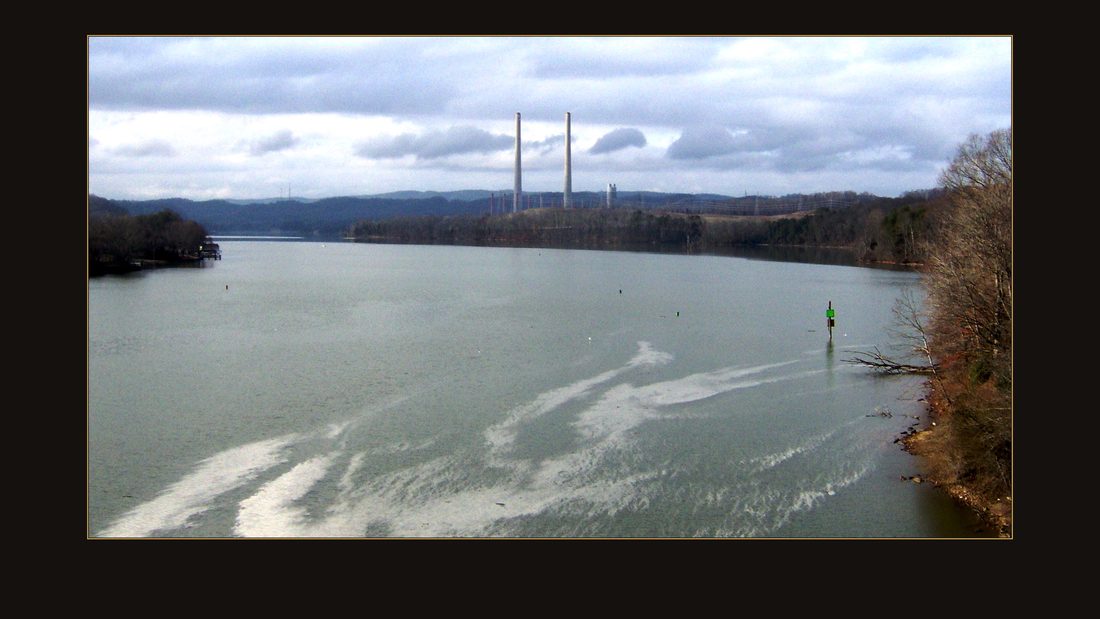
Between midnight and 1:00 a.m. on December 22, 2008, a dike failed at TVA's Kingston Fossil Plant in Roane County, Tennessee. 5.4 million cubic yards of coal ash sludge went across 300 acres. Three homes were destroyed and 23 damaged. Nobody was killed.
Transcript
The gray field
P01
Brian Stansberry, Dec. 27, 2008 · CC BY 3.0. View the original.

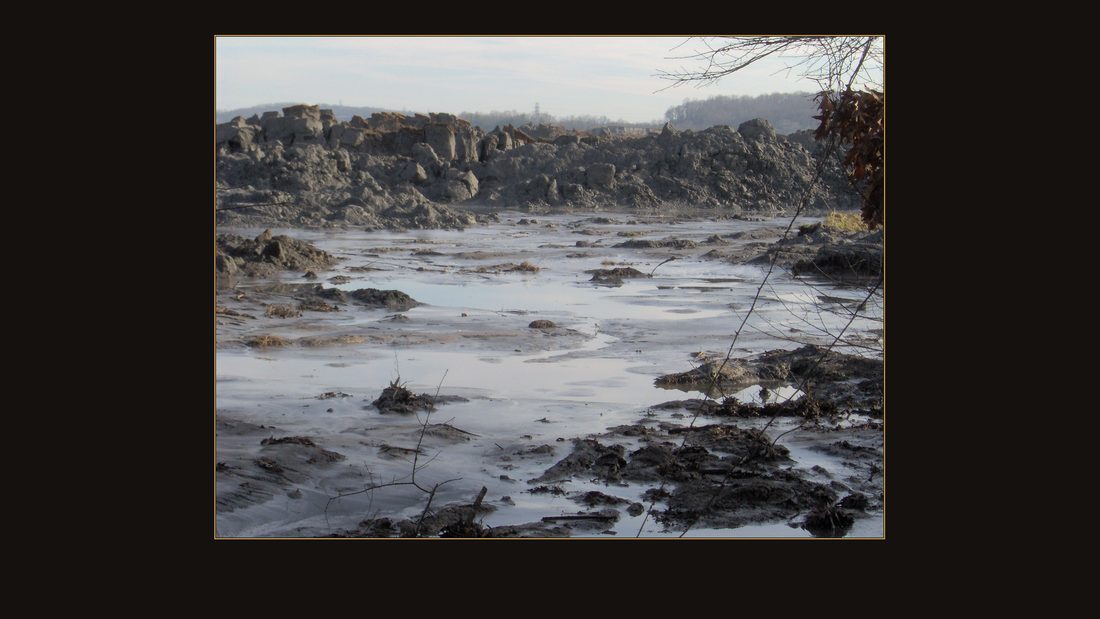
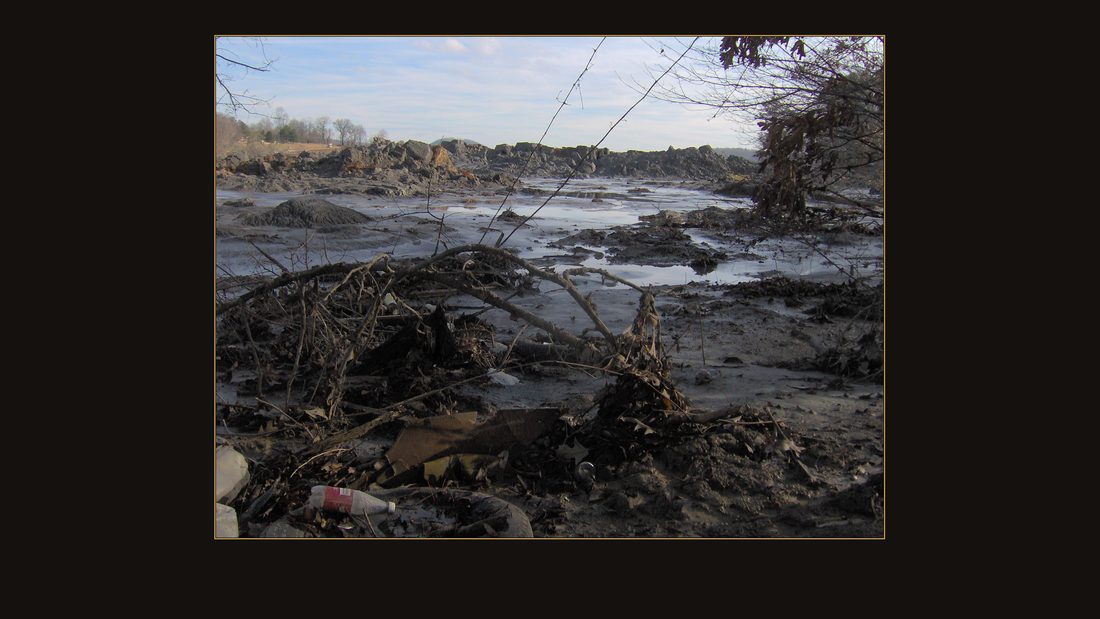
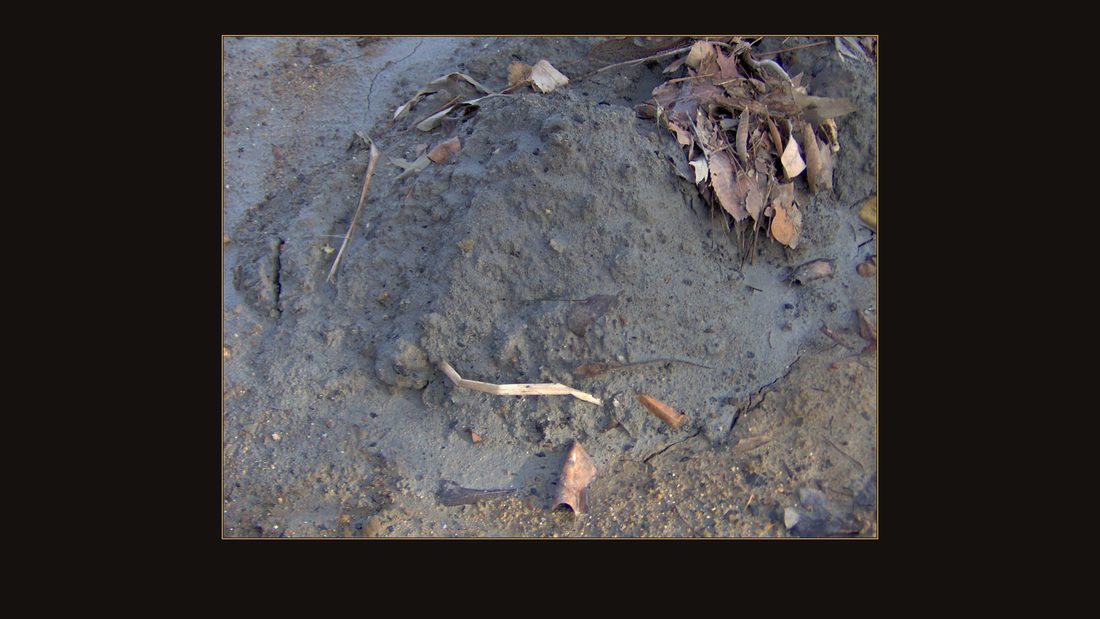
Roane County, Tennessee, the twenty-seventh of December, two thousand eight. Under the gray is a field, a road, and part of a river.
P03
Brian Stansberry, Dec. 27, 2008 · CC BY 3.0. View the original.

Five days earlier a dike had given way at the Kingston Fossil Plant. TVA's own Inspector General described the timing in six words.
Just hours after the last daily inspection.
Somebody had been walking that dike every day. The reason was written down in nineteen eighty-five, and by two thousand eight almost nobody at TVA seems to have known what it was.
What broke
This is about that memo, and about who was permitted to look at it afterward.
Between midnight and one in the morning on the twenty-second of December, an ash pond dike broke.
P06
Brian Stansberry, Dec. 27, 2008 · CC BY 3.0. View the original.

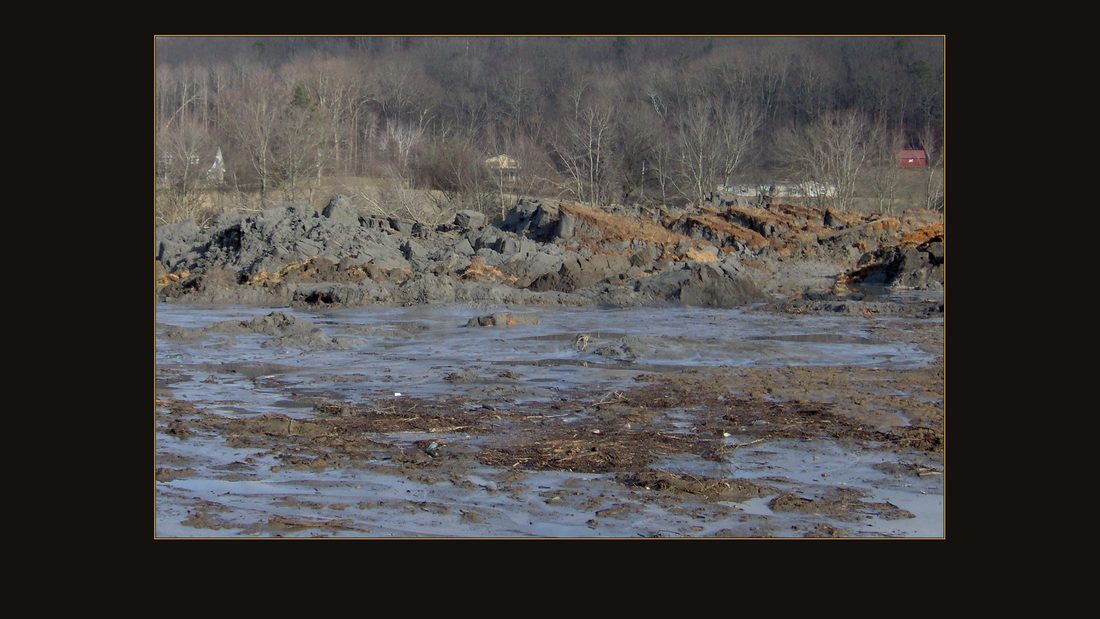
Five point four million cubic yards of coal ash sludge went across three hundred acres of Watts Bar Reservoir. Swan Pond Creek embayment. The lower Emory River. The shoreline.
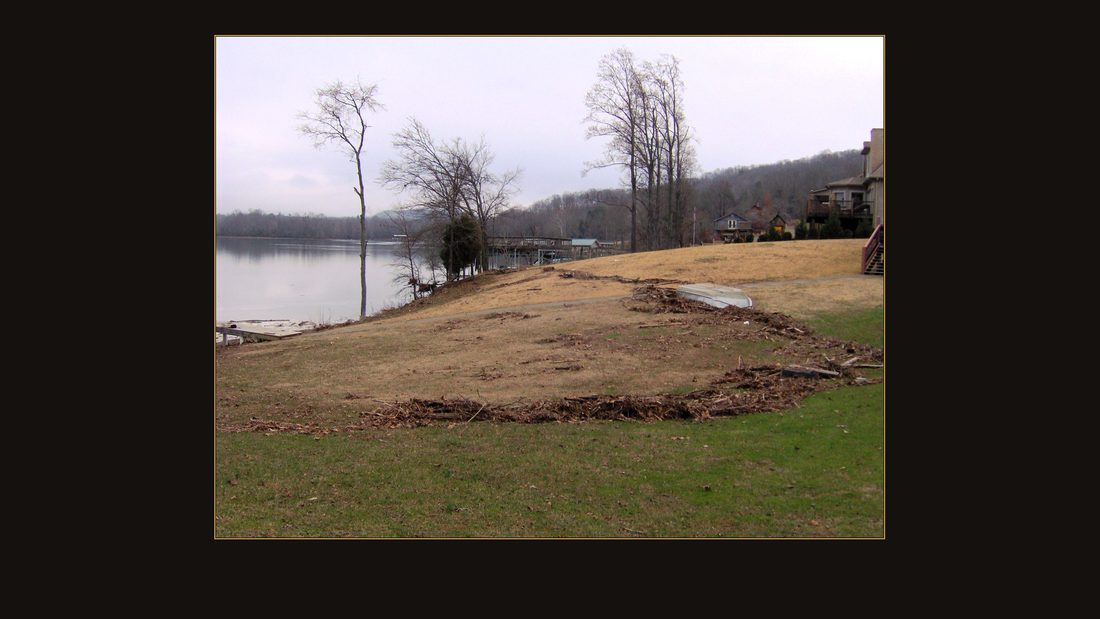
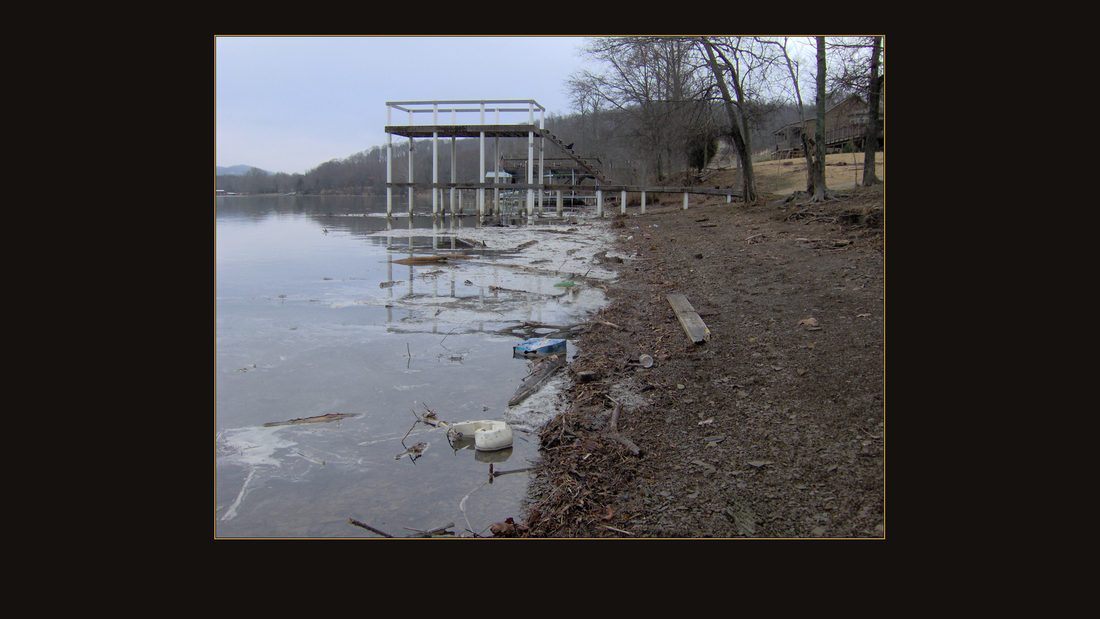
Eight of those acres were private property. Three homes destroyed, twenty-three damaged, plus the roads, the rail line and the utilities.
P02
Brian Stansberry, Dec. 27, 2008 · CC BY 3.0. View the original.

Nobody was killed and nobody was hurt. Worth saying plainly, because very little else here is good news.
At twelve-forty in the morning a man trapped in his house by the sludge called nine-one-one. The shift supervisor drove out and found the dike on cell number two collapsed.
TVA put the cost at between six hundred seventy-five million and nine hundred seventy-five million dollars — not counting litigation, claims, remediation, monitoring or fines.
Dike C
P07
Brian Stansberry, Dec. 27, 2008 · CC BY 3.0. View the original.

So how does a fifty-year-old dike fail without warning?
It doesn't. On the third of April, nineteen eighty-five, TVA's Director of Engineering Projects wrote to TVA's Director of Fossil and Hydro Power. Subject: Kingston Steam Plant, Dike C, soils investigation and engineering study results.
Dike C had not been built to the design drawings. The factor of safety it was actually built to — how much stronger a structure is than the load it carries — was less than desirable. The memo recommended that plant personnel inspect Dike C daily.
The calculated factor of safety was less than the minimum acceptable value of one point five. And close monitoring was recommended — in lieu of changing TVA policies and procedures that would require the ash pond to be designed to the higher dam safety standard.
P05
Brian Stansberry, Dec. 27, 2008 · CC BY 3.0. View the original.

The daily inspection was not a precaution on top of a fix. It was instead of the fix.
And they kept stacking ash on it. The original perimeter dike crested near seven hundred forty-eight feet. The cell that failed crested near eight hundred twenty.
Seventy feet above the structure the nineteen eighty-five memo was worried about.
Two consultants
In two thousand four TVA wanted to go higher still, and hired Worley Parsons to run a slope stability analysis for the expansion.
Parsons found a layer of loose ash, seven to ten feet thick, lying straight on the clay beneath the pond, and reported it might liquefy.
It called that extremely low probability. Then it noted that the methods for predicting liquefaction have proven to be insufficient, and recommended TVA improve the pond's drainage.
The Inspector General asked whether the drainage was ever installed.
We learned that it had not.
TVA had doubts about the Parsons study and hired Geosyntec to peer-review it. Geosyntec reported that November.
Nobody had estimated whether that ash layer would liquefy — so nobody could say whether the drains were needed, or whether they would have worked.
The potential for liquefaction should be estimated. If the site is expected to liquefy, then ground improvement techniques need to be implemented.
Those recommendations were not followed either. The chief executive told the Inspector General he had noticed how significant the study was, and had asked internally why nothing was done.
According to the CEO, he was unable to ascertain why.
What the state was given
One more piece, and it involves the state. In June of two thousand four TVA applied to Tennessee's environment department to raise the pond.
Approved September, two thousand six. TVA gave the state the Parsons study.
The state was unable to find documentation that the Geosyntec study — the peer review, the one that said estimate the liquefaction — was ever provided to it.
The permit required TVA to hand over anything it later realized it had left out.
Where the permittee becomes aware that it failed to submit any relevant facts in a permit application, it shall promptly submit such facts or information.
The engineer who read all of this for the Inspector General reached a conclusion the report set in italics and underlined.
Had corrective measures been taken in a timely fashion, it is possible that TVA could have potentially prevented the occurrence of the failure.
One of the best
On the eighth of January, two thousand nine, TVA's chief executive testified before a Senate committee. The senators wanted to know what caused the spill and which decisions inside TVA contributed to it.
A root cause analysis would answer that. The chief executive handed the job of arranging it to TVA's Office of General Counsel — the lawyers — and told them the firm should be one of the best.
The lawyers chose AECOM. The lawyers also wrote the scope.
The Office of General Counsel, by contract and verbal instruction, severely limited the scope of the work of AECOM.
Four things
Four things the investigator was told not to look at.
One: the standard of practice used to design and build the ash ponds. Two: where the ash and its contaminants went. Three: how to clean the site up. Four: the design and operation of every other wet ash pond TVA owned.
Hindsight
P03
Brian Stansberry, Dec. 27, 2008 · CC BY 3.0. View the original.
On the twenty-fifth of June, two thousand nine, TVA held a press conference. The cause was a thin buried layer of soft silt and what the engineers called slimes.
A reporter asked whether anything in the old stability analyses should have raised a red flag at the time.
We had to look at the facts that were in front of us. And those signs simply were not identified in those, and it took us two-and-a-half months to find that. So I guess it's lessons learned to move forward.
Hindsight is twenty-twenty. Let's take the lessons learned and move forward.
P05
Brian Stansberry, Dec. 27, 2008 · CC BY 3.0. View the original.
To be fair to the engineer at that podium — and the report is careful to be — it found no evidence anyone tried to influence his work, and calls him a consummate professional. The criticism is not of the man. It is of the boundary drawn around him.
Circle the wagons
That boundary had a shape, and the shape was useful. If the cause was a freak layer unique to Kingston, TVA could not reasonably have found it, need not change anything, and no other ash pond in the country was implicated.
The report lays out the choice the agency faced. One option was to examine the failed structure and its own management, and publish whatever turned up.
The second choice was to circle the wagons, carefully craft press releases to project TVA in the most favorable light, and to tightly control any reports done by TVA of the failure to minimize legal liability.
The finding
Then he says which one they took.
TVA management handled the root cause analysis in a manner that avoided transparency and accountability in favor of preserving a litigation strategy.
A federal Inspector General, writing about his own agency, in a report addressed to his own chief executive.
Garbage at a landfill
He also explains how a utility ends up with a fifty-year-old dam inspected by people who do not think of it as a dam.
Ash was relegated to the status of garbage at a landfill rather than treating it as a potential hazard to the public and the environment.
Six lessons
Then the report does something unusual. It writes out the sentences TVA should have said and hadn't.
Building the original ash pond over a lake bed was a faulty design. Corrective actions recommended by employees and consultants should have been implemented. Stacking ash to the heights contemplated at Kingston was a bad idea.
And the sixth. Wet ash ponds should comply with dam safety standards rather than with landfill standards.
P01
Brian Stansberry, Dec. 27, 2008 · CC BY 3.0. View the original.
The report went to the TVA board on the fourteenth of July, two thousand nine. A week later, at a specially called meeting, management publicly acknowledged many of the failures it identified. The Inspector General wrote a footnote applauding them for it.
Ten a.m., July twenty-eighth
The cover memo carries one more instruction.
This report will not be released to the public before ten a.m., July twenty-eighth, two thousand nine. Therefore, please do not distribute this report without prior approval of the Inspector General.
P02
Brian Stansberry, Dec. 27, 2008 · CC BY 3.0. View the original.
Five days in which the findings existed and the public did not have them.
One point five zero
In April of two thousand fifteen the Environmental Protection Agency published the first federal rule governing coal ash disposal — nearly two hundred pages of the Federal Register.
Kingston is in the text. The rule says the failure there was at least partly attributable to slip-plane failure of saturated coal ash in the subgrade, and makes unstable, man-made ground a prohibited location for a new unit.
The agency worked out what an ash embankment has to withstand, and found that a post-liquefaction residual strength factor of safety in the embankment of one point zero zero is not sufficient.
So it put numbers in the Code of Federal Regulations. The calculated static factor of safety under the long-term, maximum storage pool loading condition must equal or exceed one point five zero.
One point five zero. The same threshold a TVA engineer measured Dike C against, and came up short on, thirty years before.
The men who moved it
That leaves the men who moved it. The ash did not clean itself up.
In February of two thousand nine TVA hired Jacobs Engineering to manage the cleanup. The work was done by subcontractors, and the men in the ash worked for them, not for Jacobs.
From August of two thousand thirteen they sued — several hundred of them, across ten consolidated cases. They said they had been exposed to what was in the ash, arsenic and mercury and lead and silica and radioactive material, and had not been allowed to protect themselves from it.
Jacobs argued, more than once, that it could not be sued at all — that a contractor doing a federal agency's work stands inside that agency's immunity. TVA is wholly owned by the United States government, and that was the door.
P05
Brian Stansberry, Dec. 27, 2008 · CC BY 3.0. View the original.
The trial was split. Phase one asked only whether Jacobs owed these men a duty, whether it broke that duty, and whether the breach was capable of causing what they were sick with. It was set for October of two thousand eighteen and ran four weeks.
The jury said yes to all three. Jacobs had violated its contract with TVA. It had failed to exercise reasonable care. And the breach was capable of causing each of ten medical conditions.
P04
Brian Stansberry, Dec. 27, 2008 · CC BY 3.0. View the original.

Phase two — whether the ash actually made any particular man sick, and what he was owed — never happened.
In two thousand twenty-two the Sixth Circuit affirmed that Jacobs had no derivative immunity and sent the case back. More than thirteen years after the dike broke, the plaintiffs had established that they were allowed to sue.
Not material
They settled the next year. The terms are confidential, so there is no public number, and because phase two never ran, no court ever found that the ash caused any individual man's disease.
But a public company has to tell its shareholders about its litigation. So the settlement does appear once, in Jacobs's annual report to the Securities and Exchange Commission.
The amount of the settlement was not material to the Company's business, financial condition, results of operations or cash flows.
That is the last sentence anyone wrote about it.
The unattached exhibits
What is still buried is paperwork. The Parsons study, the Geosyntec peer review and the nineteen eighty-five memo are described in the Inspector General's report. None of the three is attached to it. We know what they said because a watchdog read them — and then the agency spent six months explaining there had been nothing to see.
P01
Brian Stansberry, Dec. 27, 2008 · CC BY 3.0. View the original.
If you worked at Kingston, or hauled for the cleanup, or watched Swan Pond Road from your porch that winter, the comments are open and this channel reads them.
Sources
- Review of the Kingston Fossil Plant Ash Spill Root Cause Study and Observations About Ash Management, TVA Office of the Inspector General, Inspection 2008-12283-02, July 23, 2009 (110 pp.) — https://www.tvaoig.gov/sites/default/files/reports/2026-07/2008-12283-02.pdf
- Kingston Fossil Plant Ash Slide Interim Report, TVA Office of the Inspector General, Inspection 2008-12283-01, June 12, 2009 — https://www.tvaoig.gov/sites/default/files/reports/2026-07/2008-1228301.pdf
- Hazardous and Solid Waste Management System; Disposal of Coal Combustion Residuals From Electric Utilities, EPA final rule, 80 Fed. Reg. 21302 (April 17, 2015) — https://www.govinfo.gov/content/pkg/FR-2015-04-17/pdf/2015-00257.pdf
- Adkisson v. Jacobs Engineering Group, Inc., 36 F.4th 686 (6th Cir. 2022) (amended opinion, No. 21-5801) — http://www.opn.ca6.uscourts.gov/opinions.pdf/22a0123p-06.pdf
- Jacobs Solutions Inc., Form 10-K for fiscal year 2023, filed November 21, 2023, note 18 (Contractual Guarantees, Litigation…), the Kingston paragraph — SEC EDGAR, accession 0000052988-23-000084.
- https://commons.wikimedia.org/wiki/File:Kingston-plant-spill-swanpond-tn2.jpg
- https://commons.wikimedia.org/wiki/File:Kingston-plant-spill-yard-tn1.jpg
- https://commons.wikimedia.org/wiki/File:Kingston-plant-spill-swanpond-tn3.jpg
- https://commons.wikimedia.org/wiki/File:Kingston-plant-spill-tn1.jpg
- https://commons.wikimedia.org/wiki/File:Kingston-plant-spill-ash-tn1.jpg
- https://commons.wikimedia.org/wiki/File:Kingston-plant-spill-swanpond-tn1.jpg
- https://commons.wikimedia.org/wiki/File:Kingston-fossil-plant-tn2.jpg