Who Could Afford the Houses Built for Destitute Miners?
The film of this episode premieres August 23, 2026 on YouTube. The documents, the transcript and the sources are below now.
Between 1933 and 1937 the federal government built three towns in West Virginia for coal families who had been left with nothing: Arthurdale in Preston County, Tygart Valley in Randolph County, and Red House Farms on the Kanawha, which is now the town of Eleanor.
Transcript
The shelf
![[Untitled photo, possibly related to: Vacuum cleaner factory, Arthurdale, West Virginia]](img/R038.jpg)
R038 [Untitled photo, possibly related to: Vacuum cleaner factory, Arthurdale, West Virginia]
Shahn, 1937 · FSA/OWI, LOC · AI-colorized. View the original.
New vacuum cleaners, on a shelf, in the mountains of West Virginia, in nineteen thirty-seven. Ben Shahn photographed them for the federal government, which had paid for the building they are standing in.
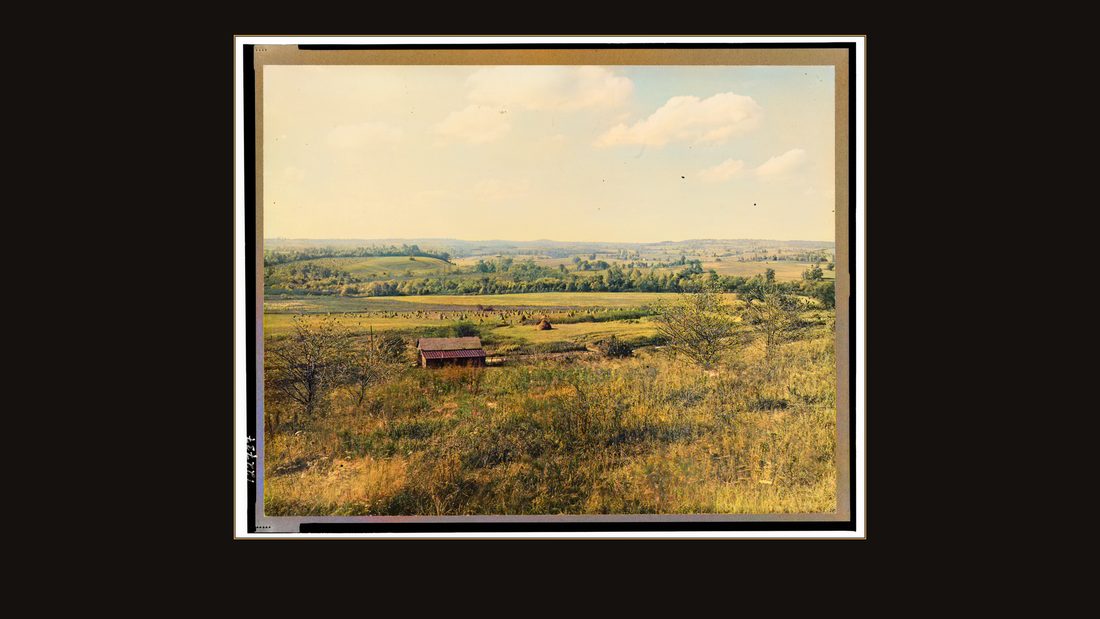
R000 View of Arthurdale property. Reedsville, West Virginia
Johnson, between 1933 and 1935 · FSA/OWI, LOC · AI-colorized. View the original.
Four years earlier, this was the site. A field in Preston County, where nearly half the families around it were on relief.
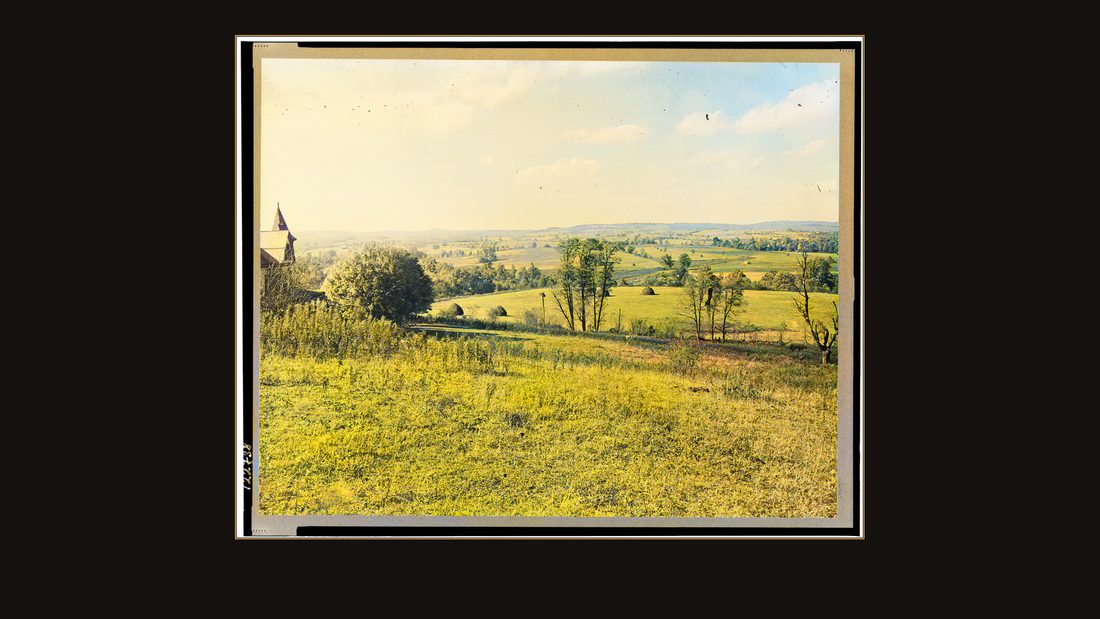
R001 View of Arthurdale property. Reedsville, West Virginia
Johnson, between 1933 and 1935 · FSA/OWI, LOC · AI-colorized. View the original.
The photographs are real. The color is not. Every frame is a black and white federal negative that a machine has estimated colors for, and machines guess. The originals are free at the Library of Congress.
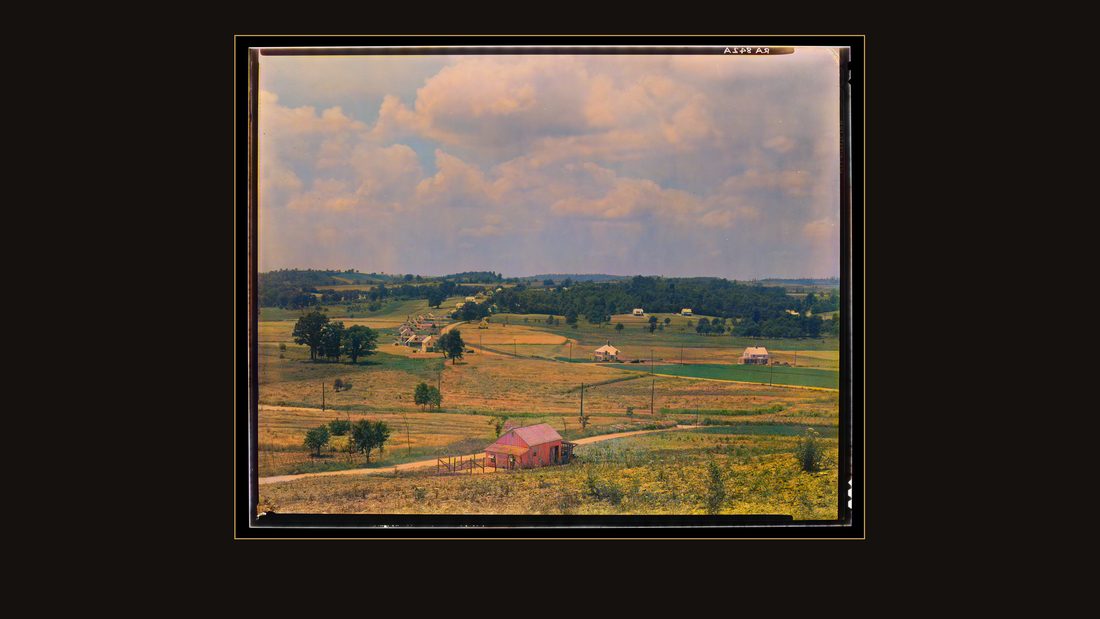
R015 View of Arthurdale project. Reedsville, West Virginia
Evans, 1935 June · FSA/OWI, LOC · AI-colorized. View the original.
If your people were in these towns and the machine got a color wrong, the comments are open.
One section undoing another
Nineteen twenty-three was the best year coal ever had. Seven hundred and five thousand men were at work in the bituminous fields. By nineteen thirty-four, four hundred and fifty-eight thousand.
In Preston County, by April nineteen thirty-three, nearly half the families were on some kind of relief.
Then the government made it worse. The National Industrial Recovery Act set codes for coal, and some of those codes closed still more mines.
The Bureau of Agricultural Economics wrote down what happened next. The suggestion was made in some quarters that one section of the Recovery Act should be used to undo the incidental damage wrought by another.
Four towns were authorized for stranded miners. Cumberland. Westmoreland. Tygart Valley. Arthurdale.
Stranded is the government's word, not mine. It is in every document here.
The plan had three parts. Community industries. The sale of what families grew. And private factories, persuaded to move out to the country.
The old Arthur place
The first step was eleven hundred and twenty-eight acres near Reedsville.
The tract had belonged to Colonel George Fairfax, an aide to George Washington. Locally it was the old Arthur place, after a later owner. The government kept the name and added a syllable.
Red House Farms
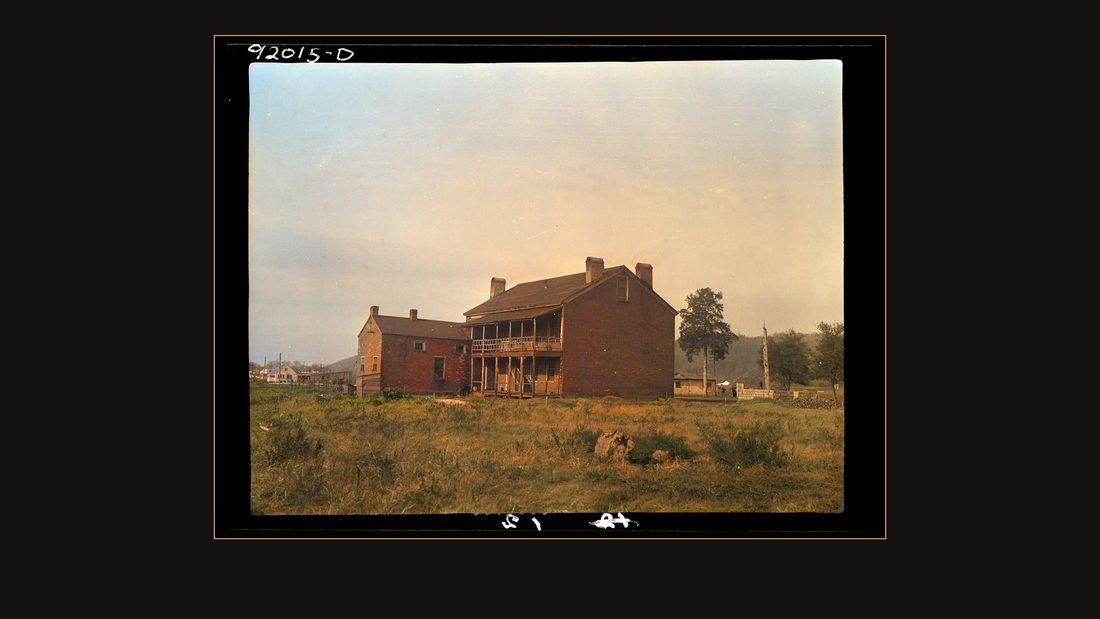
R005 Eleanor, West Virginia. Rear view of administration building at Red House after which Red House Farms was named. The "Red House" was built of brick prior to 1825 by Joseph Ruffuer
FSA, 1935 Apr.? · FSA/OWI, LOC · AI-colorized. View the original.
A hundred and thirty miles southwest, a second project was going up at Red House Farms, on the Kanawha River.
The brick house it was named for was built before eighteen twenty-five. It became the administration building.
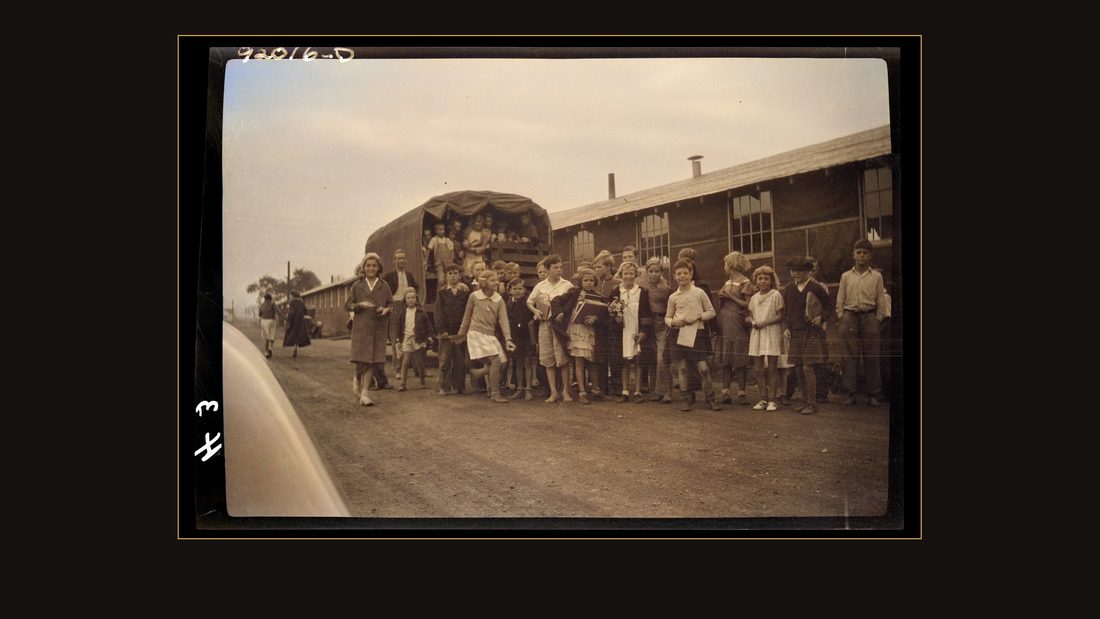
R004 Eleanor, West Virginia. Two hundred forty-four children attend the grade school of the Red House farms project barracks, supervised by eight teachers furnished by the county. Grade children are transported in the project trucks
FSA, 1935 Apr.? · FSA/OWI, LOC · AI-colorized. View the original.
While the houses went up, families lived in barracks. Two hundred and forty-four children attended the grade school there, taught by eight teachers the county supplied.
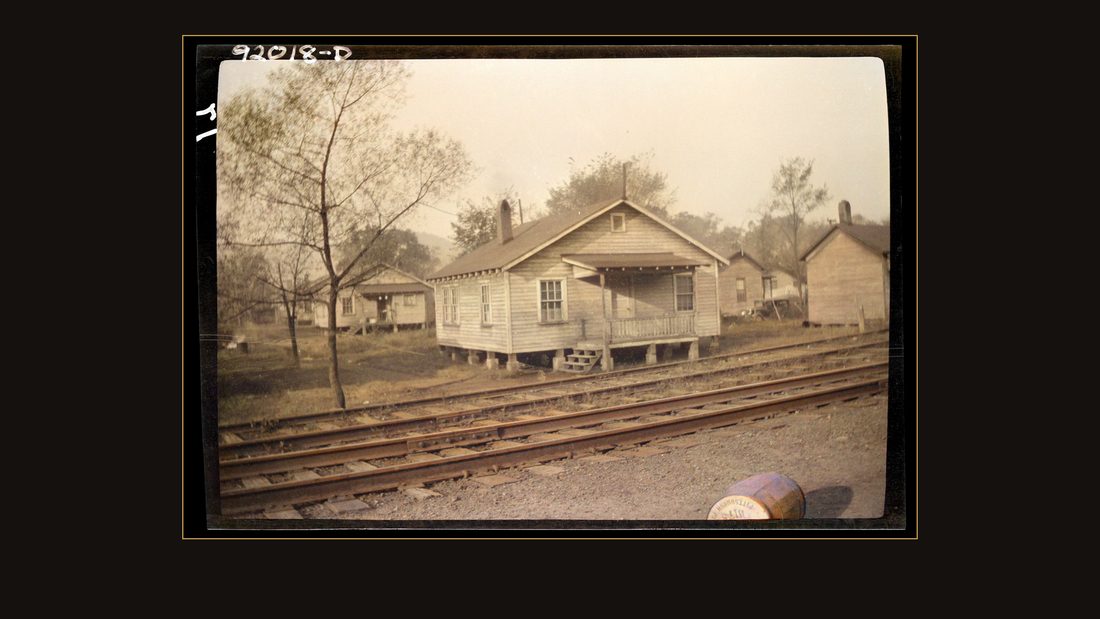
R006 Eleanor, West Virginia. Four-room houses occupied by workers at the Plymouth mines, five miles east of the Red House Farms project, on highway number thirty-five. New York Central Railroad water is carried from a well across the railroad tracks
FSA, 1935 Apr.? · FSA/OWI, LOC · AI-colorized. View the original.
Five miles east, at the Plymouth mines, this is what they had come from. Four rooms. Water carried from a well across the tracks.
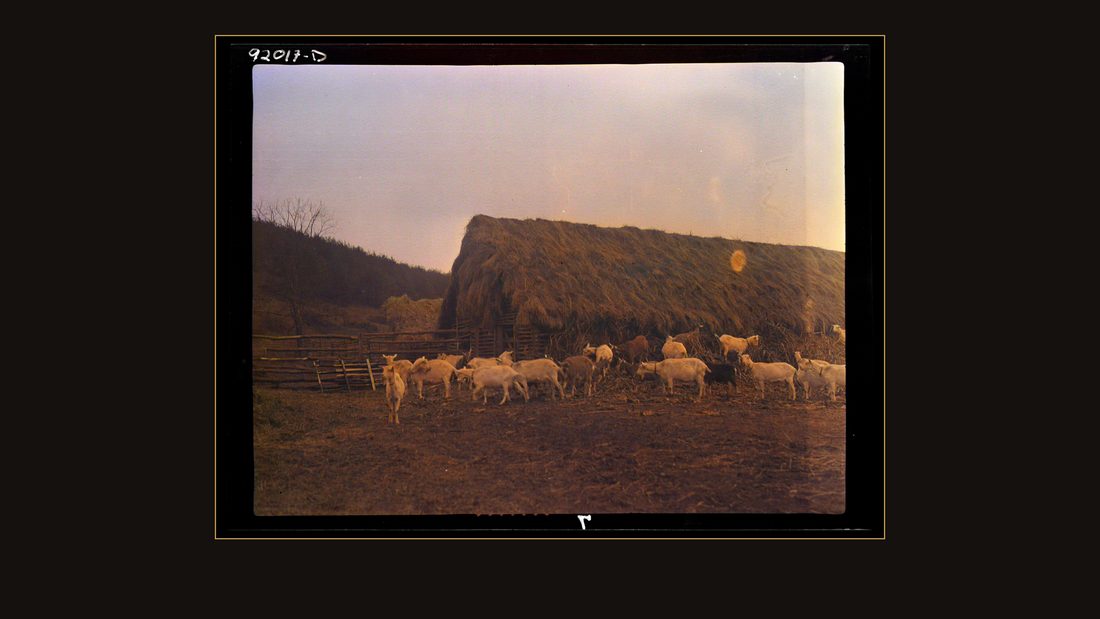
R007 Eleanor, West Virginia. Goat pen at Red House Farms. The goats were furnished by the West.......
FSA, 1935 Apr.? · FSA/OWI, LOC · AI-colorized. View the original.
The town on that ground is now called Eleanor, West Virginia.
Fifty houses in a hurry
At Arthurdale the first fifty houses were bought ready-made and shipped in, in the autumn of nineteen thirty-three, because families were already arriving.
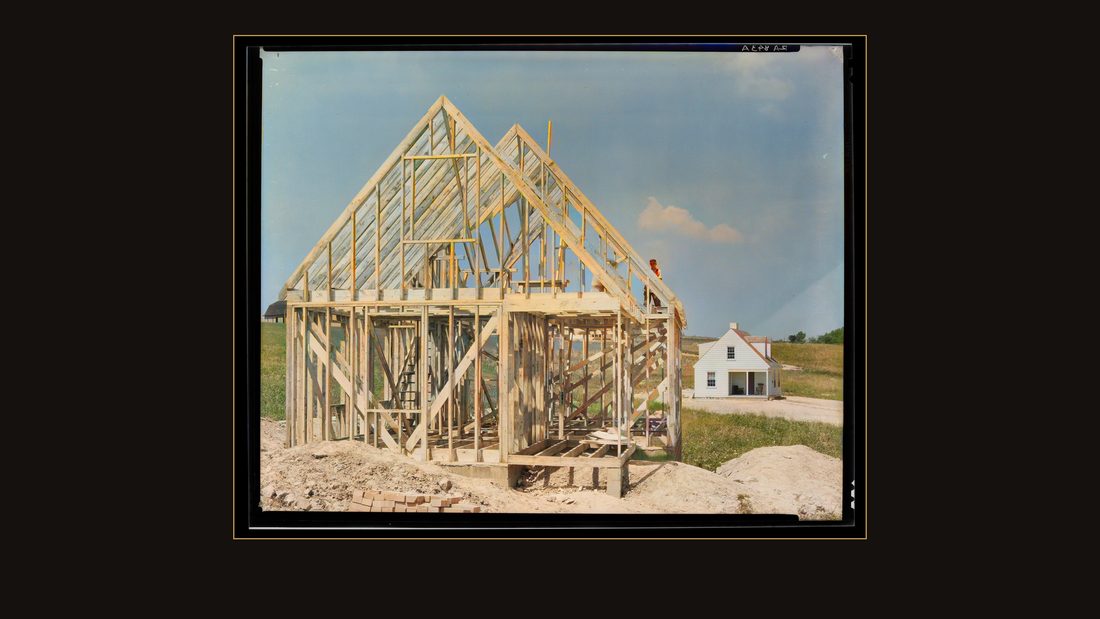
R014 House construction. Arthurdale project. Reedsville, West Virginia
Evans, 1935 June · FSA/OWI, LOC · AI-colorized. View the original.
Fifty privately manufactured prefabricated frame houses. The document does not say how they were chosen.
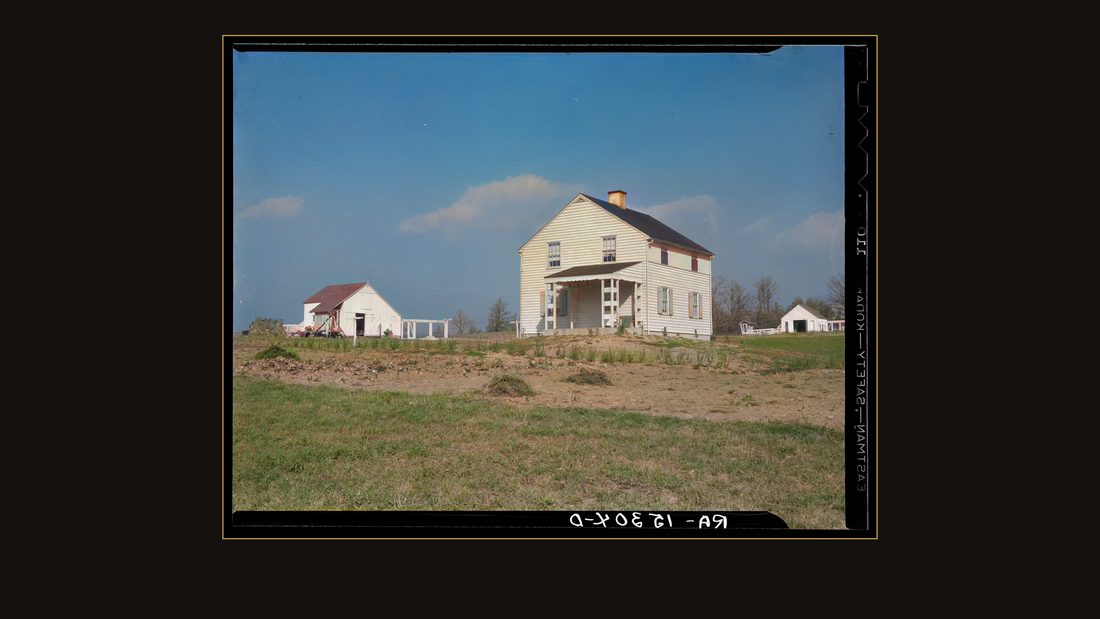
R020 Typical homestead. Arthurdale project, Reedsville, West Virginia
Locke, 1936 Nov · FSA/OWI, LOC · AI-colorized. View the original.
Running water, plumbing, electric light. In the coal camps these families came from, that was not ordinary.
By nineteen thirty-five, a hundred and sixty-five homesteads, each on about three acres, each with a barn, a poultry house, a cellar for vegetables.
Who was chosen
Here is the part that matters. More than half the homesteaders were destitute miners. The rest came from construction, manufacturing, railroading, lumbering, farming.
All but a few were on relief when they were accepted.
Their average income from all sources, for the year before they applied, was four hundred and sixty-seven dollars.
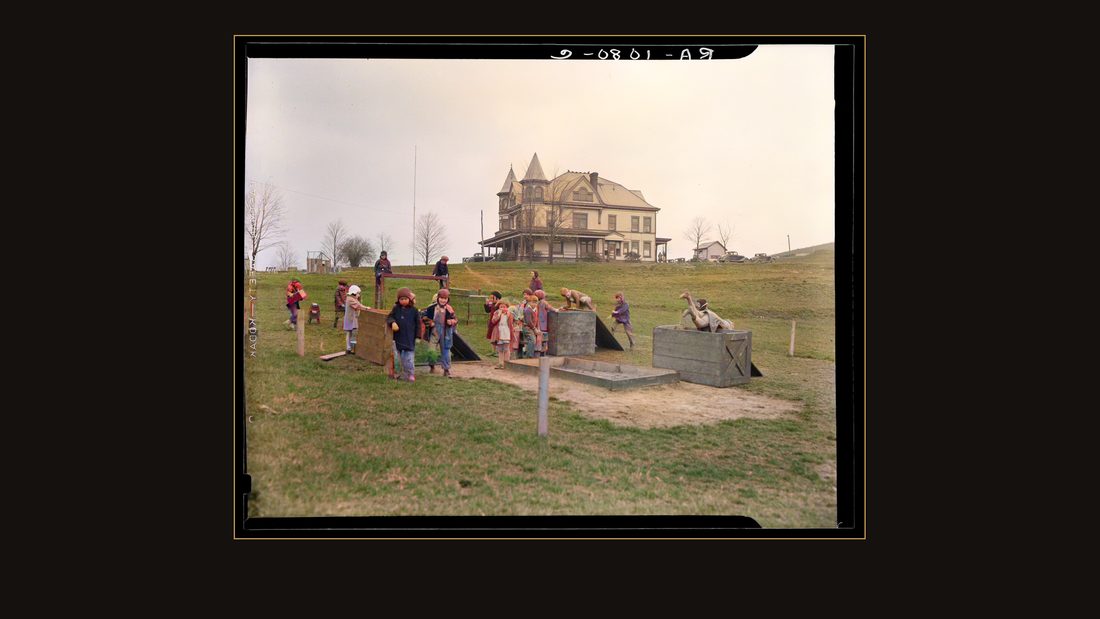
R018 Schoolchildren at play. Reedsville, West Virginia
Johnson, 1935 Apr · FSA/OWI, LOC · AI-colorized. View the original.
Hold that number.
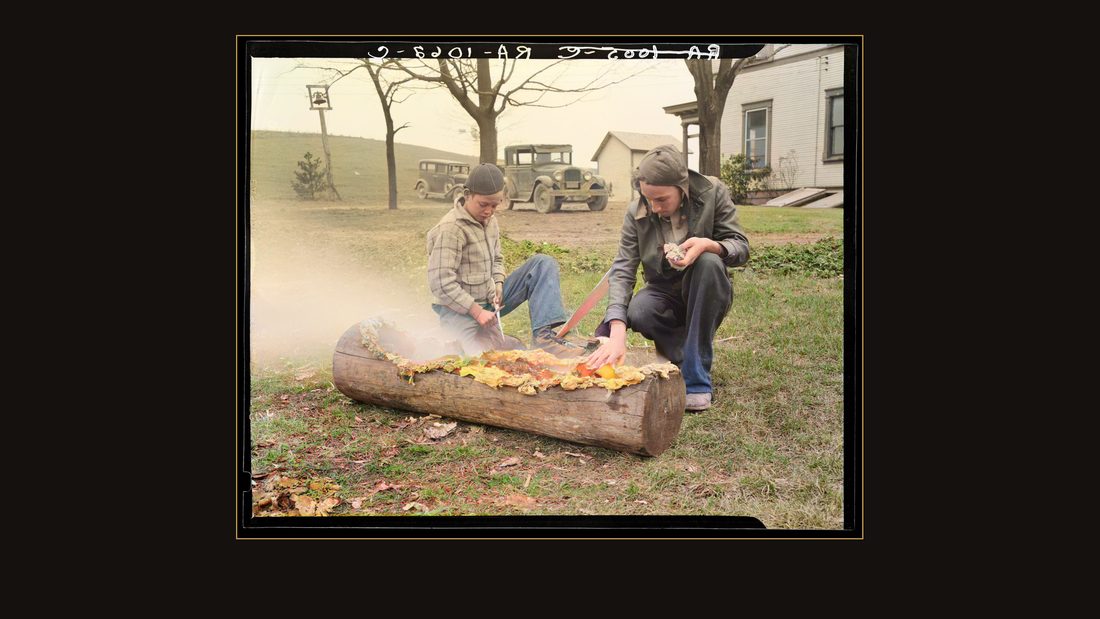
R017 Boys smoking log. Reedsville, West Virginia
Johnson, 1935 Apr · FSA/OWI, LOC · AI-colorized. View the original.
They were picked on need, on ability to work, on health. Average family, six people. Average schooling among the adults, eighth grade.
What it cost
August nineteen thirty-nine. A preliminary estimation of the construction cost of the community totals one million, eight hundred seven thousand, eight hundred sixty-nine dollars.
Seven months later the same agency published a different figure. Two million, three hundred three thousand, and seventy-one.
They are not straightforwardly comparable. The larger covers the six schools, the inn, a factory building, the chicken farm.
Underneath, the agency did its own arithmetic. One Arthurdale house, in labor with material, cost four thousand nine hundred and fourteen dollars.
A whole homestead unit, counting outbuildings, land, water, sewerage, overhead, cost eight thousand six hundred and sixty-five.
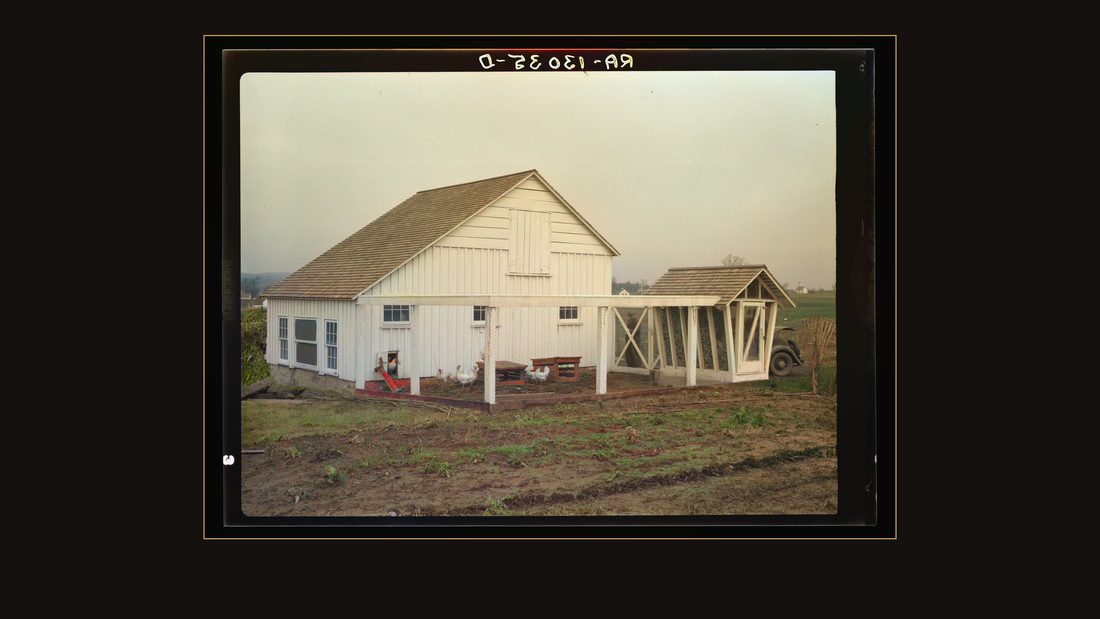
R021 Barn, corn crib, and chickens belonging to Mr. Hardin, a Resettlement Administrator homesteader on the Arthurdale project. Reedsville, West Virginia
Locke, 1936 Dec · FSA/OWI, LOC · AI-colorized. View the original.
Against four hundred and sixty-seven dollars a year. Eighteen years of a family's entire income, standing in a field.
They did not buy them. They rented, eight to eleven dollars a month, and the agency noted with some pride that delinquency ran at two point nine percent.
What the money built
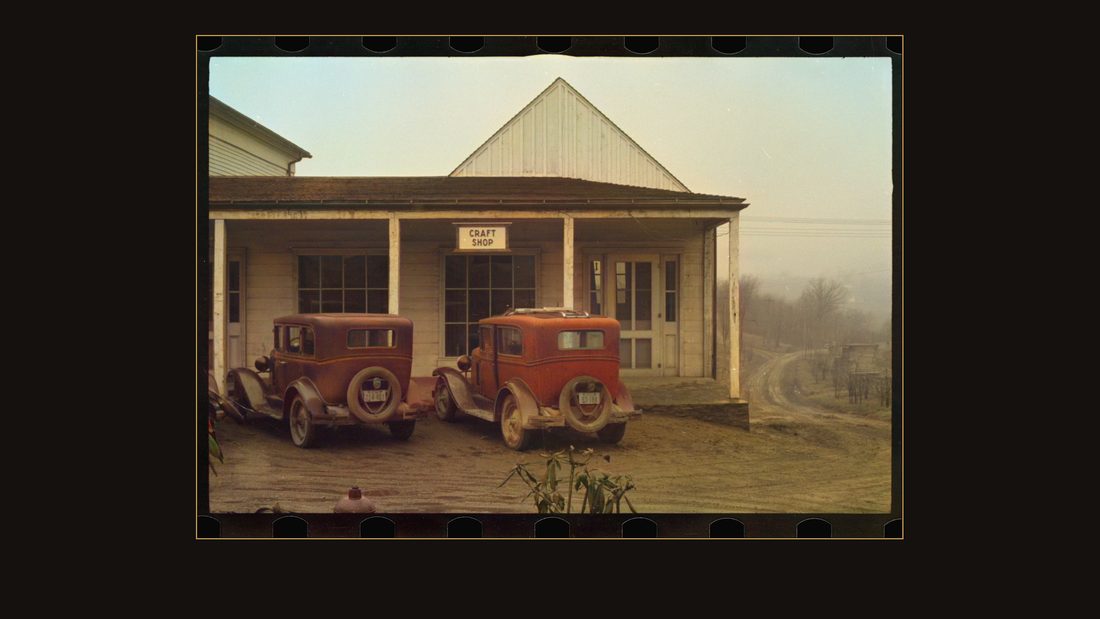
R022 Craft shop at Reedsville, West Virginia
Locke, 1936 Dec · FSA/OWI, LOC · AI-colorized. View the original.
So this is what the money built. A craft shop.
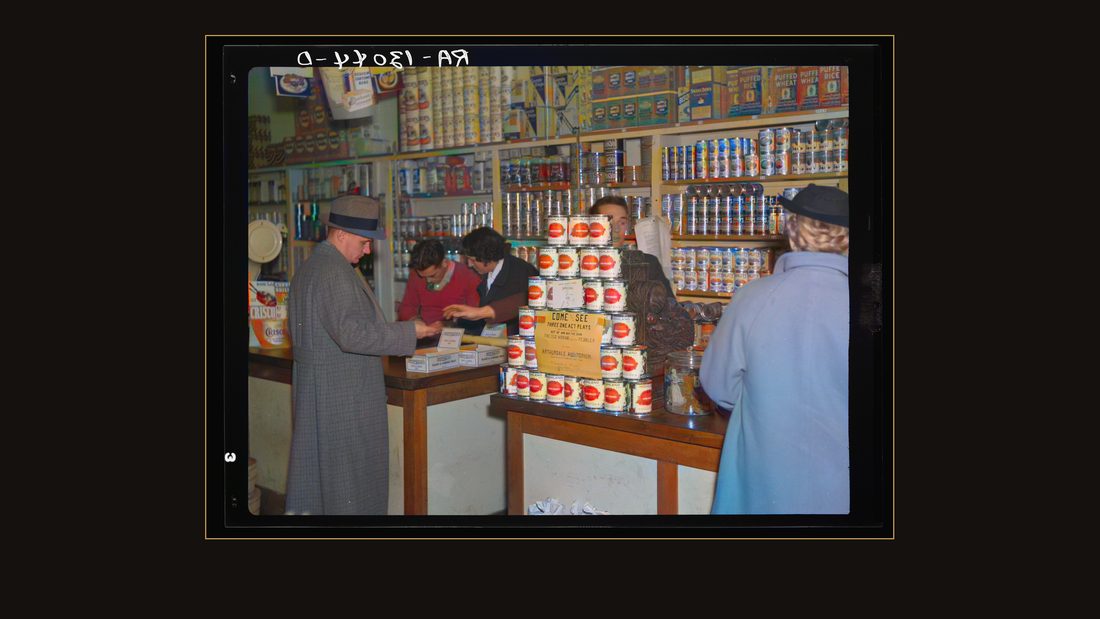
R025 Cooperative store of Arthurdale project. Reedsville, West Virginia
Locke, 1936 Dec · FSA/OWI, LOC · AI-colorized. View the original.
A cooperative store, owned by an association any homesteader could join. One member, one vote, surplus divided equally.
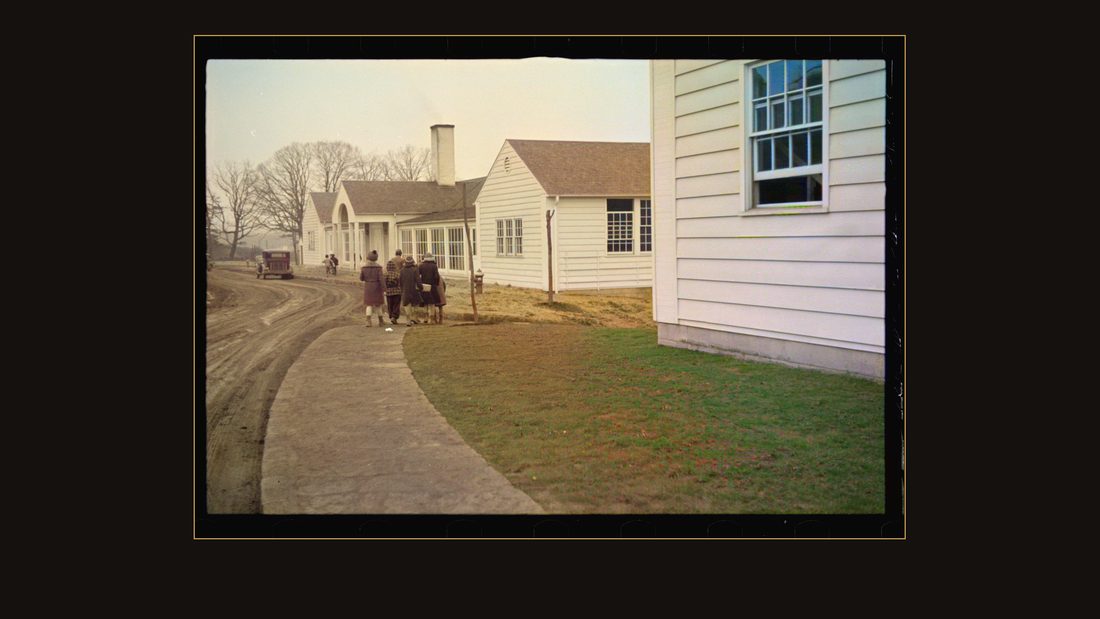
R027 Children leaving grade school at Reedsville, West Virginia
Locke, 1936 Dec · FSA/OWI, LOC · AI-colorized. View the original.
A school system from nursery through high school, in six buildings, one with a gymnasium seating five hundred.

R029 Drawing in grade school, Reedsville, West Virginia
Locke, 1936 Dec · FSA/OWI, LOC · AI-colorized. View the original.
A child drawing. Two houses, and trees.
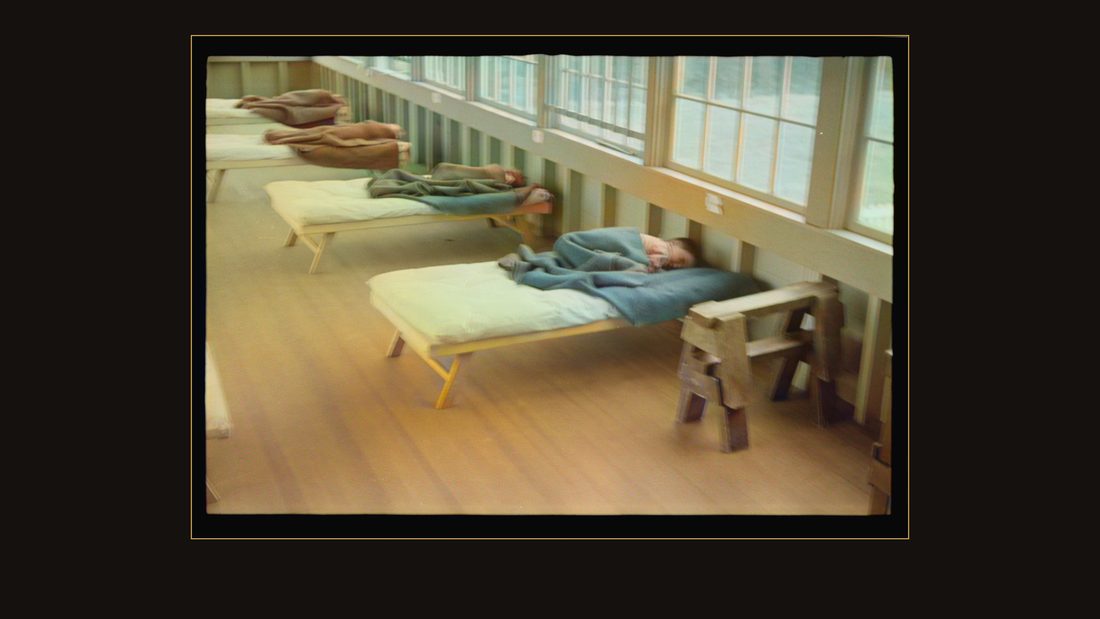
R031 [Untitled photo, possibly related to: Reedsville, West Virginia. The Arthurdale subsistence homesteads project of the U.S. Resettlement Administration. Children sleeping in the nursery school]
Locke, 1936 Dec · FSA/OWI, LOC · AI-colorized. View the original.
A nursery school, with cots.
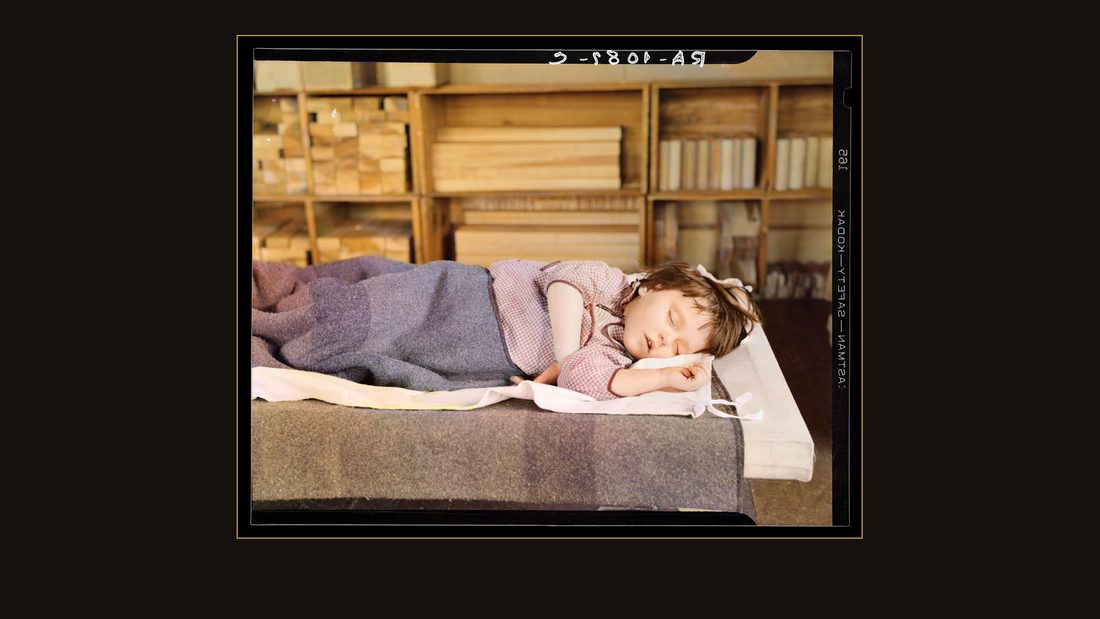
R030 Child sleeping in nursery school. Reedsville, West Virginia
Johnson, 1936 Apr · FSA/OWI, LOC · AI-colorized. View the original.
Which is a photograph of a policy. These were mining families. Somebody decided the children should sleep in the afternoon.
The factories
![[Untitled photo, possibly related to: Furniture factory, Arthurdale, West Virginia]](img/R034.jpg)
R034 [Untitled photo, possibly related to: Furniture factory, Arthurdale, West Virginia]
Shahn, 1937 · FSA/OWI, LOC · AI-colorized. View the original.
What none of it had was a payroll.
Ben Shahn, nineteen thirty-seven. The furniture factory. Period furniture, for the New York market.
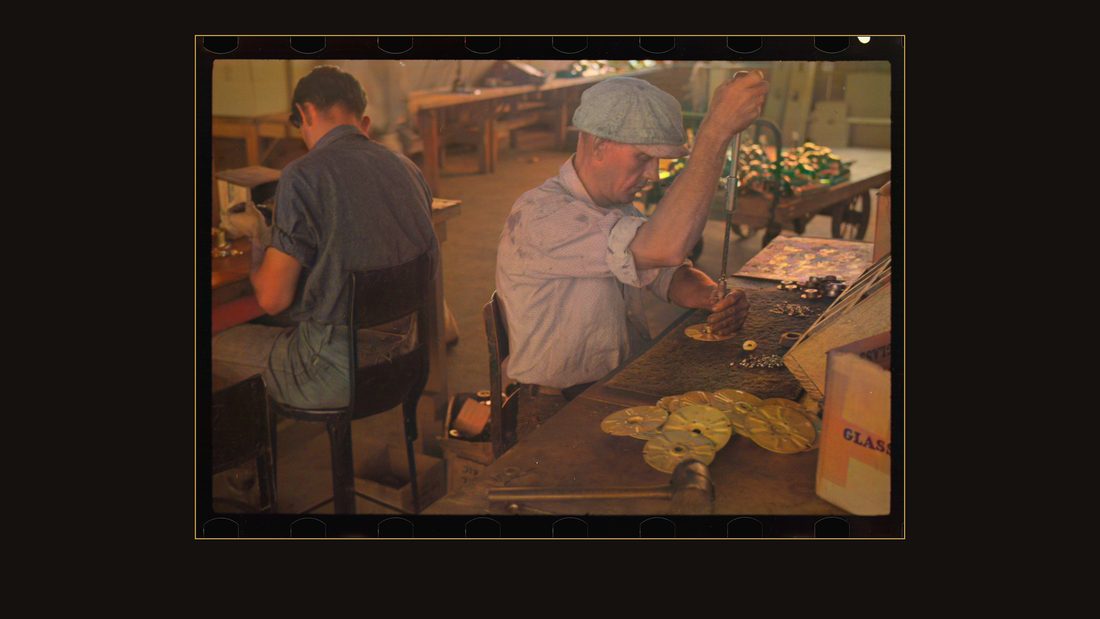
R037 Vacuum cleaner factory, Arthurdale, West Virginia
Shahn, 1937 · FSA/OWI, LOC · AI-colorized. View the original.
And this. A vacuum cleaner factory, leased to a private company, in a town built for coal miners in the mountains of West Virginia.
R038 [Untitled photo, possibly related to: Vacuum cleaner factory, Arthurdale, West Virginia]
Shahn, 1937 · FSA/OWI, LOC · AI-colorized. View the original.
And that is the shelf this episode opened on. Assembled by homesteaders, more than half of whom had been miners, in a building the government paid for.
![[Untitled photo, possibly related to: Vacuum cleaner factory, Arthurdale, West Virginia]](img/R039.jpg)
R039 [Untitled photo, possibly related to: Vacuum cleaner factory, Arthurdale, West Virginia]
Shahn, 1937 · FSA/OWI, LOC · AI-colorized. View the original.
Washington could not run a factory itself. It said so plainly. So it lent money, and waited.
By nineteen forty it had lent the Arthurdale Association six hundred seventy-seven thousand, seven hundred and fifty-four dollars.
![[Untitled photo, possibly related to: Models made by children in project study, Arthurdale, West Virginia]](img/R043.jpg)
R043 [Untitled photo, possibly related to: Models made by children in project study, Arthurdale, West Virginia]
Shahn, 1937 · FSA/OWI, LOC · AI-colorized. View the original.
And then, in its own pamphlet about the project, the Farm Security Administration wrote this.
To date, they have been unable to successfully maintain a factory at Arthurdale.
That is a promotional document. March nineteen forty. It explains the town to the public, and concedes that the thing the whole plan rested on had not happened.
Tygart Valley
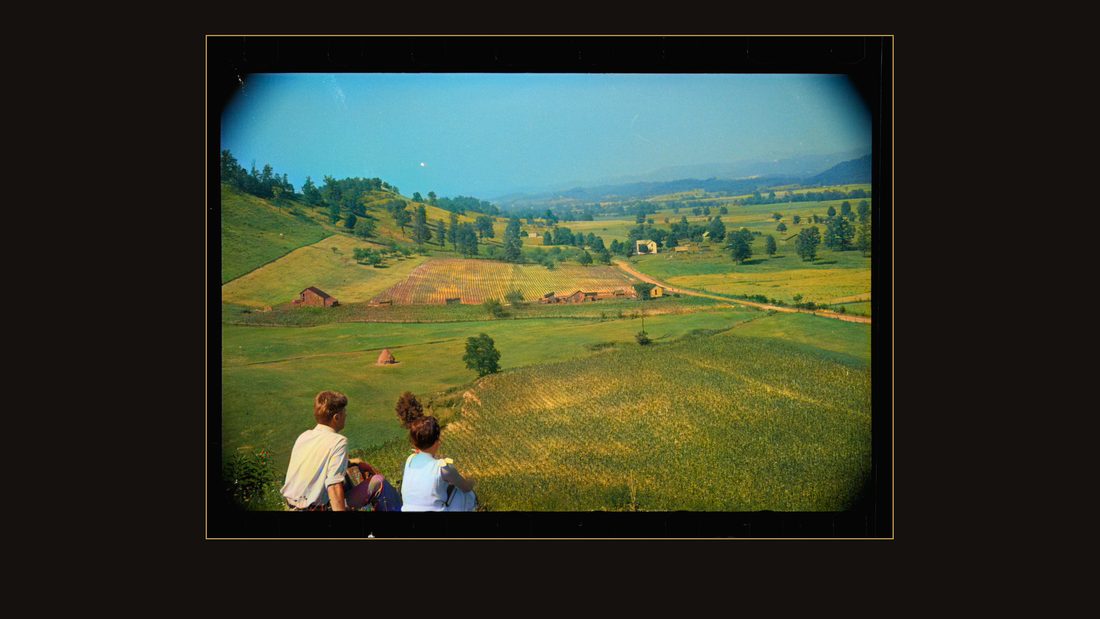
R044 Tygart Valley, West Virginia
Mydans, 1936 Aug · FSA/OWI, LOC · AI-colorized. View the original.
Sixty miles south, in Randolph County, the second West Virginia town was going up in a valley.
The fact sheet for Tygart Valley runs one page, and it is the most useful page here.
Number of family units, one hundred and ninety-eight. Number of applications received, one thousand six hundred and forty.
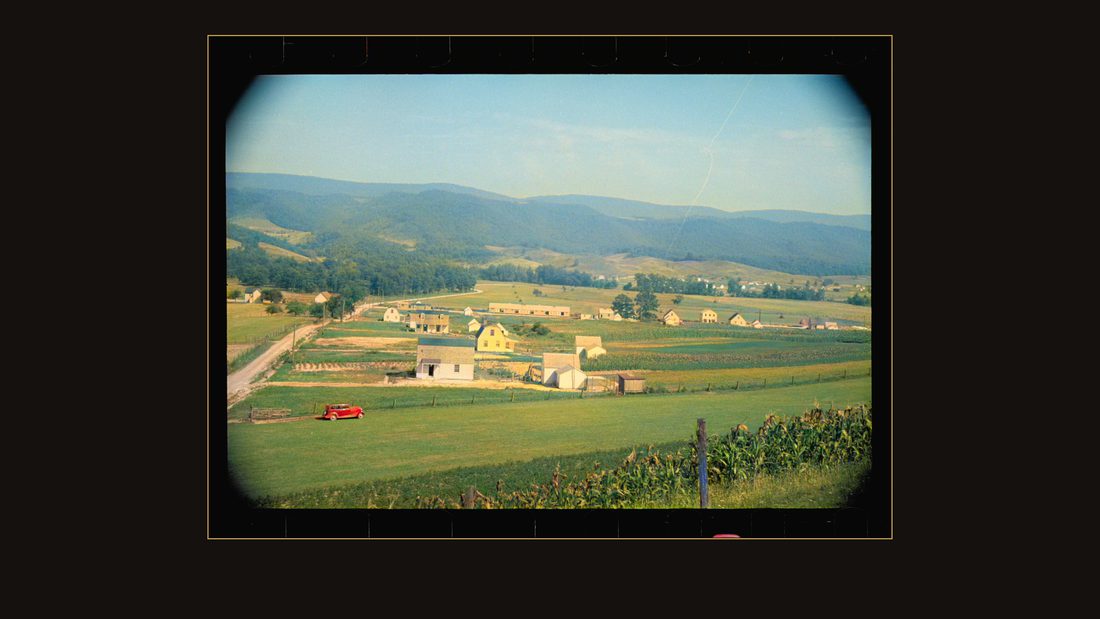
R047 Tygart Valley Homesteads, West Virginia
Mydans, 1936 Aug · FSA/OWI, LOC · AI-colorized. View the original.
Eight families applied for every house.
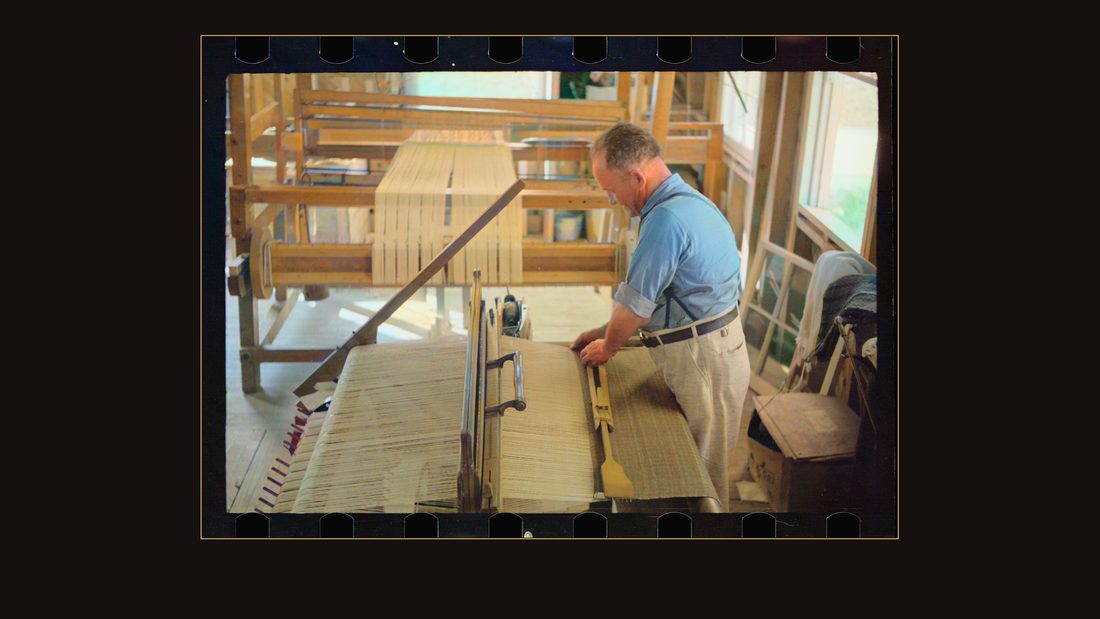
R053 Weaving at the Tygart Valley Homesteads, West Virginia
Mydans, 1936 Aug · FSA/OWI, LOC · AI-colorized. View the original.
And weaving, which was one of the community industries.
Forty years
The selling terms were unusual, and the reason given for them is worth reading twice.
Payments ran forty years at three percent. A resident could pay thirty-nine in advance. The fortieth had to wait until the end of the forty year period.
The forty year payment schedule is maintained in order to prevent speculative profits, mortgaging of the property with the consequent possibility of losing it, and in order to protect the interest of the Government.
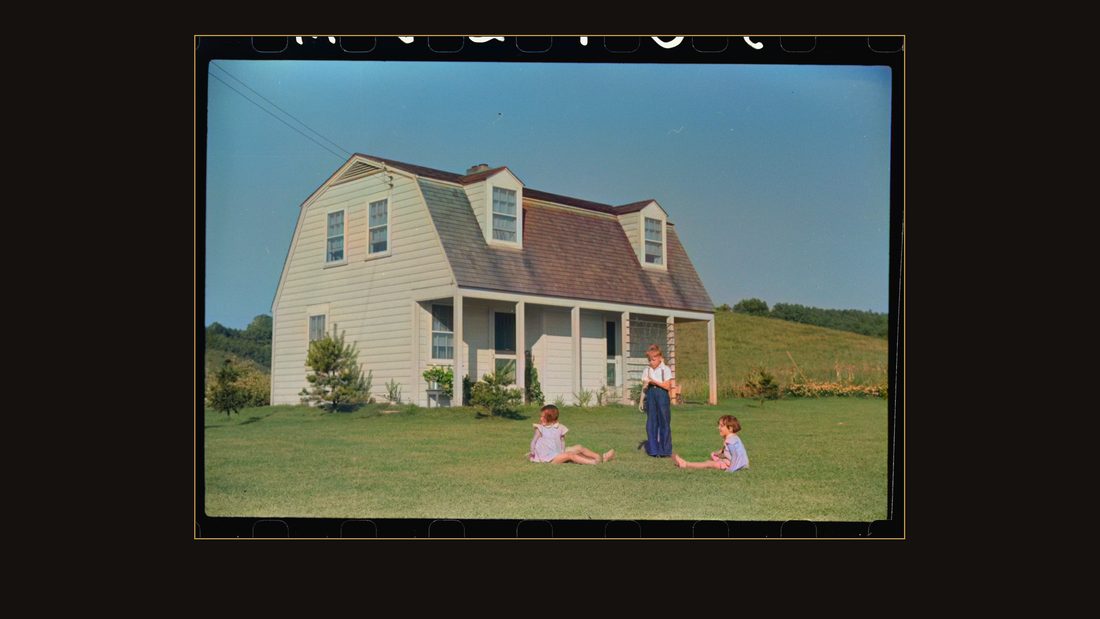
R056 Children of homesteaders playing on their front lawn, Tygart Valley, West Virginia
Wolcott, 1938 Sept · FSA/OWI, LOC · AI-colorized. View the original.
Somebody had thought hard about what happens to poor people who suddenly own an asset, and built a fence around it. Forty years of fence.
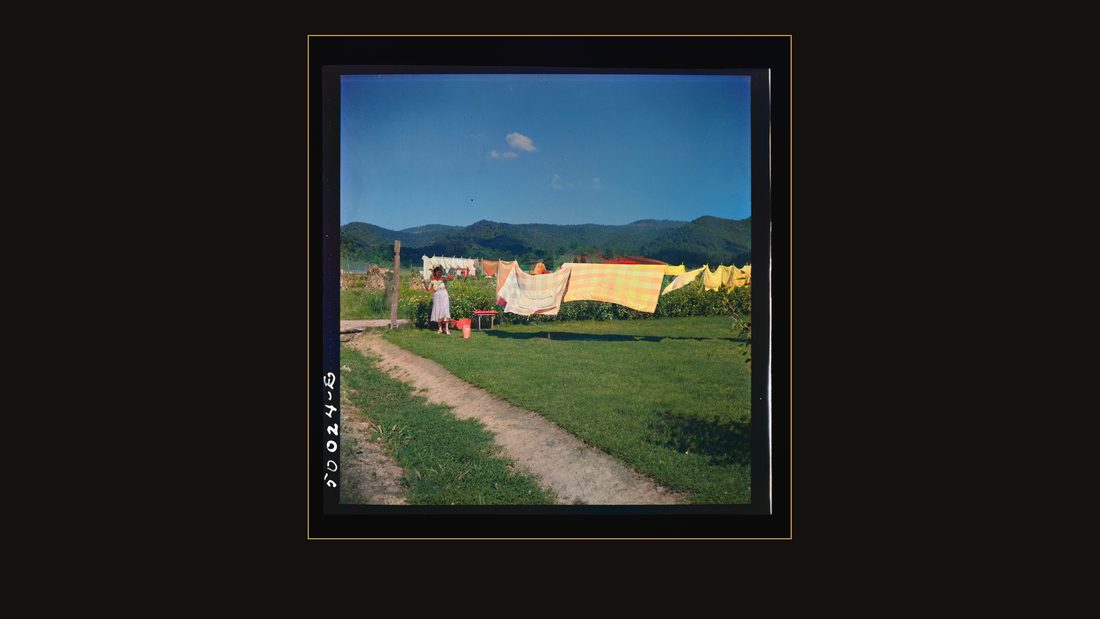
R058 The wash line. Tygart Valley, West Virginia
Wolcott, 1938 Sept · FSA/OWI, LOC · AI-colorized. View the original.
Marion Post Wolcott, September nineteen thirty-eight. The wash line.
The plant
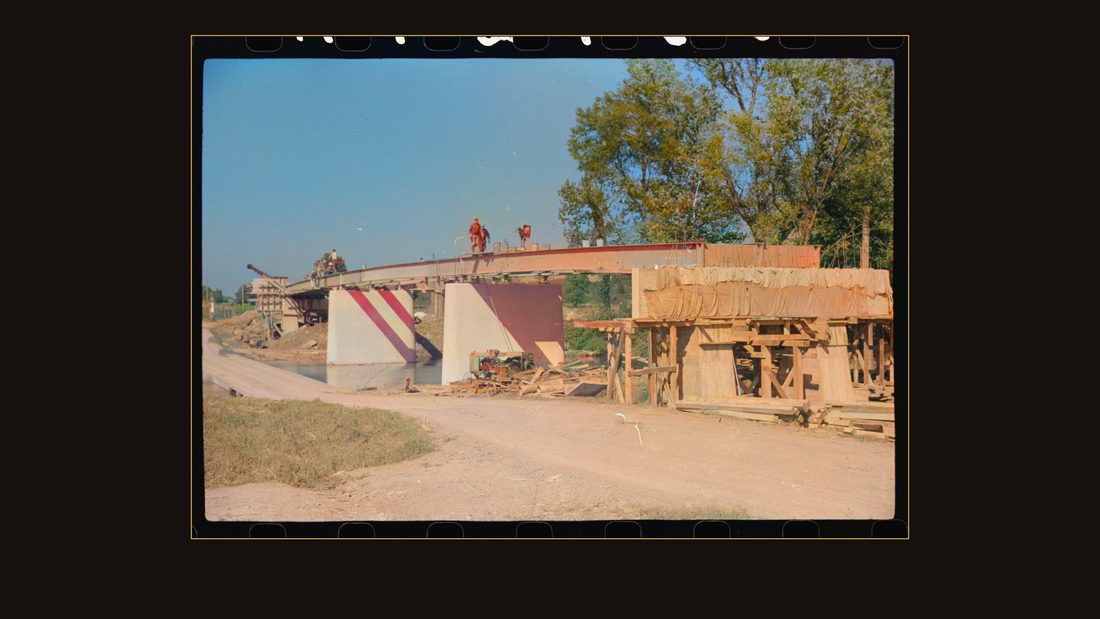
R061 Construction of new bridge, Tygart Valley Homesteads, West Virginia
Wolcott, 1938 Sept · FSA/OWI, LOC · AI-colorized. View the original.
That autumn they poured a bridge.
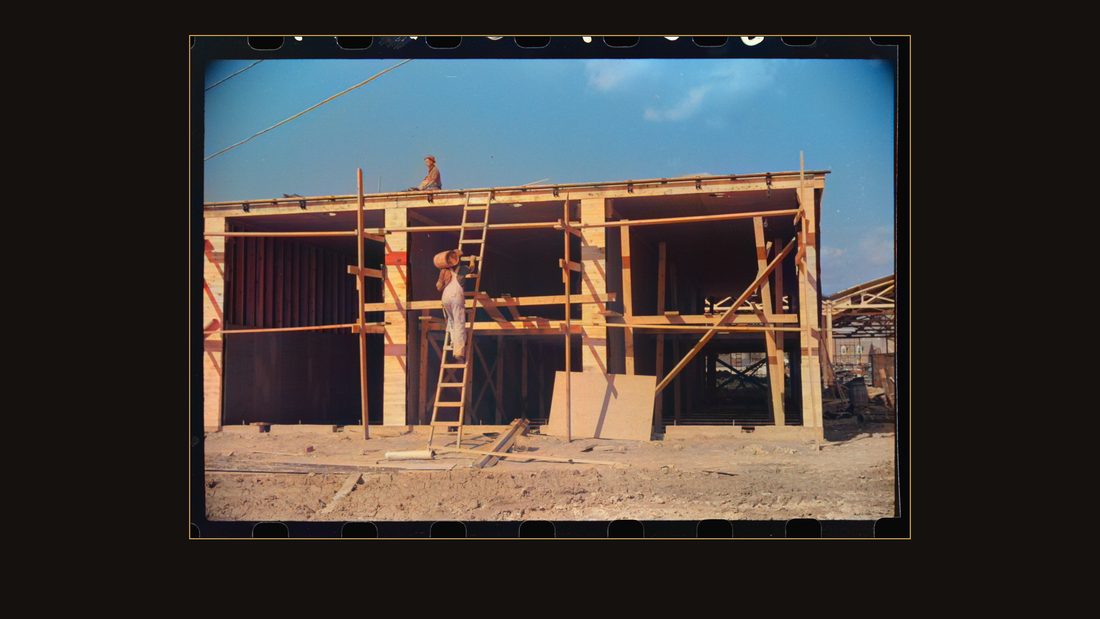
R064 Construction of Dimension Plant at Tygart Valley, West Virginia
Wolcott, 1938 Sept · FSA/OWI, LOC · AI-colorized. View the original.
And this. The Dimension Plant, going up.
In January nineteen thirty-eight the papers had been signed. A loan of three hundred and thirty thousand dollars, against a total investment of four hundred thousand.
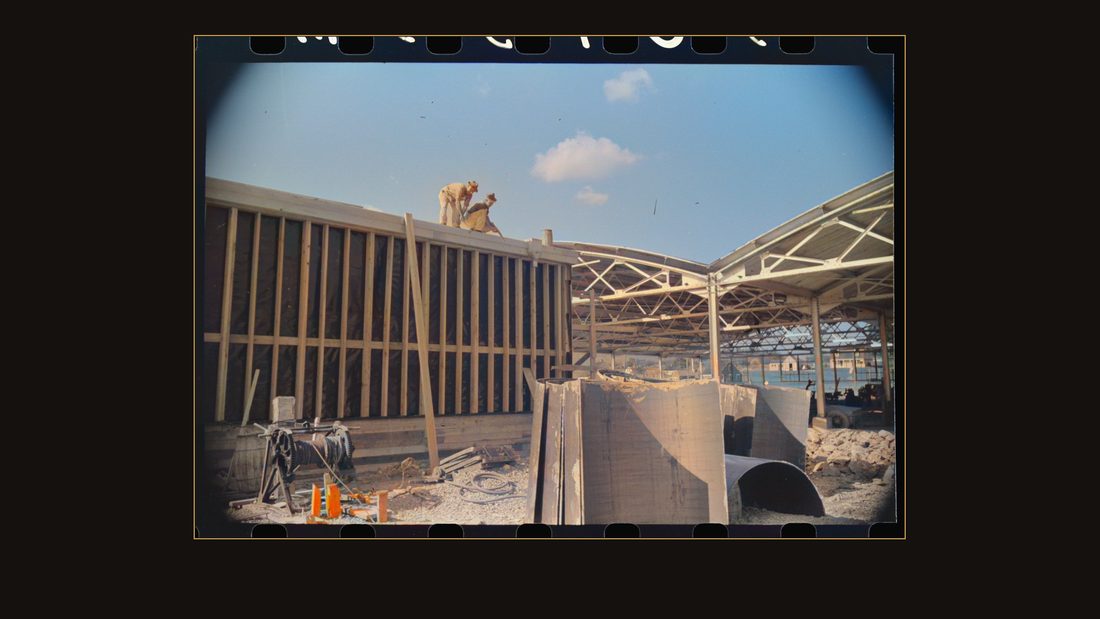
R065 Construction of Dimension Plant at Tygart Valley, West Virginia
Wolcott, 1938 Sept · FSA/OWI, LOC · AI-colorized. View the original.
It would cut dimension parts from small, poor timber that sawmills left in the woods. Managers were hired from a firm in Louisville, on a share of the profits.
The Secretary of Agriculture approved a minimum wage rate of thirty-five cents per hour.
Nineteen thirty-nine
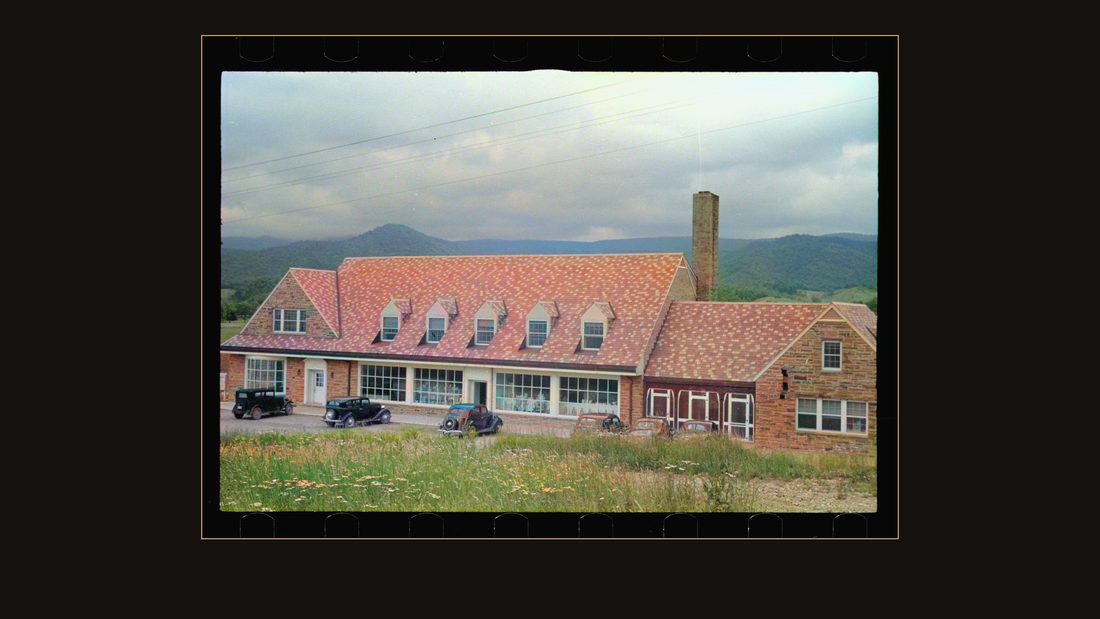
R071 The "trading post," cooperative stores at Tygart Valley Homesteads, West Virginia
Vachon, 1939 June · FSA/OWI, LOC · AI-colorized. View the original.
By nineteen thirty-nine it was running, and John Vachon went to photograph the town at work.
December 1941
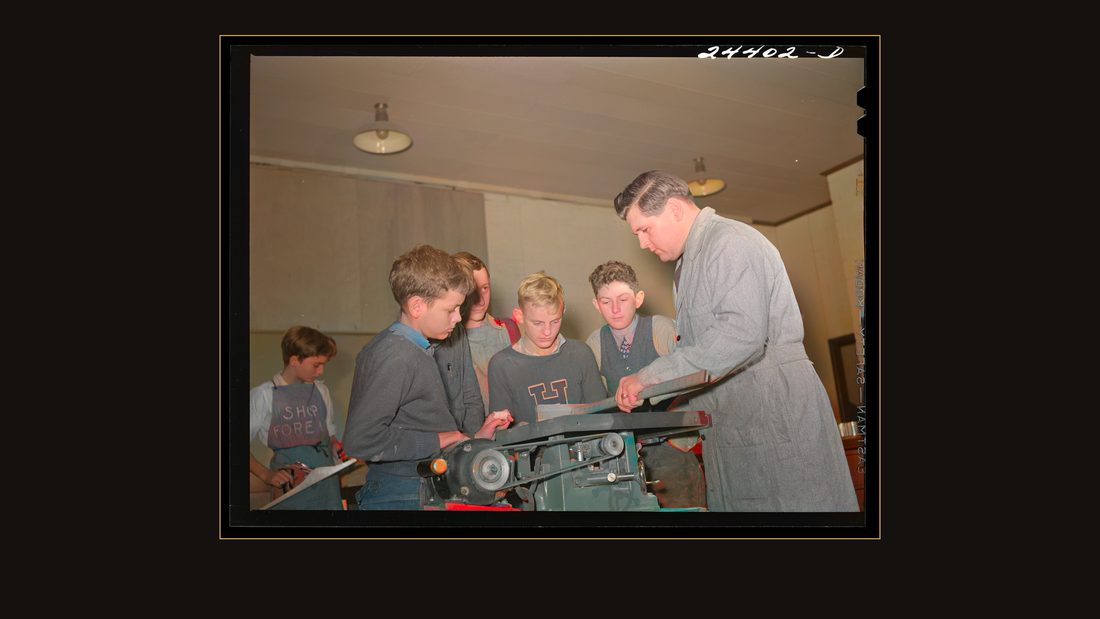
R084 Dailey, West Virginia. December 1941. Homestead school at the Tygart Valley homesteads, a FSA (Farm Security Administration) project eleven miles southwest of Elkins, West Virginia. A shop class. Part of the vocational training program
Rothstein, 1941 Dec · FSA/OWI, LOC · AI-colorized. View the original.
December nineteen forty-one. Three weeks after Pearl Harbor, Arthur Rothstein spent several days at Tygart Valley and made the fullest record anybody made of any of these towns.
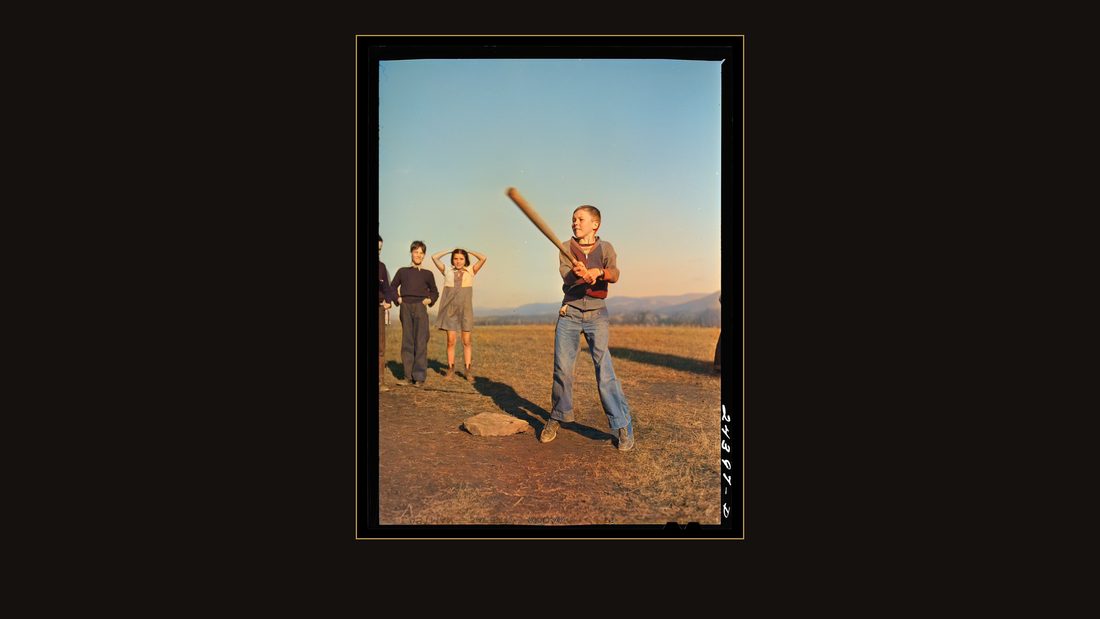
R085 Baseball game, homestead school. West Virginia
Rothstein, 1941 Dec · FSA/OWI, LOC · AI-colorized. View the original.
A baseball game in the schoolyard.

R091 Elizabeth Darkey, daughter of one of the project families, waiting in the health center to be inoculated against measles. Dailey, West Virginia
Rothstein, 1941 Dec · FSA/OWI, LOC · AI-colorized. View the original.
Elizabeth Darkey, daughter of one of the project families, waiting for hers.
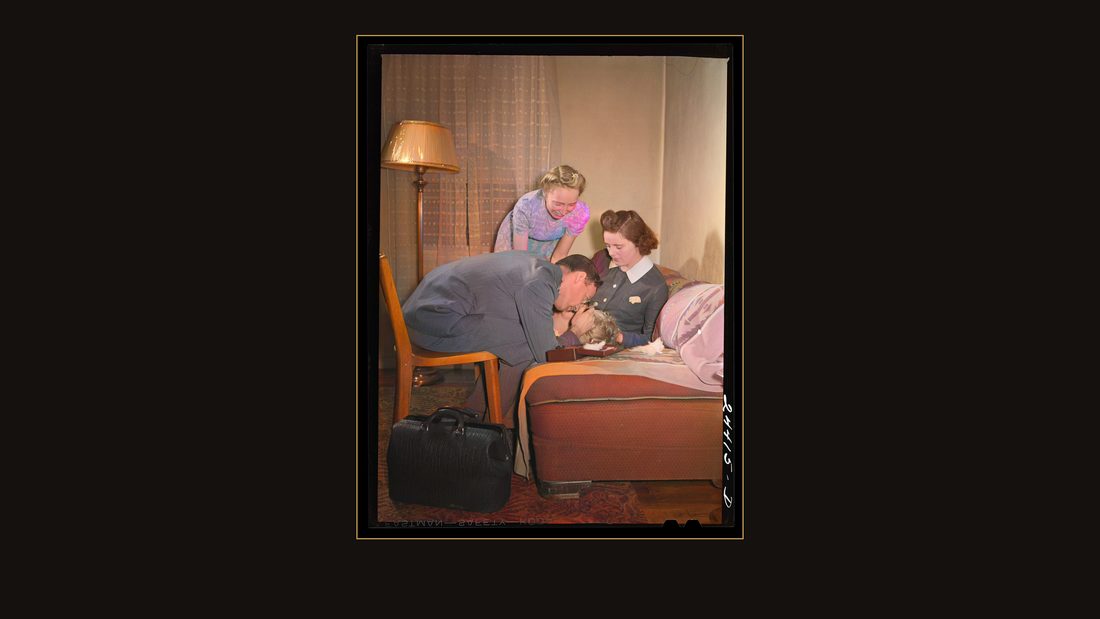
R092 Dr. Jack Tabor, the project doctor, examining Roscoe Loudin, son of one of the homesteaders. Dr. Tabor is in charge of the health program, which emphasizes preventive aspects of medicine. There is a group health plan in which 160 of the 180 project families participate. Dailey, West Virginia
Rothstein, 1941 Dec · FSA/OWI, LOC · AI-colorized. View the original.
Doctor Jack Tabor was the project doctor. His caption says the health program emphasized the preventive aspects of medicine.
And it records that a hundred and sixty of the hundred and eighty project families were in the group health plan.
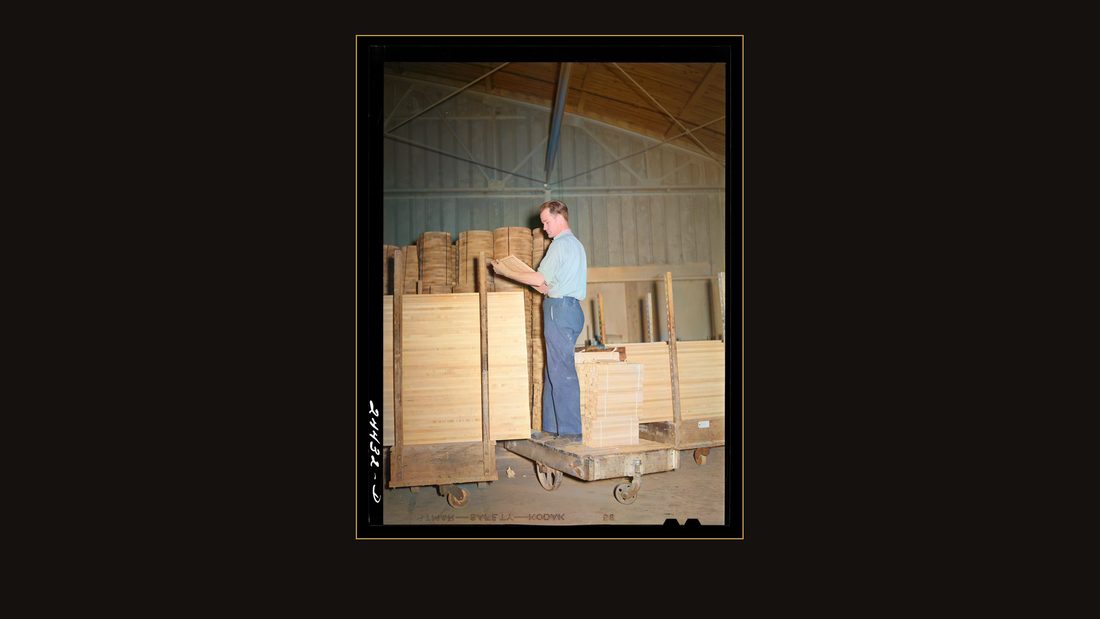
R096 Checker at dimension lumber mill. This mill affords employment to a great many of the men and older boys living on the project. It is located near the project shopping center. Dailey, West Virginia
Rothstein, 1941 Dec · FSA/OWI, LOC · AI-colorized. View the original.
At the mill, a checker. His caption says the mill affords employment to a great many of the men with the older boys living on the project.
Saturday afternoon

R098 The Hardeman family at home late Saturday afternoon. Mr. Hardeman has returned from Morgantown, West Virginia, where he works during the week, to spend the weekend at home. Mrs. Hardeman is very interested in the weaving program. Dailey, West Virginia
Rothstein, 1941 Dec · FSA/OWI, LOC · AI-colorized. View the original.
And then, late on a Saturday afternoon, Rothstein photographed a family at home.
His caption reads: the Hardeman family at home late Saturday afternoon. Mister Hardeman has returned from Morgantown, West Virginia, where he works during the week, to spend the weekend at home.
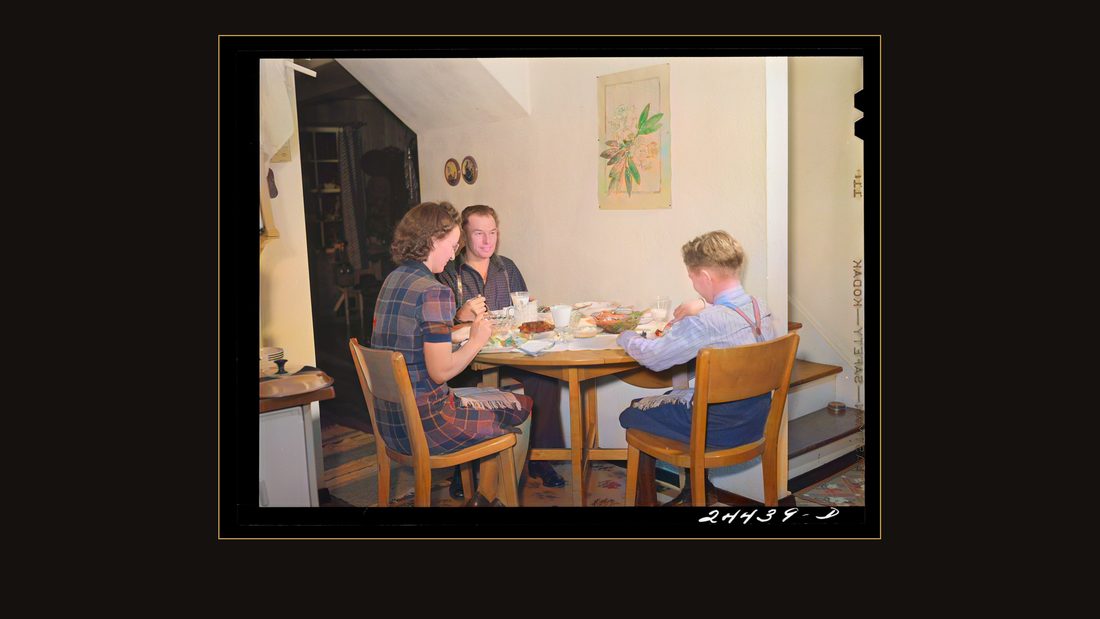
R099 The Hardeman family at their Saturday evening meal. Dailey, West Virginia
Rothstein, 1941 Dec · FSA/OWI, LOC · AI-colorized. View the original.
Read that against the plan. The entire idea was that a man would not have to leave.
Eight years in, the father of this family works eighty miles away and comes back on Saturday.
A place on earth
Eight months later the Bureau of Agricultural Economics published a book about the program, with the word appraisal in the title, and the word critical in front of that.
Probably no idea in the original planning has been more costly, or has resulted in more trouble, than the assumption that, after a community of subsistence homesteads was established, an economic base could be found.
But the mistake is evident now, and no wisely conceived program in the future would repeat it.
And then, on page one hundred and seventy-nine, the sentence this episode has been walking toward.
One of the outstanding conclusions from this study is that subsistence homesteads do not justify the confidence that many people have placed in them as a relief measure.
They have not freed families at the relief level, or close to it, from the need for continued subsidy or relief of some kind.
Families with incomes of twelve hundred dollars or more per year have managed to meet the required payments. But these families were not in need of relief as we have ordinarily thought of it.
R018 Schoolchildren at play. Reedsville, West Virginia
Johnson, 1935 Apr · FSA/OWI, LOC · AI-colorized. View the original.
Twelve hundred dollars a year to make it work.
The families chosen for Arthurdale had four hundred and sixty-seven.
![[Untitled photo, possibly related to: Metal shop, Arthurdale, West Virginia]](img/R035.jpg)
R035 [Untitled photo, possibly related to: Metal shop, Arthurdale, West Virginia]
Shahn, 1937 · FSA/OWI, LOC · AI-colorized. View the original.
Those two numbers sit in two federal documents that never cite each other. Nobody hid either. Both were published, three years apart, by the same department.
R018 Schoolchildren at play. Reedsville, West Virginia
Johnson, 1935 Apr · FSA/OWI, LOC · AI-colorized. View the original.
The selection rule was need. The study found that need was the one condition under which it could not work.
What is still there
On the fourteenth of August, nineteen forty-six, Public Law seven thirty-one abolished the Farm Security Administration.
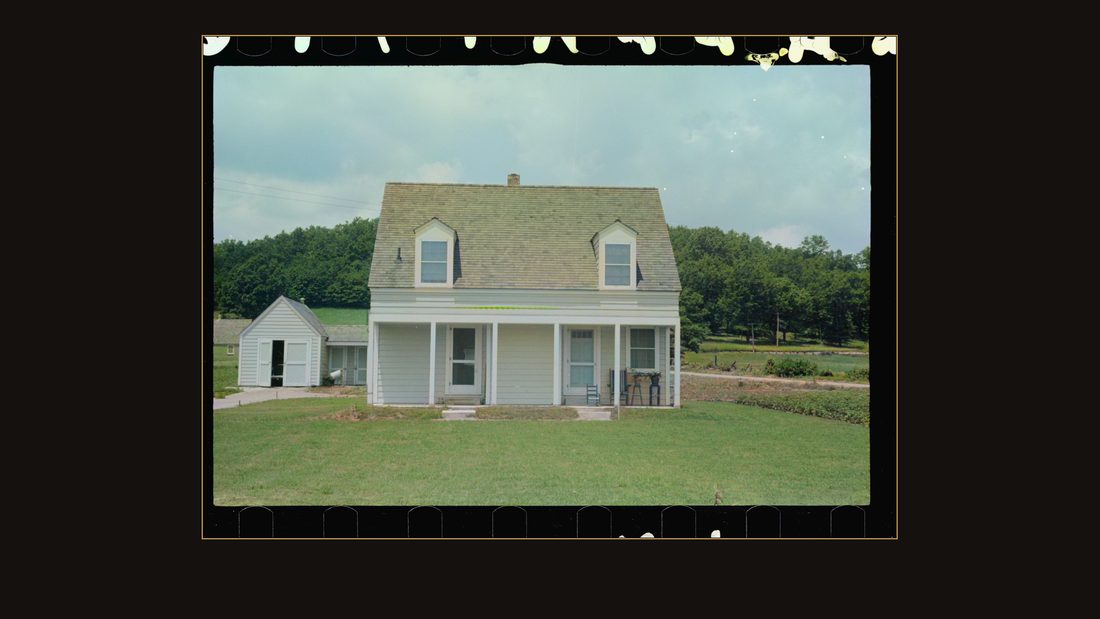
R074 Tygart Valley Homesteads, West Virginia
Vachon, 1939 June · FSA/OWI, LOC · AI-colorized. View the original.
Arthurdale is still there. So is Eleanor. So is the valley at Dailey. The houses outlived the argument about them, which is a thing houses tend to do.
Sixteen hundred and forty families applied for a hundred and ninety-eight houses. The government read that as demand. It can also be read as a measurement of how bad it was everywhere else.
R098 The Hardeman family at home late Saturday afternoon. Mr. Hardeman has returned from Morgantown, West Virginia, where he works during the week, to spend the weekend at home. Mrs. Hardeman is very interested in the weaving program. Dailey, West Virginia
Rothstein, 1941 Dec · FSA/OWI, LOC · AI-colorized. View the original.
Eight photographers we can name came to these towns across eight years, and one at Red House Farms whose name the file does not carry. Not one of them was sent to make an argument. They were sent to make a record.
R000 View of Arthurdale property. Reedsville, West Virginia
Johnson, between 1933 and 1935 · FSA/OWI, LOC · AI-colorized. View the original.
Then one office wrote down what it cost, and another wrote down that it had not worked. All three are in the same archive, and all three are yours.
R001 View of Arthurdale property. Reedsville, West Virginia
Johnson, between 1933 and 1935 · FSA/OWI, LOC · AI-colorized. View the original.
Sources
- Arthurdale Project of the Farm Security Administration, U.S. Department of Agriculture, Farm Security Administration, March 21, 1940 (archive.org `arthurdaleprojec00unit`). Source of: 705,000 bituminous miners employed in 1923 and 458,000 in 1934; nearly half of Preston County families on relief by April 1933; "stranded workers"; the purchase of 1,128 acres near Reedsville from what had been Colonel George Fairfax's plantation; the first group of 50 privately manufactured prefabricated frame houses, autumn 1933; the cost report completed March 6, 1940 covering expenditures to June 30, 1939, total $2,303,071; average cost of labor and material in one house $4,914; average cost of a whole homestead unit $8,665; total for all 165 homesteads $1,429,777; average family income before application $467; rents of $8 to $11 a month at 2.9 percent delinquency; total loans to the Arthurdale Association $677,754, of which $125,000 built a factory and $200,000 bought the operating company's stock; and, on page 7, "To date, they have been unable to successfully maintain a factory at Arthurdale."
- Facts About Arthurdale Homesteads, Farm Security Administration, August 15, 1939 (`factsaboutarthur00unit`). Source of: 165 homesteads of about three acres each with barn, poultry house and vegetable cellar; more than half the homesteaders destitute miners, all but a few on relief when accepted; average family of six; average adult schooling eighth grade; and "A preliminary estimation of the construction cost of the community totals $1,807,869."
- Facts About Tygart Valley Homesteads, Farm Security Administration, 1938 (`factsabouttygart00unit`). Source of: 198 family units; 1,640 applications received; total acreage 2,533; average individual acreage 1.72; Randolph County, ten miles southwest of Elkins; and the forty-year, three-percent schedule "maintained in order to prevent speculative profits, mortgaging of the property with the consequent possibility of losing it, and in order to protect the interest of the Government over the amortization period."
- A statement on establishment of a woodworking plant at Tygart Valley Homesteads, USDA/FSA, January 18, 1938 (`statementonestab00unit`). Source of: the $330,000 government loan against a $400,000 total investment; managers contracted from Gamble Brothers, Inc., Louisville, on a profit participation; raw material from private timber land and the Monongahela National Forest; and the Secretary of Agriculture's approval of a minimum wage rate of 35 cents per hour.
- A Place on Earth: A Critical Appraisal of Subsistence Homesteads, U.S. Department of Agriculture, Bureau of Agricultural Economics, ed. Russell Lord and Paul H. Johnstone, Washington, 1942 (`placeonearthcrit00unit`). Source of: p. 83, the American Friends Service Committee's prior work with stranded mining communities in Wales, the NIRA coal codes closing still more mines, "the suggestion was made in some quarters that one section of N.I.R.A. should be used to undo the incidental damage wrought by another," and the decision to establish four subsistence-homesteads projects for stranded miners — Cumberland, Westmoreland, Tygart Valley and Arthurdale; p. 178, "Probably no idea involved in the original planning of the subsistence-homesteads projects has been more costly, or has resulted in more trouble, than the assumption that, after a community of subsistence homesteads was established, an economic base could be found… But the mistake is evident now"; and p. 179, "One of the outstanding conclusions from this study is that subsistence homesteads do not justify the confidence that many people have placed in them as a relief measure… Families with incomes of $1,200 or more per year have managed to meet the required payments. But these families were not in need of relief as we have ordinarily thought of it."
- Farmers' Home Administration Act of 1946, interpretive memorandum from the Associate Solicitor to Administrator Dillard B. Lasseter, USDA, September 11, 1946 (`farmershomeadmin1946unit`). Source of: Public Law 731, 79th Congress, approved August 14, 1946, which abolished the Farm Security Administration.