The Fall the Buyers Vanished | The Tobacco Belt in Color, 1939-1940
The film of this episode premieres August 9, 2026 on YouTube. The documents, the transcript and the sources are below now.
In September 1939, five days after Britain declared war on Germany, London stopped releasing dollars for American tobacco - and every flue-cured market in the South closed with the record crop still in the barns.
Transcript
The markets close
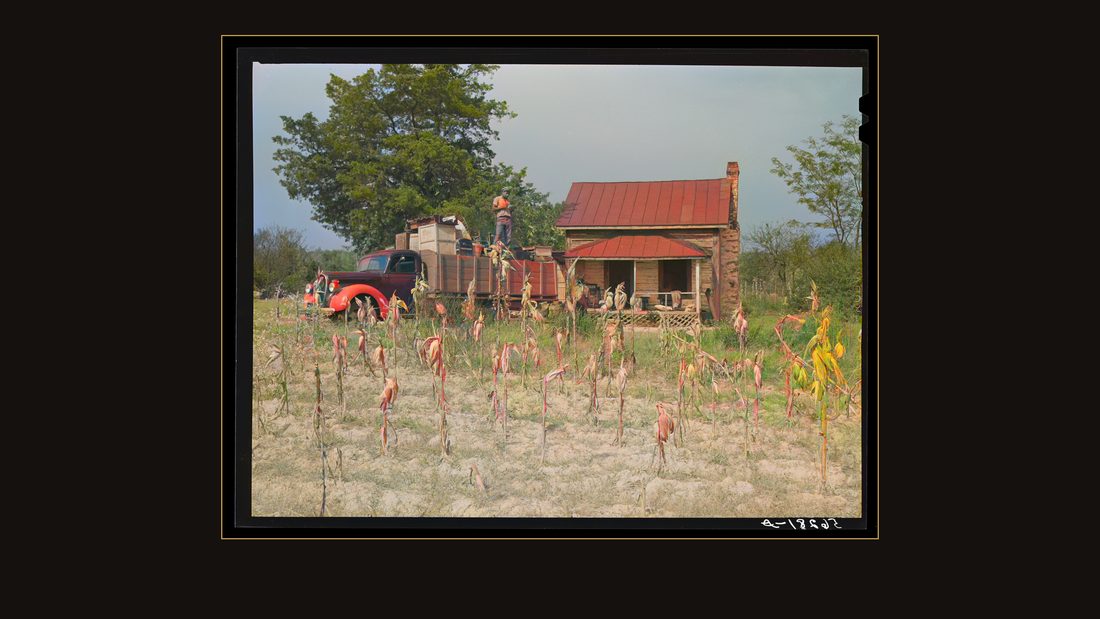
R82 In the fall of the year after the crops are up many tenants and sharecroppers move into another farm. This colored family was moving from this home near Yanceyville to one near Raleigh, North Carolina
Marion Post Wolcott · October 1940 · Library of Congress · FSA/OWI · AI-colorized. View the original.
October, nineteen forty. A road outside Yanceyville, North Carolina. A tenant family is loading everything they own onto a truck. To understand why they are moving — and why this fall, of all falls — you have to go back one year, to a typed government report.
S1
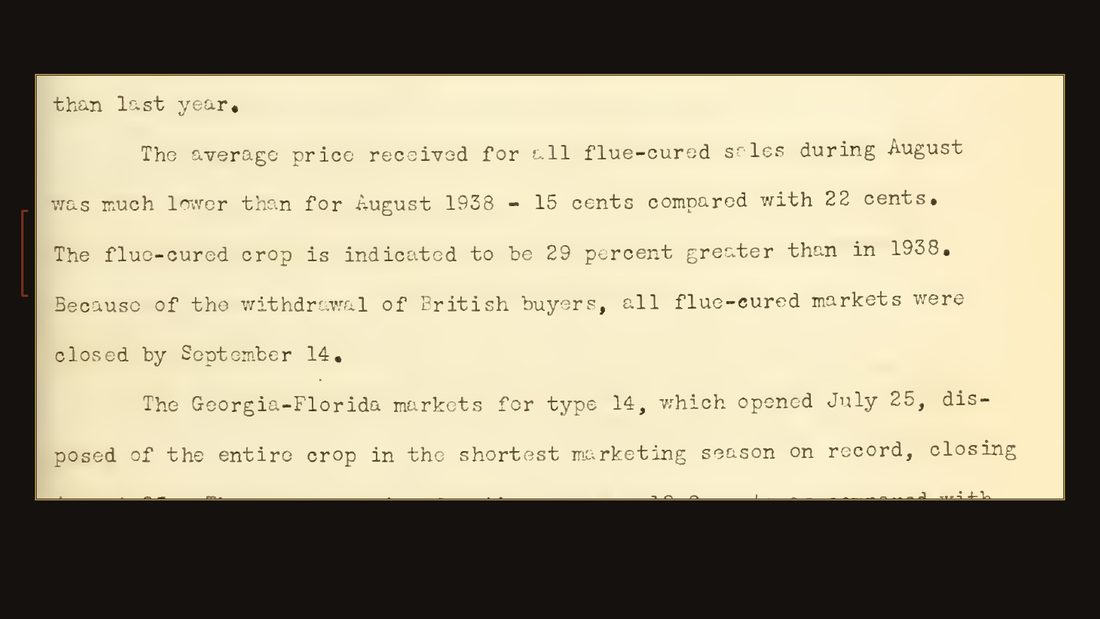
The Tobacco Situation TS-12 · USDA BAE · Sept. 27, 1939.
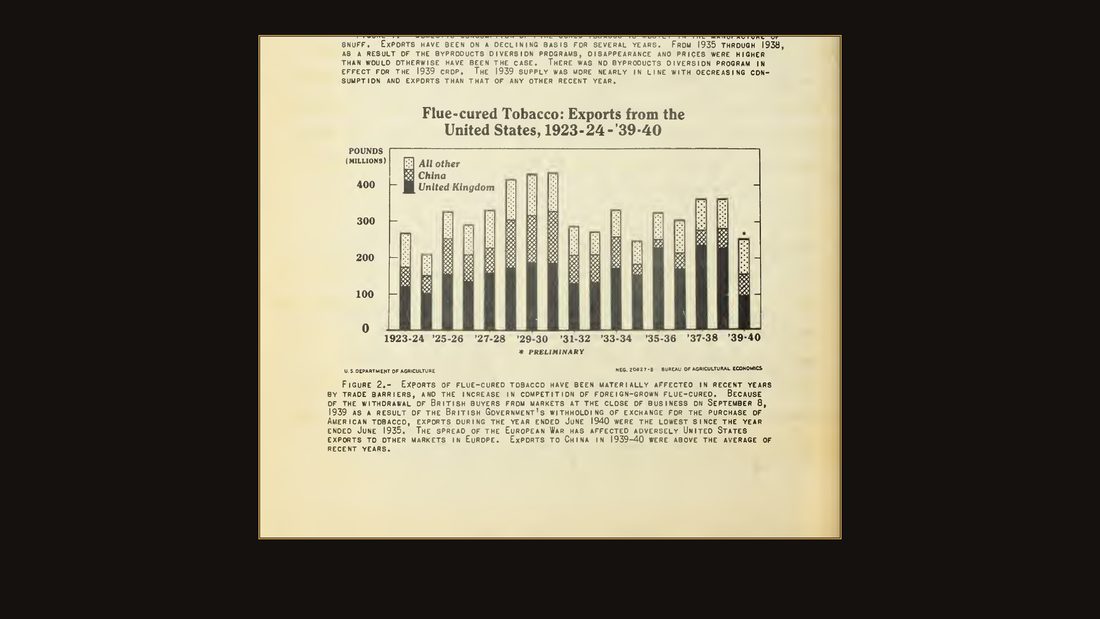
September twenty-seventh, nineteen thirty-nine — three weeks into the Second World War. Flue-cured tobacco that had brought twenty-two cents a pound the August before was bringing fifteen. Then one flat sentence: because of the withdrawal of British buyers, all flue-cured markets were closed by September fourteenth. Britain bought a third of the American crop — and five days after declaring war, London had stopped releasing dollars for it.
The colors are guesses
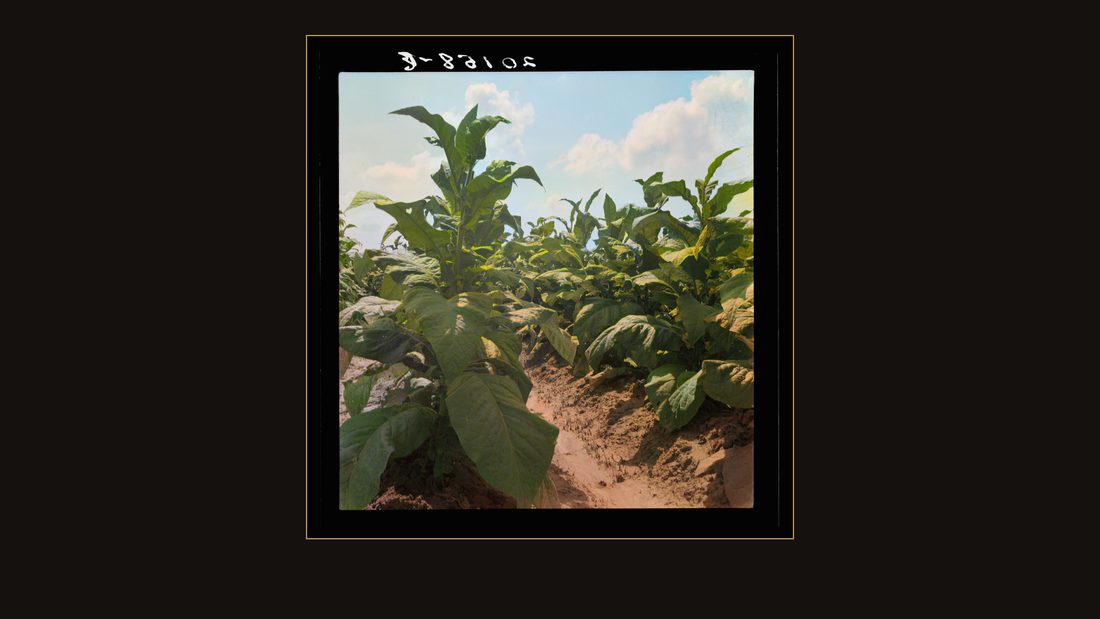
R11 Good tobacco, topped and ready for priming. Granville County, North Carolina
Dorothea Lange · July 1939 · Library of Congress · FSA/OWI · AI-colorized. View the original.
This is the crop that report is about, in the counties that grew it. Photographers on the federal payroll had been working the North Carolina piedmont since nineteen thirty-six. Their negatives are black and white.
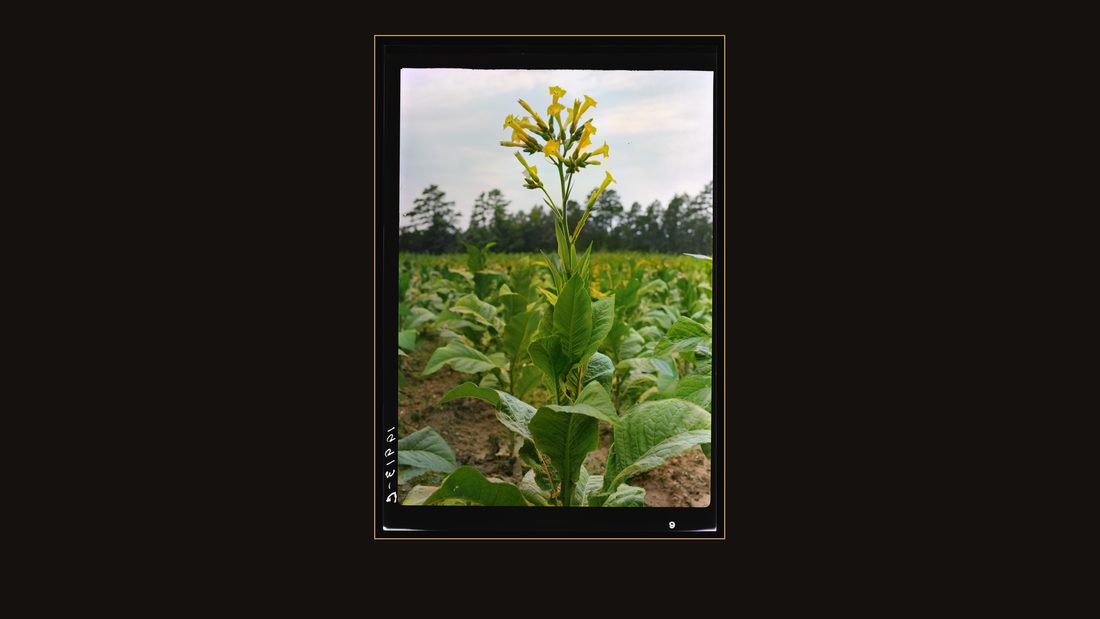
R10 Single tobacco flower. The tobacco plant is "topped" before it blooms in the field, with exception of a few plants which are saved out for seed. Shoofly, Granville County, North Carolina
Dorothea Lange · July 1939 · Library of Congress · FSA/OWI · AI-colorized. View the original.
So let's be straight about what you're watching. Every color in this film is a machine's guess, made this year from the gray values on those negatives. The light, the framing, the faces — those belong to the photographers, untouched. The colors are estimates, and every original is free at the Library of Congress, linked below.
What the crop was worth
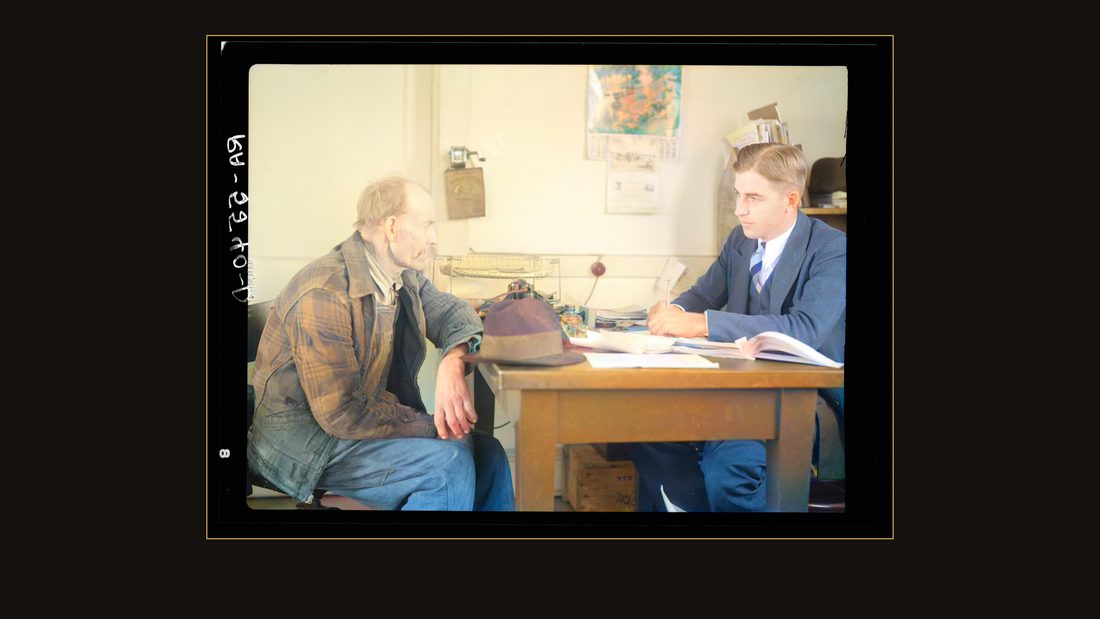
R01 Rehabilitation client repays loan. Oxford, North Carolina
Arthur Rothstein · October 1936 · Library of Congress · FSA/OWI · AI-colorized. View the original.
Oxford, North Carolina, October nineteen thirty-six. Arthur Rothstein photographed a farmer at a government desk, repaying a rehabilitation loan. In this country, tobacco was not just a crop. It was the money.
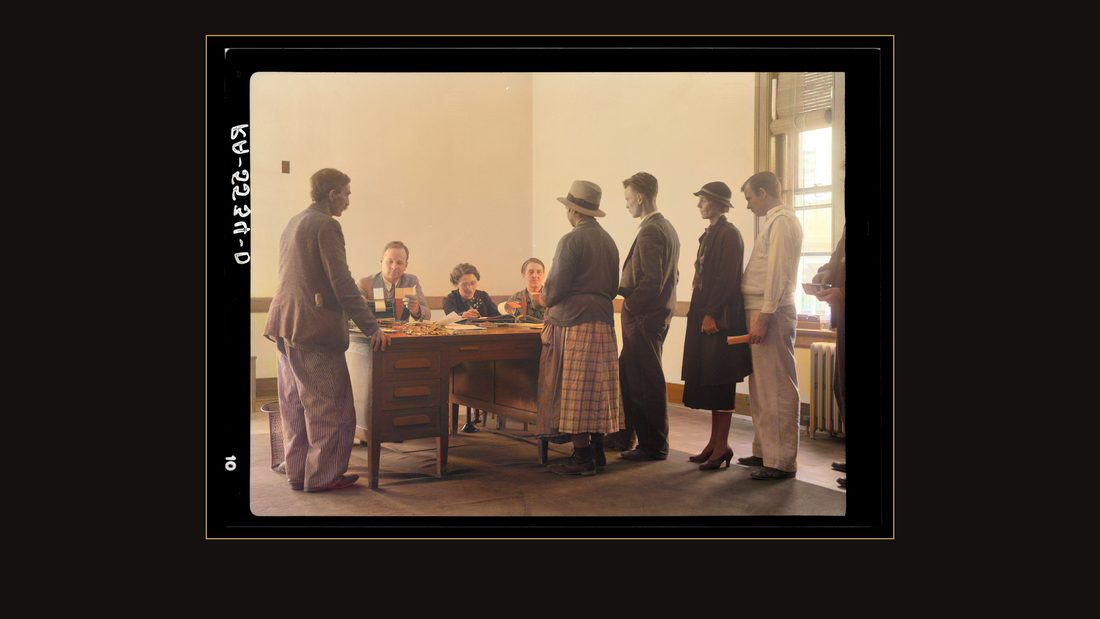
R02 Rehabilitation clients repaying loans. Durham, North Carolina
Arthur Rothstein · October 1936 · Library of Congress · FSA/OWI · AI-colorized. View the original.
Durham. The line to repay. The government had lent these families seed, fertilizer, a mule — and the loan came due when the tobacco sold.
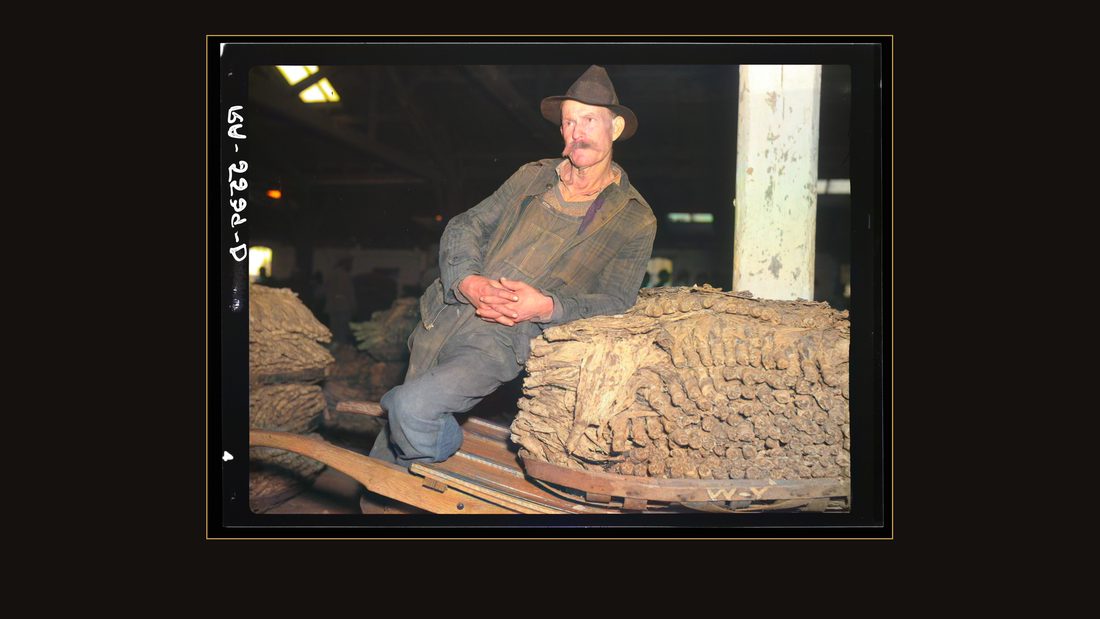
R03 Rehabilitation client with his tobacco crop. Oxford, North Carolina
Arthur Rothstein · October 1936 · Library of Congress · FSA/OWI · AI-colorized. View the original.
Rothstein's caption for this one: rehabilitation client with his tobacco crop. The crop and the loan payment are the same photograph.
Putting in
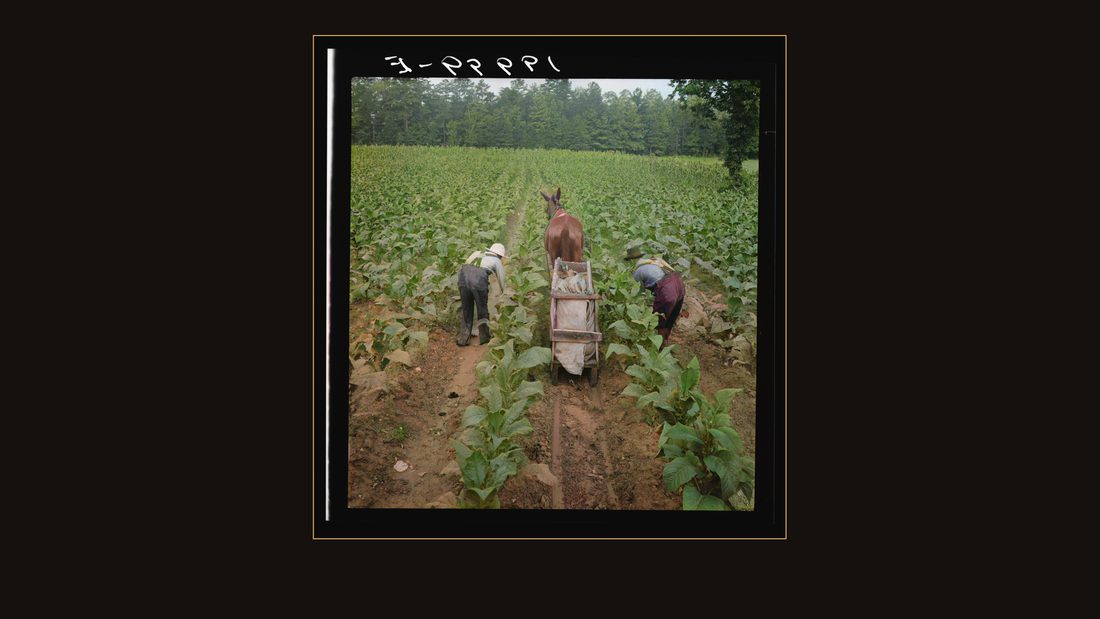
R04 Tobacco field in early morning where white sharecropper and wage laborer are priming tobacco. Shoofly, North Carolina
Dorothea Lange · July 1939 · Library of Congress · FSA/OWI · AI-colorized. View the original.
July, nineteen thirty-nine. Dorothea Lange came through Granville and Person Counties at harvest. Early morning at Shoofly: priming tobacco — pulling the ripe leaves, bottom of the stalk first.
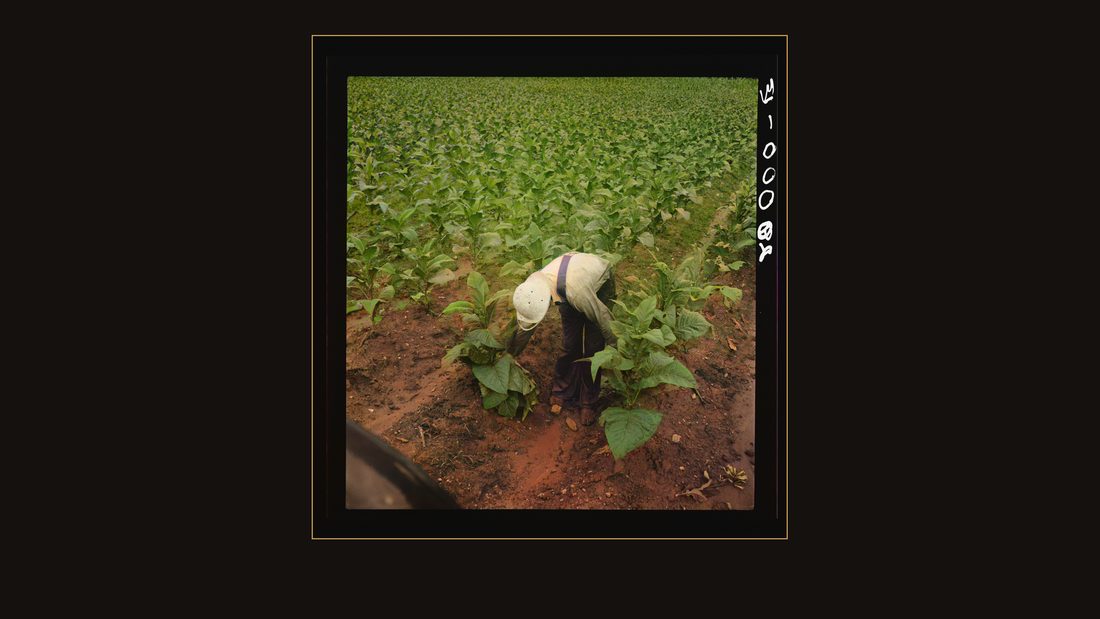
R05 White sharecropper priming tobacco early in the morning. Shoofly, North Carolina
Dorothea Lange · July 1939 · Library of Congress · FSA/OWI · AI-colorized. View the original.
It is stooped, sticky work, and it starts before the dew burns off.
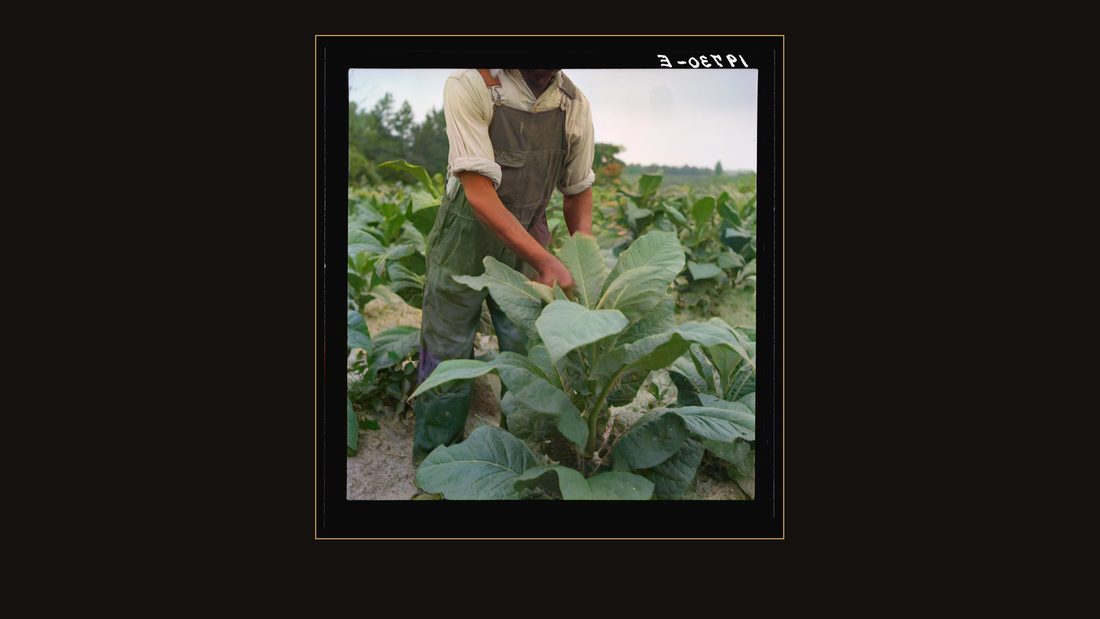
R06 Negro tenant topping tobacco. Person County, North Carolina
Dorothea Lange · July 1939 · Library of Congress · FSA/OWI · AI-colorized. View the original.
Topping — breaking the flower out of the top of every plant, so the strength goes into the leaves.
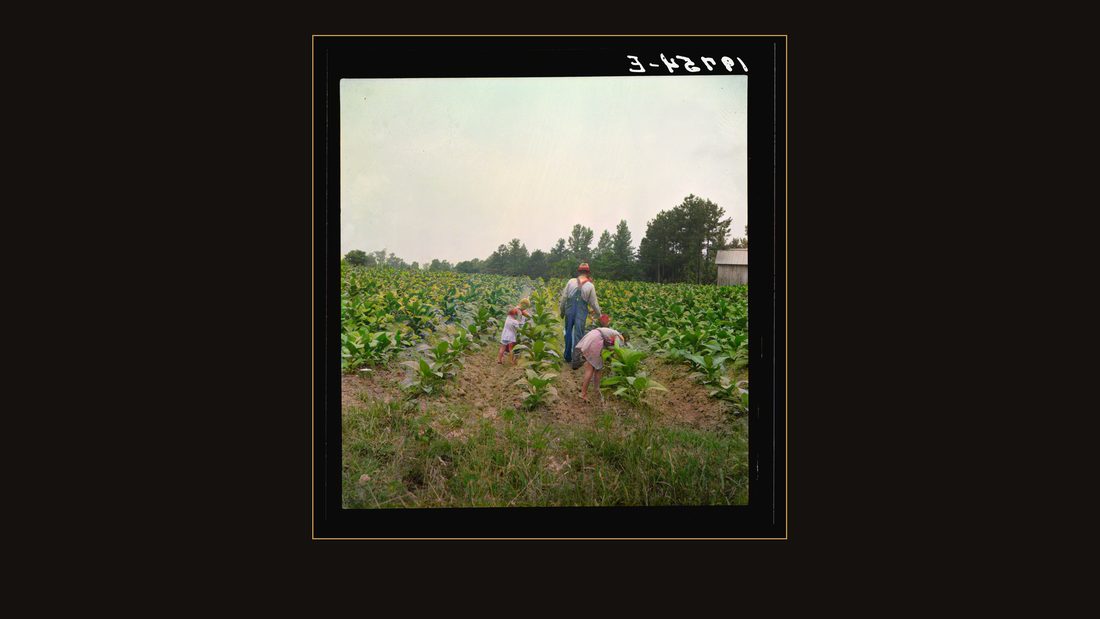
R07 Tobacco sharecropper and his children working on tobacco patch, "topping" and "worming."
Dorothea Lange · July 1939 · Library of Congress · FSA/OWI · AI-colorized. View the original.
A sharecropper and his children, quote, topping and worming. The quotation marks are Lange's. The worms were picked off by hand.
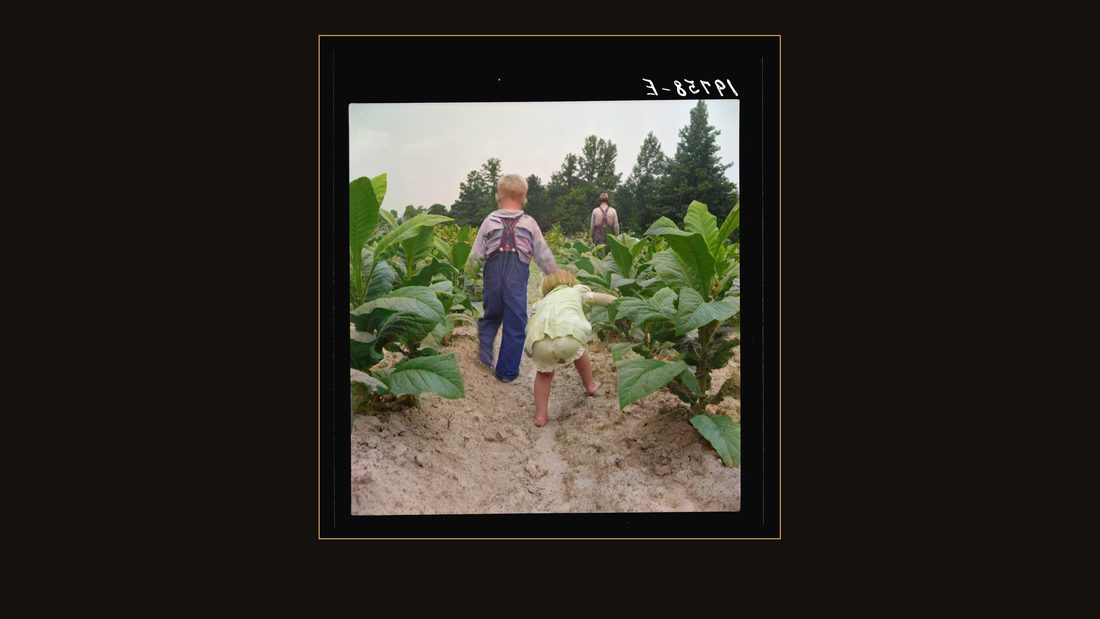
R08 Children helping father, tobacco sharecropper, at work in tobacco patch. Person County, North Carolina
Dorothea Lange · July 1939 · Library of Congress · FSA/OWI · AI-colorized. View the original.
Children helping father, her caption says. Nobody in a tobacco family was too young to work.
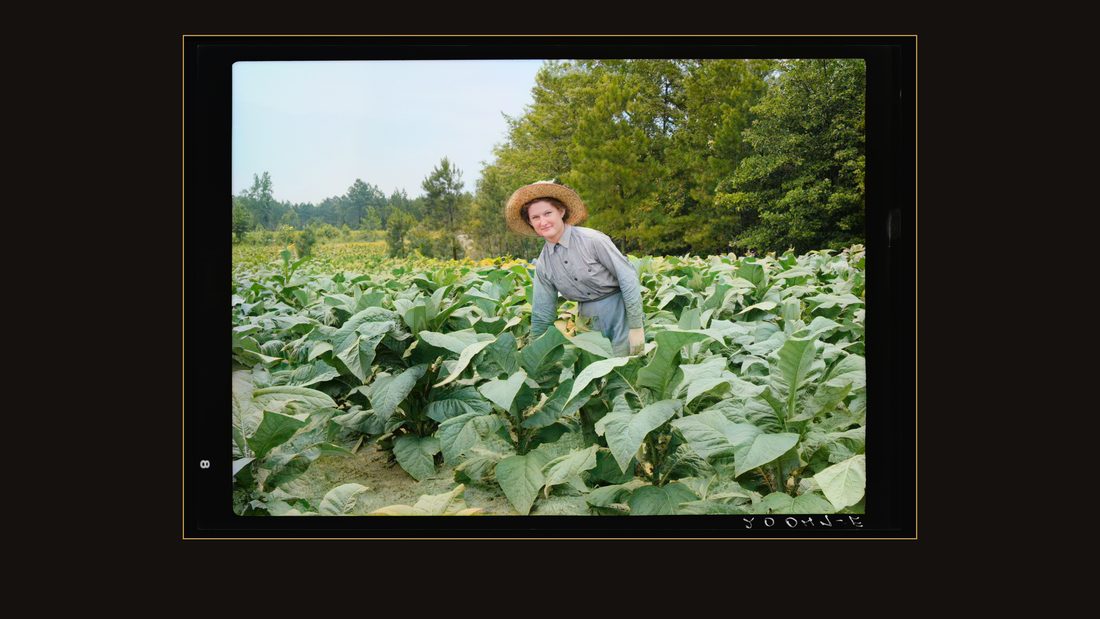
R09 Owner's daughter topping tobacco. She has a patch of her own of about 1000 hills from which she will be given the proceeds. Her father buys her clothes and she can have the "patch" money for whatever she wants. She is in the eighth grade; says she doesn't learn as fast as she ought. Granville County, North Carolina
Dorothea Lange · July 1939 · Library of Congress · FSA/OWI · AI-colorized. View the original.
This girl is topping her own patch — about a thousand hills her father set aside for her, and the patch money is hers to keep. She told Lange she was in the eighth grade, and said she doesn't learn as fast as she ought.
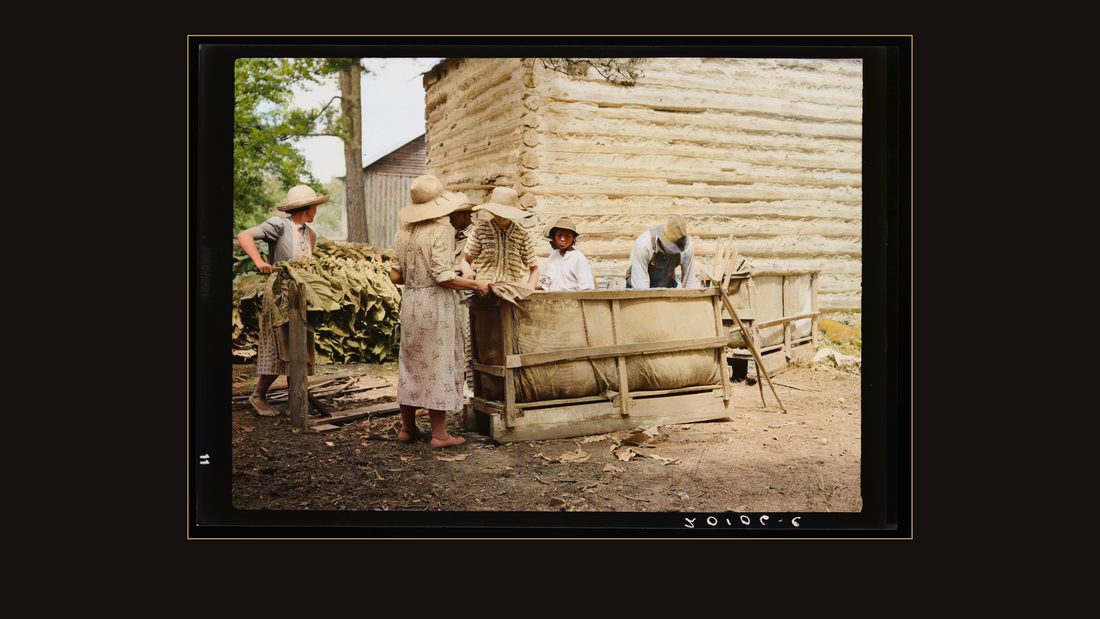
R12 Families stringing tobacco brought in from the field by sled. Granville County, North Carolina
Dorothea Lange · July 1939 · Library of Congress · FSA/OWI · AI-colorized. View the original.
The primed leaves come in from the field by sled, and whole families string them onto sticks.
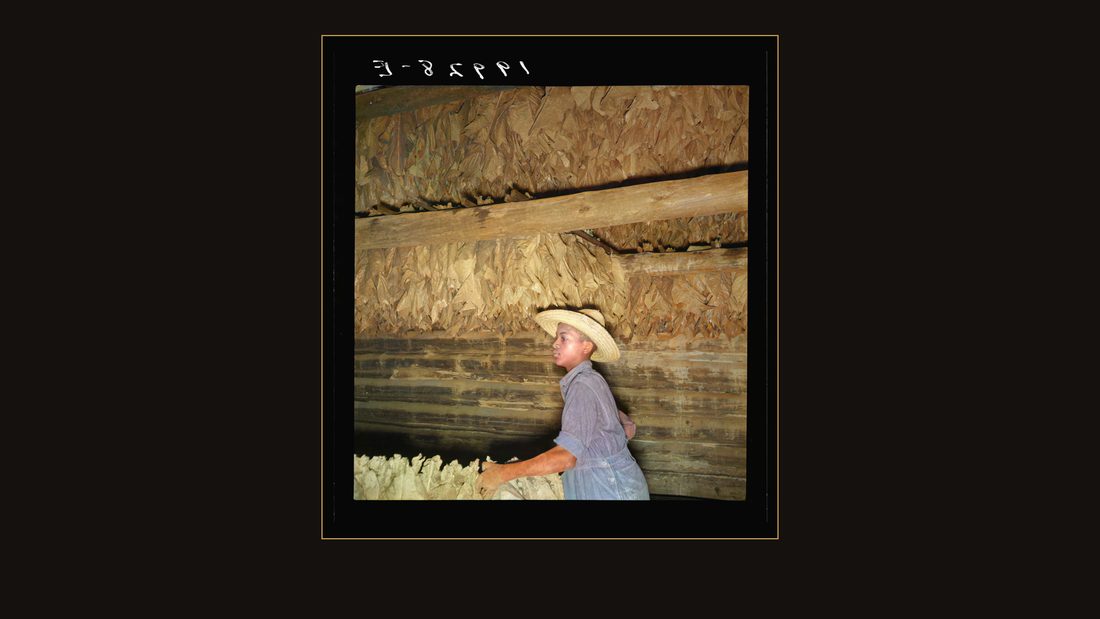
R14 Son of sharecropper and sub tenant hanging up strung tobacco inside barn. Shoofly, North Carolina
Dorothea Lange · July 1939 · Library of Congress · FSA/OWI · AI-colorized. View the original.
A sharecropper's son hangs the strung sticks inside the barn, tier above tier, up to the roof.
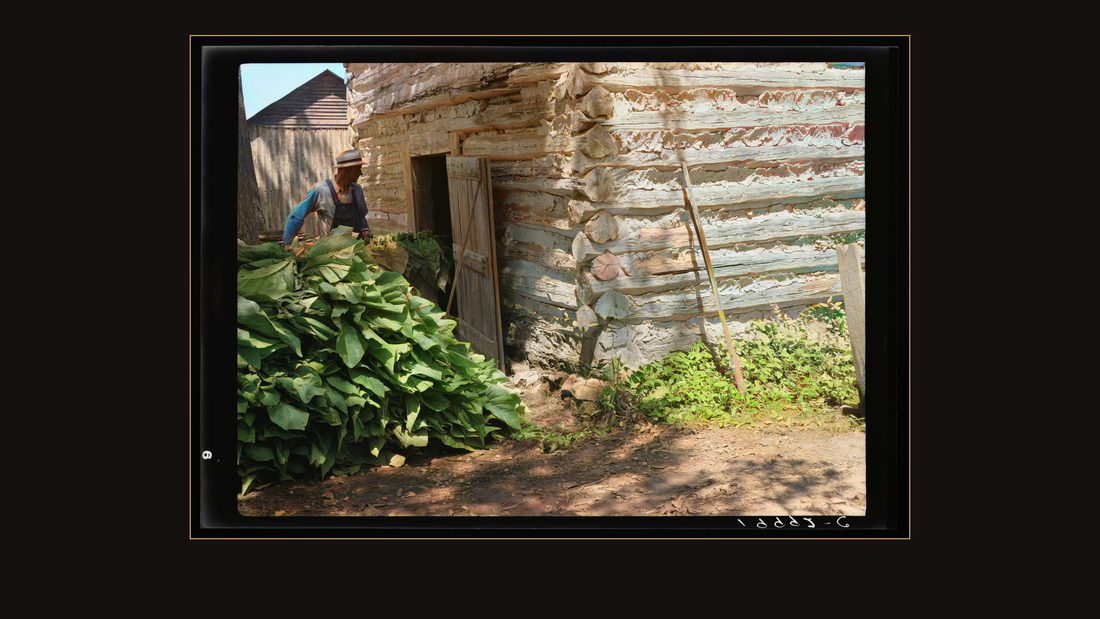
R15 Putting in the tobacco after the morning work. Shoofly, North Carolina
Dorothea Lange · July 1939 · Library of Congress · FSA/OWI · AI-colorized. View the original.
Putting in, they called it. A barn filled in a morning's work.
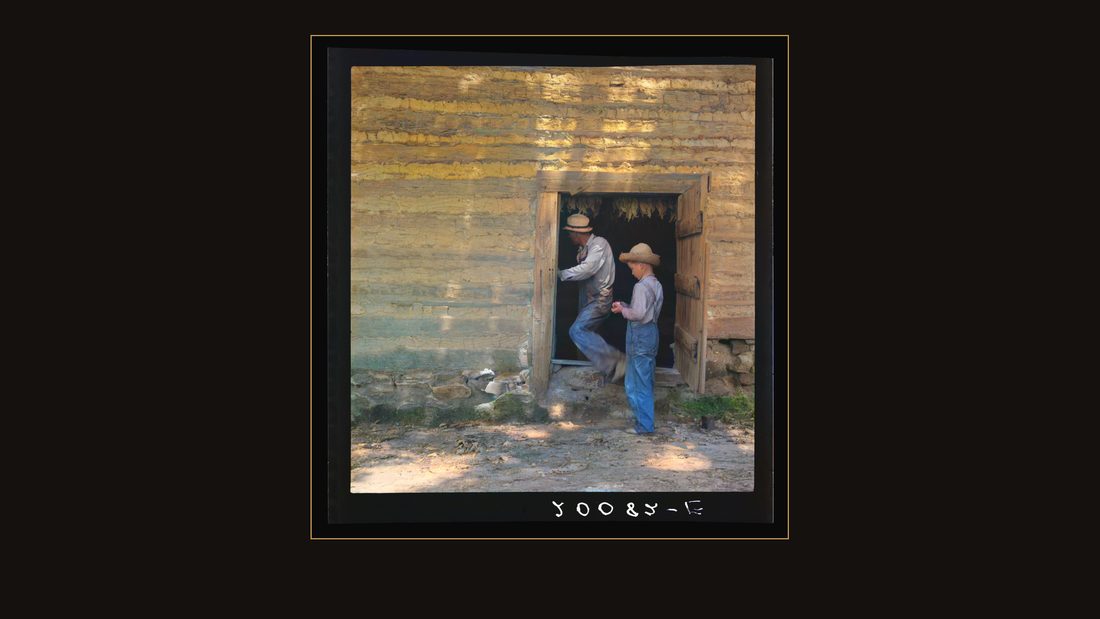
R16 Coming out of tobacco barn in which tobacco is being cured. Careful check of temperature must be made. Granville County, North Carolina
Dorothea Lange · July 1939 · Library of Congress · FSA/OWI · AI-colorized. View the original.
Then the fires are lit, and for days the barn cures the leaf from green to gold. The temperature has to be watched around the clock.
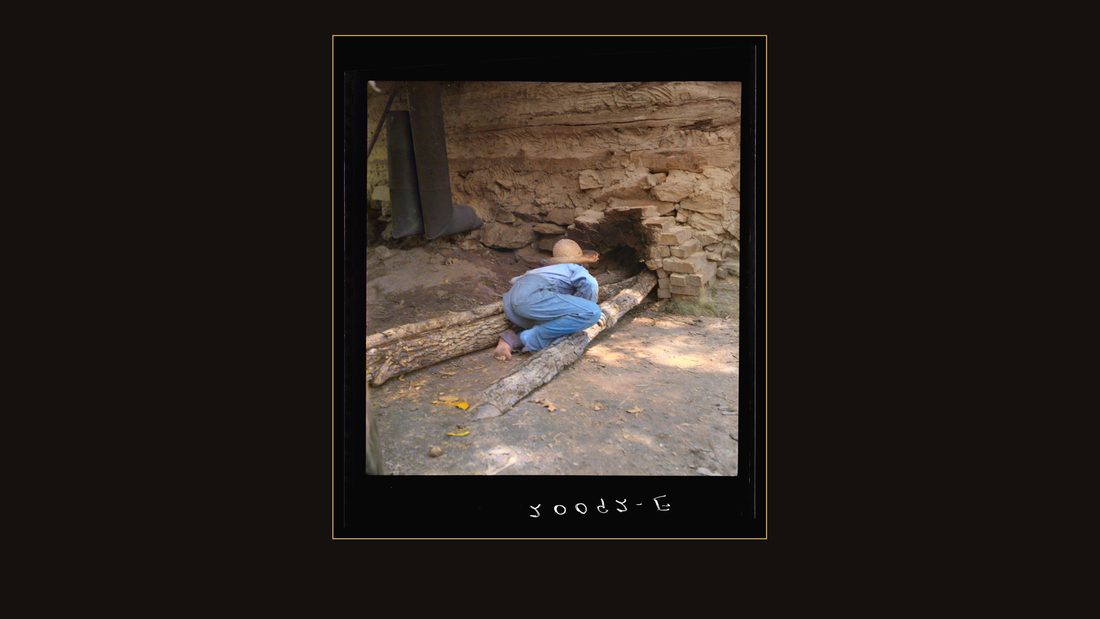
R17 Ten year old son of tobacco tenant tends the fire which is curing the tobacco in the barn. Granville County, North Carolina
Dorothea Lange · July 1939 · Library of Congress · FSA/OWI · AI-colorized. View the original.
The one watching this fire is ten years old.
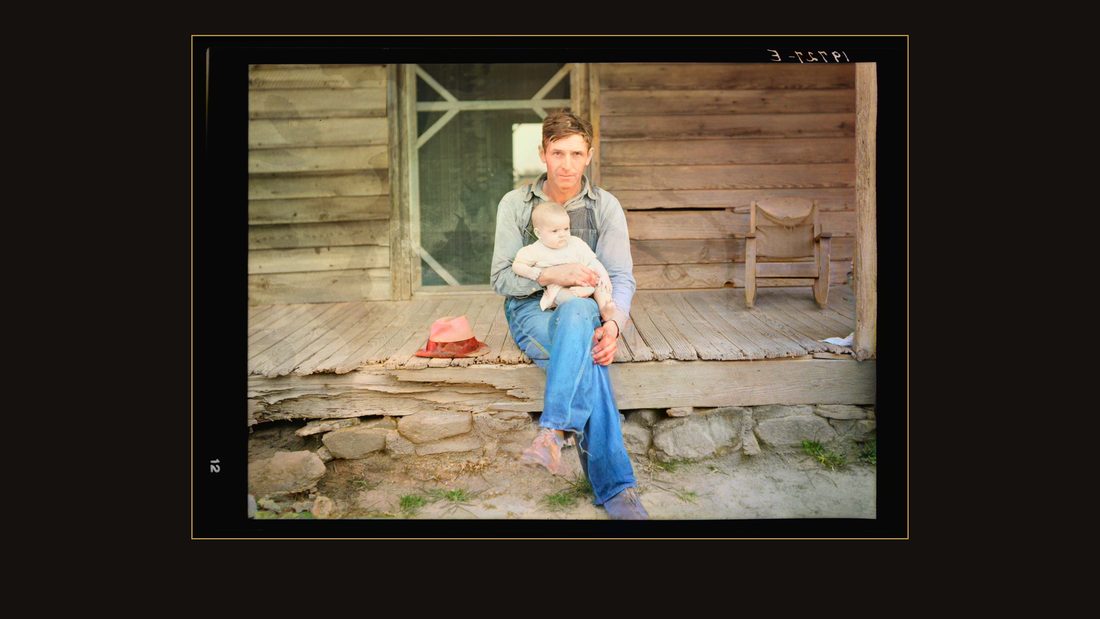
R18 Mr. Whitfield, tobacco sharecropper, with baby on front porch. North Carolina, Person County
Dorothea Lange · July 1939 · Library of Congress · FSA/OWI · AI-colorized. View the original.
Mr. Whitfield, tobacco sharecropper, with his baby on the front porch.
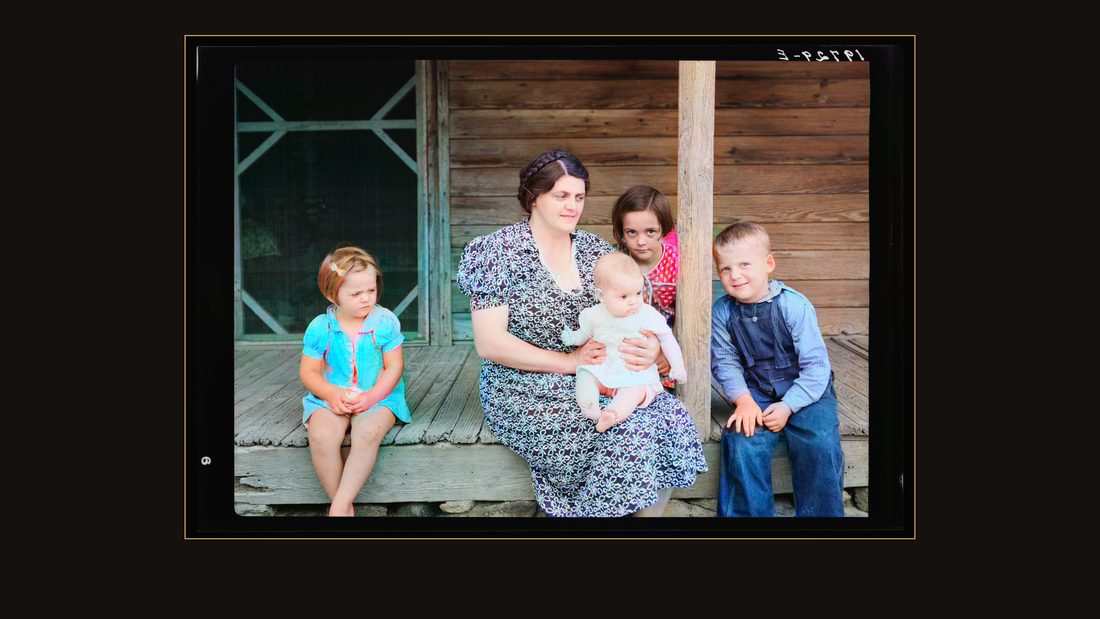
R19 Wife and children of tobacco sharecropper on front porch. Person County, North Carolina
Dorothea Lange · July 1939 · Library of Congress · FSA/OWI · AI-colorized. View the original.
A sharecropper's wife and children. The house went with the land, and the land went with the crop.
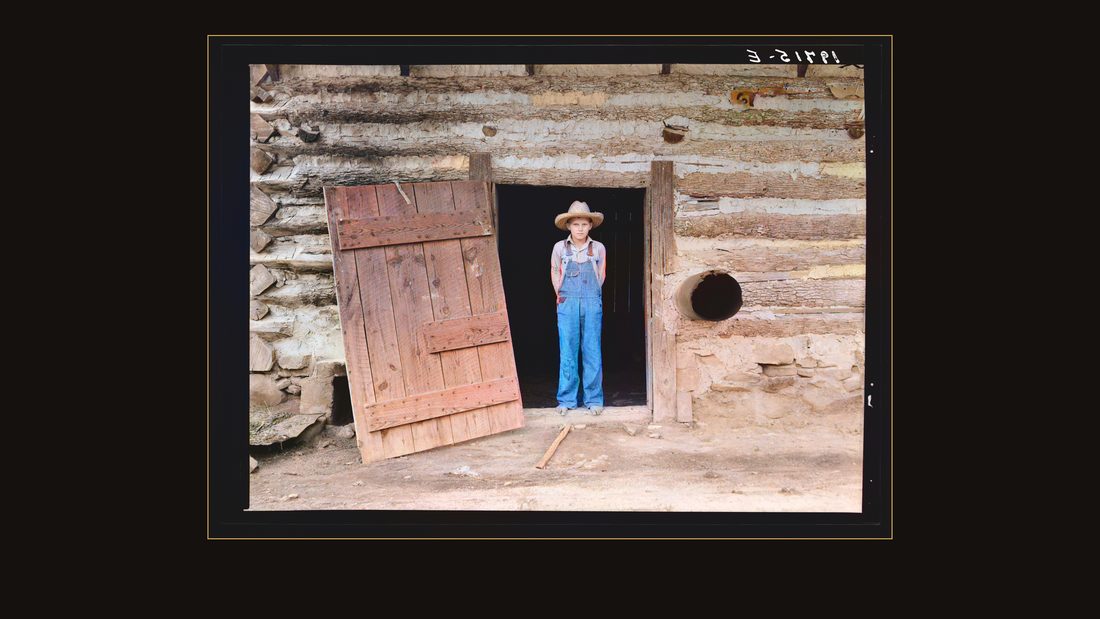
R20 North Carolina farm boy in doorway of tobacco barn. Person County, North Carolina
Dorothea Lange · July 1939 · Library of Congress · FSA/OWI · AI-colorized. View the original.
A farm boy in the doorway of a tobacco barn.
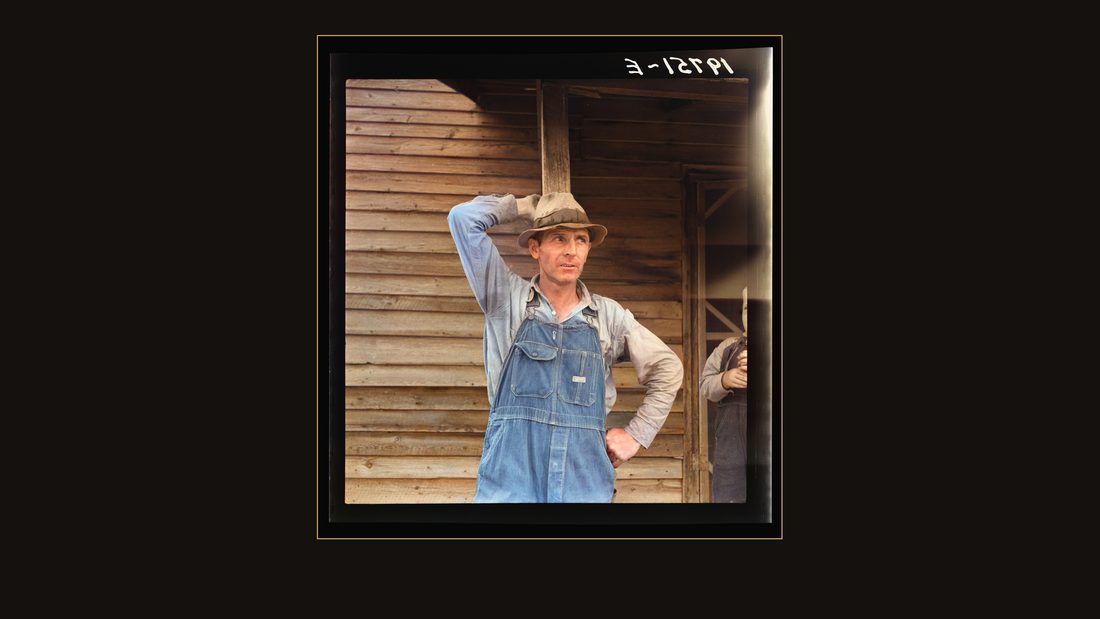
R21 Tobacco sharecropper tells about his prospects. Person County, North Carolina
Dorothea Lange · July 1939 · Library of Congress · FSA/OWI · AI-colorized. View the original.
Lange's caption here reads: tobacco sharecropper tells about his prospects. She didn't write down what he said.
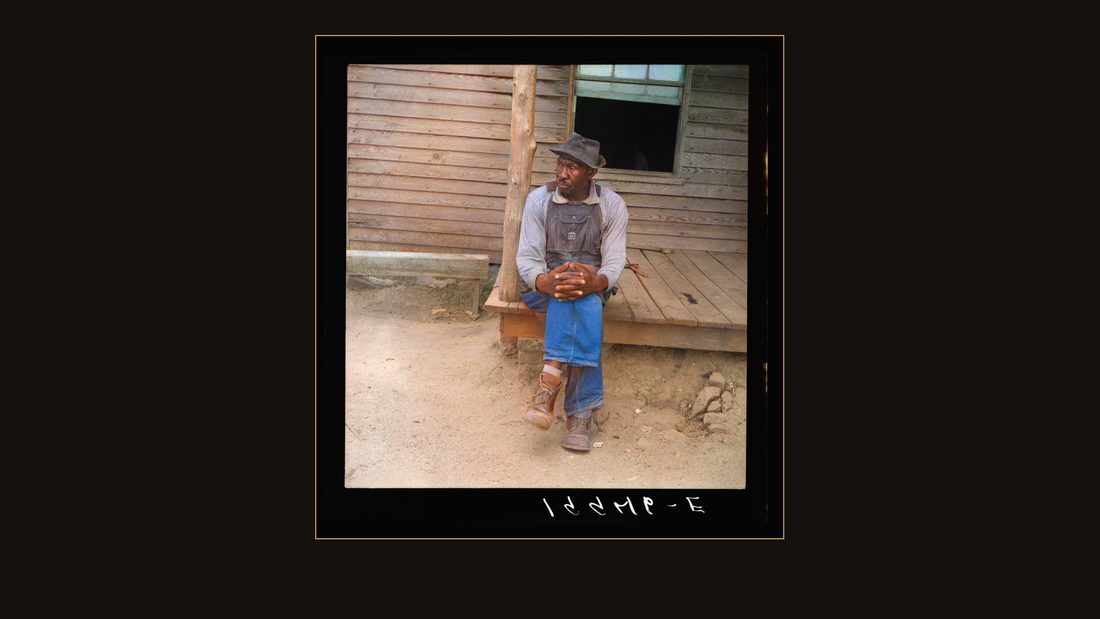
R22 Father of sharecropper family. He is sixty-nine years old, has six acres of tobacco, has a large family. Heard in conversation on his porch, "Land is like folks. It gets tired and needs a rest." Person County, North Carolina
Dorothea Lange · July 1939 · Library of Congress · FSA/OWI · AI-colorized. View the original.
This man is sixty-nine. He farms six acres of tobacco and has a large family. Lange did write down one thing she heard on his porch: land is like folks — it gets tired and needs a rest.
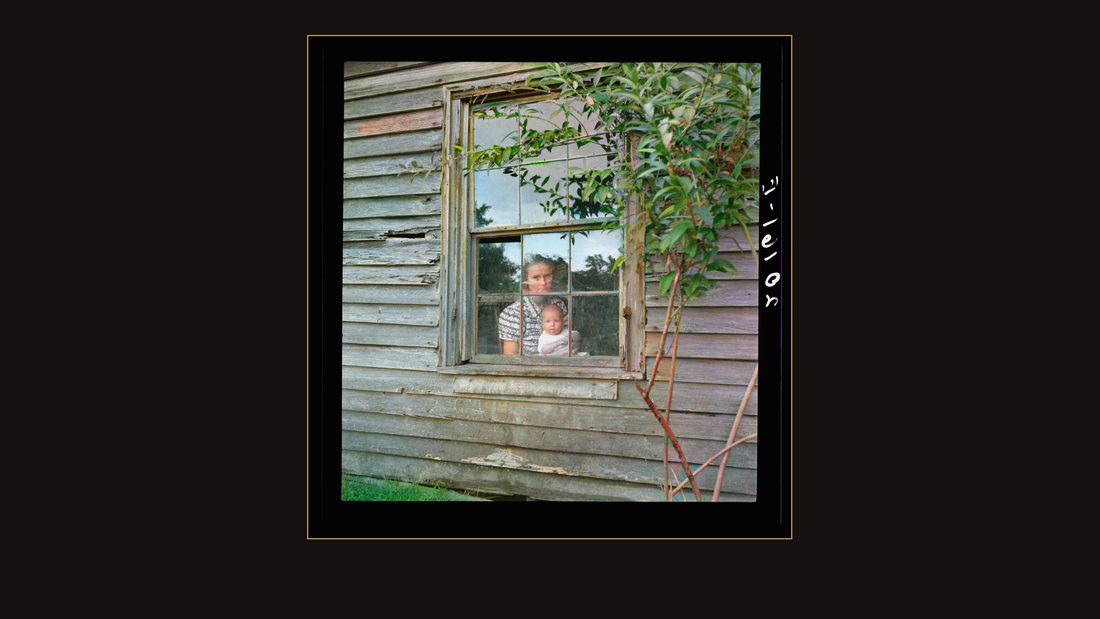
R23 Wife and five month old baby of young tobacco sharecropper (Mr. Taylor) in window of their home. She is seventeen years old. On the following day she helped "put in" tobacco at the farm. Granville County, North Carolina
Dorothea Lange · July 1939 · Library of Congress · FSA/OWI · AI-colorized. View the original.
Mrs. Taylor is seventeen. The baby is five months old. The day after this picture was made, she was in the field putting in tobacco.
Sunday
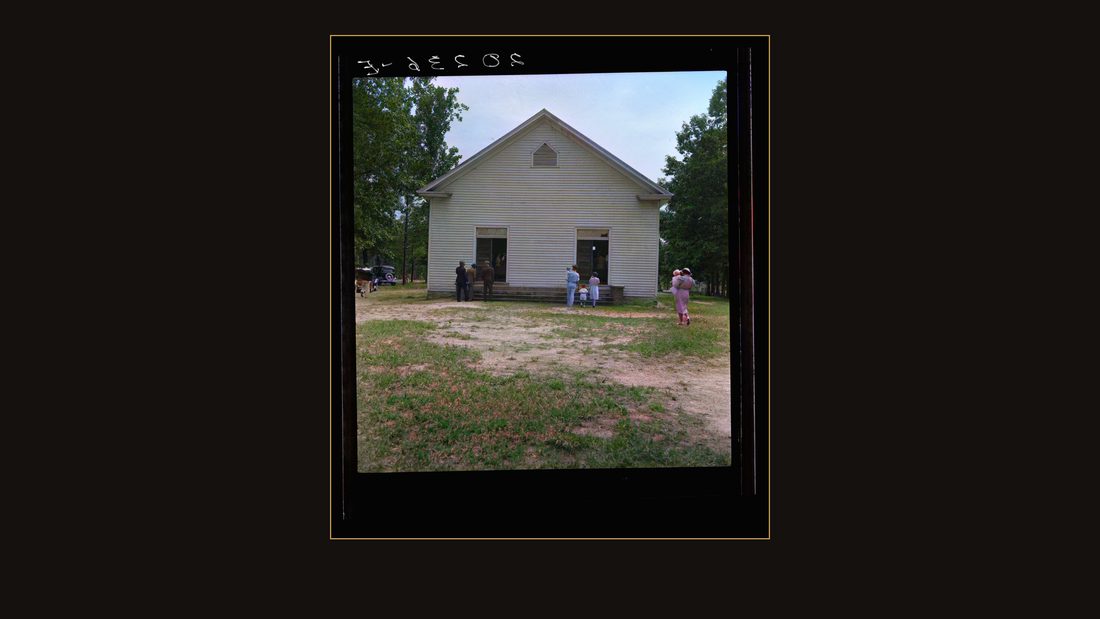
R24 Congregation entering church. Wheeley's Church. Person County, North Carolina
Dorothea Lange · July 1939 · Library of Congress · FSA/OWI · AI-colorized. View the original.
Sunday. Wheeley's Church, Person County.
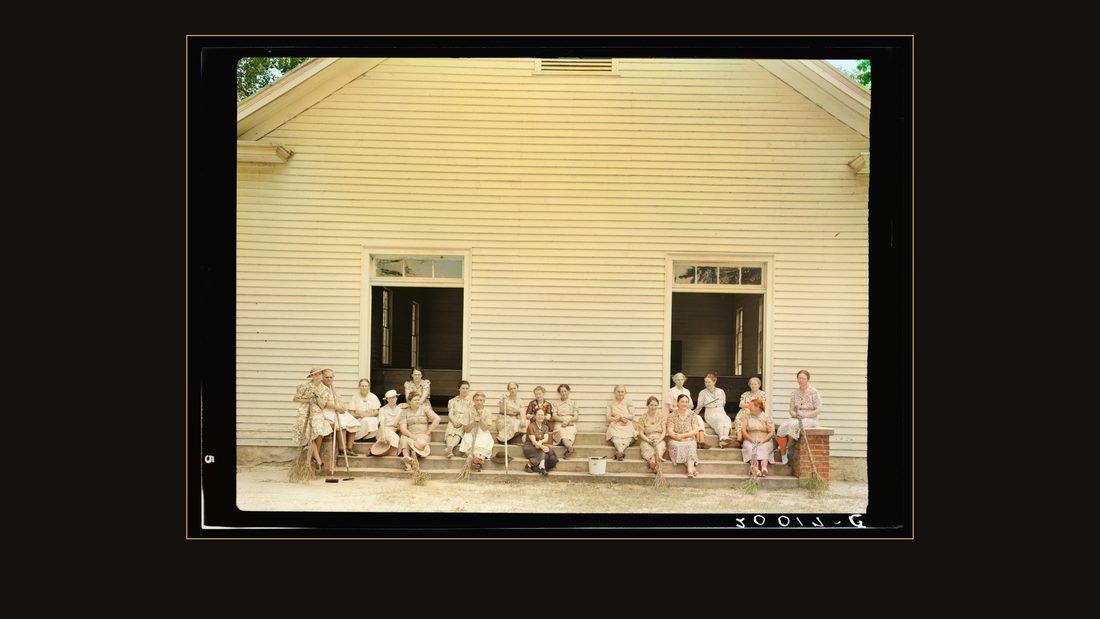
R25 Women of the congregation of Wheeley's Church on steps with brooms and buckets on annual clean up day. Gordonton, North Carolina
Dorothea Lange · July 1939 · Library of Congress · FSA/OWI · AI-colorized. View the original.
Once a year the women of the congregation came with brooms and buckets, and cleaned the church and the grounds.
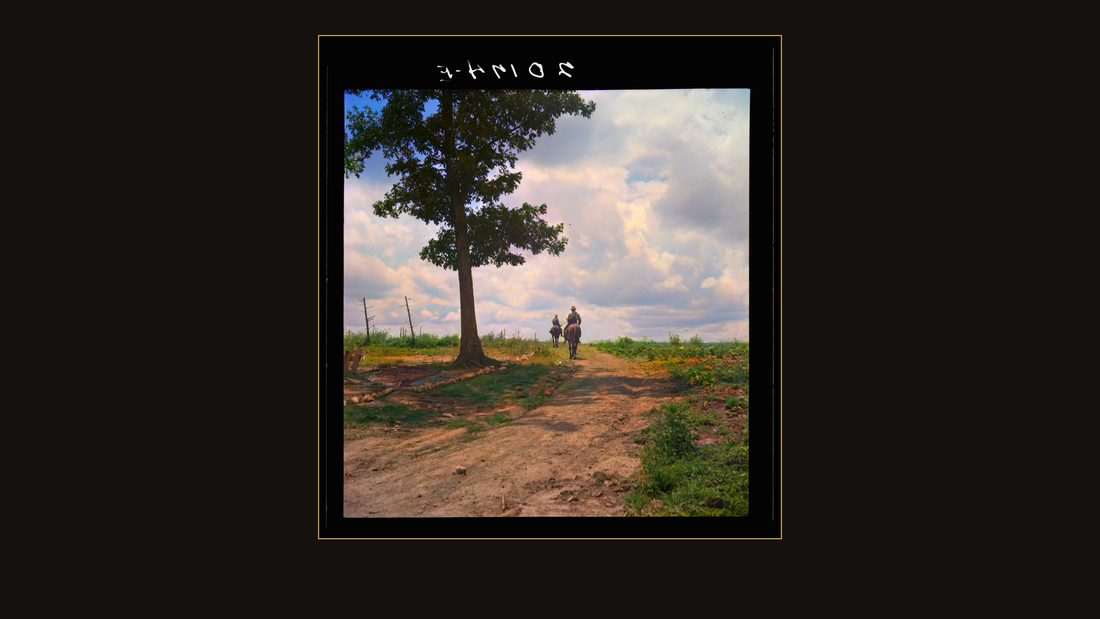
R26 Sons of Negro tenant farmer go off visiting on Saturday afternoon. Granville County, North Carolina
Dorothea Lange · July 1939 · Library of Congress · FSA/OWI · AI-colorized. View the original.
And Saturday. The sons of a tenant farmer ride off down the road to go visiting.
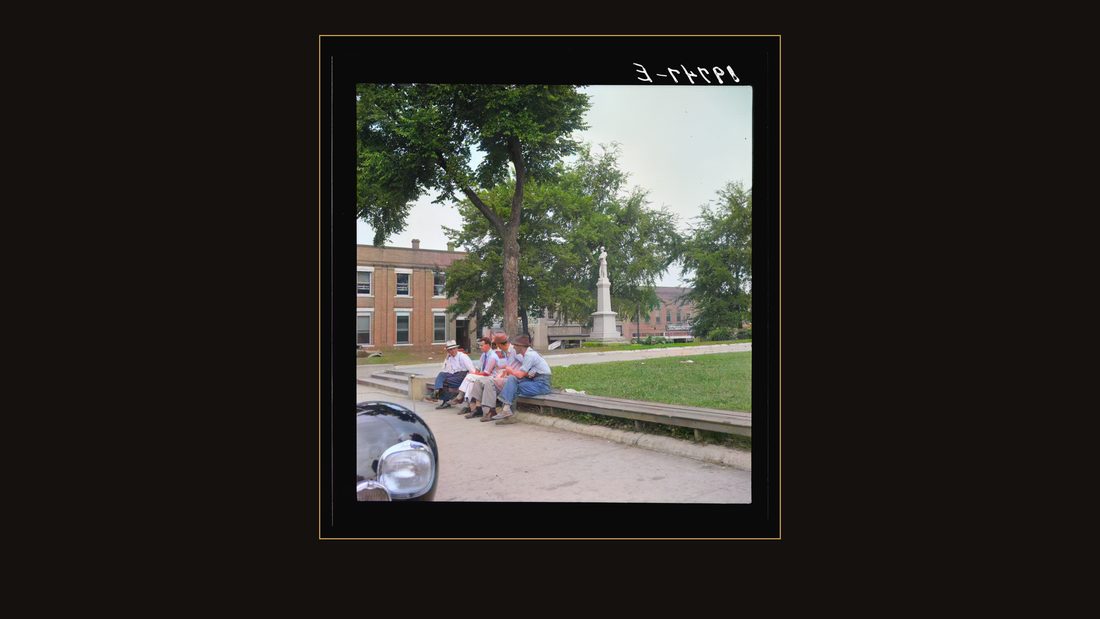
R27 Men idling around the courthouse square. Note Confederate monument characteristic of Southern towns. Roxboro, North Carolina
Dorothea Lange · July 1939 · Library of Congress · FSA/OWI · AI-colorized. View the original.
Saturday in Roxboro, the county seat, men idling around the courthouse square. Lange noted the Confederate monument — characteristic, she wrote, of Southern towns.
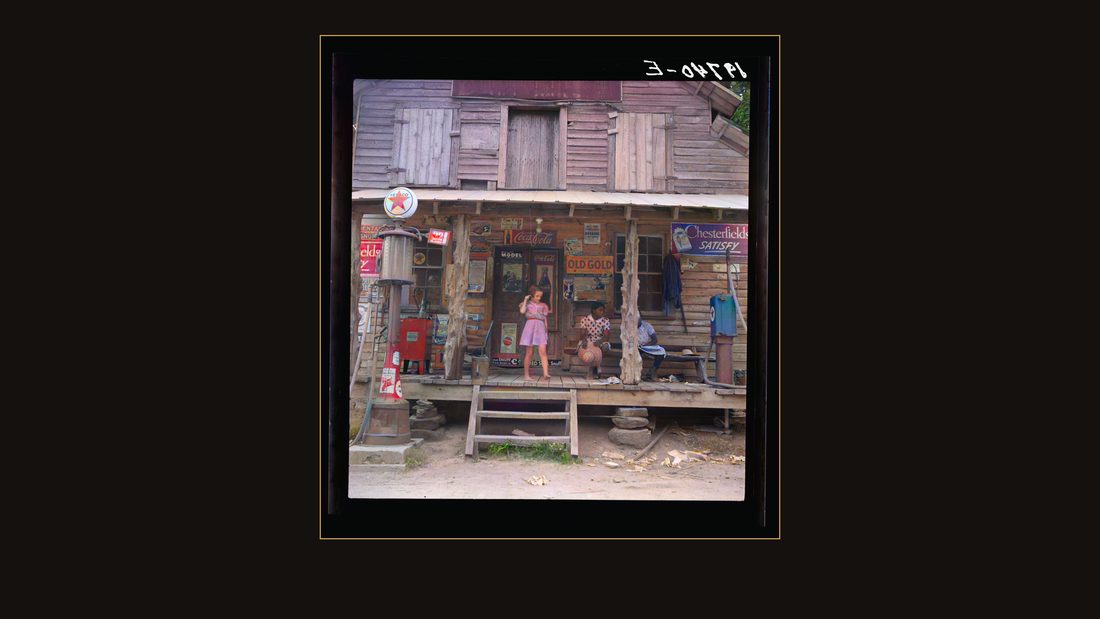
R28 Daughter of white tobacco sharecropper at country store. Person County, North Carolina
Dorothea Lange · July 1939 · Library of Congress · FSA/OWI · AI-colorized. View the original.
A sharecropper's daughter at the country store.
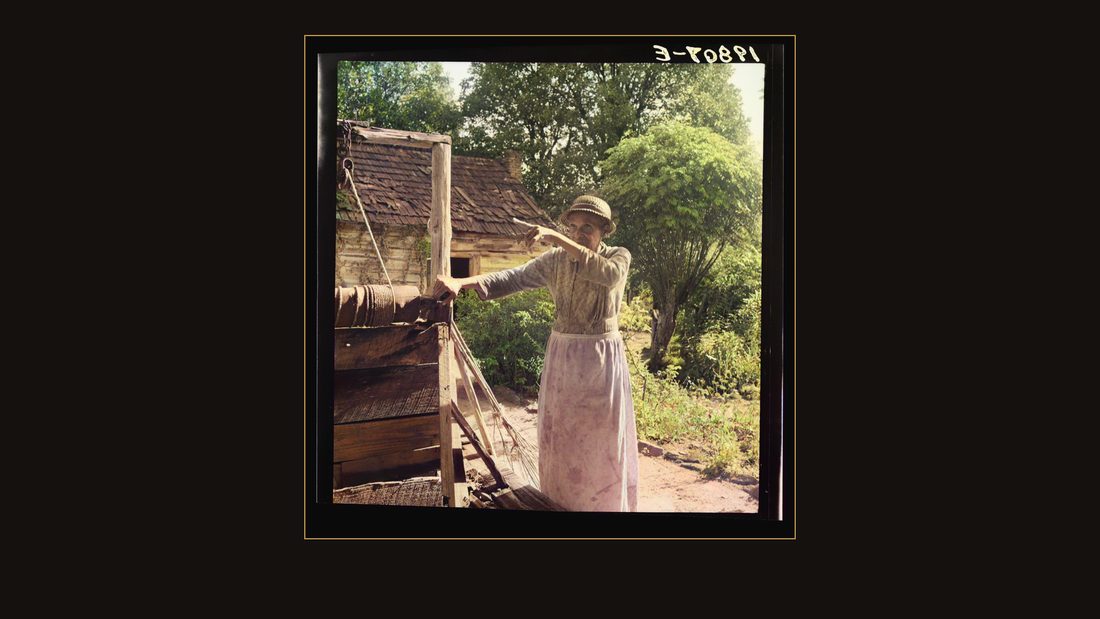
R29 Caroline Atwater, wife of Negro owner, tells where she was born
Dorothea Lange · July 1939 · Library of Congress · FSA/OWI · AI-colorized. View the original.
And Caroline Atwater of Orange County, who owned her place with her husband — photographed mid-sentence, telling where she was born.
September
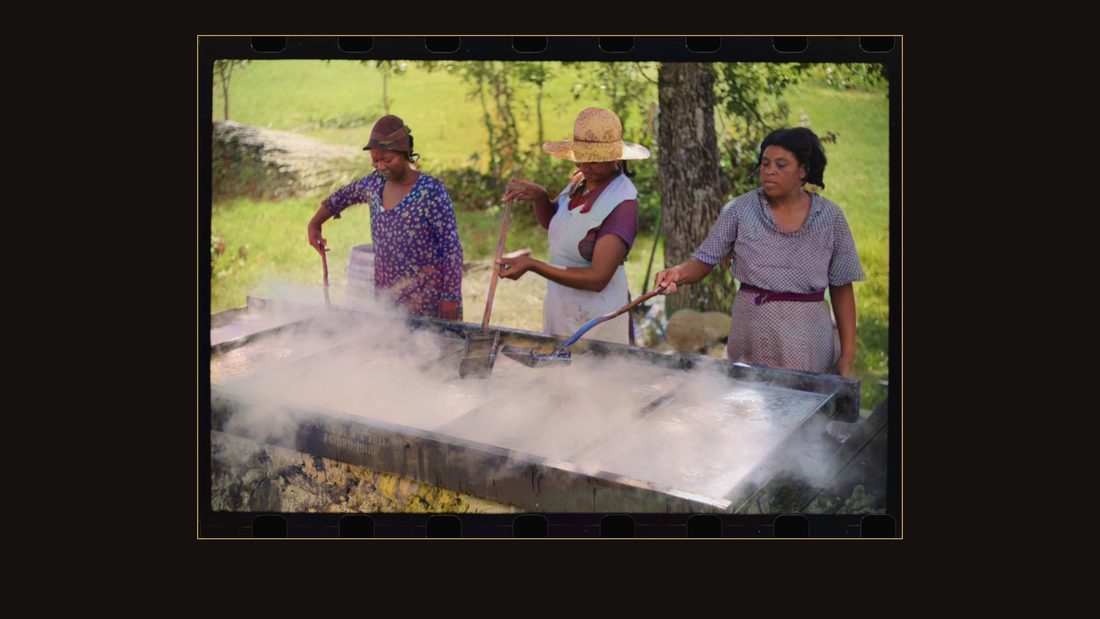
R30 Skimming the boiling cane juice to make sorghum syrup at cane mill near Carr, Orange County, North Carolina
Marion Post Wolcott · September 1939 · Library of Congress · FSA/OWI · AI-colorized. View the original.
September, nineteen thirty-nine. Marion Post Wolcott found the belt between seasons — the crop in the barns, the war three weeks old. Near Carr, a cane mill: skimming the boiling juice down to sorghum syrup.
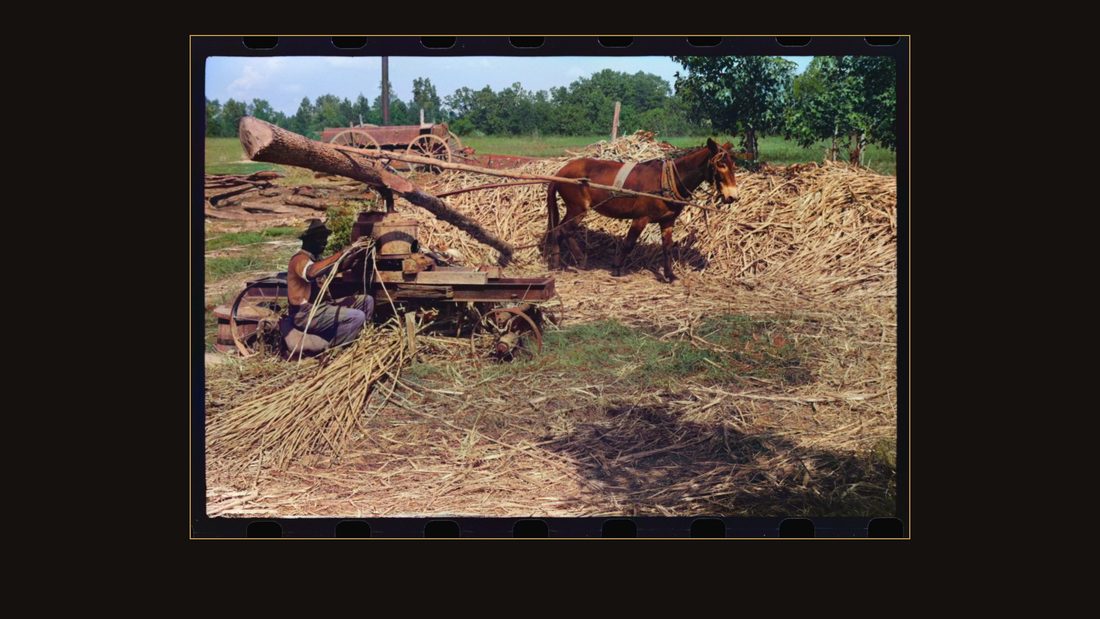
R31 Feeding the sorghum cane into the mill to make syrup on property of Wess Cris, a tobacco farm of about 165 acres in a prosperous Negro settlement near Carr, Orange County, North Carolina
Marion Post Wolcott · September 1939 · Library of Congress · FSA/OWI · AI-colorized. View the original.
The mill stood on Wess Cris's farm — a hundred sixty-five acres of tobacco, in what Wolcott described as a prosperous Black settlement near Carr.
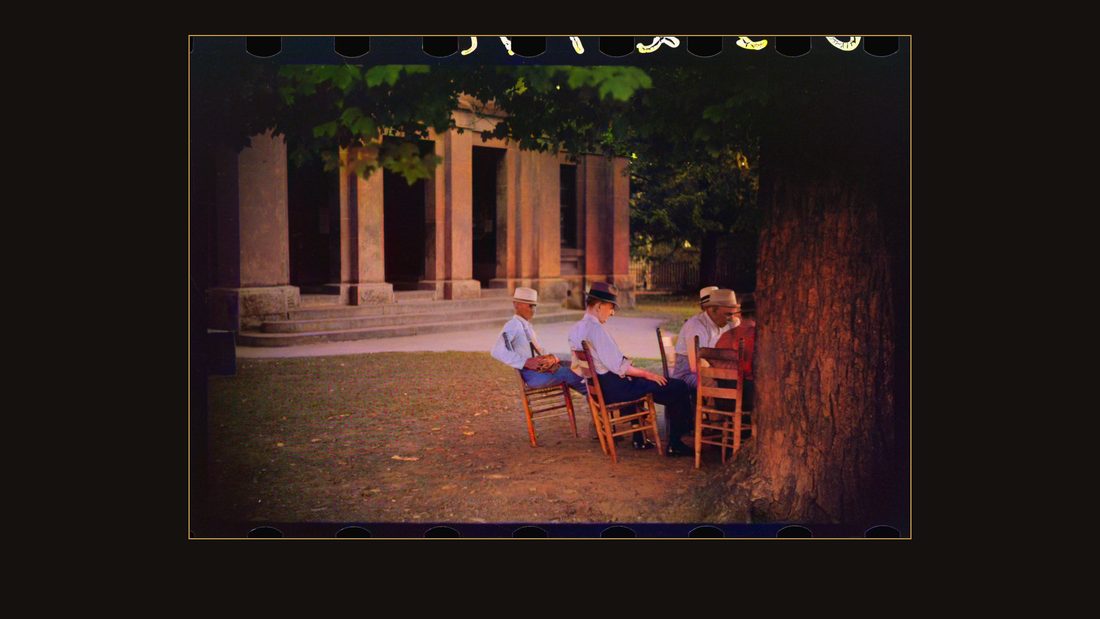
R34 Townspeople and farmers playing cards in front of courthouse on Saturday afternoon in Yanceyville, Caswell County, North Carolina
Marion Post Wolcott · September 1939 · Library of Congress · FSA/OWI · AI-colorized. View the original.
Cards in front of the courthouse. What nobody in this picture knows yet is that the tobacco markets that should have been running that month — weren't.
The deal
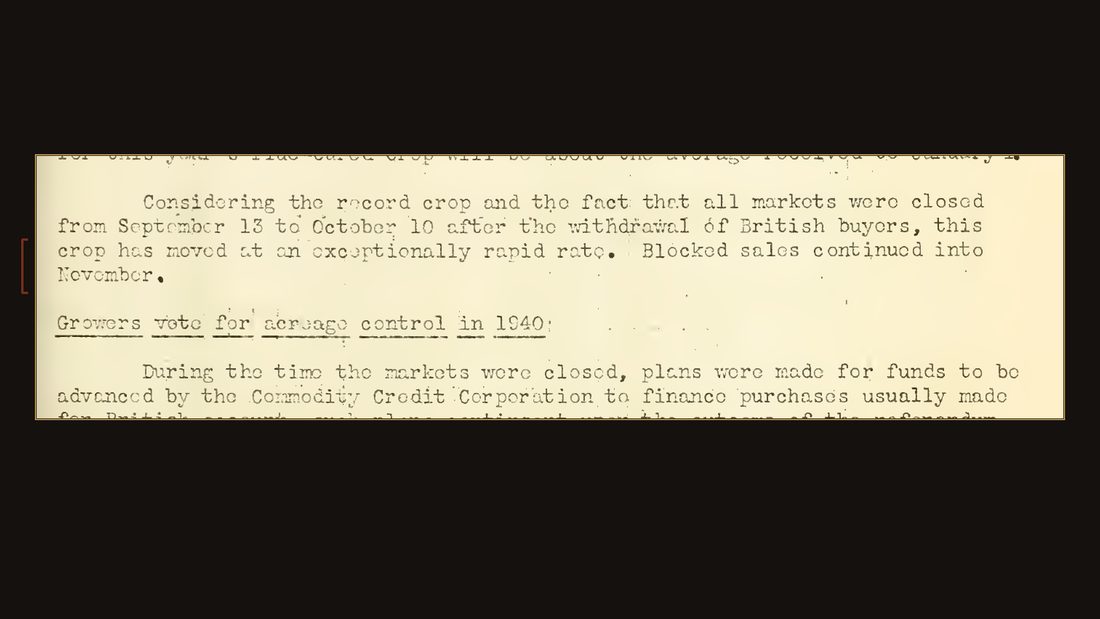
S2
The Tobacco Situation TS-13 · USDA BAE · Jan. 1940.
The federal record puts it plainly: all markets closed from September thirteenth to October tenth, after the withdrawal of British buyers. The Old Belt markets never opened at all. Blocked sales ran into November.
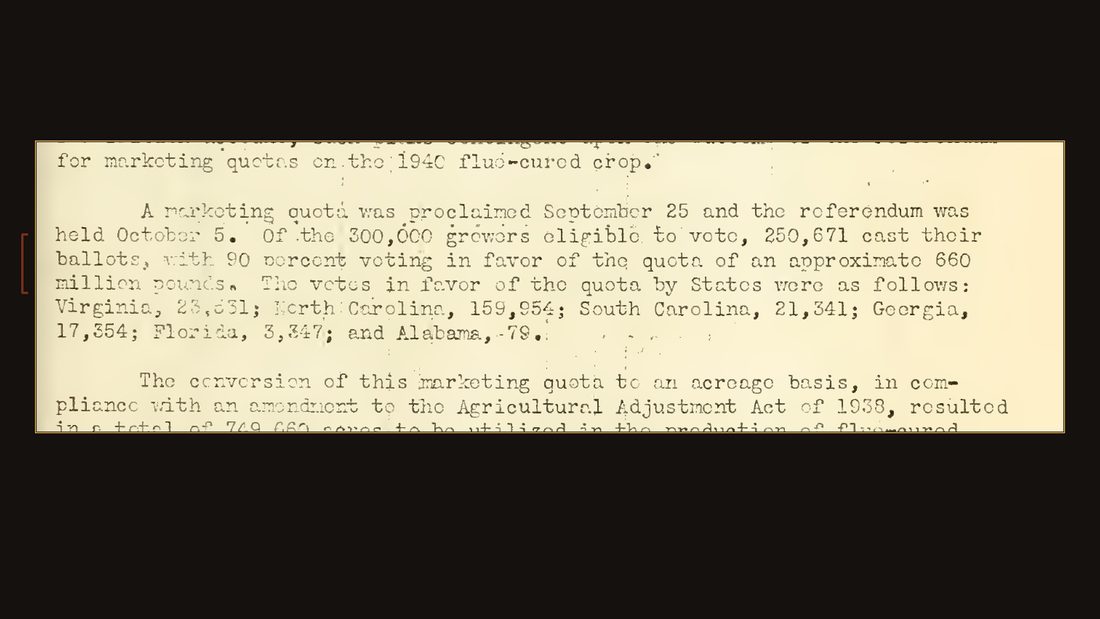
S3
The Tobacco Situation TS-13 · USDA BAE · Jan. 1940.
During the shutdown, Washington made an offer. The Commodity Credit Corporation would buy the British share of the crop — if the growers voted to accept marketing quotas on the next one. The referendum came October fifth. A quarter million growers voted, ninety percent in favor. North Carolina alone cast a hundred fifty-nine thousand, nine hundred fifty-four yes votes. Alabama cast seventy-nine.
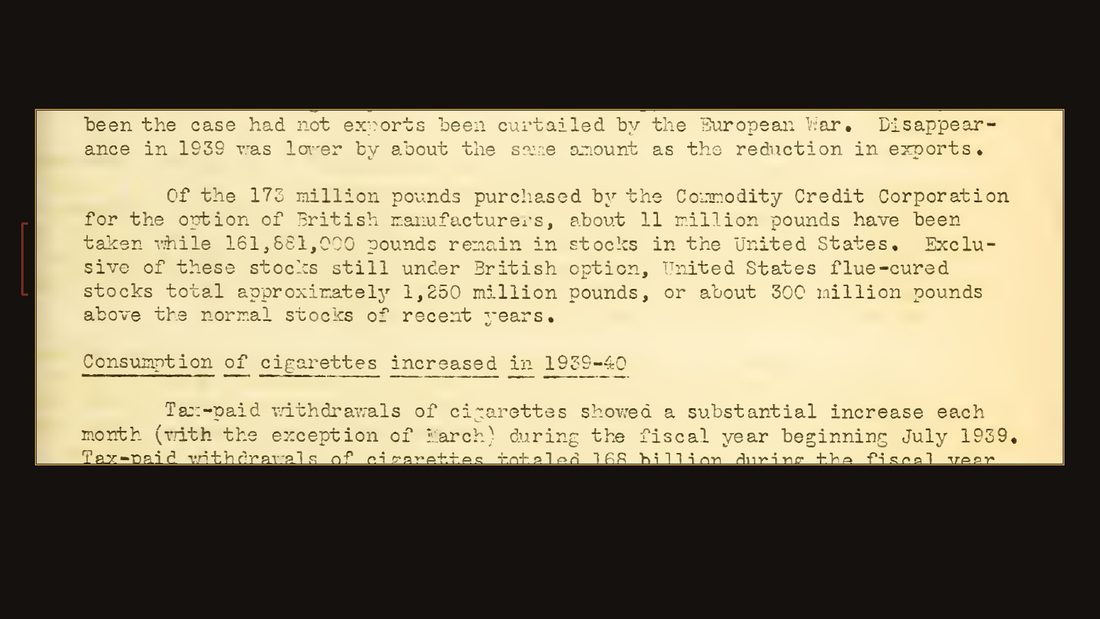
S5
The Tobacco Situation TS-15 · USDA BAE · July 1940.
So the government became the buyer of last resort: one hundred seventy-three million pounds, held for British option. A year later, a hundred sixty-one million pounds of it was still sitting in American warehouses.
The auctions
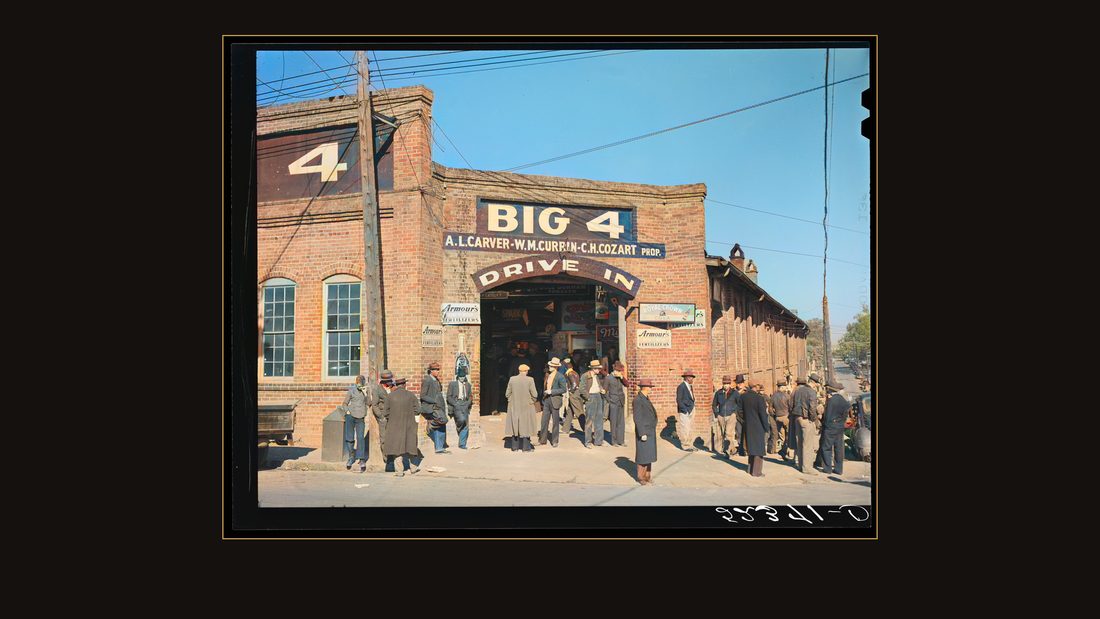
R35 Farmers waiting around outside warehouse during tobacco auction sale. Durham, North Carolina
Marion Post Wolcott · November 1939 · Library of Congress · FSA/OWI · AI-colorized. View the original.
The markets reopened October tenth, a month late, with the whole record crop stacked up behind them. This is what the backlog looked like. Durham, November nineteen thirty-nine.
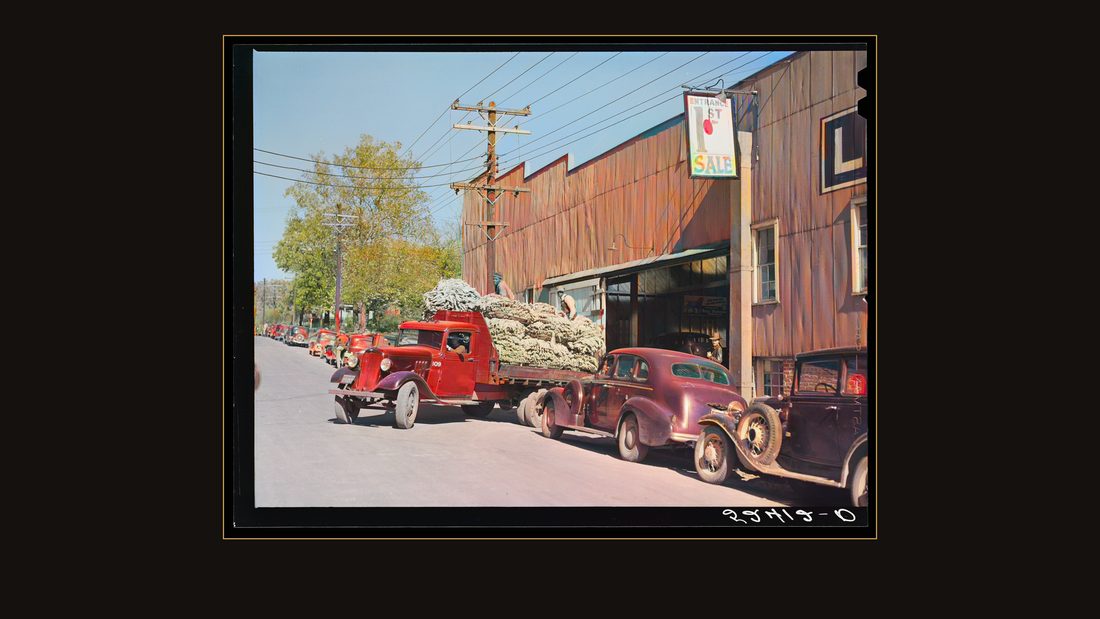
R36 Tobacco is taken in trucks from warehouse to cigarette factories. Durham, North Carolina
Marion Post Wolcott · November 1939 · Library of Congress · FSA/OWI · AI-colorized. View the original.
Trucks ran the sold tobacco from the warehouses straight to the cigarette factories.
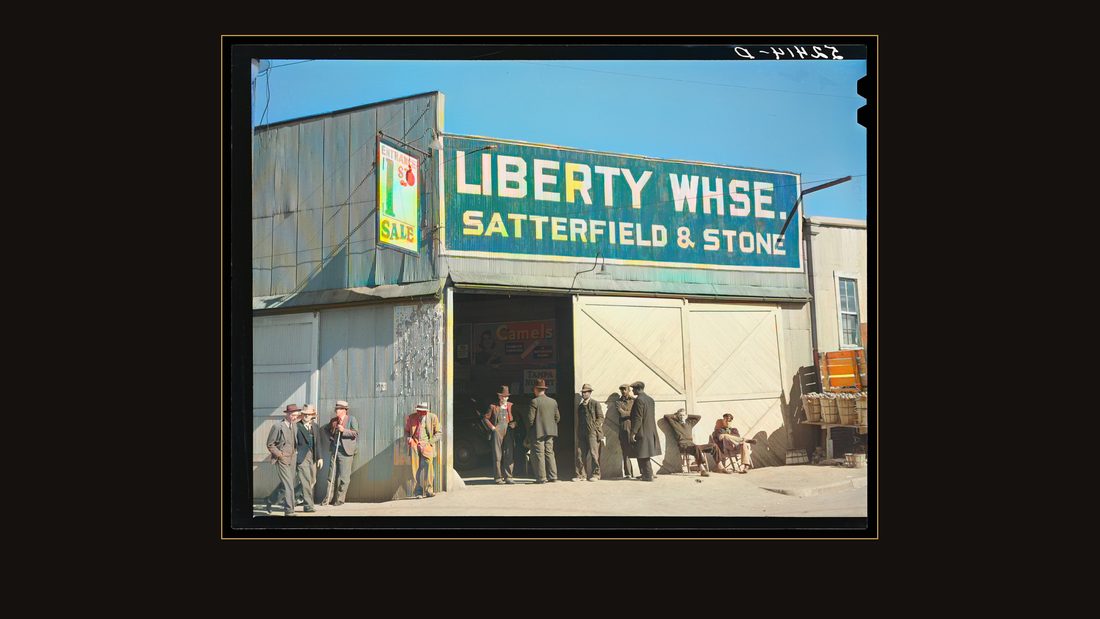
R37 Outside tobacco warehouse during auction sale. Durham, North Carolina
Marion Post Wolcott · November 1939 · Library of Congress · FSA/OWI · AI-colorized. View the original.
Outside the Liberty Warehouse on sale day.
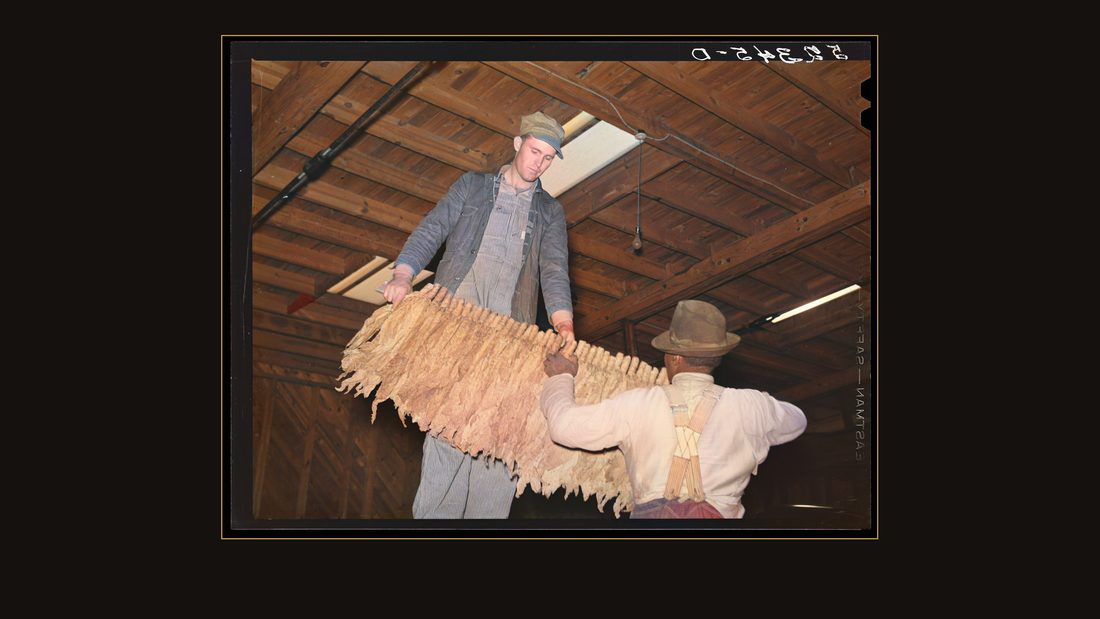
R38 When the tobacco is brought inside the warehouse on the trailer it is taken off the sticks and packed in baskets for the auction sale. Durham, North Carolina
Marion Post Wolcott · November 1939 · Library of Congress · FSA/OWI · AI-colorized. View the original.
Inside, the leaf comes off the sticks and into flat baskets.
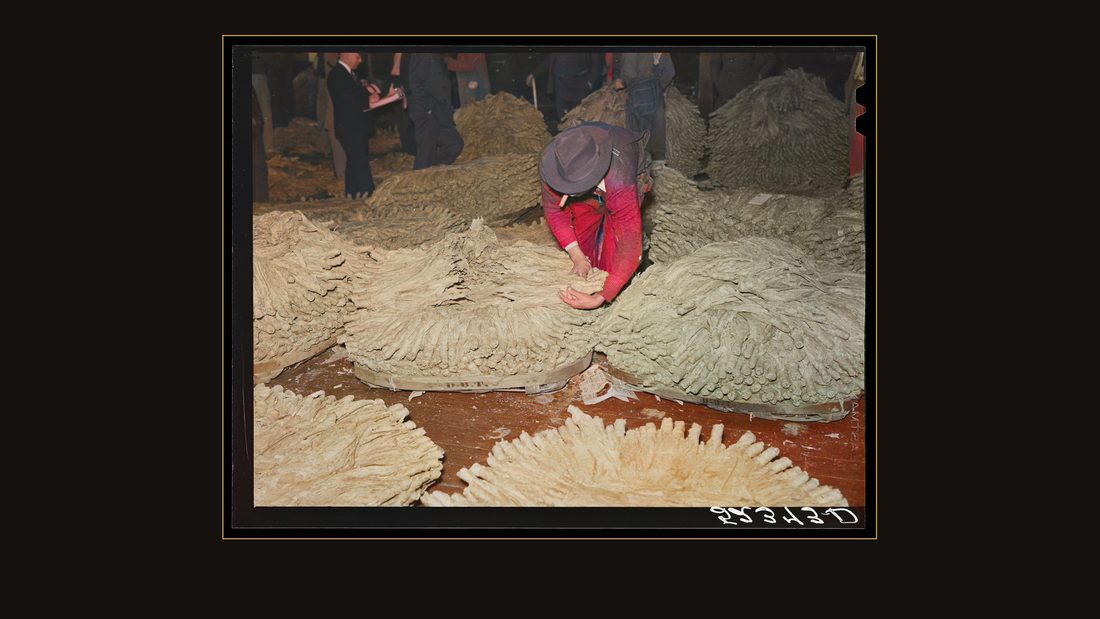
R39 Hands of tobacco placed in baskets according to the grade ready for auction sale in warehouse. Durham, North Carolina
Marion Post Wolcott · November 1939 · Library of Congress · FSA/OWI · AI-colorized. View the original.
Hands of tobacco — leaves tied into bundles — arranged by grade, waiting for the sale.
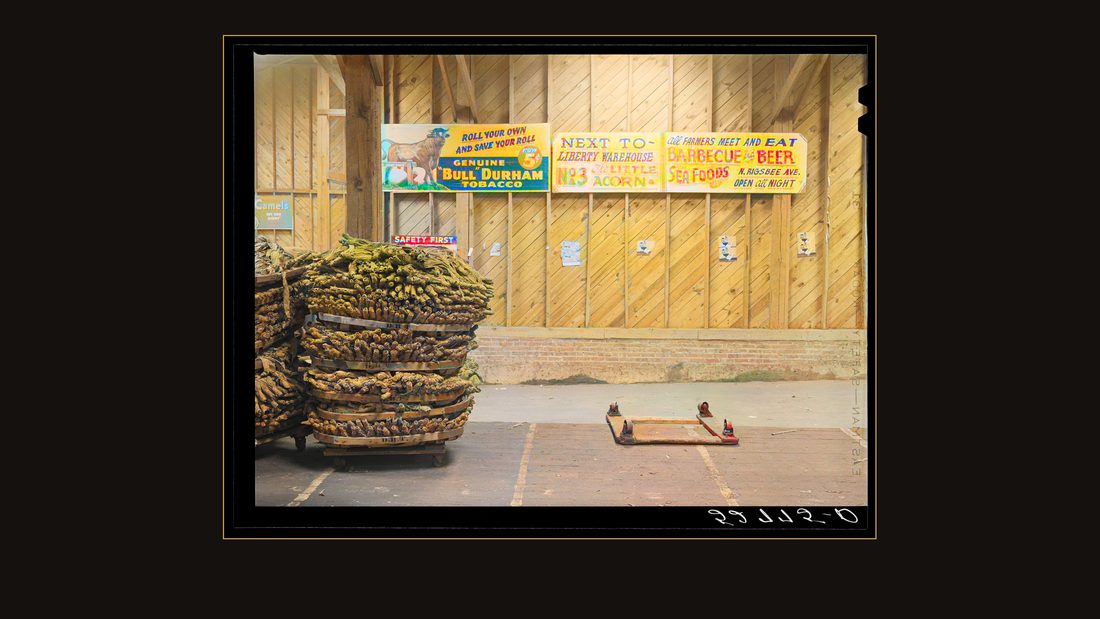
R40 Baskets of tobacco piled on top of each other after being sold at auction. Here they are picked up by the trucks which haul them to the cigarette factories. This is in the Liberty warehouse. Durham, North Carolina
Marion Post Wolcott · November 1939 · Library of Congress · FSA/OWI · AI-colorized. View the original.
Sold baskets, stacked in the Liberty warehouse for the factory trucks.
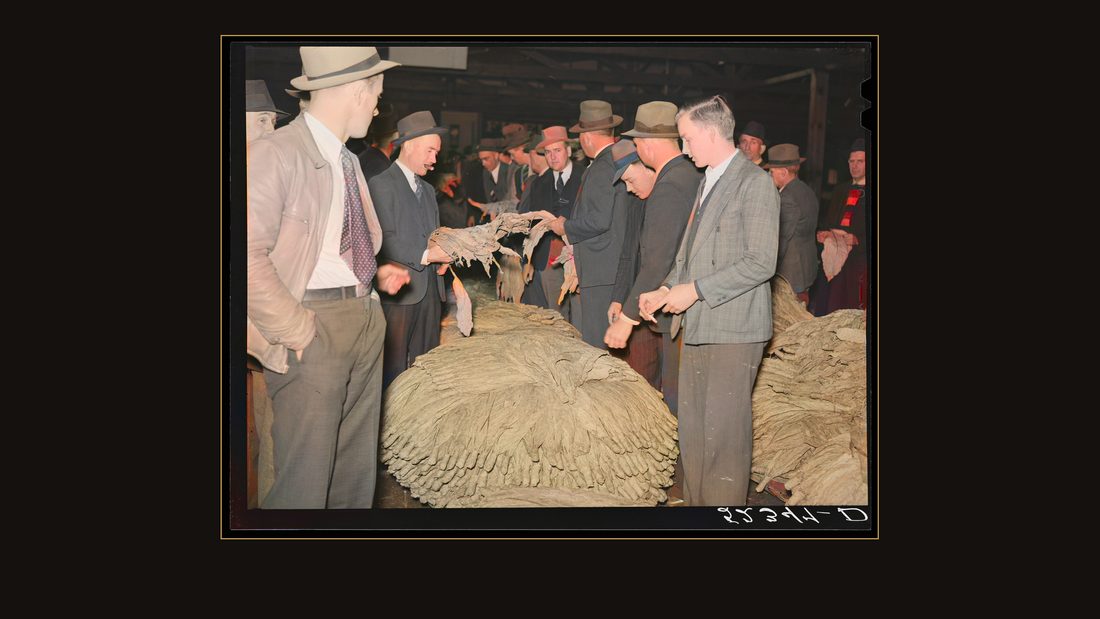
R41 Buyers examining tobacco during auction sale in warehouse. Durham, North Carolina
Marion Post Wolcott · November 1939 · Library of Congress · FSA/OWI · AI-colorized. View the original.
The buyers walk the rows, feeling the leaf.
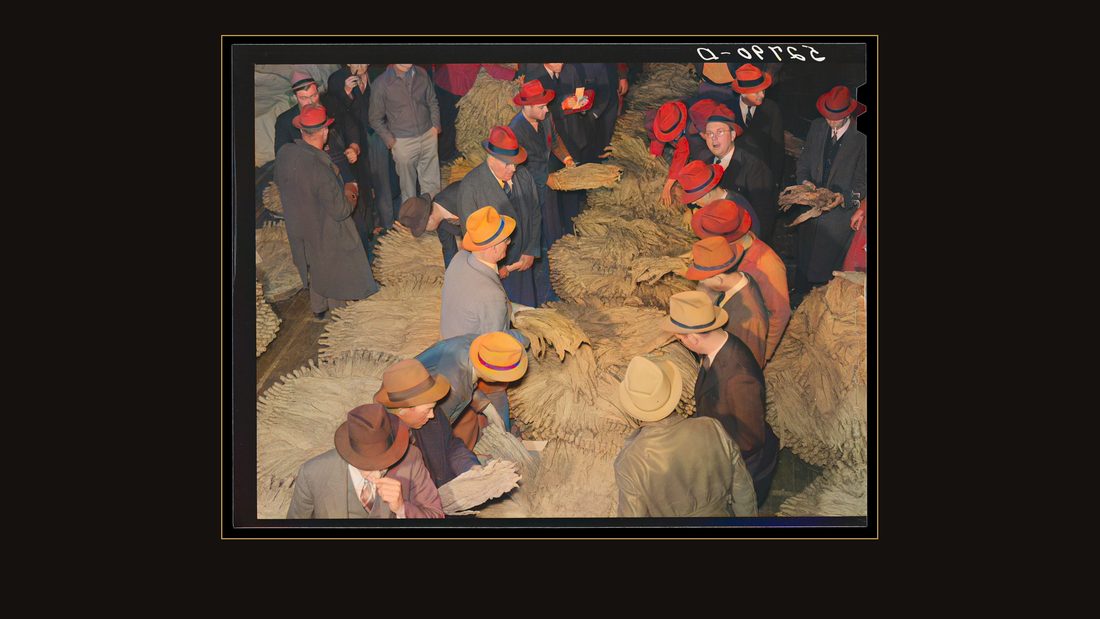
R42 Auctioneer, buyers, and farmers during tobacco auction sale. Warehouse, Durham, North Carolina
Marion Post Wolcott · November 1939 · Library of Congress · FSA/OWI · AI-colorized. View the original.
The auctioneer works down the line, the buyers a step behind, the farmers a step behind them.
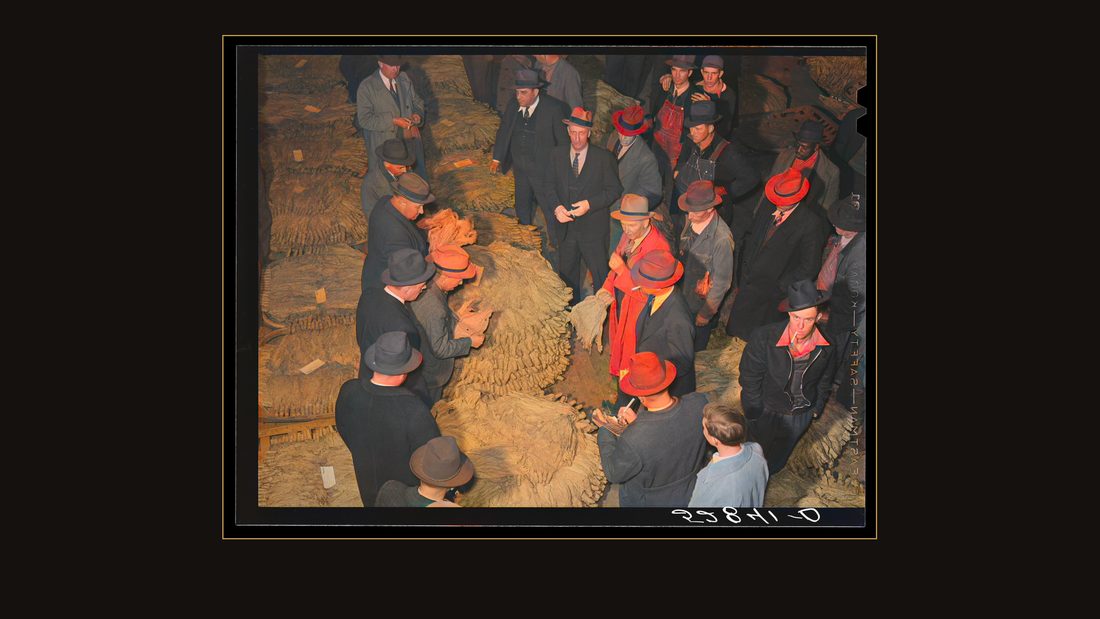
R43 Tobacco auctioneer (in white gloves) and buyers during auction sale in warehouse in Mebane, Orange County, North Carolina
Marion Post Wolcott · November 1939 · Library of Congress · FSA/OWI · AI-colorized. View the original.
In Mebane, the auctioneer worked in white gloves.
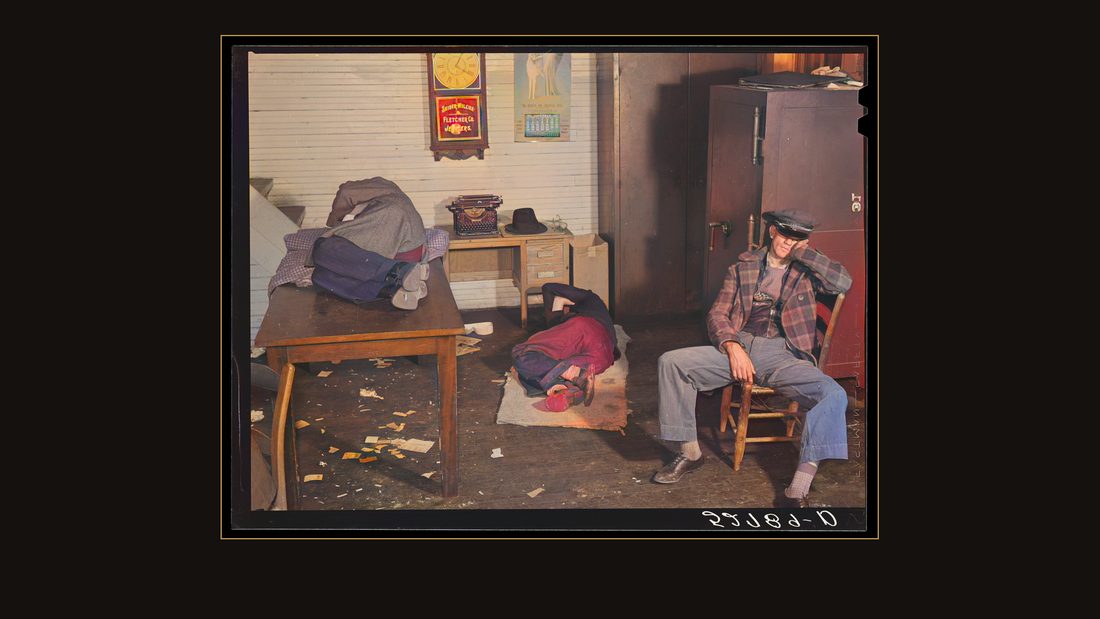
R45 Farmers must often wait overnight before their tobacco is sold at auction. They sleep most anywhere. This is interior of the office in the warehouse about four o'clock in the morning. Durham, North Carolina
Marion Post Wolcott · November 1939 · Library of Congress · FSA/OWI · AI-colorized. View the original.
Wolcott's caption: farmers must often wait overnight before their tobacco is sold. They sleep most anywhere. This is the warehouse office at four o'clock in the morning.
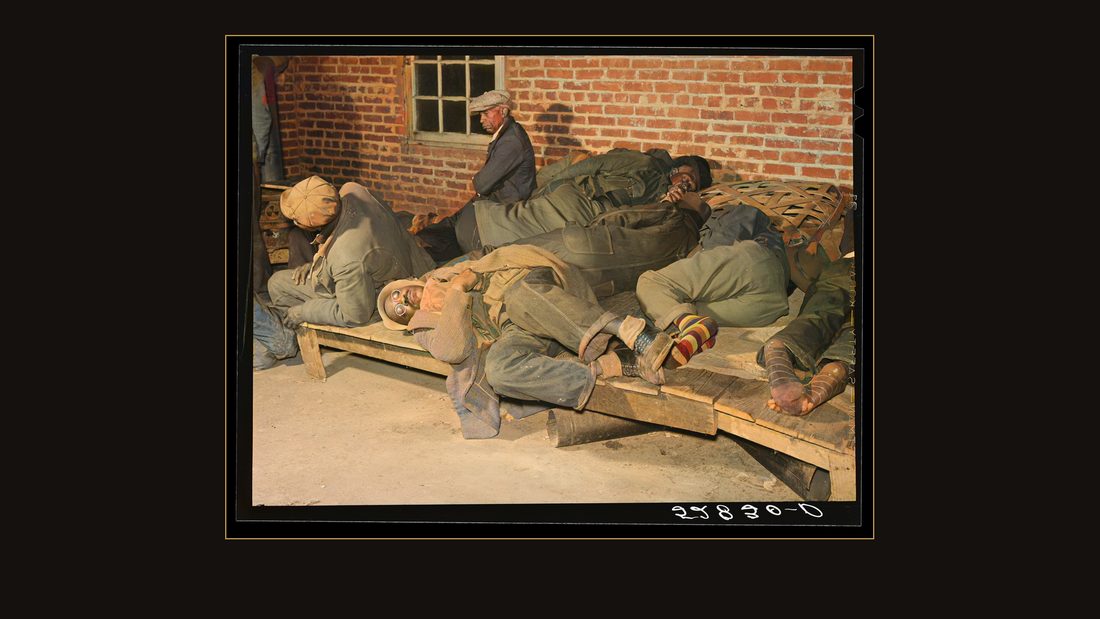
R46 Farmers sleeping in Negro camp room in warehouse. They often must remain overnight or several days before their tobacco is auctioned. Several of them are using an old tobacco basket for a pillow. Durham, North Carolina
Marion Post Wolcott · November 1939 · Library of Congress · FSA/OWI · AI-colorized. View the original.
The warehouse camp rooms, like everything else in this economy, were segregated. In the Black farmers' room, several men are sleeping with an old tobacco basket for a pillow.
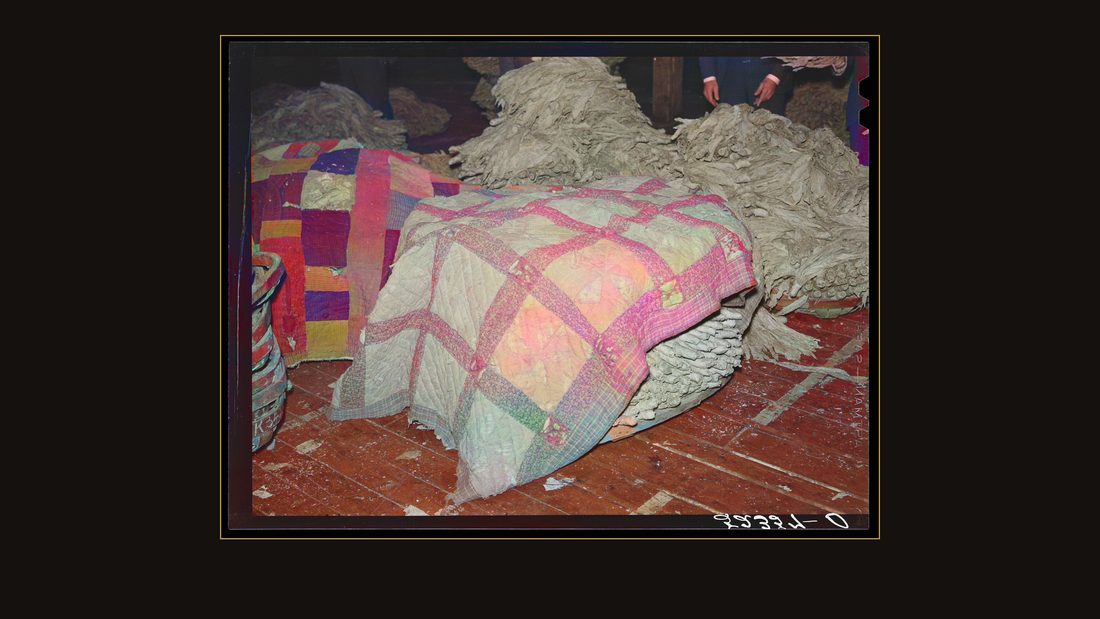
R47 Old quilts and sacks are used to keep tobacco moist and "in order" while waiting for auction sale in warehouse. Durham, North Carolina
Marion Post Wolcott · November 1939 · Library of Congress · FSA/OWI · AI-colorized. View the original.
The crop slept under blankets, same as the men — old quilts, keeping the leaf moist and in order for the morning.
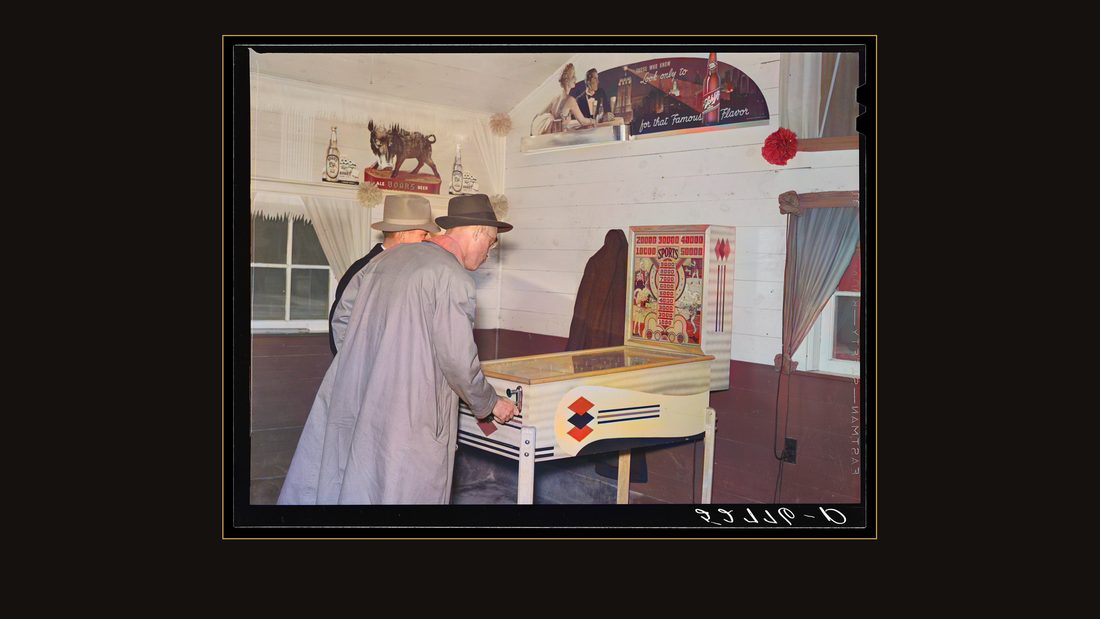
R48 Tobacco buyers playing at pinball machine during lunch hour on day of tobacco auctions. Durham, North Carolina
Marion Post Wolcott · November 1939 · Library of Congress · FSA/OWI · AI-colorized. View the original.
Buyers at the pinball machine on their lunch hour.
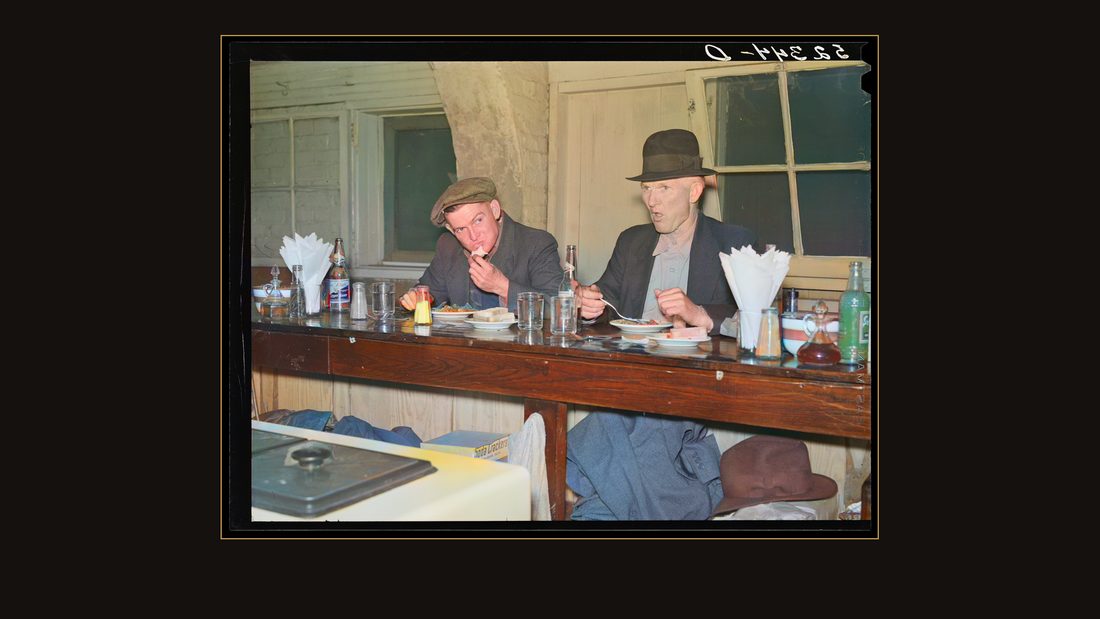
R49 Farmers eating in cafe under tobacco warehouse during auction sale. Durham, North Carolina
Marion Post Wolcott · November 1939 · Library of Congress · FSA/OWI · AI-colorized. View the original.
Farmers eating in the cafe under the warehouse floor.
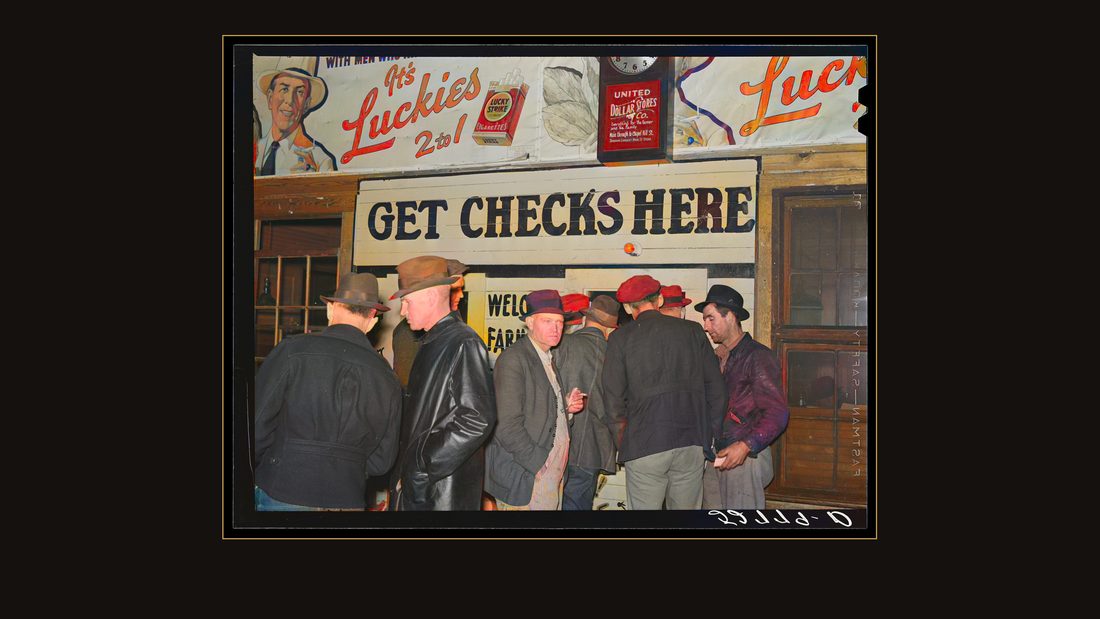
R50 Farmers in warehouse getting their checks after tobacco auction sale. Durham, North Carolina
Marion Post Wolcott · November 1939 · Library of Congress · FSA/OWI · AI-colorized. View the original.
And then the point of the entire year. The sign says get checks here.
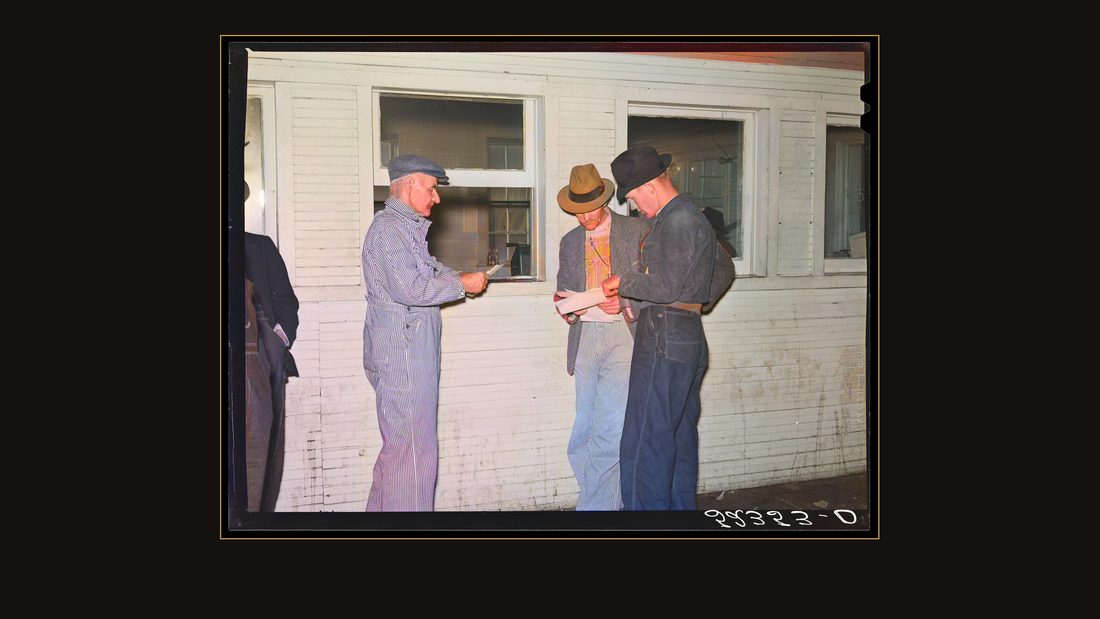
R51 Farmers getting their checks after sale of tobacco at auction in warehose. Durham, North Carolina
Marion Post Wolcott · November 1939 · Library of Congress · FSA/OWI · AI-colorized. View the original.
Around fifteen cents a pound, instead of last year's twenty-two. But it was cash, in hand, in November.
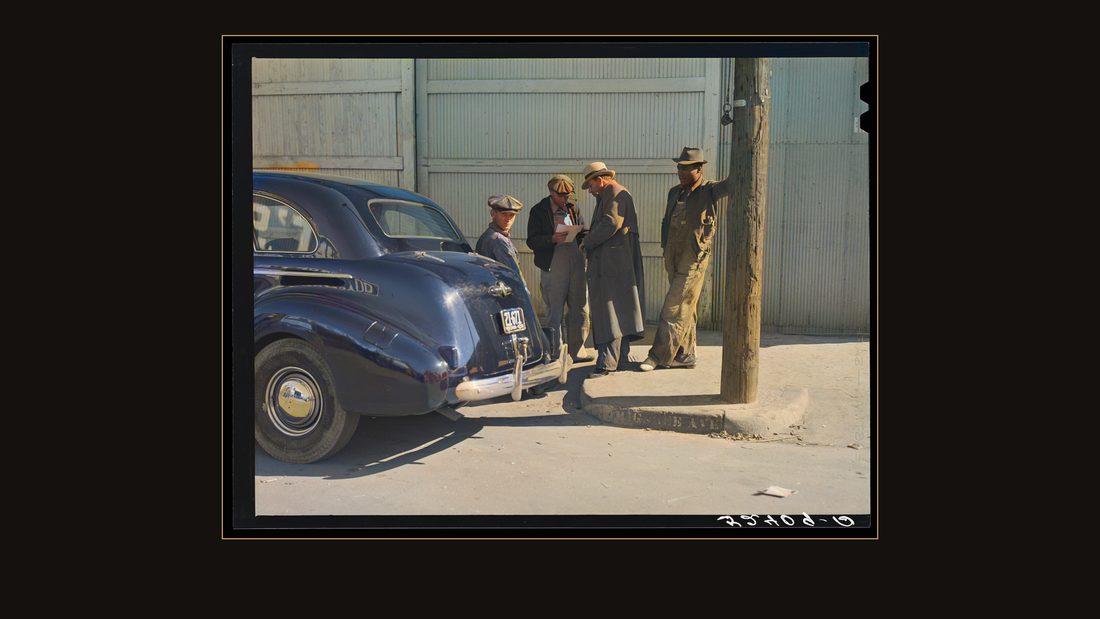
R52 Farmers looking at their checks outside tobacco warehouse after auction sales. Durham, North Carolina
Marion Post Wolcott · November 1939 · Library of Congress · FSA/OWI · AI-colorized. View the original.
Reading the checks on the way out.
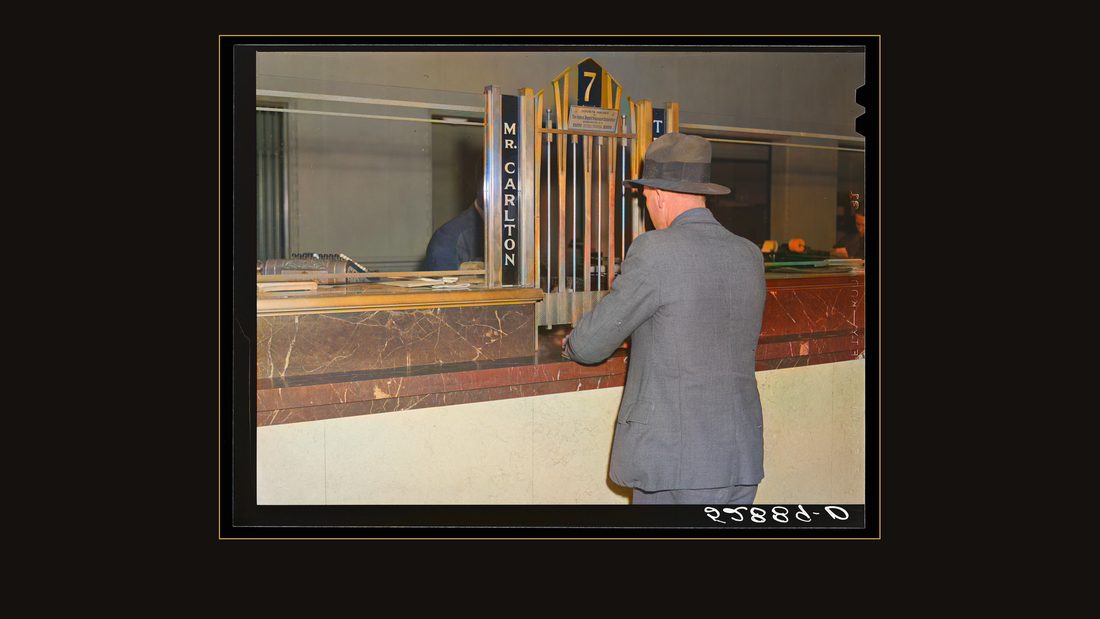
R53 Mr. Elvin Wilkins went to the bank in Durham, North Carolina to cash check which he received at the warehouse for sale of his tobacco at auction
Marion Post Wolcott · November 1939 · Library of Congress · FSA/OWI · AI-colorized. View the original.
Elvin Wilkins went straight to the bank in Durham to cash his. Wolcott followed him the whole way.
Court day
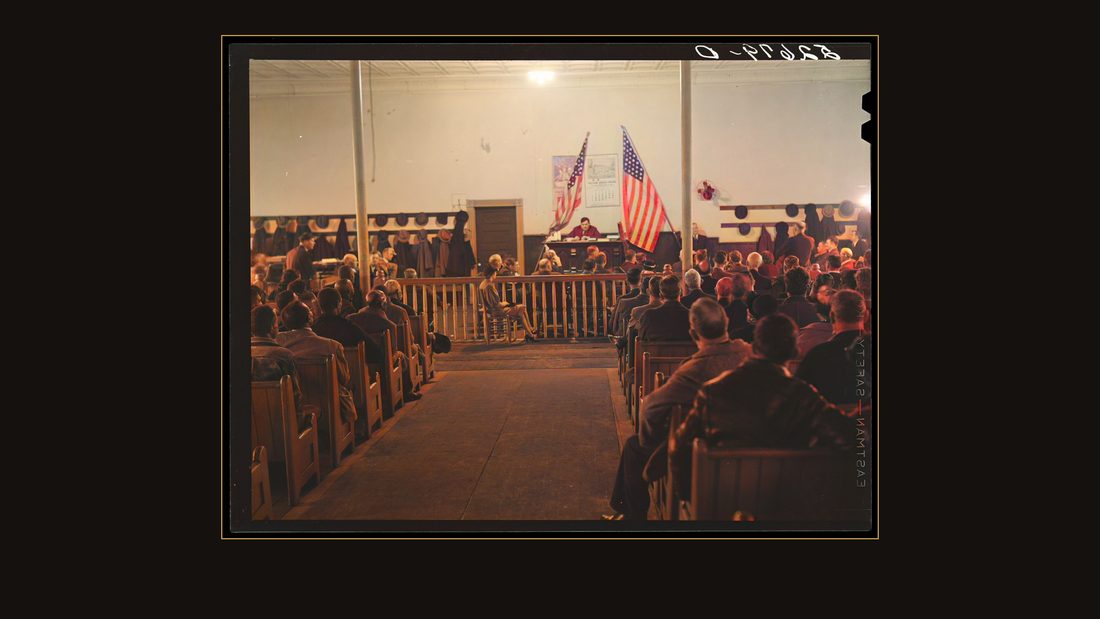
R54 Court day in a county seat, second day of superior court. Granville County Courthouse, Oxford, North Carolina. An automobile accident case is being tried
Marion Post Wolcott · November 1939 · Library of Congress · FSA/OWI · AI-colorized. View the original.
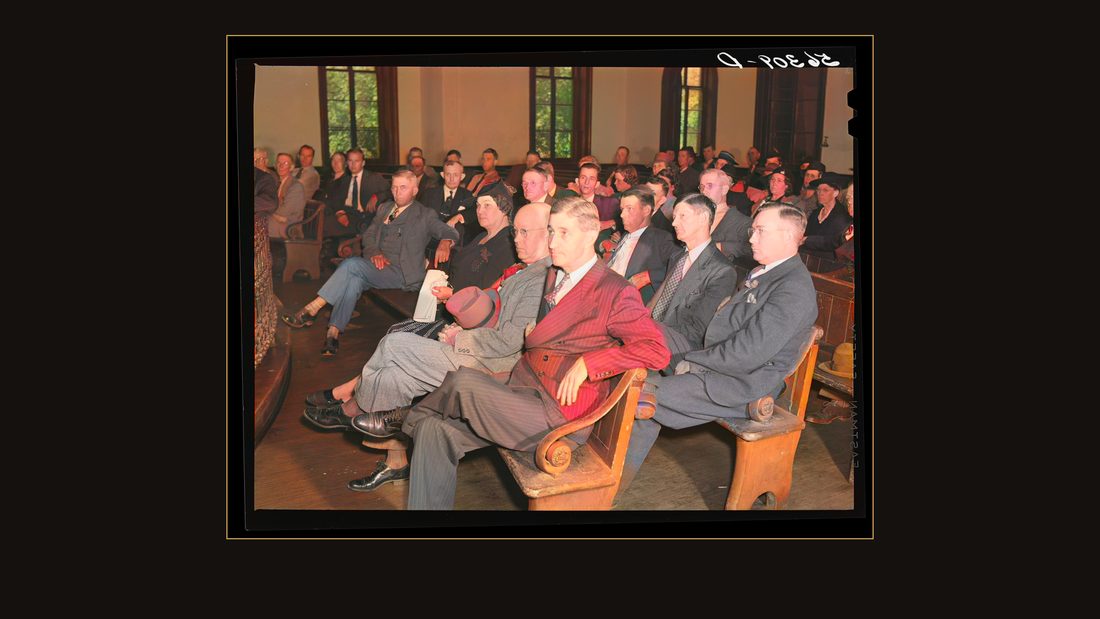
November twenty-second, Oxford. Court week fell during the auctions, and Wolcott walked over to the Granville County Courthouse. Second day of Superior Court — an automobile accident case.
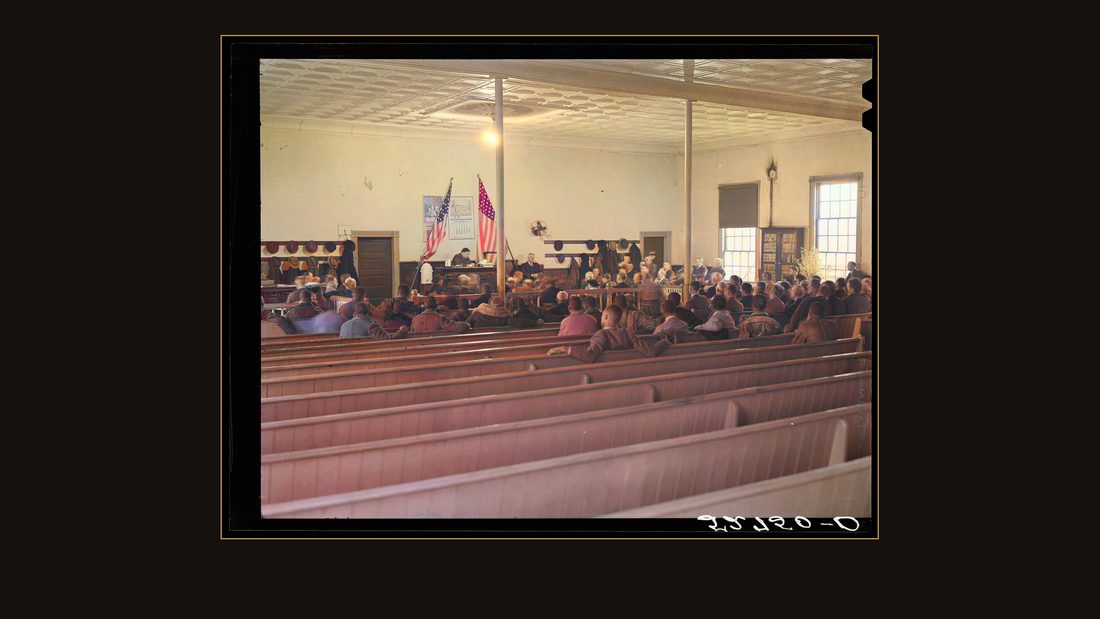
R55 Interior of courtroom during trial of automobile accident case during court week in Granville County Courthouse, Oxford, North Carolina. This was the second day of Superior Court. See subregional notes (Odum). November 22, 1939
Marion Post Wolcott · November 1939 · Library of Congress · FSA/OWI · AI-colorized. View the original.
The courtroom, mid-trial.
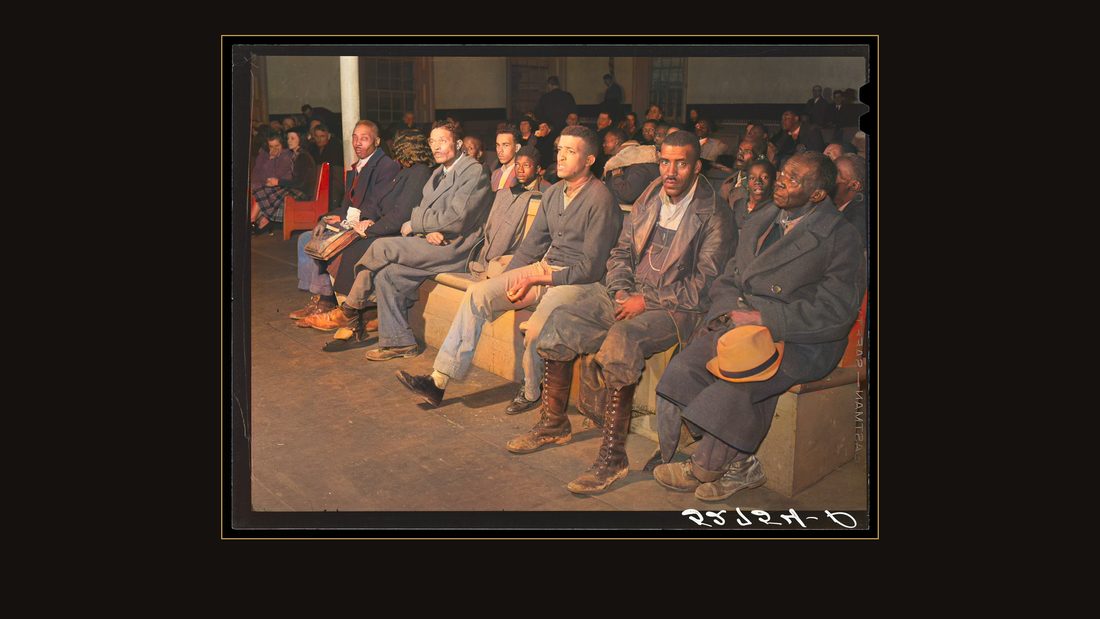
R56 Spectators and witnesses on second day of Superior Court during trial of automobile accident case during court week in Granville County Courthouse, Oxford, North Carolina. See subregional notes (Odum) November 22, 1939
Marion Post Wolcott · November 1939 · Library of Congress · FSA/OWI · AI-colorized. View the original.
Spectators and witnesses. Court day was the county's entertainment, and the gallery is full.
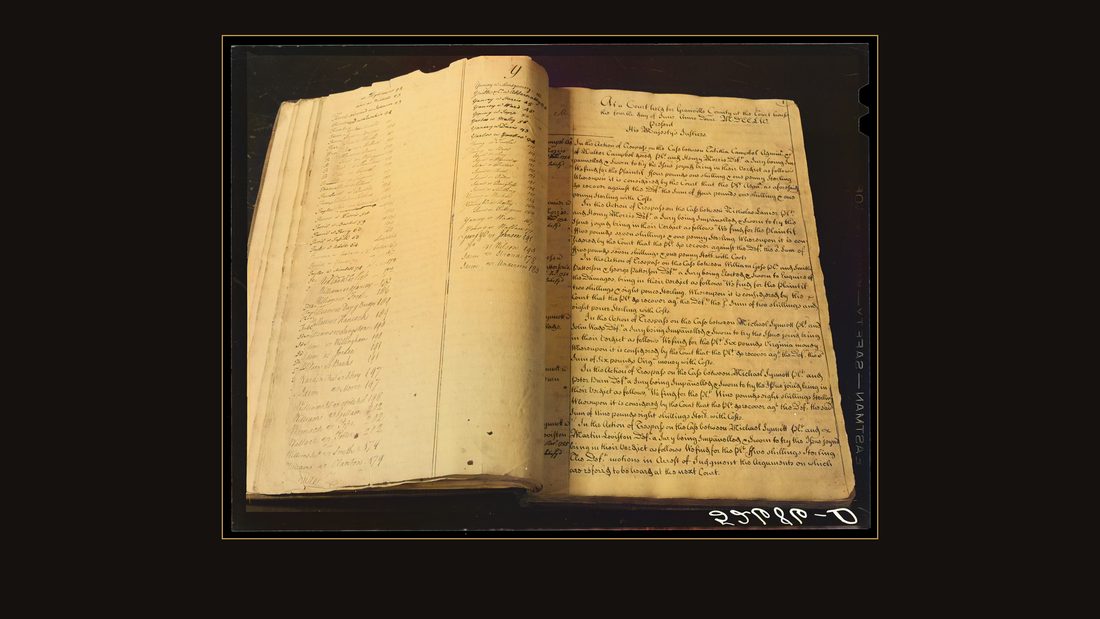
R57 The first page of the minute Docket of Granville County. A record of the court of pleas and quarter sessions from 1754 to October 16, 1770. Book one. This is in the vault for records opening from clerk of court office. Granville County Courthouse Oxford, North Carolina
Marion Post Wolcott · November 1939 · Library of Congress · FSA/OWI · AI-colorized. View the original.
In the clerk's vault she photographed Book One — the minute docket of the county court of pleas and quarter sessions, opened in seventeen fifty-four.
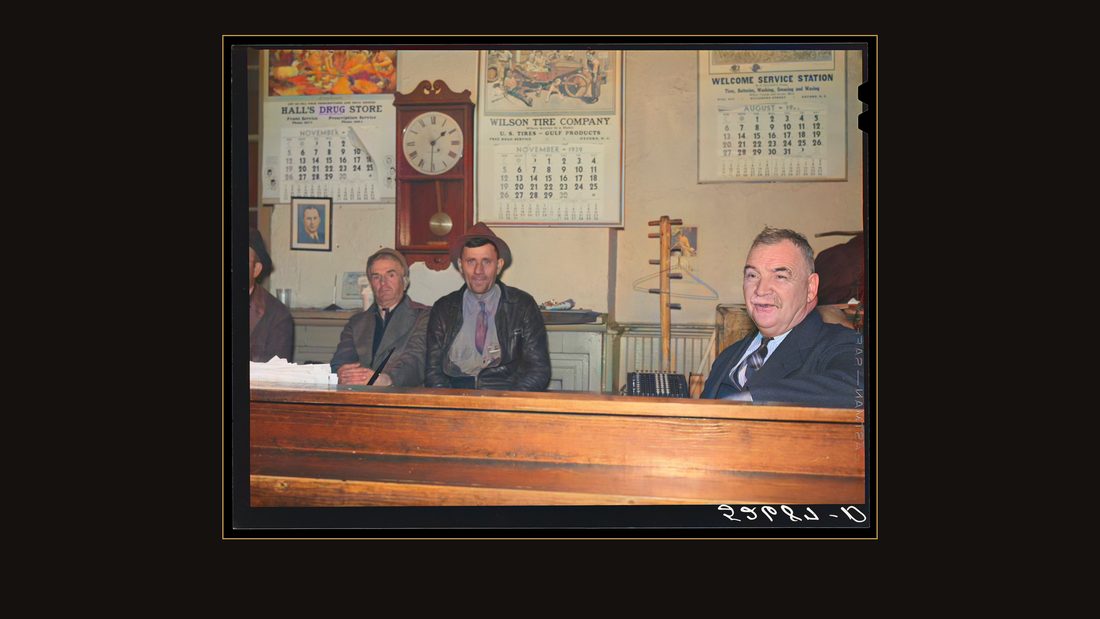
R58 Sheriff Graham and two farmers killing time during dinner hour in his office on court day in Granville County Courthouse. Oxford, North Carolina
Marion Post Wolcott · November 1939 · Library of Congress · FSA/OWI · AI-colorized. View the original.
Sheriff Graham and two farmers, killing time in his office over the dinner hour.
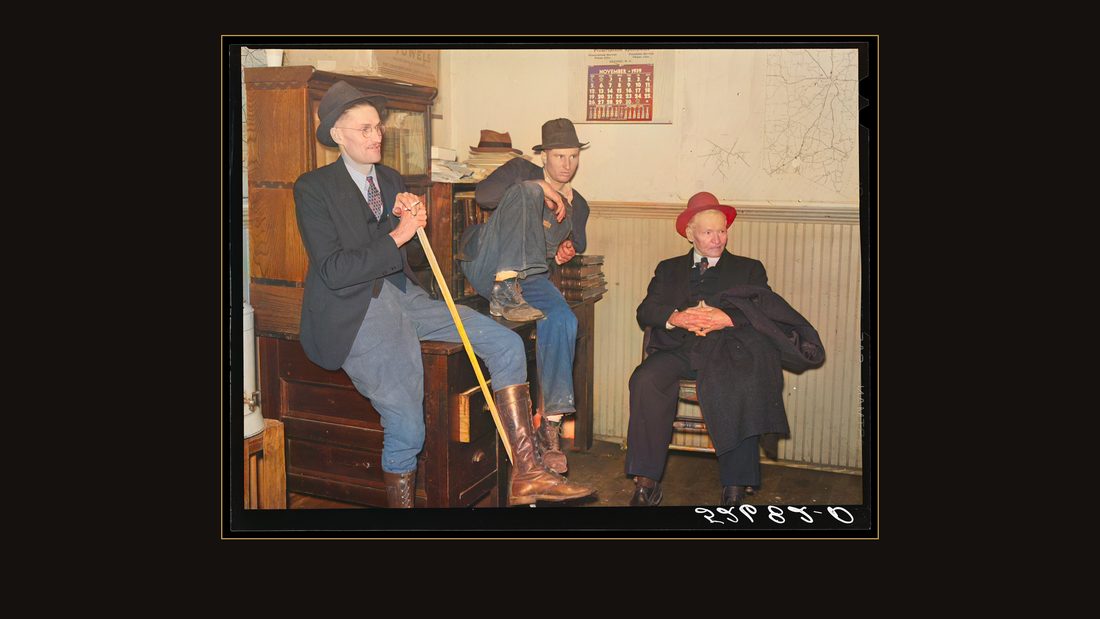
R59 Group of men killing time during dinner hour in sheriff's office. Granville County Courthouse on court day in county seat. Oxford, North Carolina
Marion Post Wolcott · November 1939 · Library of Congress · FSA/OWI · AI-colorized. View the original.
More time being killed. The tobacco was sold. For once, there was nowhere to be.
Where the check goes
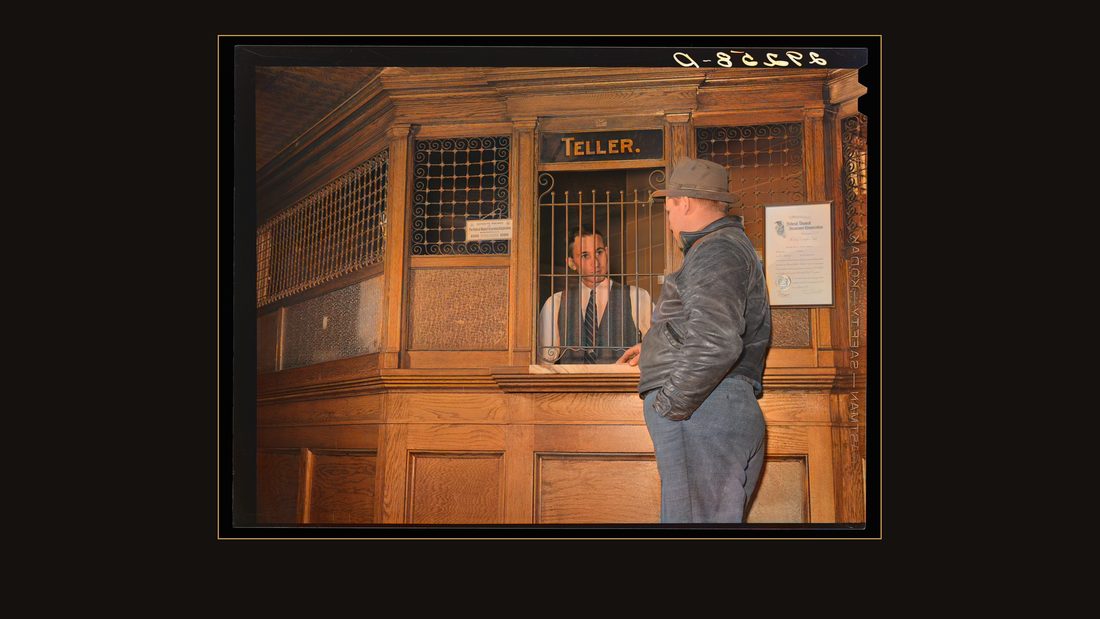
R60 Interior of bank. Creedmoor, North Carolina
Arthur Rothstein · January 1940 · Library of Congress · FSA/OWI · AI-colorized. View the original.
January, nineteen forty. Rothstein again, in Creedmoor. Where does a tobacco check go? Through the teller window of the Creedmoor bank.
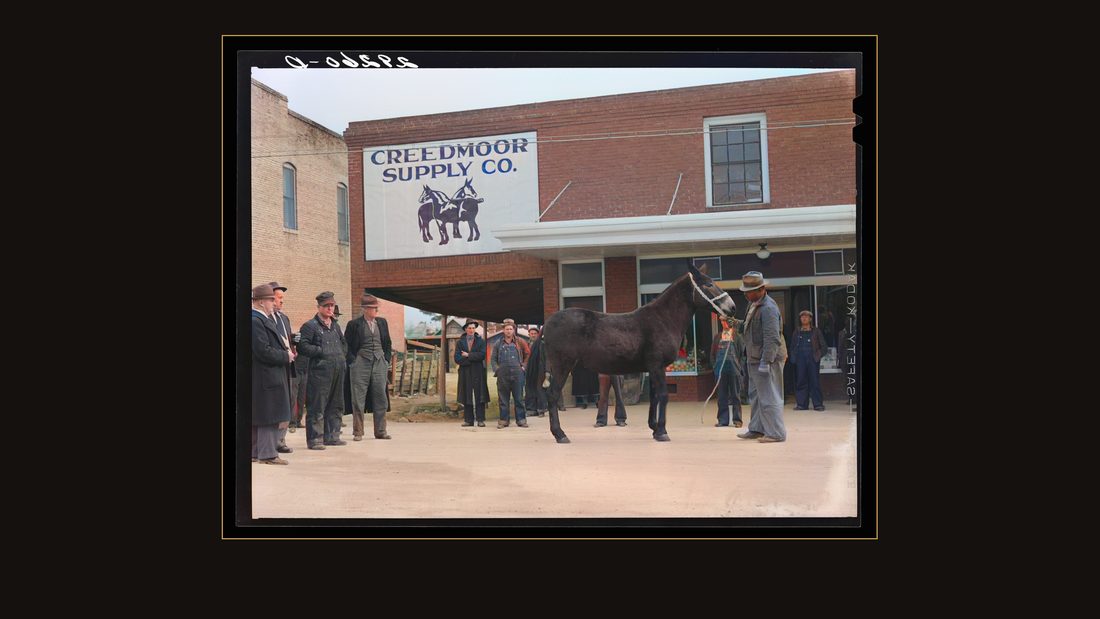
R61 Mule auction in main street. Creedmoor, North Carolina
Arthur Rothstein · January 1940 · Library of Congress · FSA/OWI · AI-colorized. View the original.
And into mules. Mule auction, main street, Creedmoor.
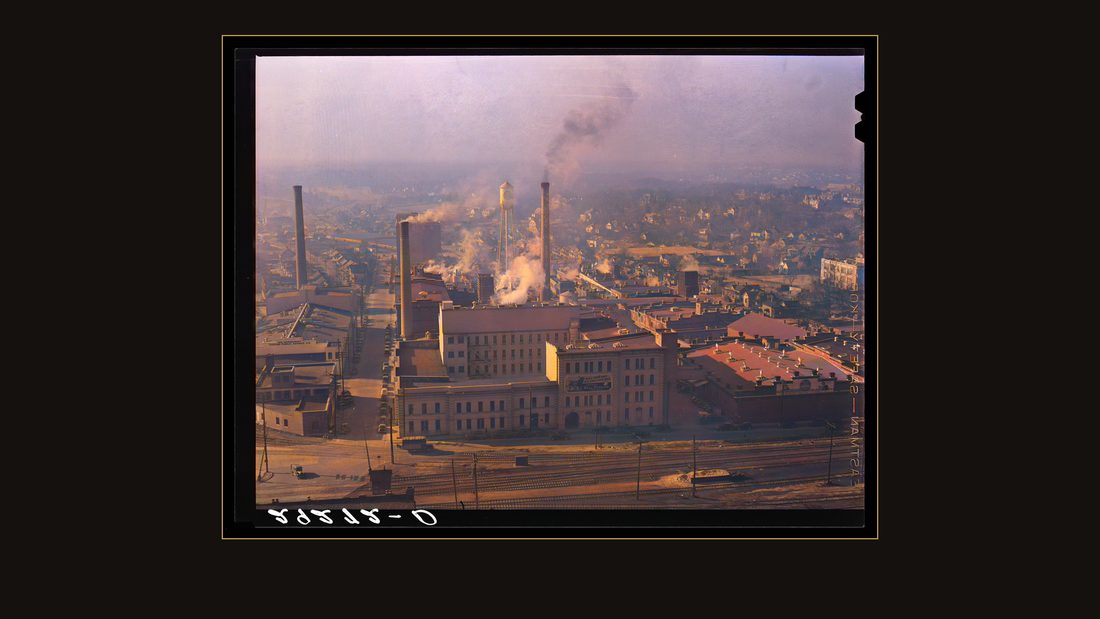
R63 Tobacco warehouses and factory. Durham, North Carolina
Arthur Rothstein · January 1940 · Library of Congress · FSA/OWI · AI-colorized. View the original.
And the other end of the leaf: Durham, warehouses in front, cigarette factory smoking behind. The crop that couldn't find a buyer in September was becoming cigarettes all winter.
Planting again
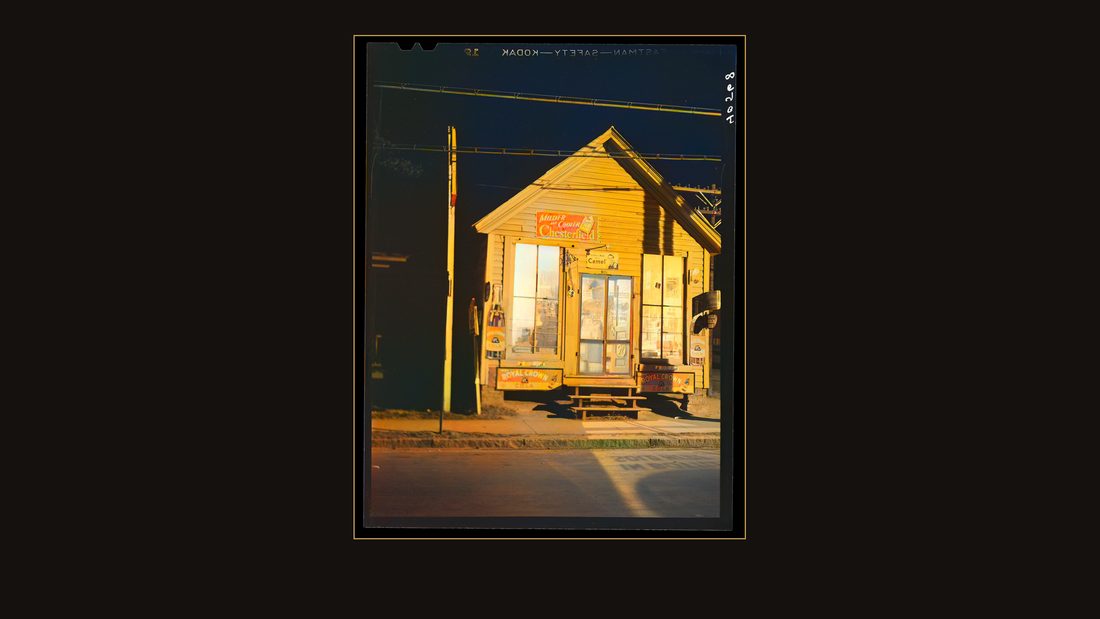
R64 Corner store at 11 p.m. Durham, North Carolina
Jack Delano · May 1940 · Library of Congress · FSA/OWI · AI-colorized. View the original.
May, nineteen forty. Jack Delano's turn in the belt. A corner store in Durham at eleven o'clock at night.
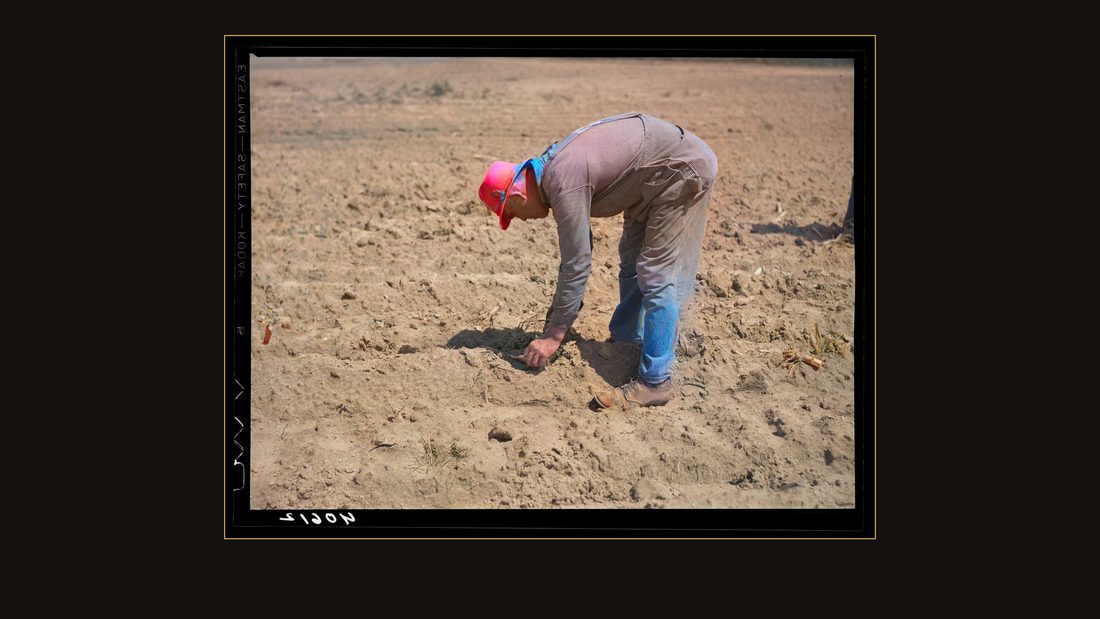
R65 Mr. Jones, tenant farmer, planting tobacco. Near Farrington, Orange County, North Carolina
Jack Delano · May 1940 · Library of Congress · FSA/OWI · AI-colorized. View the original.
And near Farrington, the cycle starting over. Mr. Jones, tenant farmer, planting the nineteen-forty crop — the first one grown under the quotas the growers had voted for.
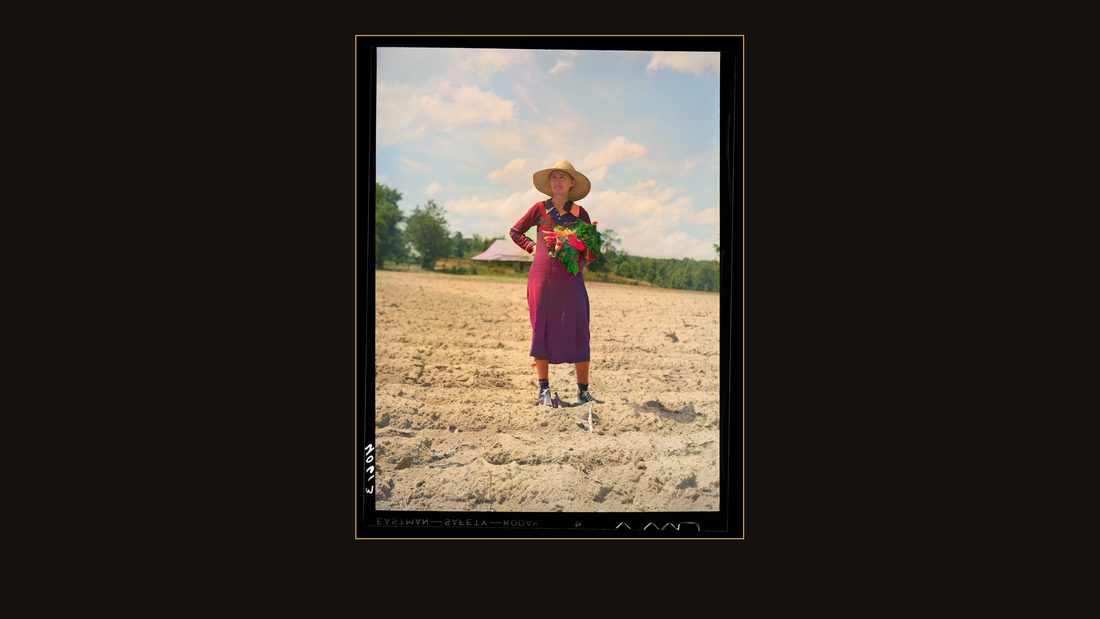
R66 Mrs. Jones, wife of Mr. Jones, tenant farmer, with armful of tobacco plants. Near Farrington, Orange County, North Carolina
Jack Delano · May 1940 · Library of Congress · FSA/OWI · AI-colorized. View the original.
Mrs. Jones, with an armful of seedlings.
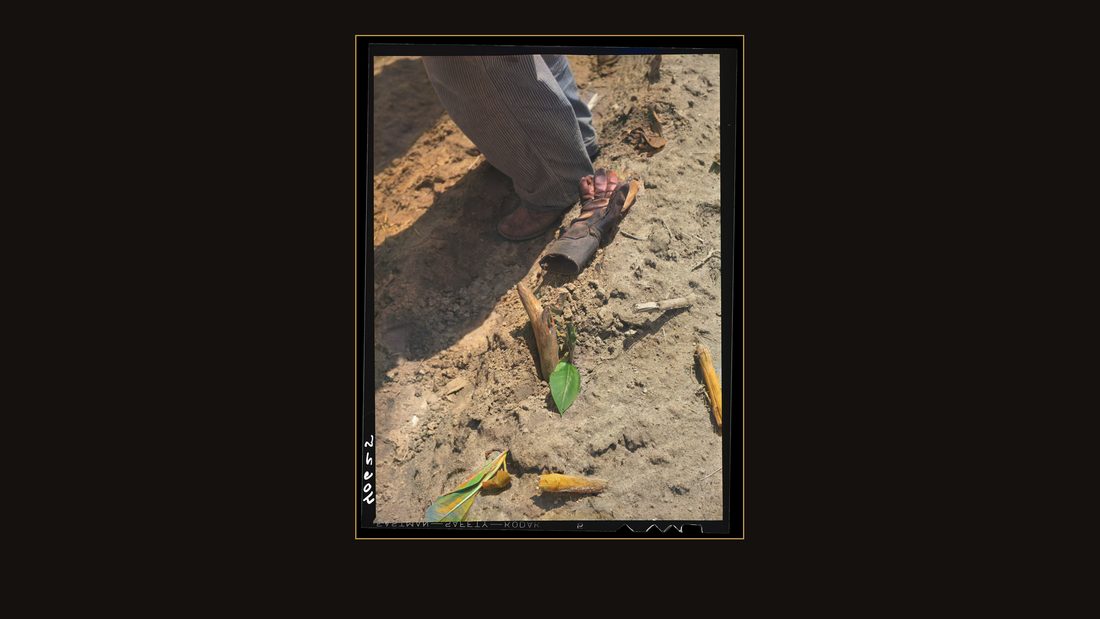
R67 Tobacco plant, the peg, and glove to prevent blisters. Near Farrington, Orange County, North Carolina
Jack Delano · May 1940 · Library of Congress · FSA/OWI · AI-colorized. View the original.
The tools of it: the plant, the peg that opens the hole, and a glove to prevent blisters.
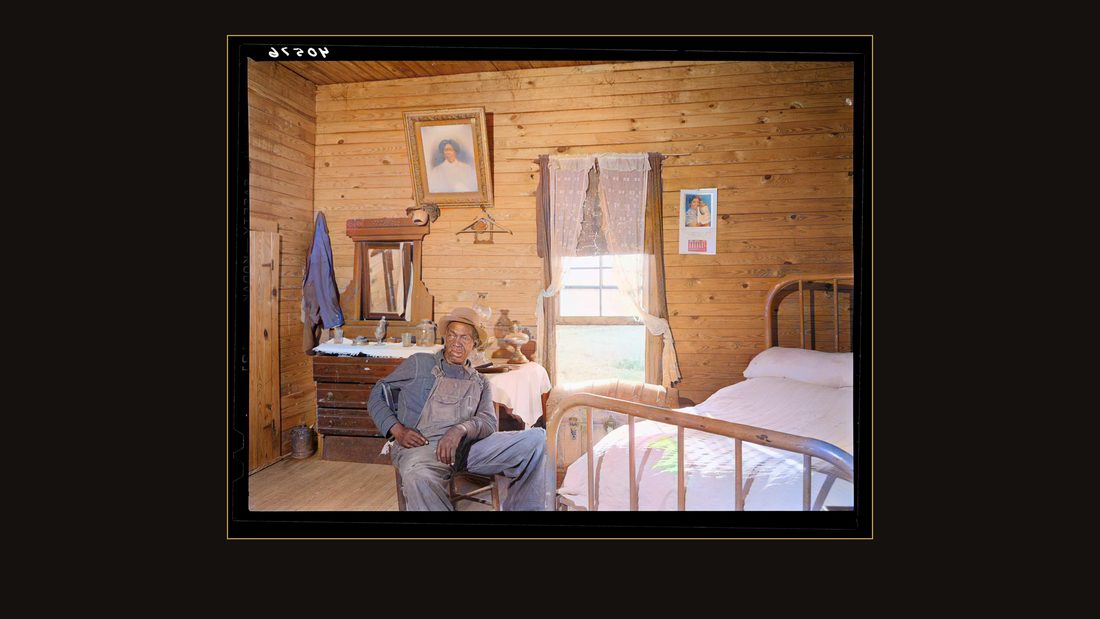
R68 The father of Mr. Hubbard, a Negro tenant farmer planting tobacco. The elder Mr. Hubbard is too old to work. Near Farrington, North Carolina
Jack Delano · May 1940 · Library of Congress · FSA/OWI · AI-colorized. View the original.
Mr. Hubbard's father. Delano wrote that he is too old to work. He is in the field anyway.
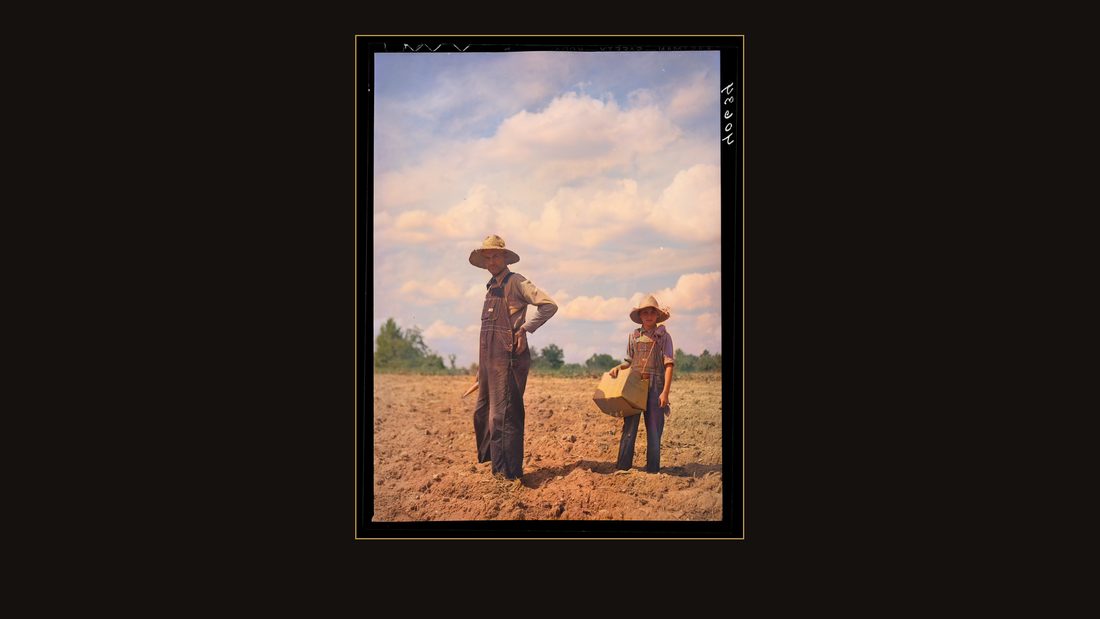
R69 Mr. Rigsbee and his son in tobacco field. In the box are the tobacco plants and, in Mr. Rigsbee's right hand, the peg. Near Farrington, Chatham County, North Carolina
Jack Delano · May 1940 · Library of Congress · FSA/OWI · AI-colorized. View the original.
Mr. Rigsbee and his son — plants in the box, peg in his right hand.
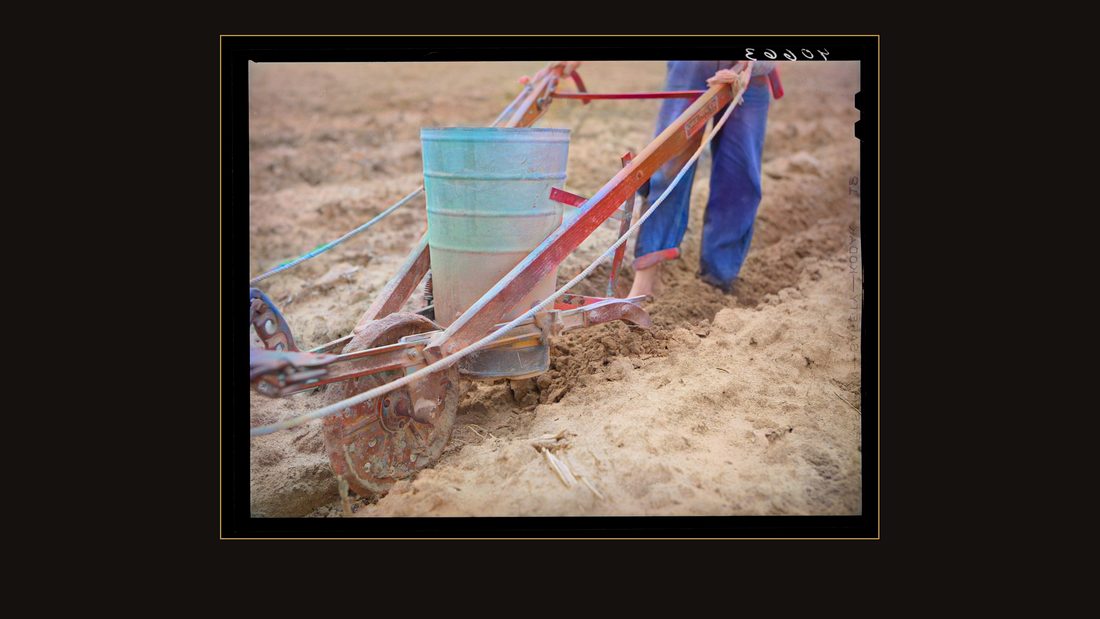
R70 Fertilizing tobacco field. Farm of J.R. Ray. Five miles northeast of Durham, North Carolina on U. S. 15
Jack Delano · May 1940 · Library of Congress · FSA/OWI · AI-colorized. View the original.
Fertilizer going down on J.R. Ray's farm, five miles out of Durham.
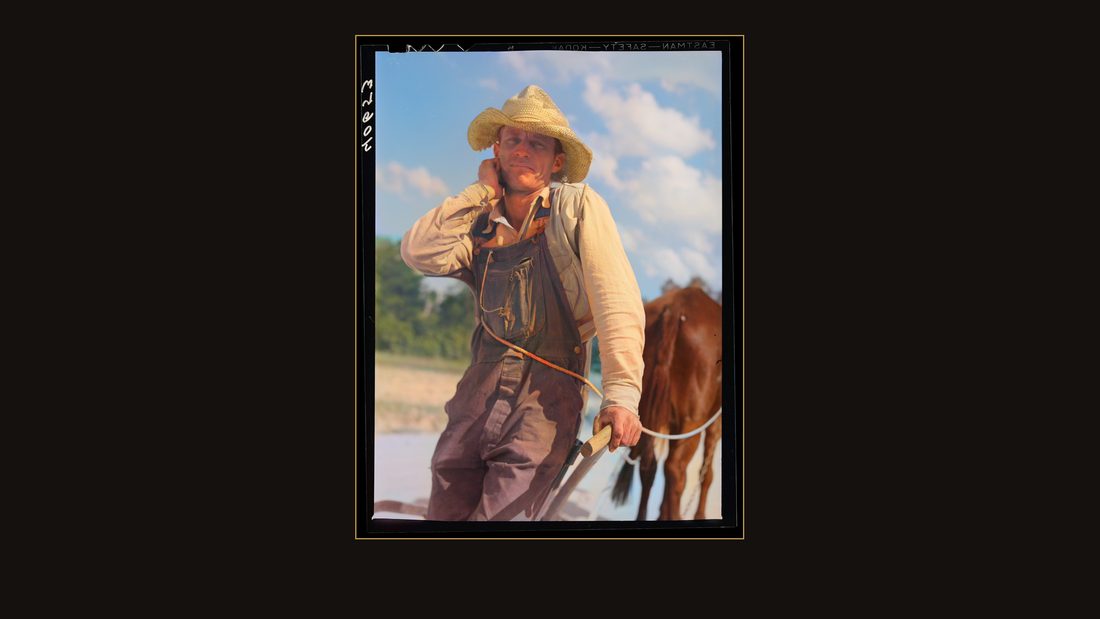
R71 North Carolina tobacco farmer. Near Farrington, Chatham County
Jack Delano · May 1940 · Library of Congress · FSA/OWI · AI-colorized. View the original.
A tobacco farmer near Farrington. Under the new quota, the belt planted about sixty percent of the acreage it had planted the year before. The program worked exactly as designed — by shrinking.
The year after
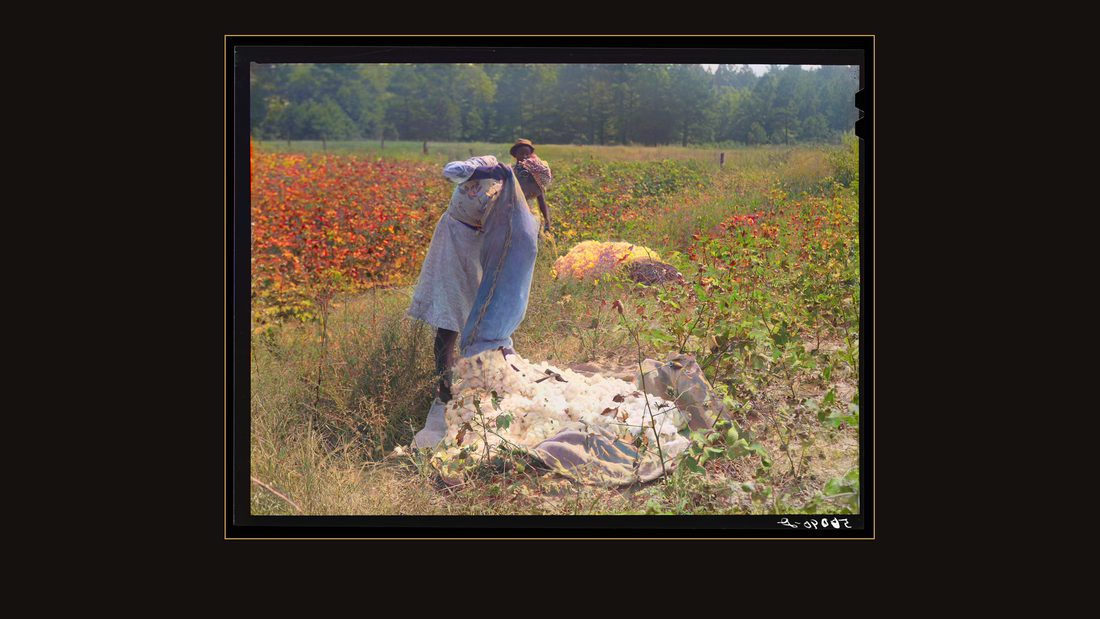
R72 Tenants picking cotton on Highway 15, about seven miles south of Chapel Hill. Chatham County, North Carolina
Marion Post Wolcott · September 1940 · Library of Congress · FSA/OWI · AI-colorized. View the original.
Fall, nineteen forty. Wolcott came back through Caswell and Chatham. Cotton coming in on Highway fifteen, south of Chapel Hill.
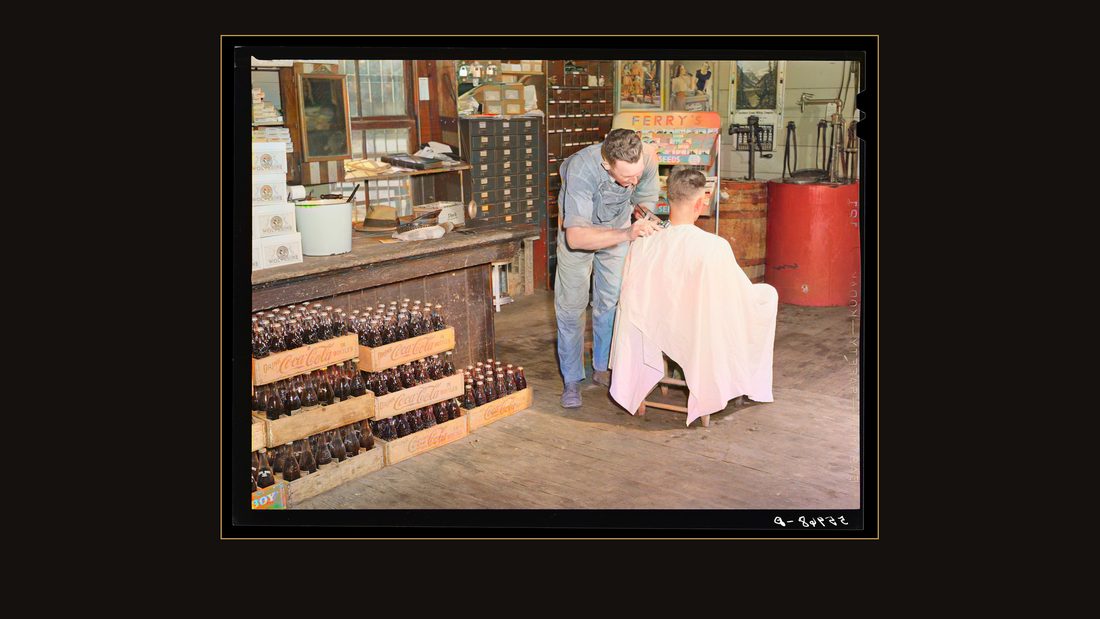
R73 Free haircut on Saturday morning in W.M. Scott's general store. Farrington. Chatham County, North Carolina
Marion Post Wolcott · September 1940 · Library of Congress · FSA/OWI · AI-colorized. View the original.
Saturday morning in W.M. Scott's general store at Farrington: a free haircut.
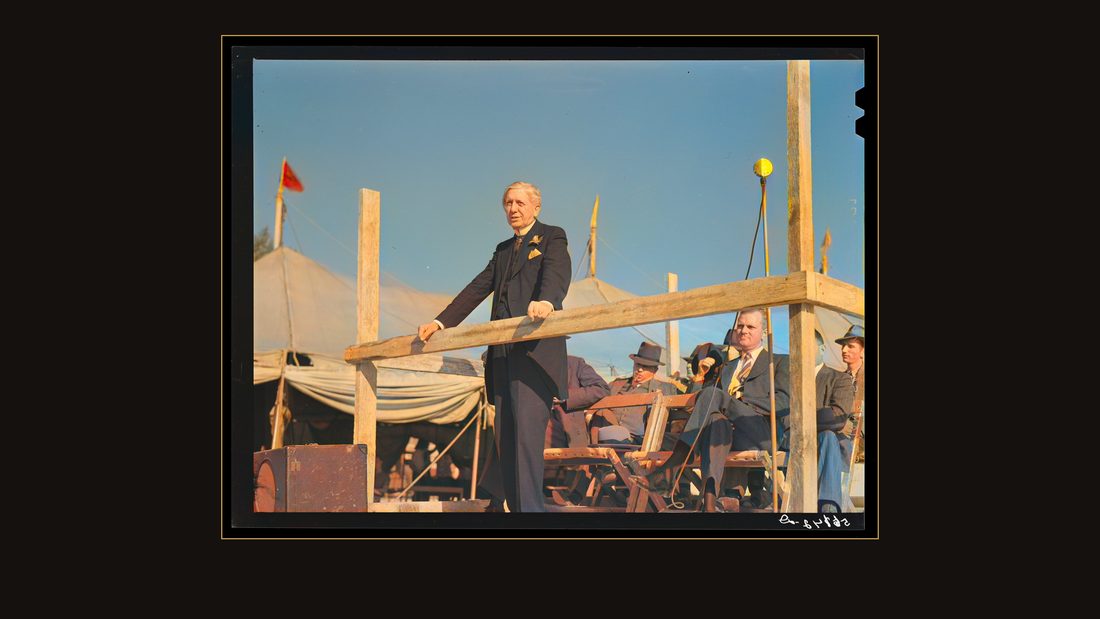
R74 Governor Hoey speaking at Caswell County Fair, with school superintendent Holland McSwain at right on platform. Yanceyville, North Carolina
Marion Post Wolcott · October 1940 · Library of Congress · FSA/OWI · AI-colorized. View the original.
Governor Clyde Hoey at the Caswell County Fair in Yanceyville, the school superintendent at his right hand.
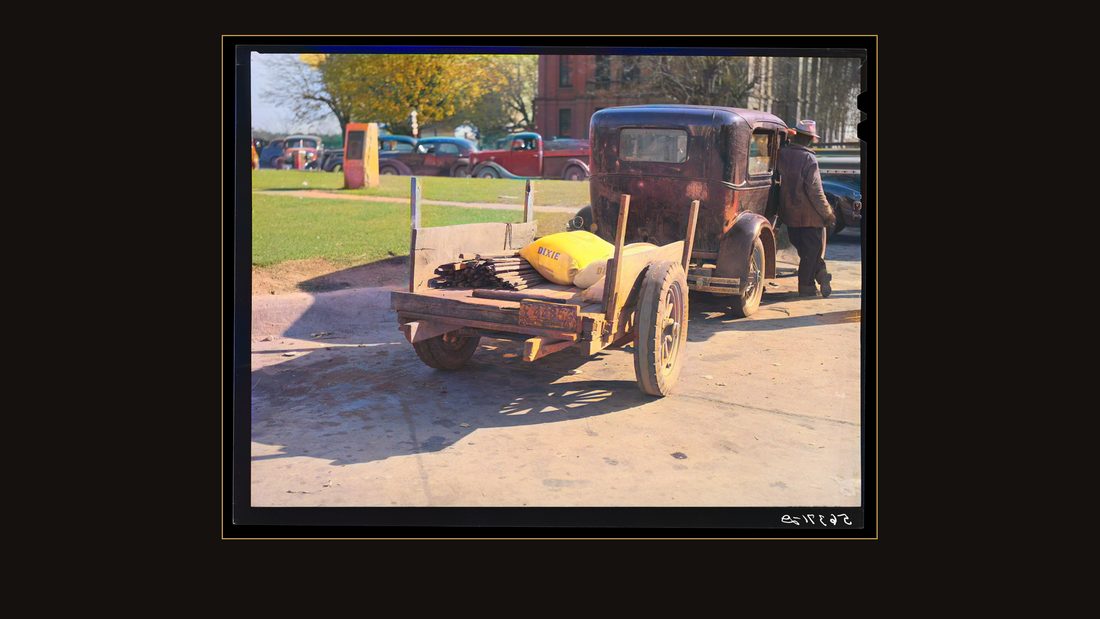
R75 Farmer returning home after selling his tobacco at auction. In the trailer are sacks of flour and meal and the tobacco sticks. Yanceyville, Caswell County, North Carolina
Marion Post Wolcott · September 1940 · Library of Congress · FSA/OWI · AI-colorized. View the original.
A farmer heading home from the nineteen-forty auctions — sacks of flour and meal in the trailer, and the empty tobacco sticks. This year, there was a market to come home from.
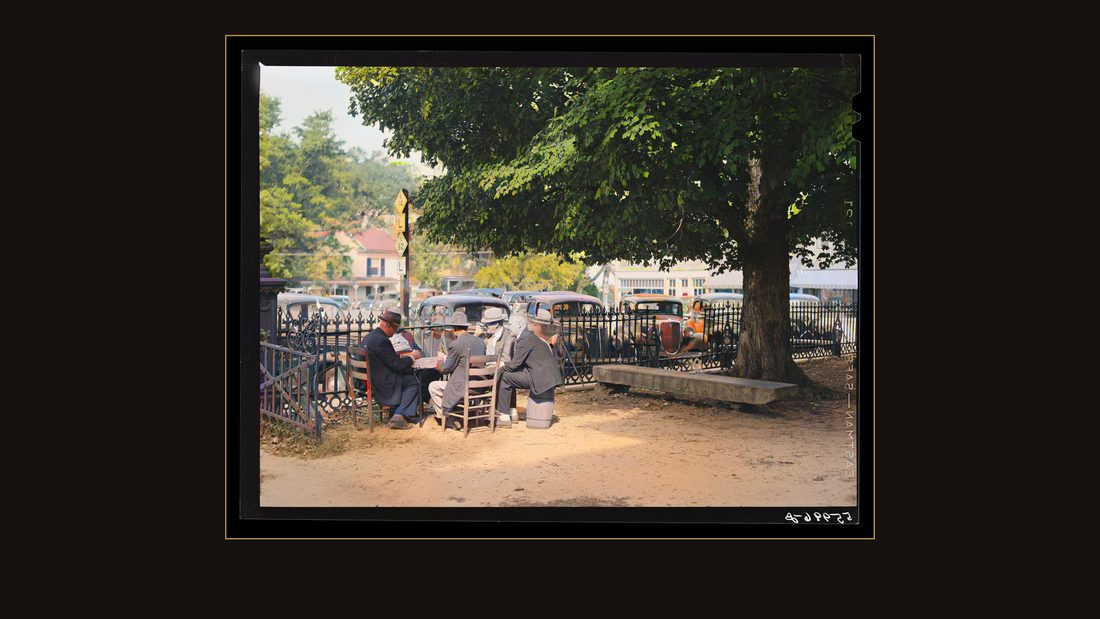
R76 Men playing cards in yard in front of court house in Yanceyville, Caswell County, North Carolina
Marion Post Wolcott · October 1940 · Library of Congress · FSA/OWI · AI-colorized. View the original.
Cards in the courthouse yard again. Some things the war hadn't touched.
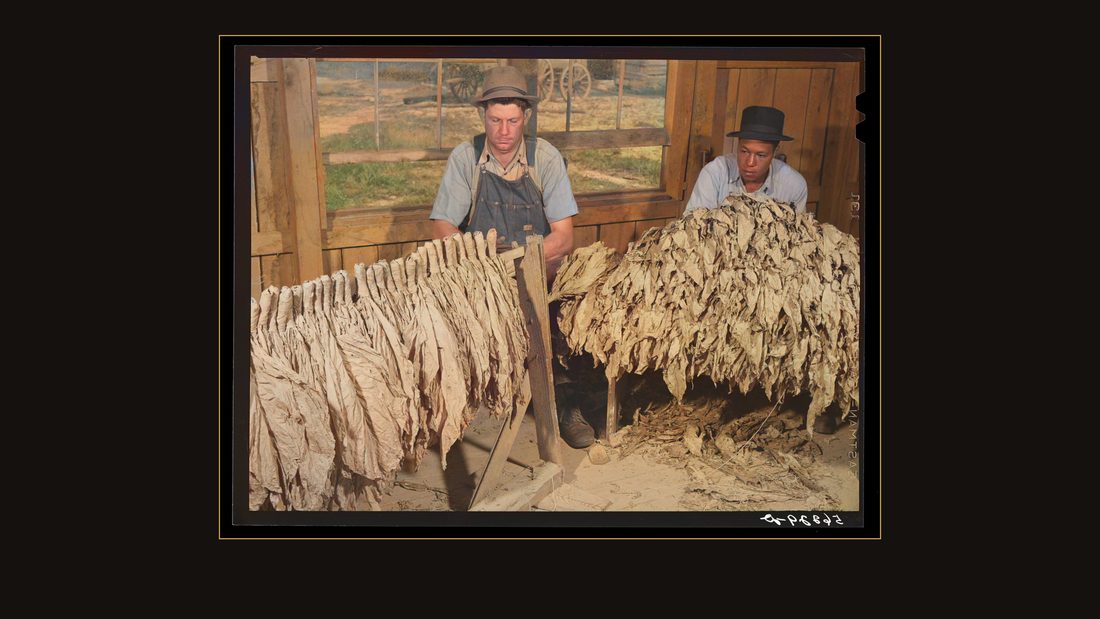
R77 Mr. W.H. Willis, a FSA (Farm Security Administration) borrower and his helper grading stripping tobacco in pack house on his farm near Yanceyville. Caswell County, North Carolina
Marion Post Wolcott · October 1940 · Library of Congress · FSA/OWI · AI-colorized. View the original.
Mr. W.H. Willis and his helper, grading and stripping tobacco in the pack house. Willis farmed on a Farm Security Administration loan —
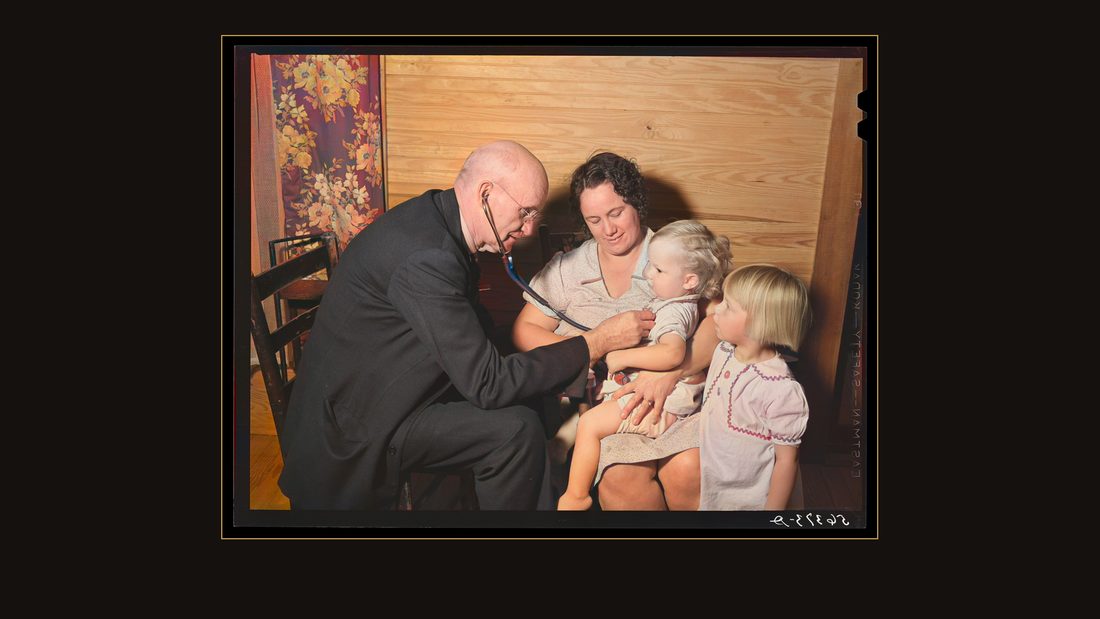
R78 Dr. S.A. Malloy examining Mrs. William H. Willis and her family. Mr. Willis is a FSA (Farm Security Administration) borrower. Blanch, Caswell County, North Carolina
Marion Post Wolcott · October 1940 · Library of Congress · FSA/OWI · AI-colorized. View the original.
— which is why there is a doctor in his house. Dr. S.A. Malloy, examining Mrs. Willis and the children. The medical care came arranged through the farm program.
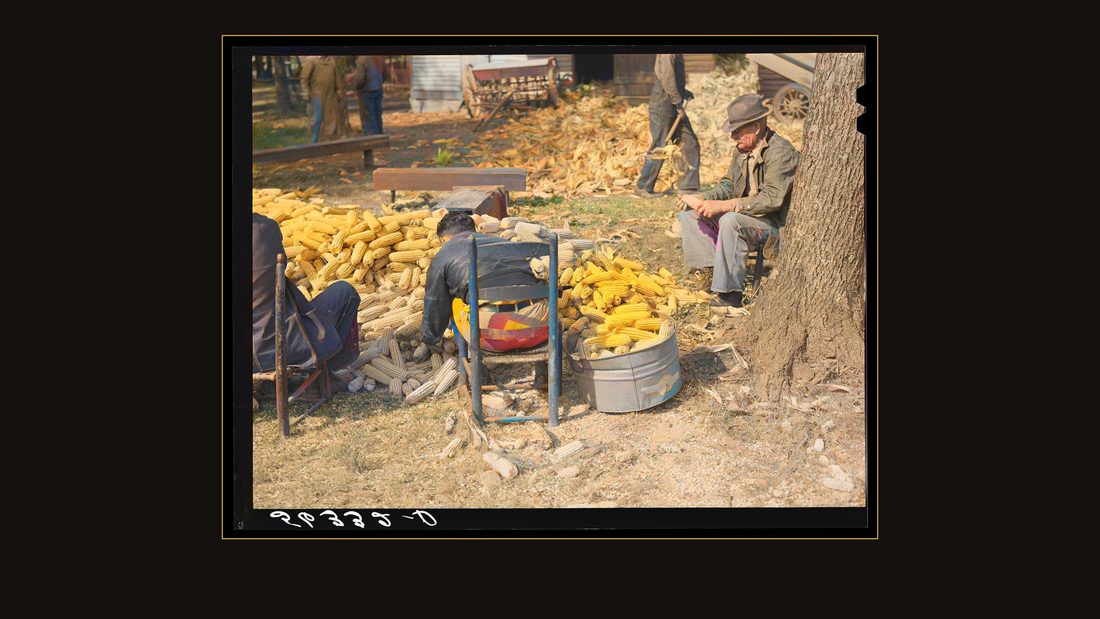
R79 Putting the corn in the crib to store for winter feed after shucking on Hooper Farm near Hightowers and Prospect Hill. Caswell County, North Carolina
Marion Post Wolcott · October 1940 · Library of Congress · FSA/OWI · AI-colorized. View the original.
Corn going into the crib on the Hooper farm — winter feed, laid by.
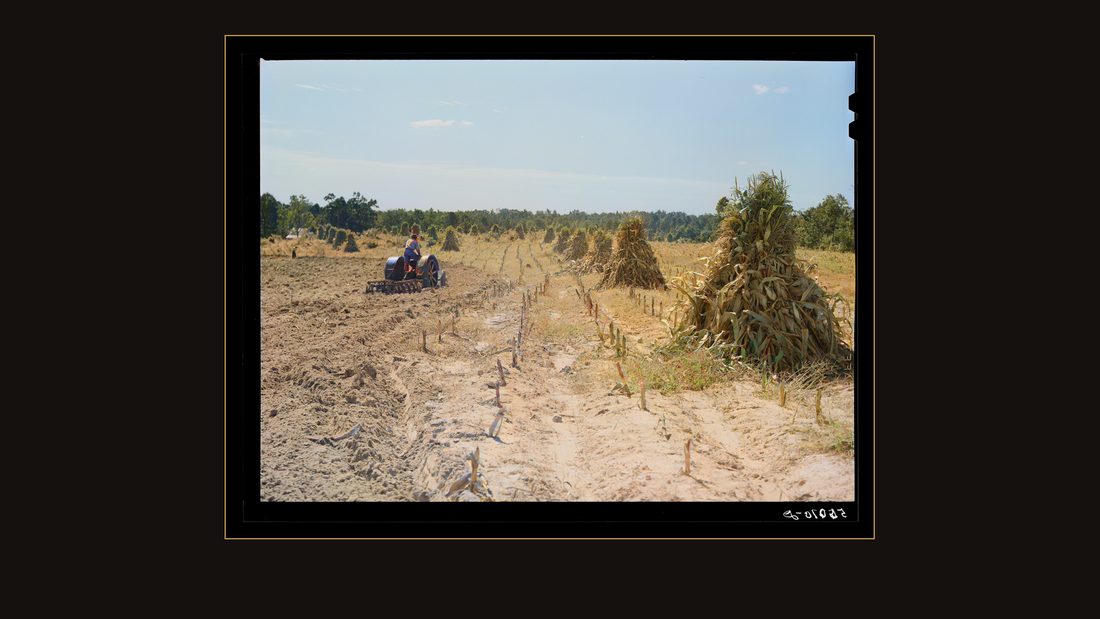
R80 CCC (Civilian Conservation Corps) boys seeding and preparing a meadow strip for terrace outlet on property of FSA (Farm Security Administration) borrower E.O. Foster. Caswell County, North Carolina
Marion Post Wolcott · October 1940 · Library of Congress · FSA/OWI · AI-colorized. View the original.
C C C boys seeding a terrace outlet on E.O. Foster's place. The government, trying to give the tired land its rest.
R81 Representative A.L. Folger attending the county land use planning committee meeting in the courthouse in Yanceyville. Caswell County, North Carolina
Marion Post Wolcott · October 1940 · Library of Congress · FSA/OWI · AI-colorized. View the original.
And in the Yanceyville courthouse, Congressman A.L. Folger at a county land-use planning meeting. Every institution in this film — the loan desk, the quota, the check window, this committee — is the same hand, steadying one crop.
Moving day
R82 In the fall of the year after the crops are up many tenants and sharecroppers move into another farm. This colored family was moving from this home near Yanceyville to one near Raleigh, North Carolina
Marion Post Wolcott · October 1940 · Library of Congress · FSA/OWI · AI-colorized. View the original.
October, nineteen forty. Near Yanceyville, Wolcott stopped on the road for this. Her caption: in the fall of the year, after the crops are up, many tenants and sharecroppers move into another farm.
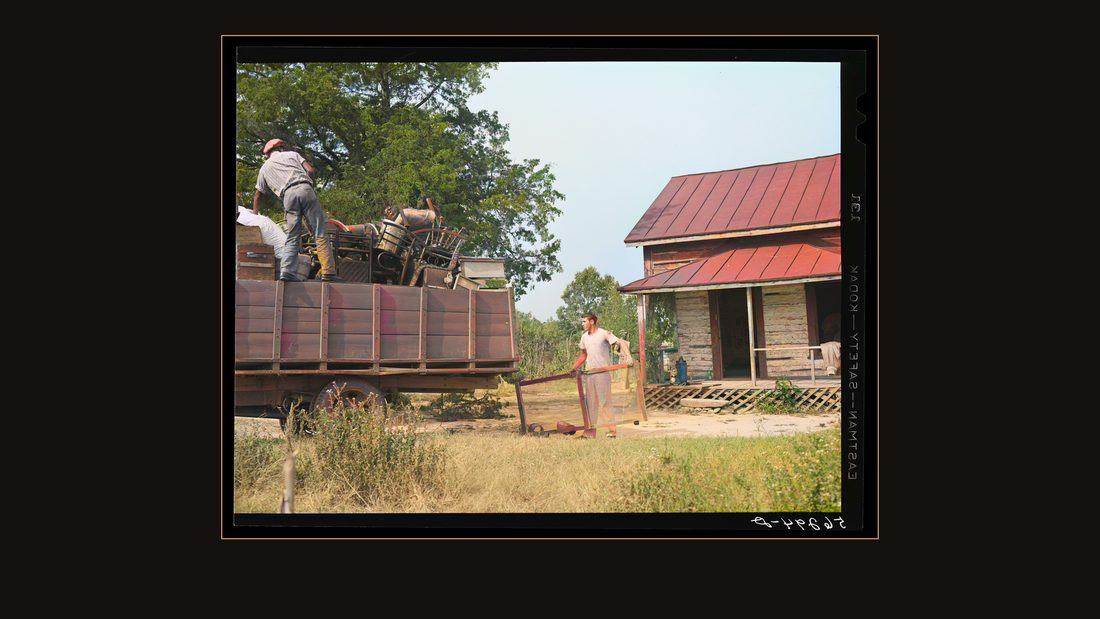
R83 In the fall of the year after the crops are up many tenants and share croppers move into another farm. This colored family was moving from this home near Yanceyville to one near Raleigh, North Carolina. Caswell County, North Carolina
Marion Post Wolcott · October 1940 · Library of Congress · FSA/OWI · AI-colorized. View the original.
This family was leaving a farm near Yanceyville for one near Raleigh, with everything they owned on board.
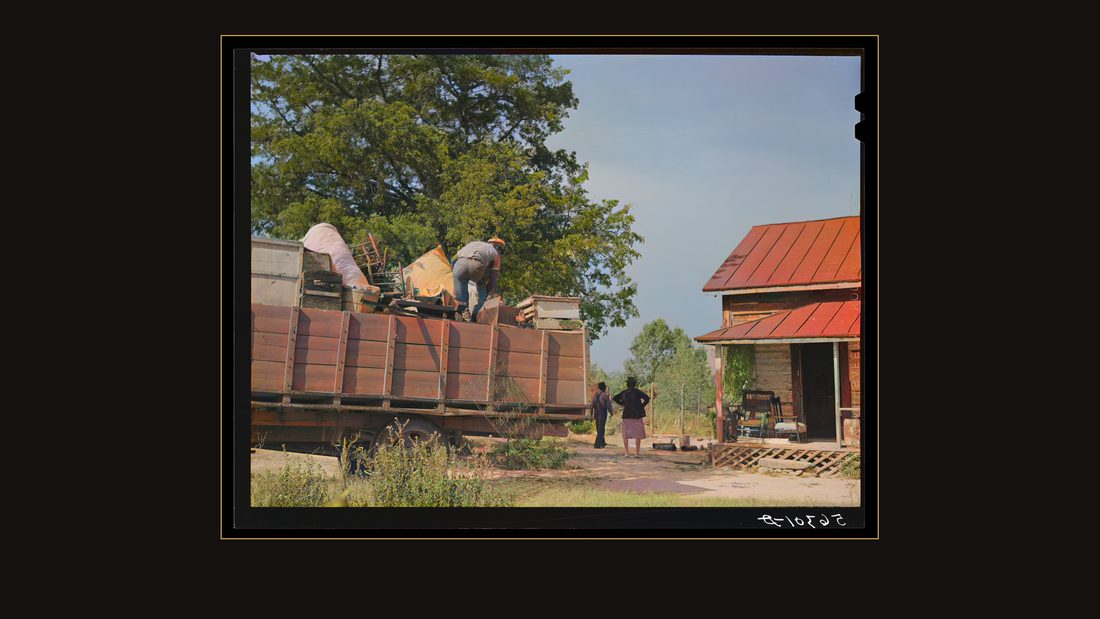
R84 In the fall of the year after the crops are up many tenants and share croppers move into another farm. This colored family was moving from this farm near Yanceyville to one near Raleigh, North Carolina
Marion Post Wolcott · October 1940 · Library of Congress · FSA/OWI · AI-colorized. View the original.
Tenancy meant the crop was never quite yours, and neither was the house. When the tobacco was sold and the loan was paid, fall was when you found out whether you stayed. The road to Raleigh. A new landlord. A new patch. The same crop.
S4
The Tobacco Situation TS-15 · USDA BAE · July 1940.
Sources
- U.S. Dept. of Agriculture, Bureau of Agricultural Economics, *The Tobacco Situation* TS-12 (Sept. 27, 1939) — August 1939 flue-cured average price of 15 cents vs. 22 cents in August 1938; crop 29 percent larger than 1938; "Because of the withdrawal of British buyers, all flue-cured markets were closed by September 14." archive.org/details/tobaccosituation12unit
- *The Tobacco Situation* TS-13 (Jan. 1940) — markets closed September 13 to October 10; blocked sales into November; Commodity Credit Corporation financing contingent on the quota referendum; referendum held October 5, 1939: 250,671 of ~300,000 eligible growers voting, 90 percent in favor (North Carolina 159,954 yes votes; Alabama 79); 1939-crop season average ~15.4 cents vs. 22.5 cents; 1940 allotted acreage 62 percent of 1939 planted acreage. archive.org/details/tobaccosituation13unit
- *The Tobacco Situation* TS-15 (July 1940) — British buyers withdrew at the close of business September 8, 1939, after the British government withheld exchange for American tobacco; the United Kingdom normally took about one-third of the U.S. flue-cured crop (~200 million pounds); fiscal-1940 exports to the U.K. of 97 million pounds, 8.4 percent of the record 1,159,320,000-pound 1939 crop; of 173 million pounds bought by the Commodity Credit Corporation for British option, 161,881,000 pounds remained in U.S. stocks; 1940 scheduled market openings (Middle Belt Sept. 17, Old Belt Sept. 24). archive.org/details/tobaccosituation15unit
- Photographs: Farm Security Administration / Office of War Information black-and-white negatives, Library of Congress Prints & Photographs Division — Dorothea Lange (July 1939), Marion Post Wolcott (Sept.–Nov. 1939, Sept.–Oct. 1940), Arthur Rothstein (Oct. 1936, Jan. 1940), Jack Delano (May 1940). Federal works, public domain. Per-photo item links are in the exhibit register; captions quoted in narration are the photographers' own from LOC catalog records. loc.gov/pictures/collection/fsa/
- Colorization: DDColor (piddnad/ddcolor_modelscope weights), applied 2026 to 2600-px downsamples of the Library of Congress master scans. Colors are machine estimates; luminance untouched. Gray-patch audit and spot repair via the channel's spotfix tool; corrections logged.