Four Armed Men Burned the Only House the Flood Spared | Frozen Creek, 1939
In the dark hours of July 5, 1939, a cloudburst sent a wall of water down Frozen Creek in Breathitt County, Kentucky — witnesses told government engineers it rose twenty feet in ten minutes. It is still the deadliest flash flood in Kentucky's recorded history. The county's own health office listed 51 dead in Breathitt County alone.
Transcript
The front page
The Jackson Times, the weekly paper of Breathitt County, Kentucky — July the sixth, nineteen thirty-nine. One day after the flood. Death Toll Mounts As High Waters Recede.
Sixty-five lives lost in the Frozen section of the county, the paper reported. The number would keep changing for a week, because the county did not yet know who was missing.
This is the story of the deadliest flash flood in Kentucky's recorded history. And of one house — the only house the water left standing in one small town — and what happened to it three nights later.
Frozen Creek
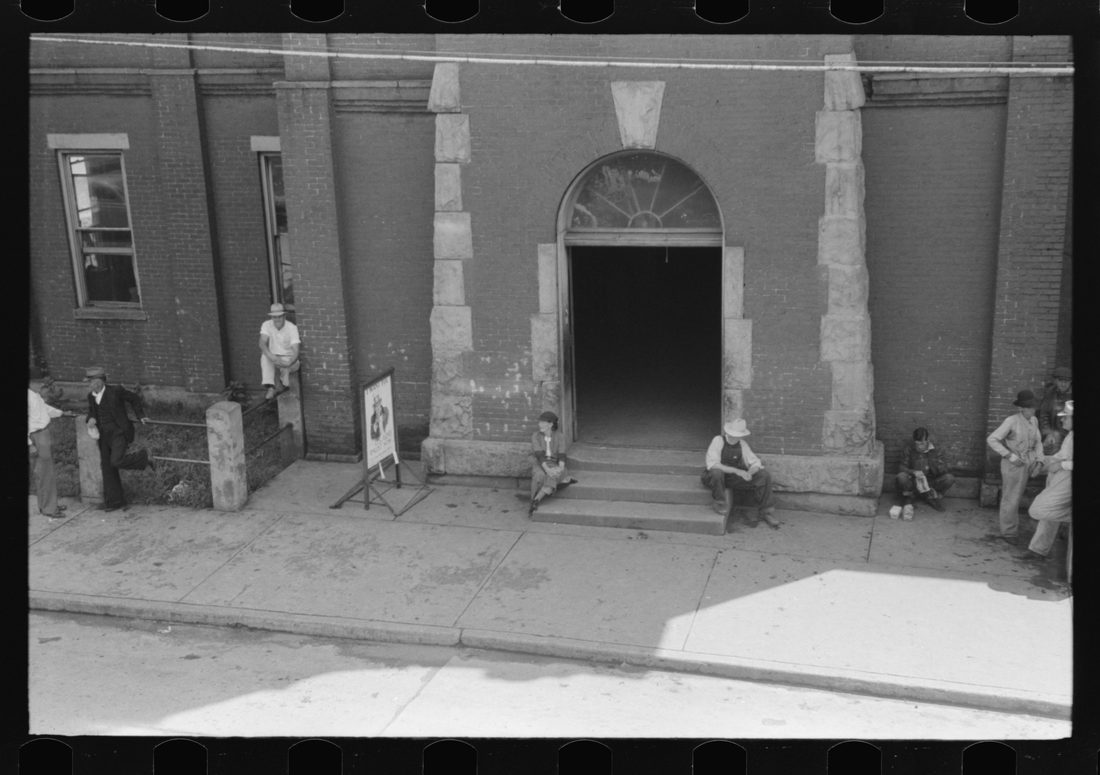
W05 Front of the courthouse, Jackson, Breathitt County, Kentucky
Marion Post Wolcott · 1940 · Library of Congress · FSA/OWI. View the original.
Breathitt County, eastern Kentucky. The county seat is Jackson. This is the courthouse, photographed the following year.
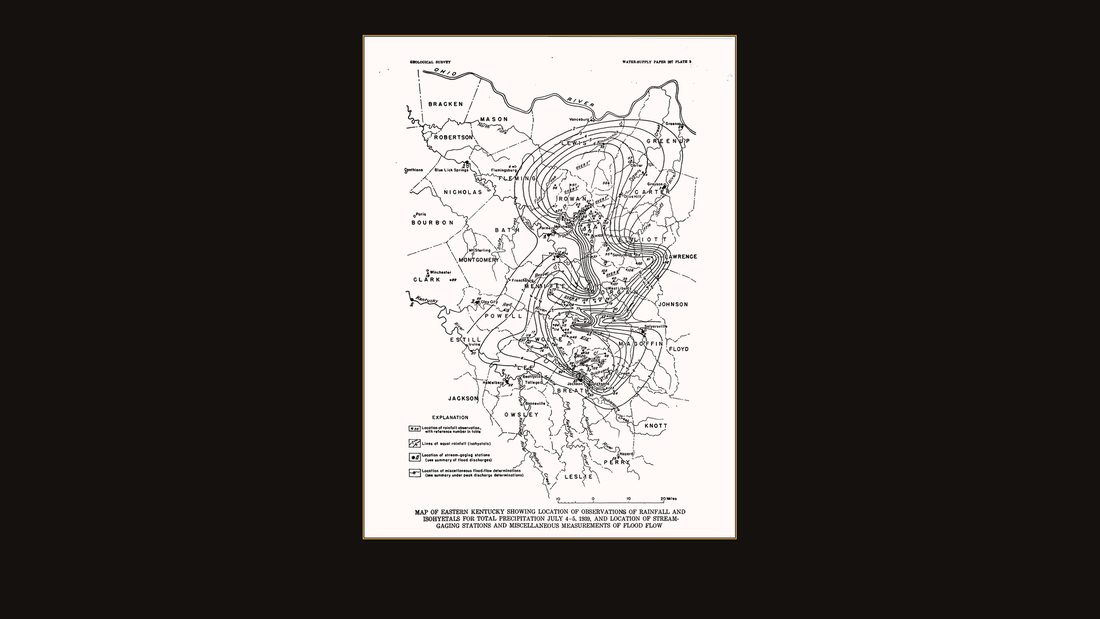
S08
USGS WSP 967-B · Plate 9 · isohyetal map.
Frozen Creek drains fifty-five square miles of steep hillside into the North Fork of the Kentucky River. The settlements sat in the creek bottoms — the only flat ground there was.

S01
USGS Water-Supply Paper 967-B · 1945 · title page.
What happened on that creek was documented twice: by the newspapers in the week it happened, and by the Geological Survey, in Water-Supply Paper nine sixty-seven B.
The night of July 4th
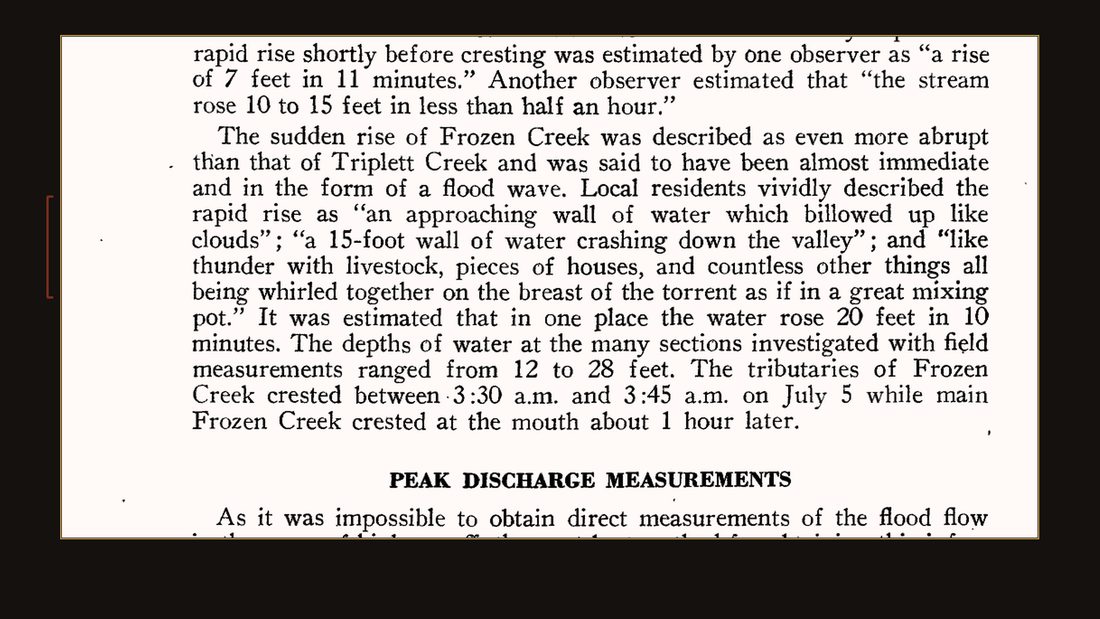
S04
USGS WSP 967-B · p. 52.
July the fourth was hot and dry. That night, thunderstorms built to the north — lightning so continuous, the Survey recorded, that people watched the clouds move in what they called a purplish hue.
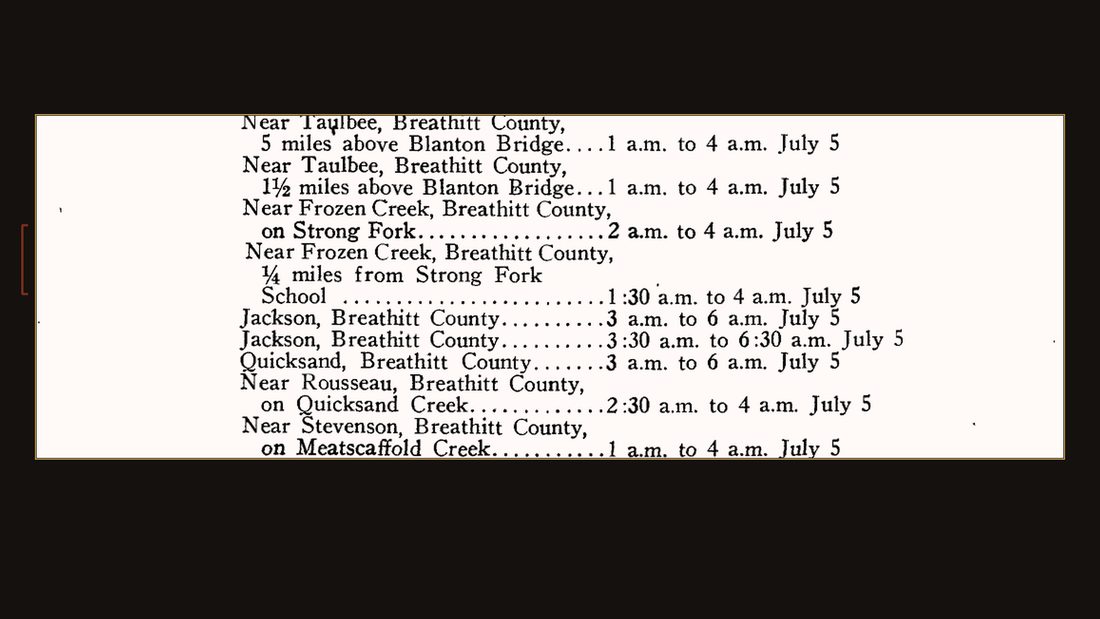
S03
USGS WSP 967-B · p. 46.
The rain fell in roughly three hours, between one and four in the morning. On Frozen Creek, from about two until four.
S02
USGS WSP 967-B · p. 46.
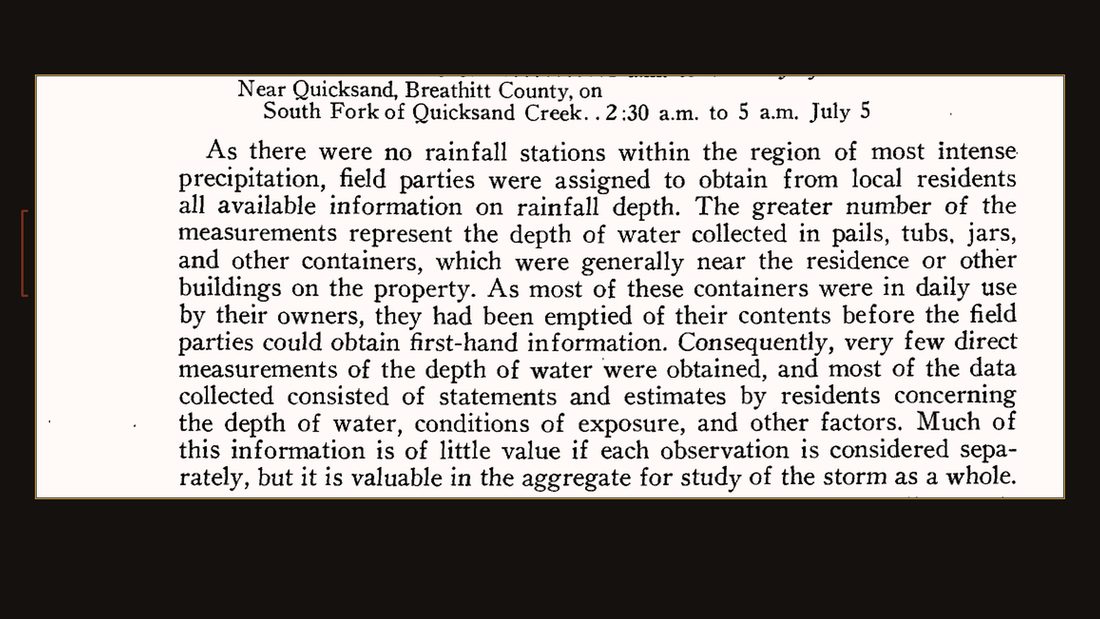
Nobody knows how much rain fell, because not one weather station stood inside the storm. The government's figures came from field parties measuring the water left in pails, tubs, and jars.
S05
USGS WSP 967-B · p. 46.
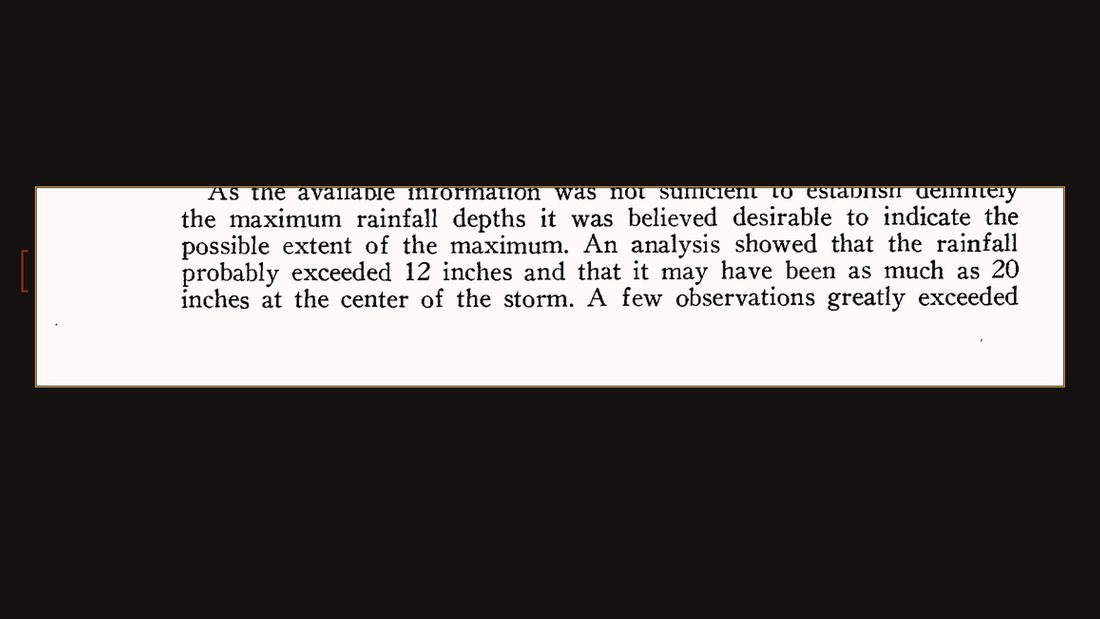
From the pails, the Survey concluded the rainfall probably exceeded twelve inches — and may have reached twenty. In about three hours.
The Associated Press put it this way: the mountain people went to bed Tuesday night unmindful of the impending treachery of streams that ran past their door, merely trickling at times.
S04
USGS WSP 967-B · p. 52.
Residents described what came next. An approaching wall of water which billowed up like clouds. A fifteen-foot wall of water crashing down the valley. Twenty feet in ten minutes.
Like thunder, one witness said — with livestock, pieces of houses, and countless other things all being whirled together on the breast of the torrent as if in a great mixing pot.
The creek crested between three thirty and three forty-five in the morning, in the dark. Survivors said there was not the slightest warning. People trapped in their homes, the wire said, didn't have a chance.
The morning after
By Thursday, forty-three bodies had been recovered at Jackson and at Morehead, where a second arm of the storm came down Triplett Creek. Nearly one hundred people were missing.
A twelve-year-old, Benton Howard Junior, escaped through the glass of a door as the water reached his shoulders, and rode two miles downstream holding to a piece of tin.
Gertrude Deaton was the only survivor in the family of Barney Deaton, of Keck. Rescued from a tree — where the child she carried had been swept from her hands.
At Vancleve, a settlement of seventy-five people, the water took the Kentucky Mountain Bible Institute — its church, its school, the home of its minister, Reverend Myers. Sixteen people were on the property that night. By Thursday, seven had been located.
Gary Nathan Pelfrey, one year old, drowned when his family's home washed away. His father held the baby until the drift tore the child out of his arms. The parents were found alive, two miles below their home.
By Thursday morning the Red Cross had carpenters at the Jackson Builders Supply plant, making caskets. Identified bodies were buried as quickly as possible, by order of the health officers.
In some instances, the paper wrote, whole families, with the exception of one or two children or a parent, have been wiped out.
The river carried the dead thirty miles to Beattyville, in the next county. About fifteen bodies were found there. Men rode the train down to identify them.
Counting the dead
Sheriff Walter Deaton estimated seventy-five drowned in the Frozen Creek valley alone. He shared a surname with the family wiped out at Keck. In that valley, most people did.
By Friday the recovered stood at Breathitt twenty-one, Rowan twenty-five, Lewis two — dozens still missing. Searchers said openly that some bodies might never be found.
Saturday's Lexington Herald-Leader: Red Cross Lists Thirty-Five Flood Victims Still Missing In Breathitt County Section.
The county health director feared the toll would pass one hundred. That morning's bulletin named three more dead: Louise Noble, eighteen. Forest Howard, a child. An unidentified girl, about one year old.
Governor Happy Chandler called it probably the worst calamity of its kind ever to visit Kentucky. The suffering of our own people in the mountains, he said, beggars description.
On Saturday, searchers found a body tentatively identified as Reverend Myers of the Bible Institute. The same day they found two of his sons. Titus was six. Phillip was five.
They also found the Pelfrey baby. And Florence Noble, who worked for the Pelfrey family.
The last house standing
Which brings this story to the Pelfreys, and to the house.
W.H. Pelfrey was Vancleve's man of property. The store was the Pelfrey store. The garage was the Pelfrey garage. And his two-story frame house stood above the creek.
The flood put several feet of water inside it, and the family escaped by swimming. But the house held. At sunrise it was the only house in that part of Vancleve still on its foundations.
The Pelfreys moved into Jackson and posted a guard. At night, John Henry Banks watched the house. His father, Jim Banks, watched a bridge half a mile away.
On Friday night — two days after the flood, with bodies still coming out of the drifts — four armed men came to the Pelfrey house.
They stayed in the darkness, Banks told the sheriff, but thrust out guns so that he could see them. They told him to skidoo. We'll do the guarding for a while.
Banks walked the half mile to his father's bridge. A few minutes later, the two of them watched the flames come up.
The house burned to the ground with everything in it. The only house the flood had spared. Saturday's headline in Lexington: Fire Destroys Last Dwelling In Flood Town.
The Associated Press moved it nationwide in four sentences. Four armed men approached a guard at the home, and ordered him away a few minutes before the structure was fired.
Banks could not name the men. And he believed they had disguised their voices. You disguise your voice from a man who would know it.
Pelfrey said he knew of no enemies who might wish to destroy his home. The loss: five thousand dollars by the sheriff's account, ten thousand by the local paper's. Partly insured — the house. Not the furniture.
The sheriff said plainly he had no clue to the arsonists or their motives. A grand jury convened in Jackson the following Monday, Judge J. Brack Howard presiding.
In every Kentucky paper we could search, through nineteen forty-one, no arrest for the fire is ever reported. No indictment. No name. The record simply stops.
What the record settled
A week after the flood, the county's own accounting arrived. Fifty-one dead in Breathitt County. Forty-three recovered. Eight never found.
Missus Earl Howard and her children, Forest and Roberta, were buried together in one grave, in the Watkins cemetery near Quicksand.
S01
USGS Water-Supply Paper 967-B · 1945 · title page.
Across the whole storm area the federal report counted seventy-eight dead. The Red Cross counted seventy-nine.
What the engineers found
S06
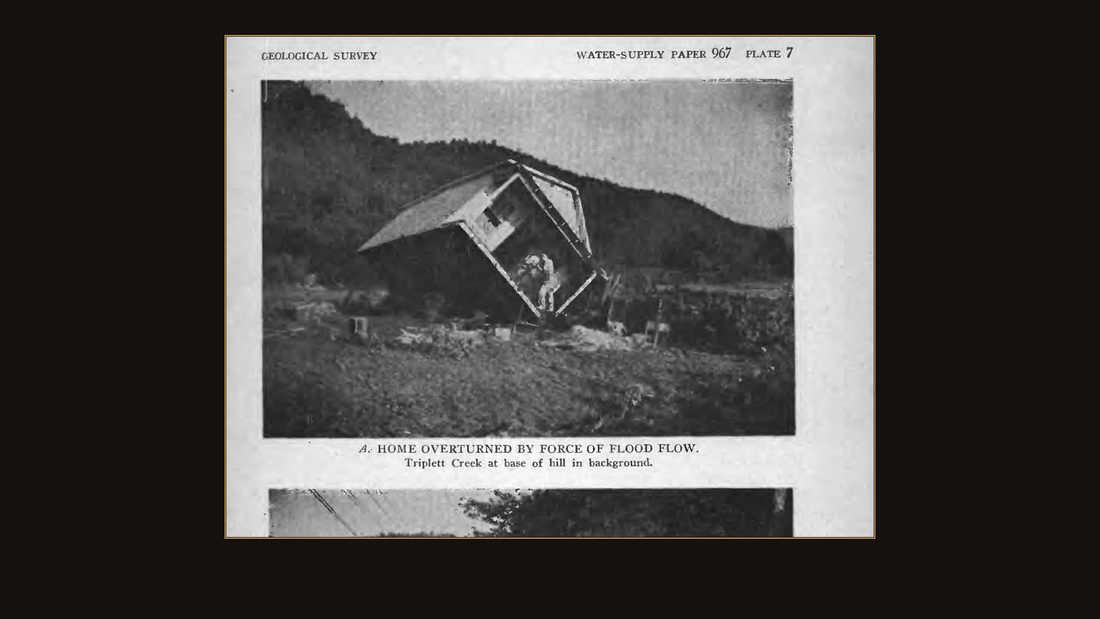
USGS WSP 967-B · Plate 7-A · Corps of Engineers.
The engineers came that same month, because the flood had beaten every instrument they had. No stream gage existed in the high-runoff area. They measured what the water left behind.
In Morehead they photographed a home overturned by the force of the flow, and a store pushed off its foundation.
S07
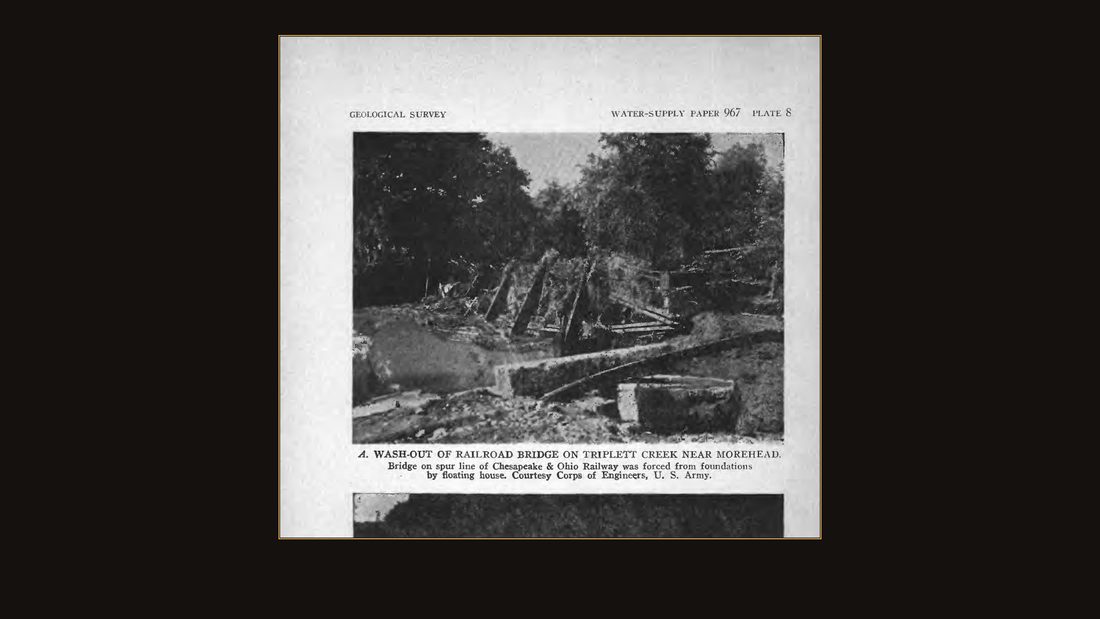
USGS WSP 967-B · Plate 8-A · Corps of Engineers.
The railroad bridge on Triplett Creek, washed out. The highway bridge over Cope Fork — remains.
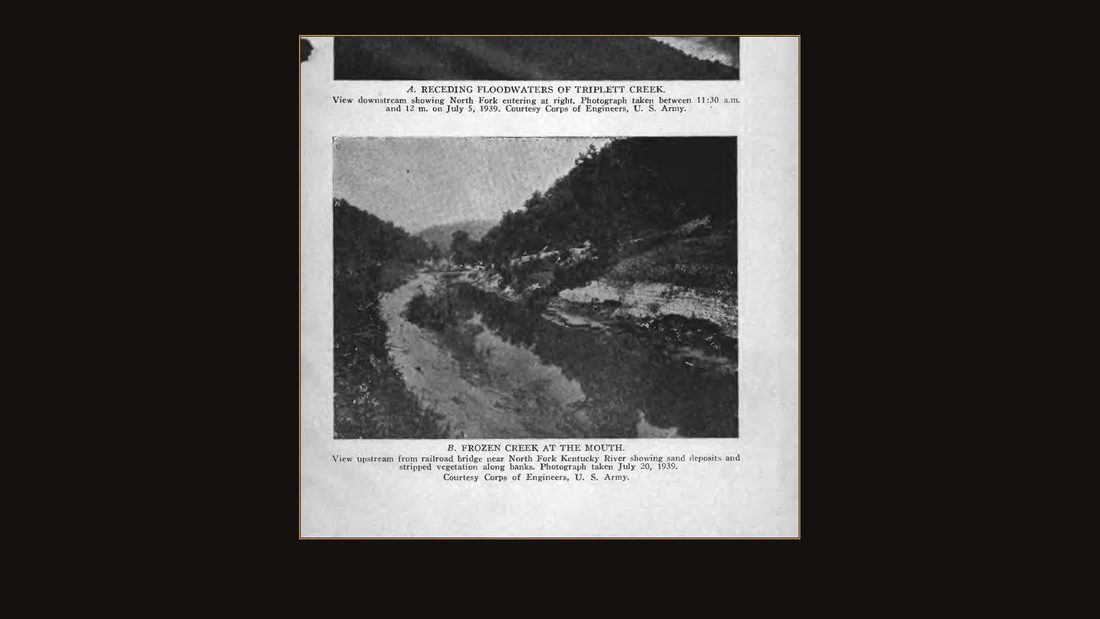
S09
USGS WSP 967-B · Plate 10-B · Frozen Creek at the mouth.
The mouth of Frozen Creek, scoured to sand and stripped vegetation.
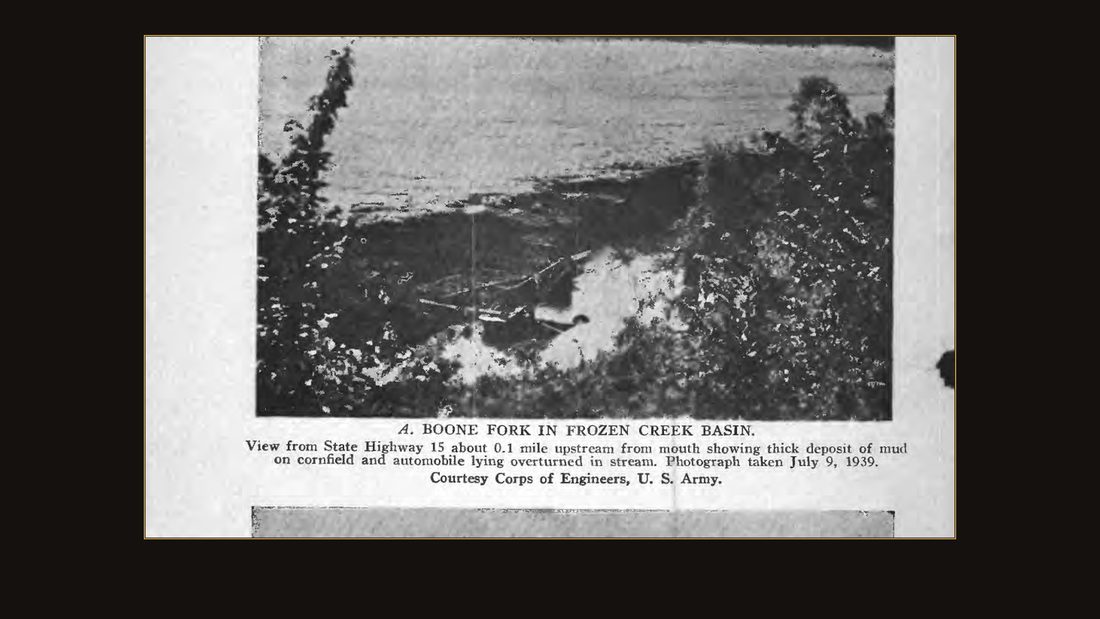
S10
USGS WSP 967-B · Plate 11-A · Boone Fork, Frozen Creek Basin.
Boone Fork, under a thick deposit of mud.
S04
USGS WSP 967-B · p. 52.
The flood ran twelve to twenty-eight feet deep. The discharge figures came out so far beyond anything ever recorded in Kentucky that the Survey refused to publish them — for doubt of its own measurements.
Thirteen months later
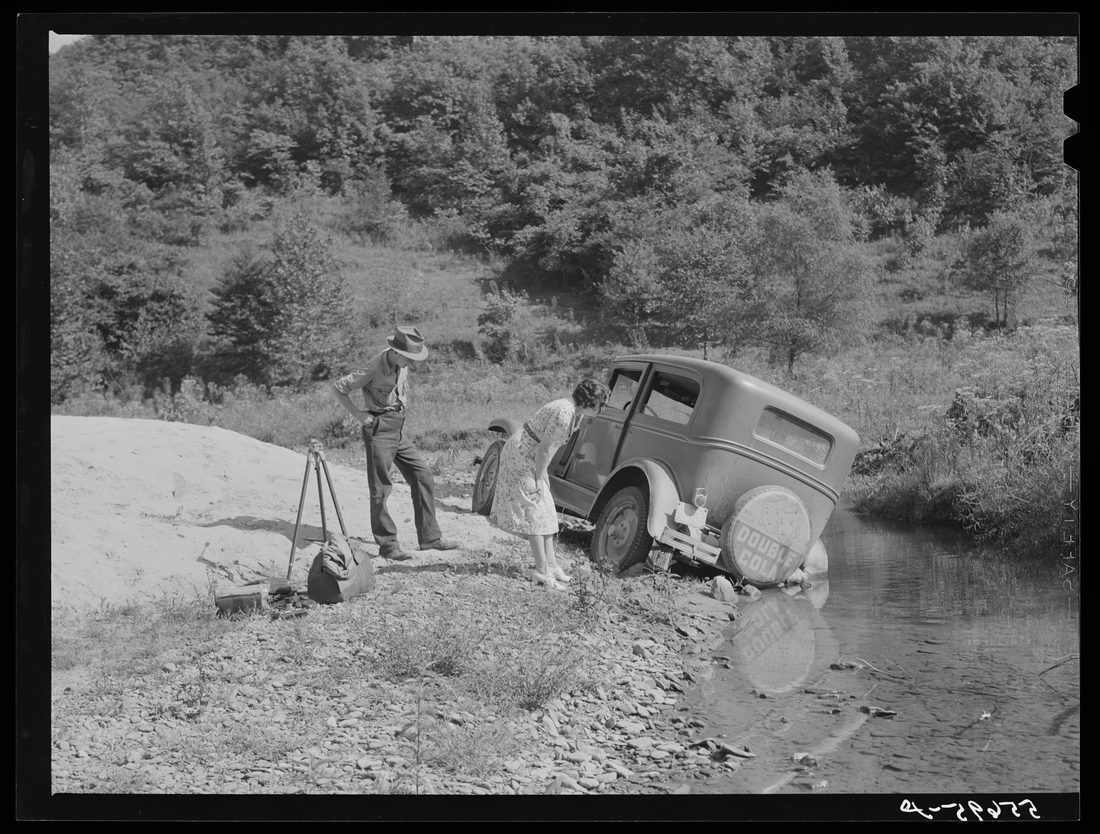
W07 Car in which school superintendent and photographer went up South Fork of the Kentucky River to take pictures of conditions in rural schools. Breathitt County, Kentucky
Marion Post Wolcott · September 1940 · Library of Congress · FSA/OWI. View the original.
Thirteen months later, a photographer came up these same creeks.
Marion Post Wolcott, of the Farm Security Administration, photographed this county in the late summer of nineteen forty. This is the car that carried her and the school superintendent up the South Fork.
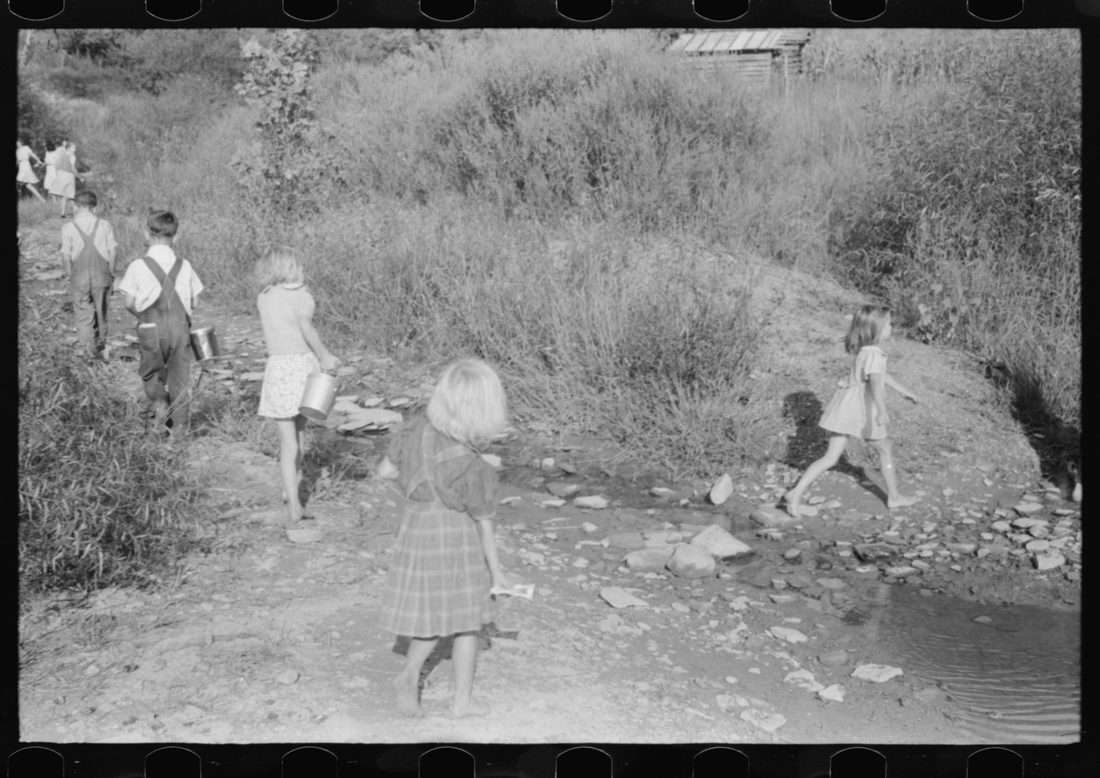
W01 Children going home from school up Frozen Creek carrying their lunch pails. School is held in the summer and stops in January because the creek beds, roads and inadequate clothing make it impossible for them to come in severe weather. Breathitt County, Kentucky
Marion Post Wolcott · 1940 · Library of Congress · FSA/OWI. View the original.
This is her photograph of children going home from school up Frozen Creek, carrying their lunch pails. The creek bed was the road.
Her caption talks about the lunch pails and the school term. It does not mention that fourteen months earlier, this creek killed more than fifty people in a single hour before dawn.
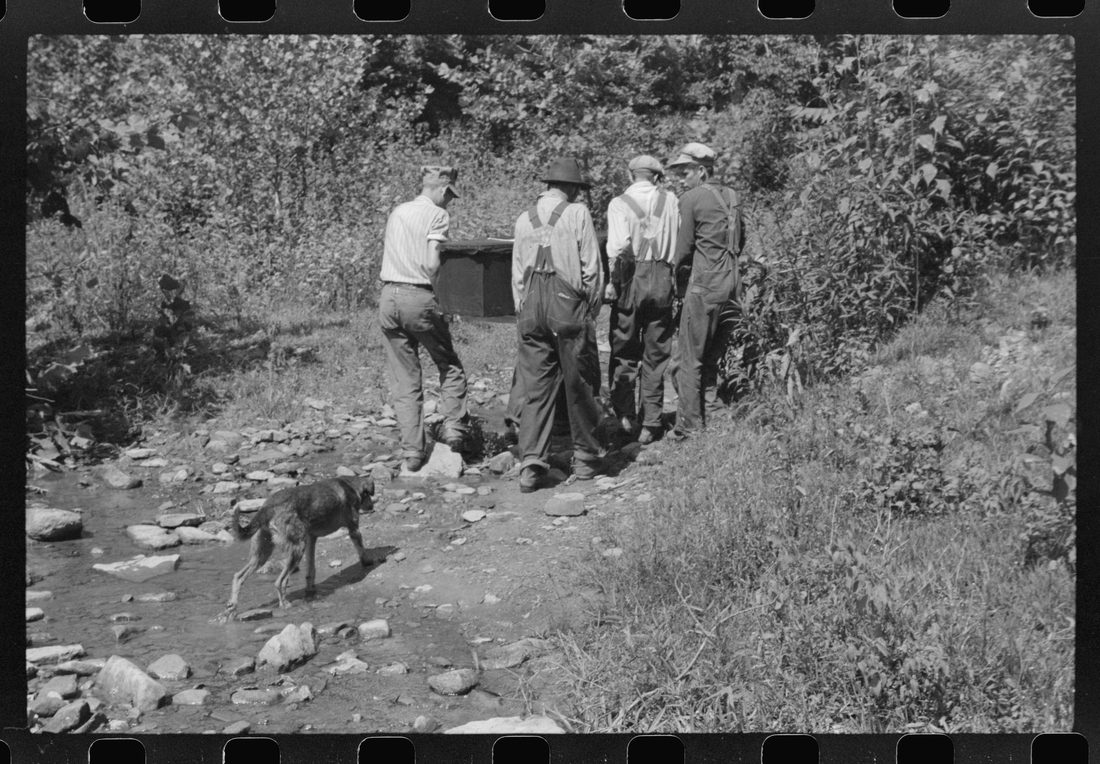
W02 Mountain people carrying a homemade coffin up creek bed to the family plot on the hillside where it will be buried. This section is too isolated to hold any formal funeral services immediately. Up South Fork of the Kentucky River near Jackson, Kentucky
Marion Post Wolcott · 1940 · Library of Congress · FSA/OWI. View the original.
She photographed mountain people carrying a homemade coffin up a creek bed to a family plot. Too isolated, the caption says, for formal funeral services.
![[Untitled photo, possibly related to: New graves decorated for an annual memorial meeting. In the mountains near Jackson, Kentucky. See general caption no. 1]](img/W03.jpg)
W03 [Untitled photo, possibly related to: New graves decorated for an annual memorial meeting. In the mountains near Jackson, Kentucky. See general caption no. 1]
Marion Post Wolcott · 1940 · Library of Congress · FSA/OWI. View the original.
She photographed new graves, decorated for a memorial meeting, in the mountains near Jackson. In August of nineteen forty, some graves on these hillsides were not yet a year old.
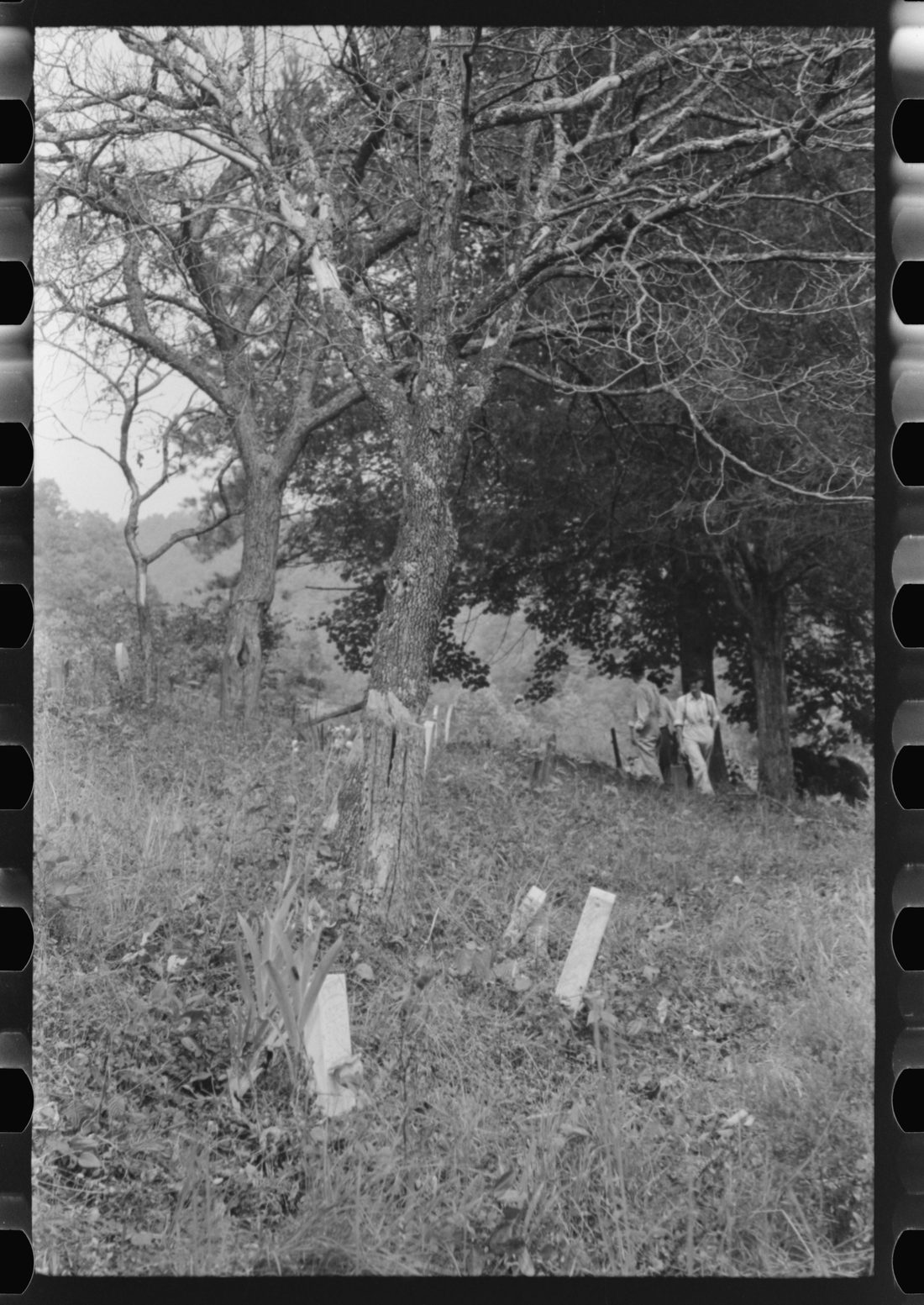
W04 [Untitled photo, possibly related to: Hand-carved gravestones in an old family cemetery where memorial meetings are held annually. In the mountains near Jackson, Kentucky. See general caption no. 1]
Marion Post Wolcott · 1940 · Library of Congress · FSA/OWI. View the original.
And hand-carved stones in a family cemetery. The dead that got names. Eight of the flood's dead never did.
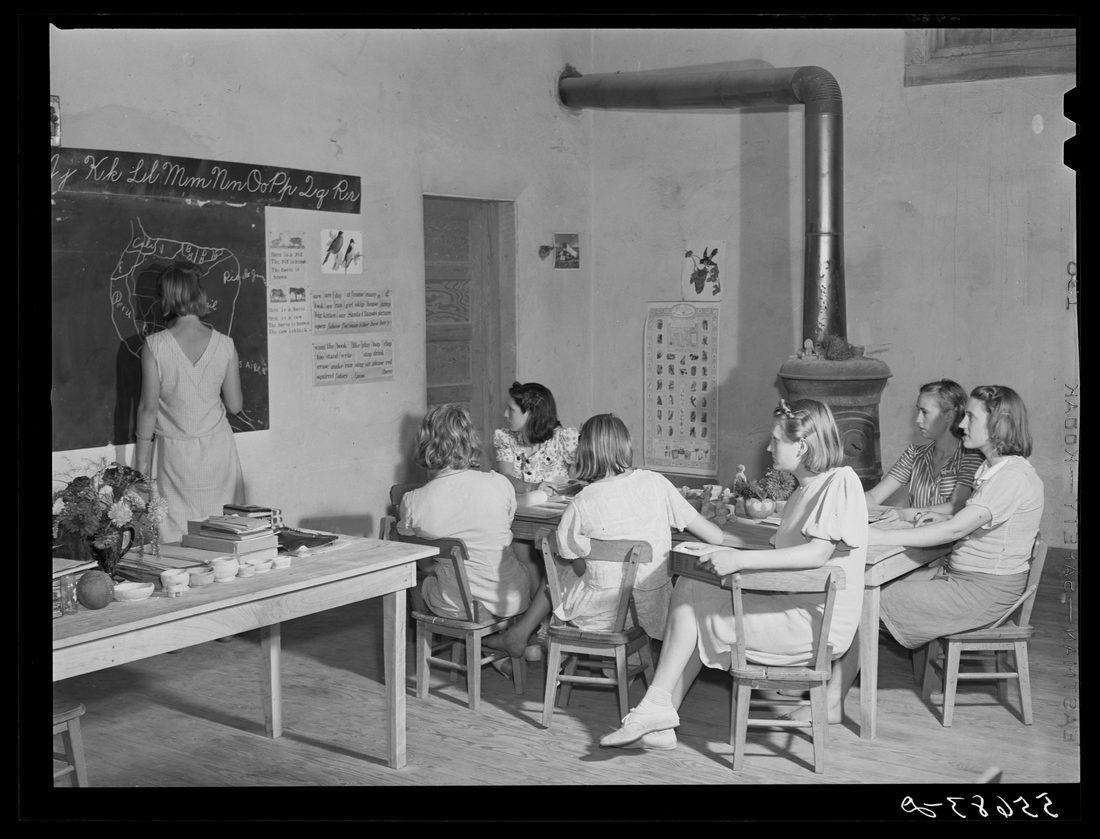
W06 One of the newer consolidated schools in Breathitt County, where Mrs. Marie R. Turner is county superintendent. She is trying to consolidate all the schools and build them of stone since so many of the mountain schools have been burned down several times. She has been encouraging an activity program emphasizing creative arts and crafts using their native clay, wood and other materials. Breathitt County, Kentucky
Marion Post Wolcott · September 1940 · Library of Congress · FSA/OWI. View the original.
And she photographed the county's answer to catastrophe: a school that superintendent Marie Turner was building in stone. Her reason, in the caption — so many of the mountain schools have been burned down several times.
Burned down several times. In this county, fire was an instrument — for a grudge, for a claim, for reasons a guard in the dark would not be told. The county built in stone because it knew its own history.
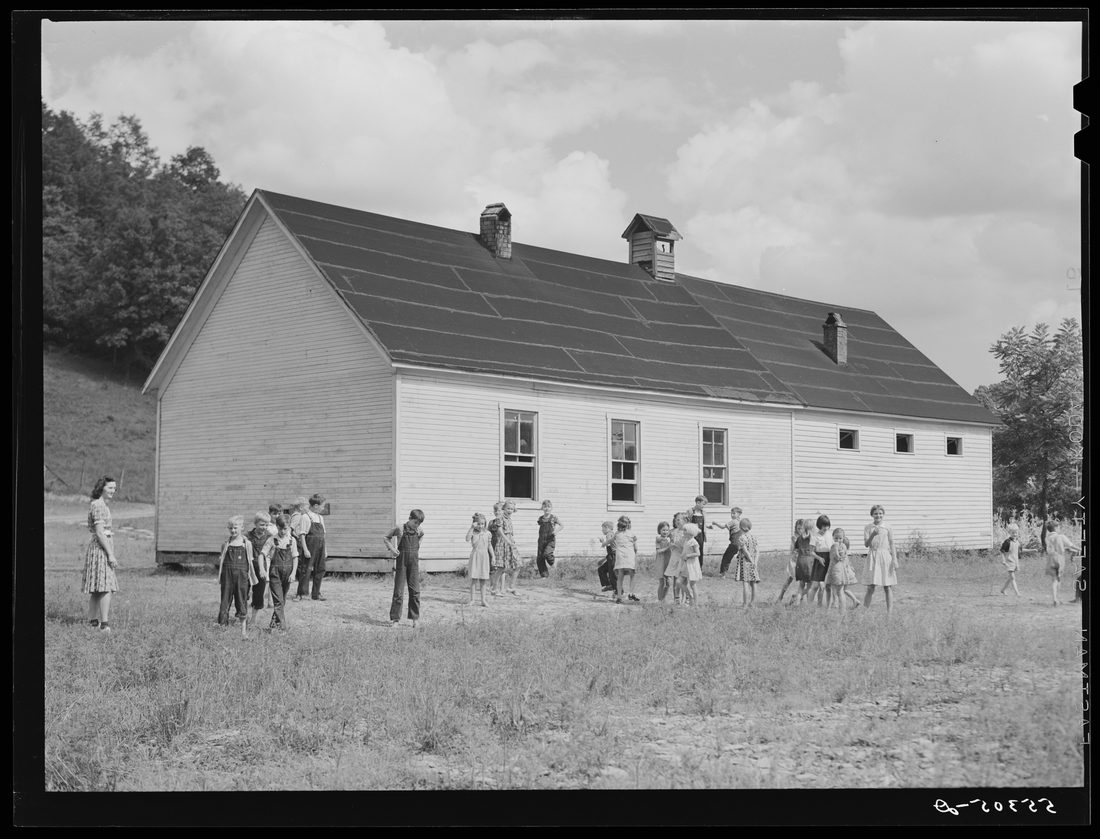
W09 Two-room school house near Morehead, Kentucky. In these mountain areas the school term begins in June and goes through January, because in the late winter and spring months the weather is so severe and roads so bad and childrens' clothing is too inadequate
Marion Post Wolcott · August 1940 · Library of Congress · FSA/OWI. View the original.
Near Morehead, a schoolhouse full of children, in a county that had buried twenty-five of its own the summer before.
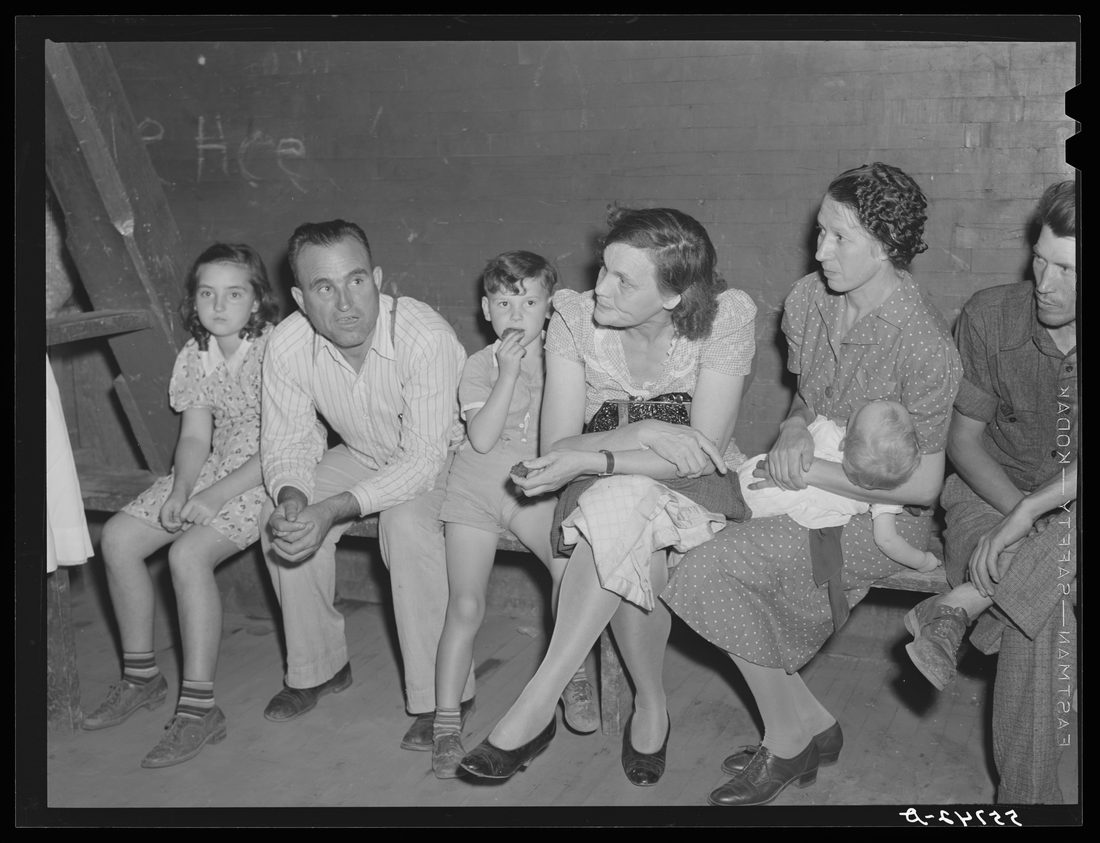
W08 Many parents and young people from the school and nearby communities attend the pie and box supper, given by the school to raise money for additional repairs and supplies. Each box or pie is auctioned off to the highest bidder, sometimes bringing a good deal, since the girl's "boyfriend" usually wins and has the privilege of eating it with her afterwards. Quicksand School, Breathitt County, Kentucky
Marion Post Wolcott · September 1940 · Library of Congress · FSA/OWI. View the original.
And at Quicksand School, a pie supper — a year after the creek it was named for backed up six miles.
Four sentences on a wire
The flood has a federal report and a Red Cross file. The fire has four sentences on a wire and no ending. Four armed men burned the last house in Vancleve, and nobody was ever named for it.
W01 Children going home from school up Frozen Creek carrying their lunch pails. School is held in the summer and stops in January because the creek beds, roads and inadequate clothing make it impossible for them to come in severe weather. Breathitt County, Kentucky
Marion Post Wolcott · 1940 · Library of Congress · FSA/OWI. View the original.
If your people were on Frozen Creek, or Quicksand, or Triplett in nineteen thirty-nine — if you grew up on a story about the flood, or the fire — the comments are open. Somebody knew those four men. Somebody's grandchildren still might.
The record
Sources
- U.S. Geological Survey, Water-Supply Paper 967-B: "Notable Local Floods of 1939 — Part 2. Flood of July 5, 1939, in Eastern Kentucky" (Floyd F. Schrader, GPO 1945). https://pubs.usgs.gov/wsp/0967b/report.pdf ·
- The Jackson Times (Jackson, Ky.), July 6, 1939, p. 1.
- The Jackson Times, July 13, 1939, p. 1.
- Lexington Herald-Leader, July 8, 1939, p. 1.
- Evening Star / Sunday Star (Washington, D.C.), July 6–9, 1939 (Associated Press wire coverage), via Chronicling America.
- Marion Post Wolcott, Farm Security Administration/OWI negatives, Aug–Sept 1940, Library of Congress (public domain federal works).
- National Weather Service, Jackson KY office, historical summary of the July 4–5, 1939 flood: https://www.weather.gov/jkl/frozenflood1939 (background; Red Cross figures of 79 dead — 52 Breathitt / 25 Rowan / 2 Lewis — and 21 counties affected).
- The death toll depends on who counted. Breathitt County's health office: 51 dead in the county, 8 never recovered. USGS/Corps of Engineers: 78 across the entire storm area. Red Cross: 79 (52 Breathitt / 25 Rowan / 2 Lewis). Early wire estimates ran from 65 to "may pass 100." The script quotes each figure with its source and does not average them.
- The arson accounts differ. The Lexington Herald-Leader (reporting the day after, naming the guard) says four armed men and ~$5,000; the Jackson Times (a week later) says two unidentified men and $10,000, and dates the fire "the night Thursday" where the Lexington and AP accounts say Friday night. The script follows the contemporaneous Lexington/AP account and the discrepancies are preserved here.
- No one was ever charged for the fire, as far as the searched record shows. The searches covered the Jackson Times and Kentucky dailies on newspapers.com through 1941 ("vancleve", "pelfrey", "incendiary" and variants). A grand jury sat the following Monday; no indictment for the fire appears in any issue found. The insurance detail is reported because the papers reported it; the script draws no conclusion from it, and none should be — the record supports none.
- The Howard families. Ray Howard (son of Earl Howard) and Benton Howard, Jr. (son of Benton Howard) are two different boys with separate escape accounts; Mrs. Earl Howard and children Forest and Roberta drowned. The July 8 bulletin gives Forest's age as 6, the July 13 Jackson Times as 12; the script avoids the disputed age.
- Wolcott's captions never mention the flood. That is an observation about the captions, not a criticism of the photographer; the FSA's assignment in 1940 was schools and community life.