The Camp Said Its Water Was Perfect. The Wells Killed 18 Men | 1918
Hot Springs, North Carolina — Madison County, on the French Broad, forty miles west of Asheville. In May 1917 the Secretary of Labor leased the Mountain Park Hotel there to hold two thousand interned German merchant sailors.
Transcript
Cold open
In May of nineteen seventeen the United States government went looking for somewhere to put two thousand German sailors. It chose a mountain valley in western North Carolina, and it put its reason in writing.
N2
French Broad Hustler · Hendersonville, N.C. · May 31, 1917 · p. 1. View the original.

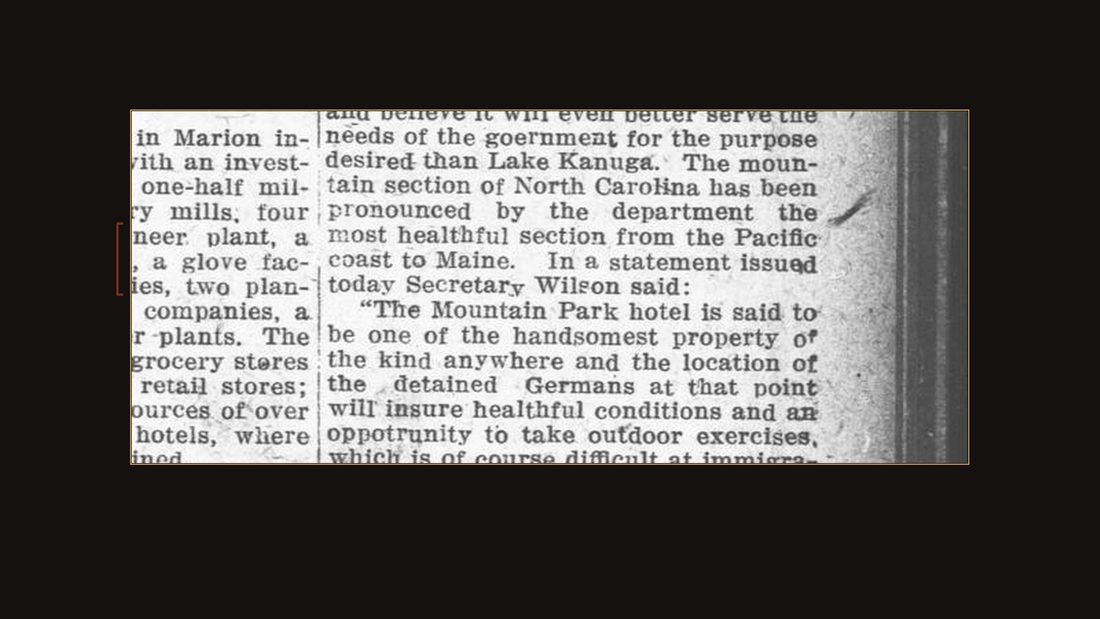
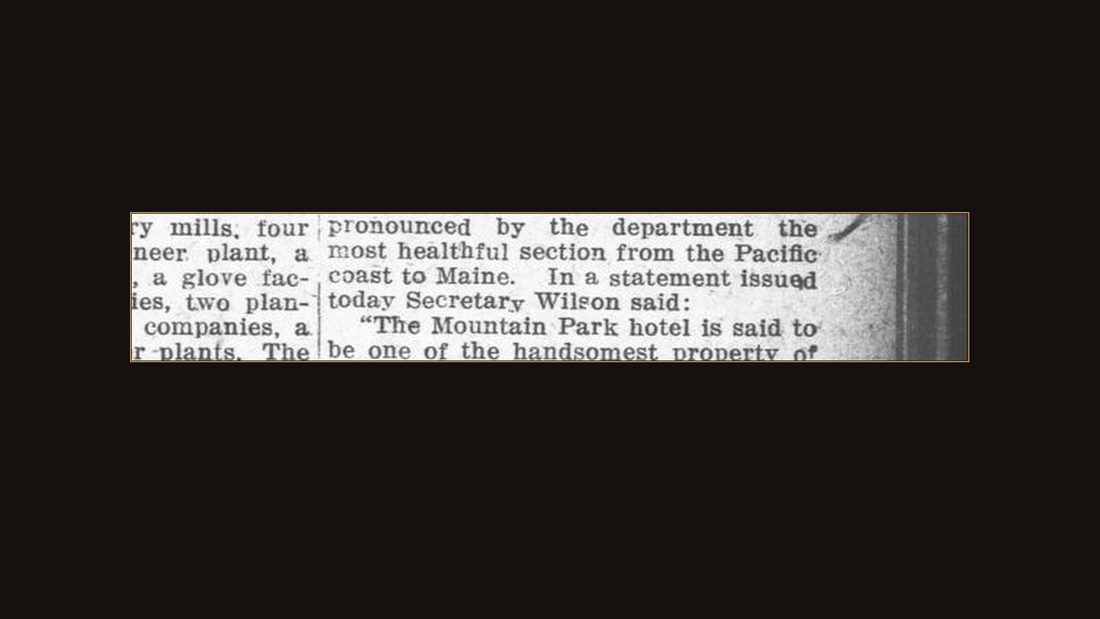
The location, the Secretary of Labor's statement said, will insure healthful conditions. His department had pronounced that stretch of mountains the most healthful section from the Pacific coast to Maine.
N40
The Washington Herald · Sept. 7, 1918 · p. 1. View the original.

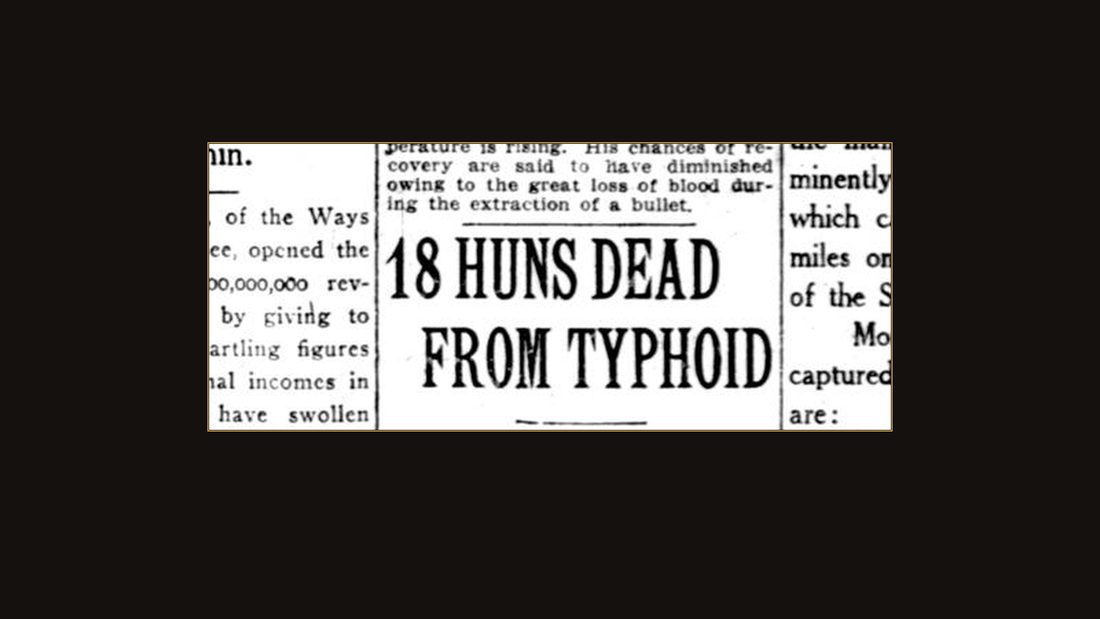
Fifteen months later the War Department announced that a hundred and seventy-seven men in that camp had typhoid fever, and that eighteen of them were dead.
This is what happened in between, and the argument about whose fault the water was.
The men in the harbors
On the sixth of April, nineteen seventeen, the United States declared war on Germany. Sitting in American harbors that morning were dozens of German merchant ships, some of which had run for shelter in nineteen fourteen and never left.
The ships were seized. The men aboard them became a problem with no obvious name. Not soldiers, not captured in any battle — merchant seamen from a country the United States was now at war with, already inside it.
N9
Evening Star · Washington, D.C. · Mar. 3, 1918 · p. 16. View the original.

Holding them fell to the Department of Labor, through its Bureau of Immigration. Not the Army. The same bureau that ran the immigration stations.
The largest group had been living in a building on Ellis Island for nearly three years, and Ellis Island was built for people passing through in days. So the department went looking for a building in the mountains.
The lease that fell through
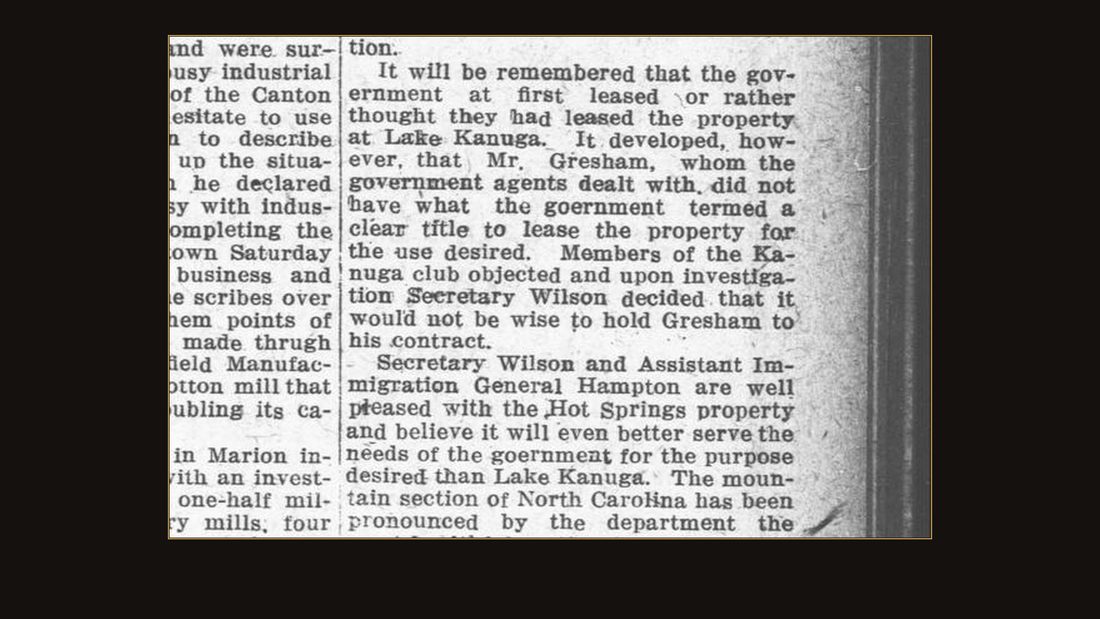
The first choice was a property at Lake Ka-NOO-ga, near Hendersonville. The government thought it had leased it. Then the deal came apart.
N1
French Broad Hustler · Hendersonville, N.C. · May 31, 1917 · p. 1. View the original.
The man the government's agents had dealt with, the local paper reported, did not have what the government called a clear title to lease the property for the use desired. Members of the club objected, and the Secretary decided it would not be wise to hold him to the contract.
So the government moved forty miles northwest, to a place called Hot Springs. It sits in Madison County, where the French Broad river cuts north through the mountains toward Tennessee. There were warm mineral springs there, and a resort hotel built around them called the Mountain Park.
N3
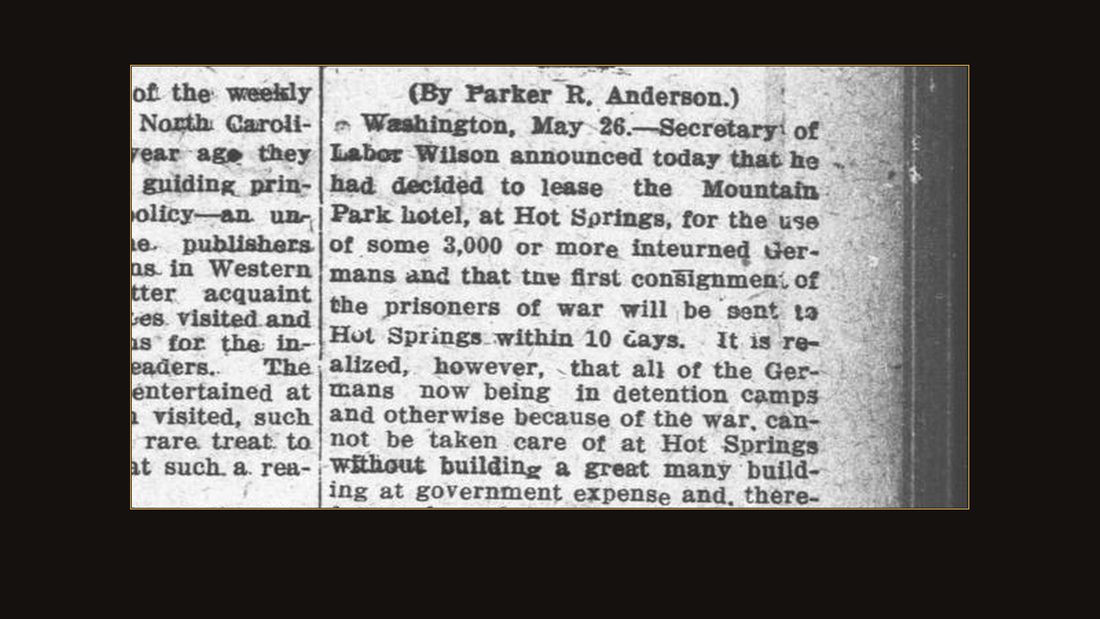
French Broad Hustler · Hendersonville, N.C. · May 31, 1917 · p. 1. View the original.
On the twenty-sixth of May, nineteen seventeen, the Secretary of Labor announced he had decided to lease that hotel for the use of some three thousand or more interned Germans.
N4
French Broad Hustler · Hendersonville, N.C. · May 31, 1917 · p. 1. View the original.
And he explained the choice.
N5
French Broad Hustler · Hendersonville, N.C. · May 31, 1917 · p. 1. View the original.
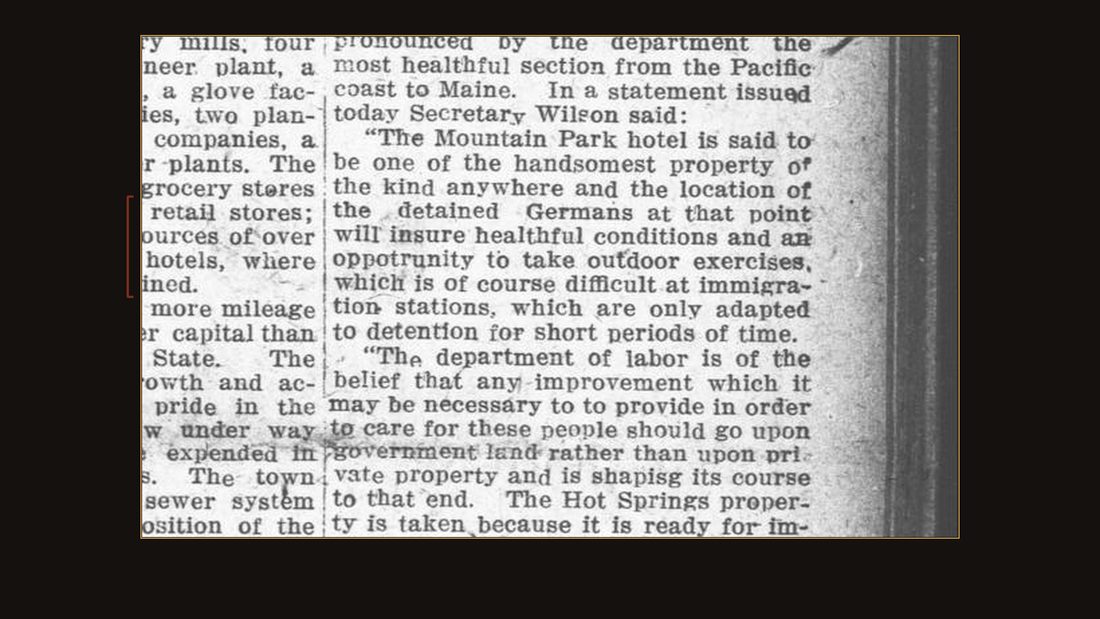
The Mountain Park hotel is said to be one of the handsomest properties of the kind anywhere, the statement read, and the location of the detained Germans at that point will insure healthful conditions and an opportunity to take outdoor exercise.

N6
French Broad Hustler · Hendersonville, N.C. · May 31, 1917 · p. 1. View the original.
That is the government's own reasoning, in the government's own words, printed in a North Carolina newspaper. The place was picked because it was healthy.
The plan

N7
Evening Star · Washington, D.C. · July 15, 1917 · p. 34. View the original.

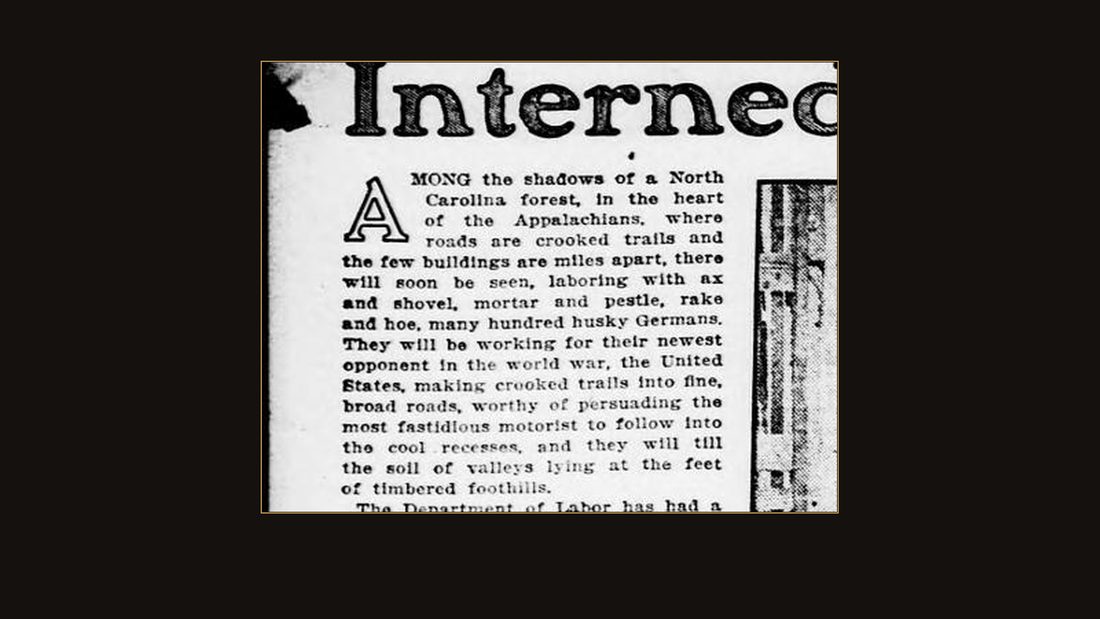
Two months later the Evening Star of Washington laid out the whole plan across a Sunday page.
N8
Evening Star · Washington, D.C. · July 15, 1917 · p. 34. View the original.
Among the shadows of a North Carolina forest, it began, in the heart of the Appalachians, where roads are crooked trails and the few buildings are miles apart, there will soon be seen, laboring with ax and shovel, many hundred husky Germans.
N10
Evening Star · Washington, D.C. · July 15, 1917 · p. 34. View the original.
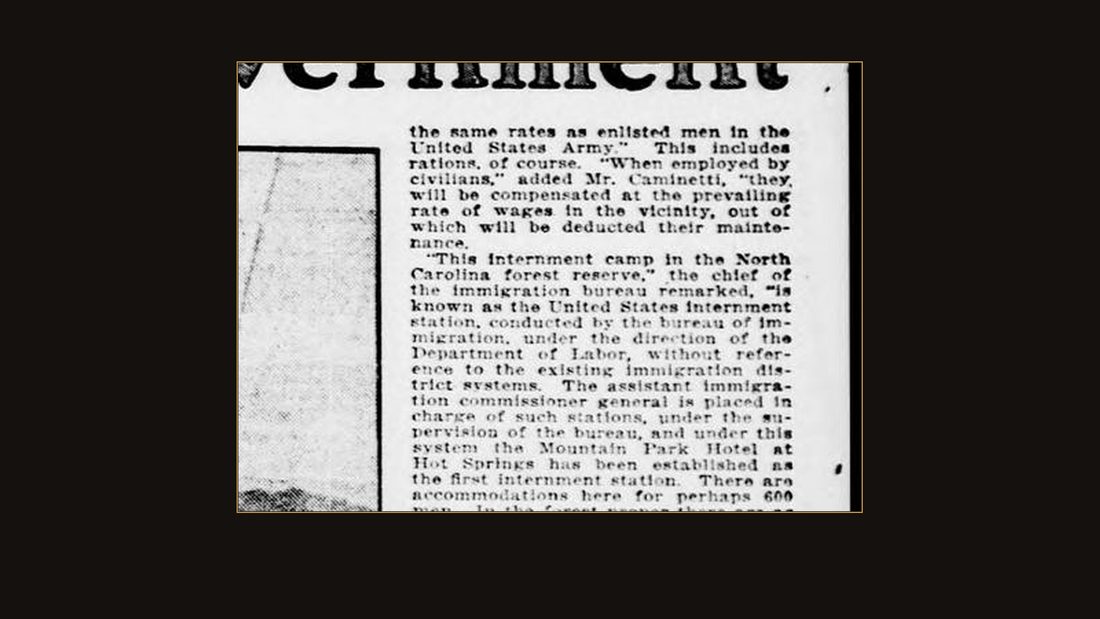
They were to cut roads through the government's forest land at PIZ-ga, and be paid, the commissioner general of immigration explained, at the same rates as enlisted men in the United States Army.
N12
Evening Star · Washington, D.C. · July 15, 1917 · p. 34. View the original.
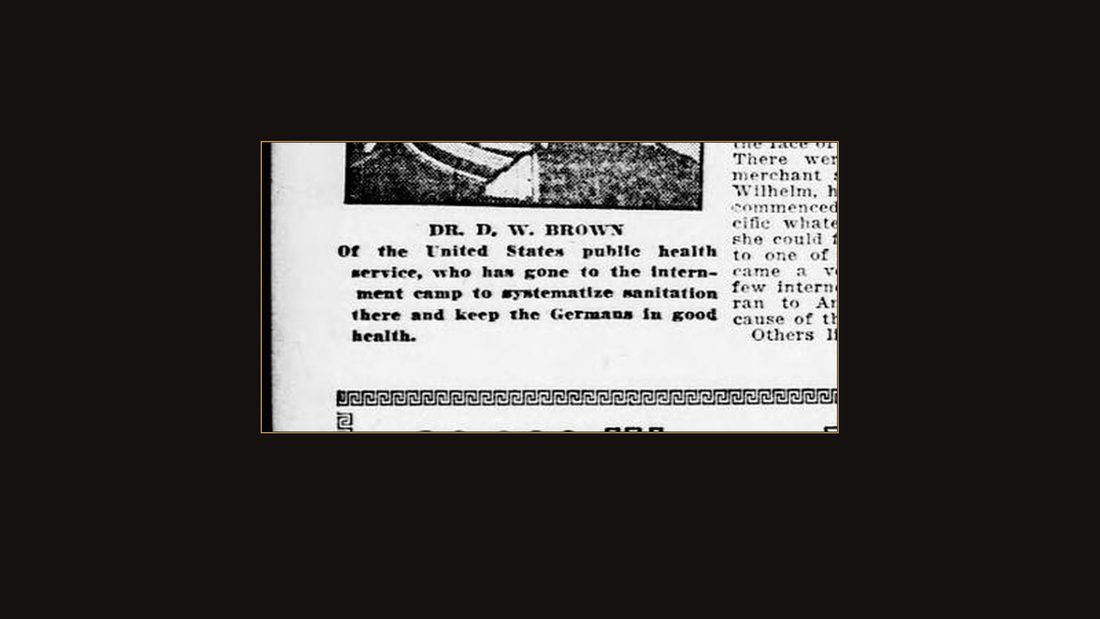
And the same page carried a photograph of an officer of the United States Public Health Service, who, the caption said, had gone to the internment camp to systematize sanitation there and keep the Germans in good health.
Remember that line. It is July of nineteen seventeen.
The village
The men came south through the summer and early fall, by train, from New York and Boston and the other stations.
N14
Evening Star · Washington, D.C. · Mar. 3, 1918 · p. 16. View the original.
The hotel could hold four or five hundred people. There were two thousand men. So the government supplied lumber, and the men built the rest of the camp themselves.
N15
Evening Star · Washington, D.C. · Mar. 3, 1918 · p. 16. View the original.
Out of the crews came electricians, plumbers, carpenters, engineers, cooks. A seagoing ship, the official account notes, is a community in itself.
N16
Evening Star · Washington, D.C. · Mar. 3, 1918 · p. 16. View the original.
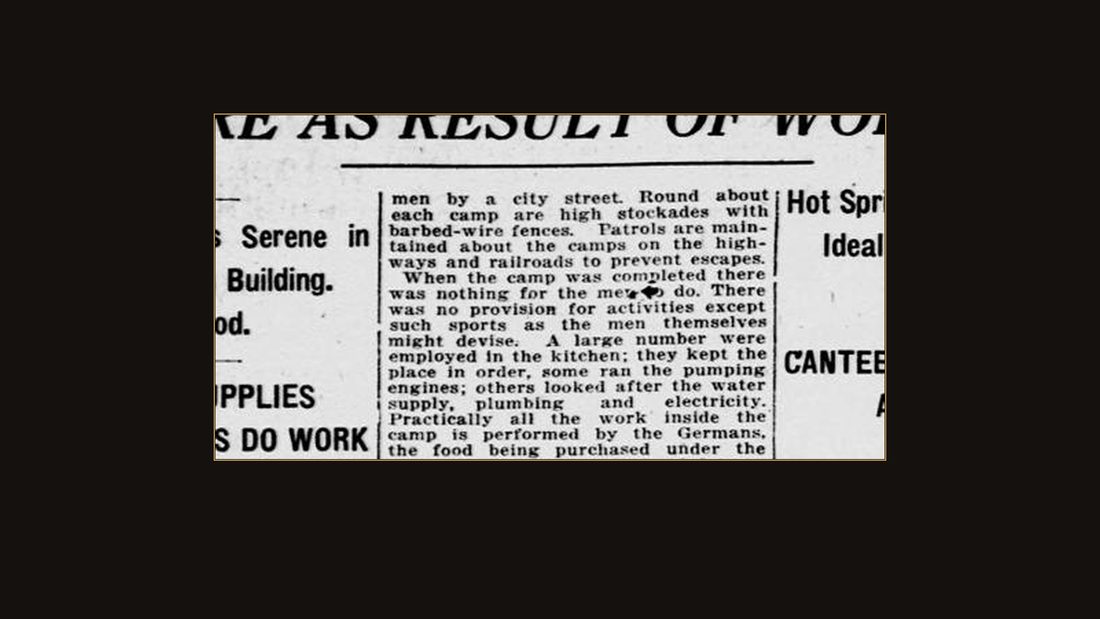
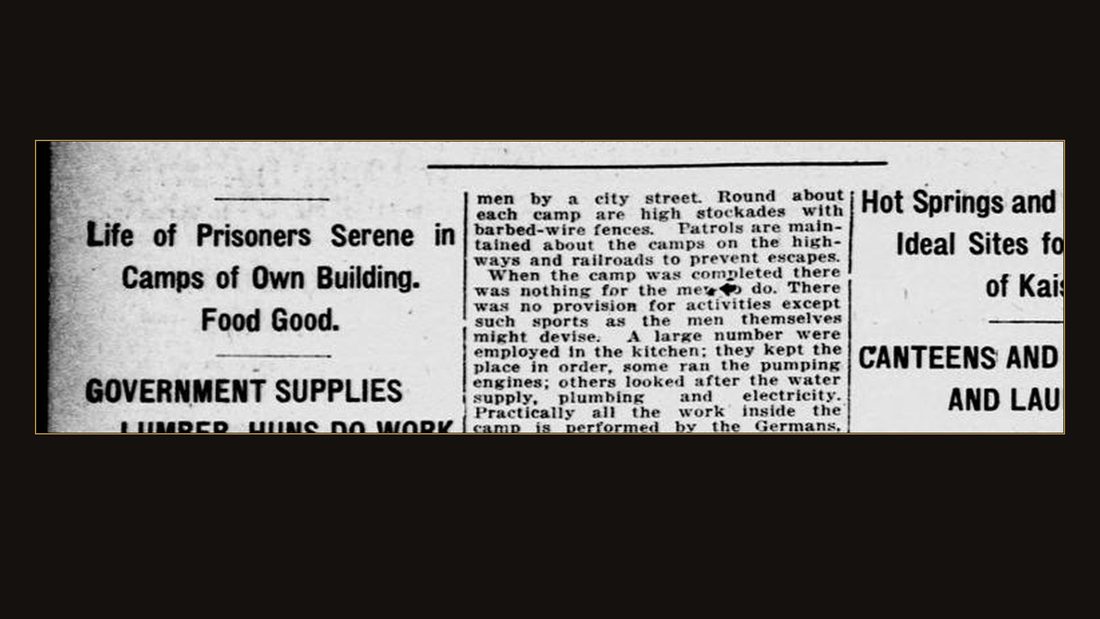
In a few weeks there arose a cantonment camp for sixteen hundred men. Around it went high stockades and barbed wire, with patrols on the highways and the railroad to prevent escapes.
And then, having built the camp, the men had nothing to do. There was no provision for activities of any kind.
N17
Evening Star · Washington, D.C. · Mar. 3, 1918 · p. 16. View the original.
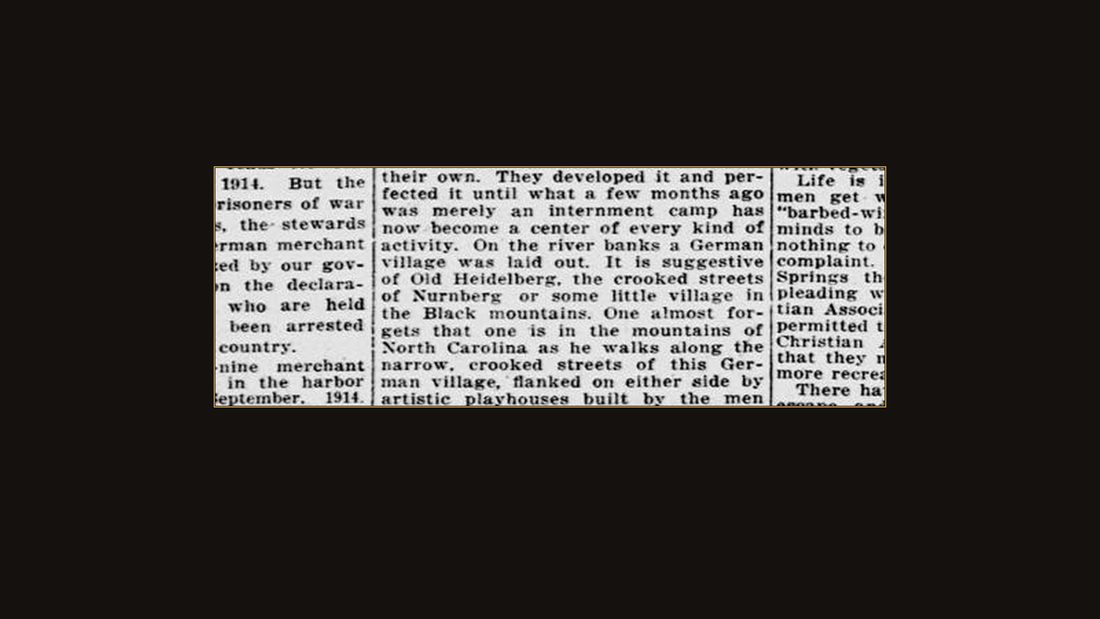
So they built a village.
N18
Evening Star · Washington, D.C. · Mar. 3, 1918 · p. 16. View the original.
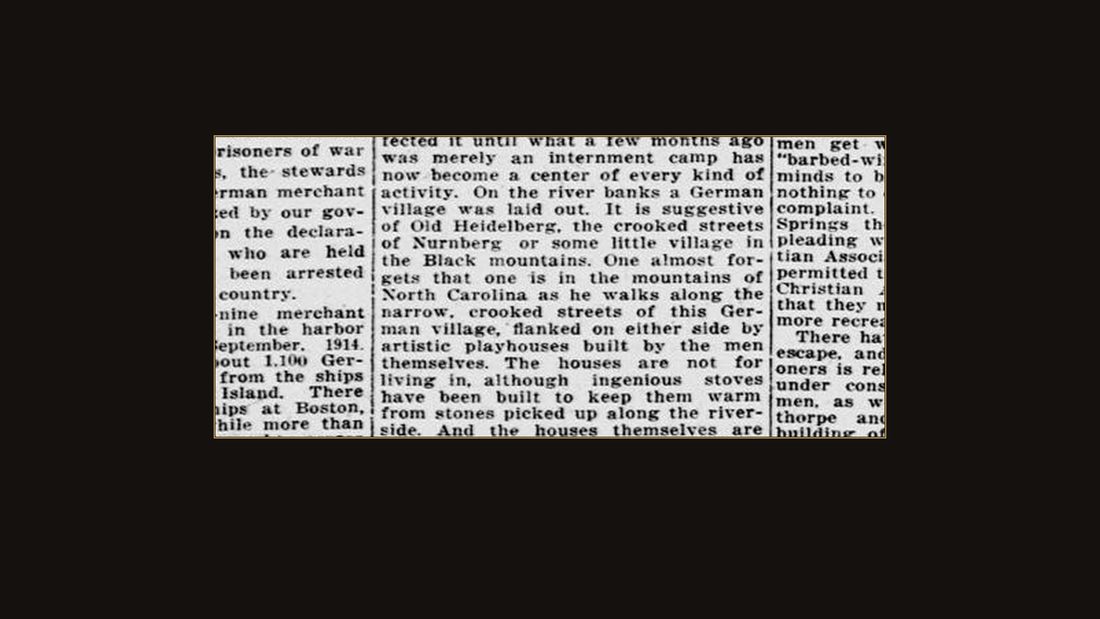
On the river bank a German village was laid out. It is suggestive of Old Heidelberg, wrote the Commissioner of Immigration, the crooked streets of Nuremberg, or some little village in the Black mountains.
One almost forgets that one is in the mountains of North Carolina, he wrote, as he walks along the narrow, crooked streets. But the houses were not for living in. The men slept in the barracks. These were something else.
N19
Evening Star · Washington, D.C. · Mar. 3, 1918 · p. 16. View the original.
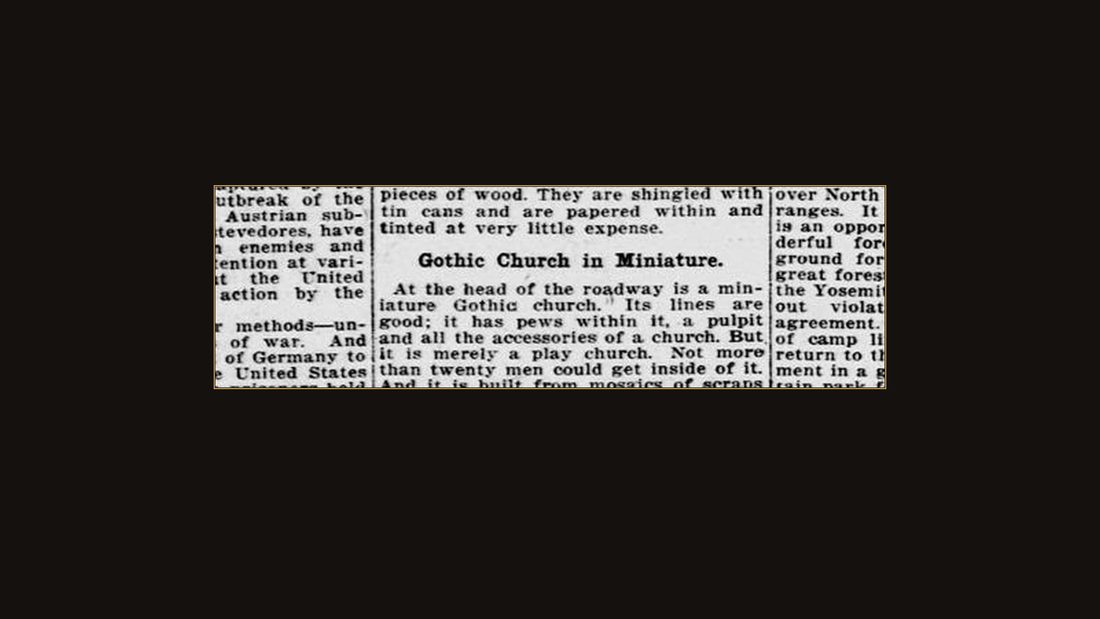
They were made from scraps of lumber, from broken branches of trees, from little pieces of wood. They were shingled with tin cans, flattened out and nailed down. The foundations were stone carried up from the river bottom.
N20
Evening Star · Washington, D.C. · Mar. 3, 1918 · p. 16. View the original.
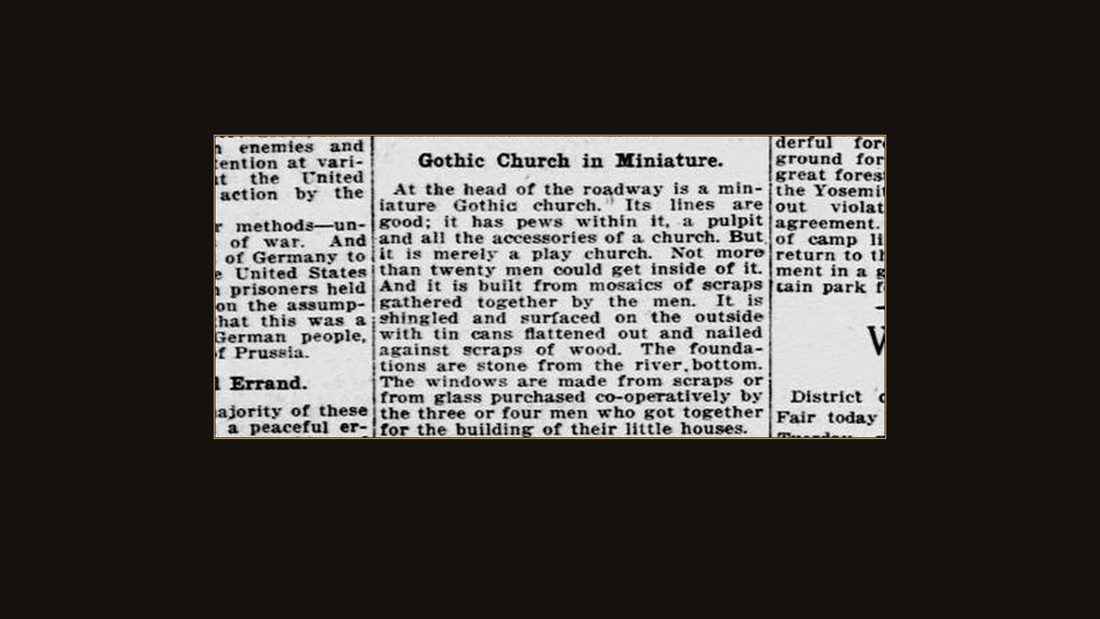
At the head of the roadway they built a church.
N21
Evening Star · Washington, D.C. · Mar. 3, 1918 · p. 16. View the original.
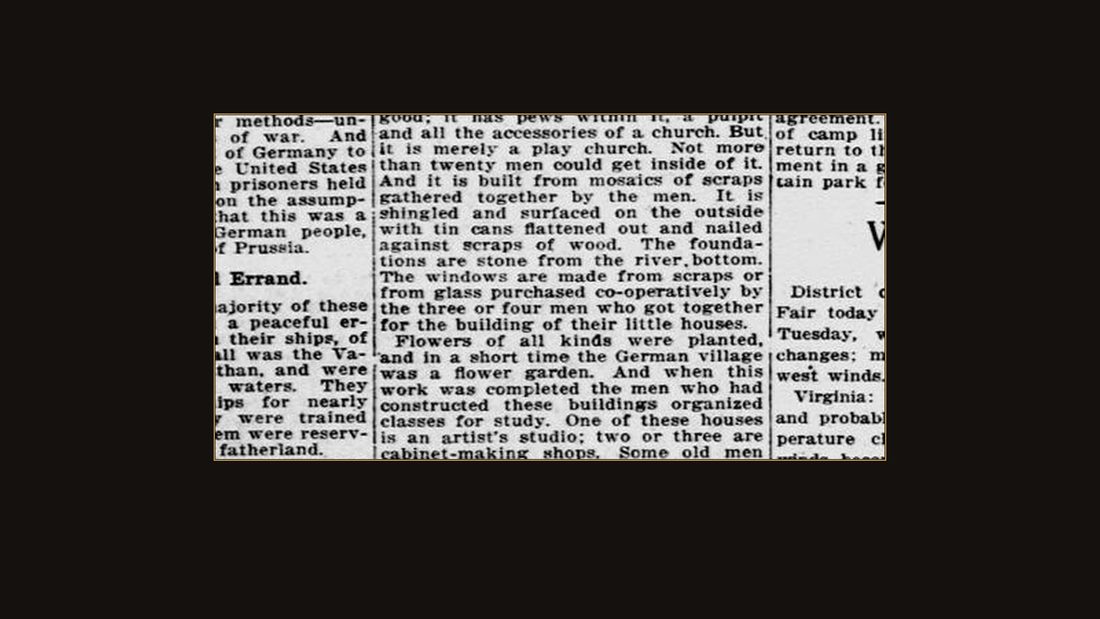
A miniature Gothic church. Its lines are good, the account says. It has pews within it, a pulpit, and all the accessories of a church. Not more than twenty men could get inside of it.
It was surfaced with flattened tin cans, and its windows made from scraps, or from glass three or four men bought together.
On the bank a sailor found the stump of an old tree protruding and carved it into an alligator. It guarded the approach to the village.
N23
Evening Star · Washington, D.C. · Mar. 3, 1918 · p. 16. View the original.
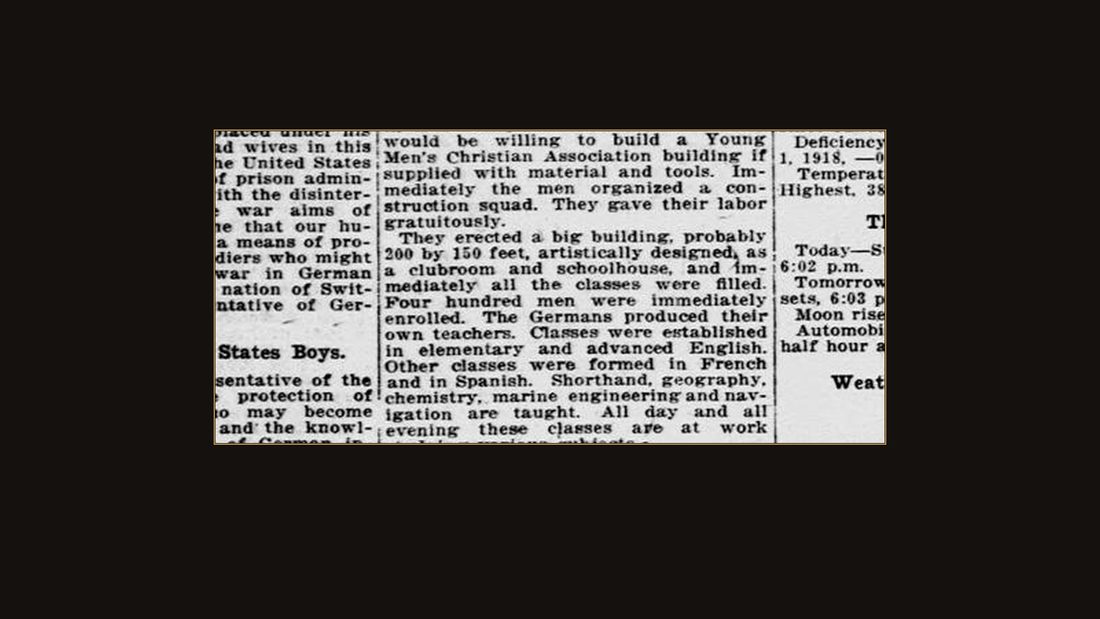
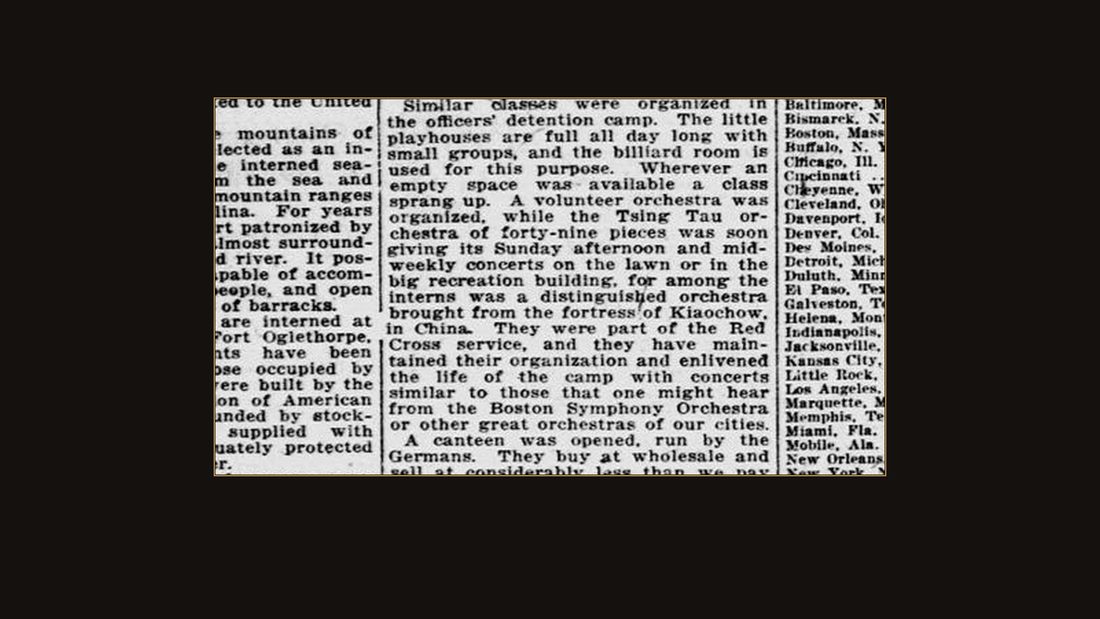
The Y.M.C.A. arrived with money for lumber but none for labor, and asked the German seamen whether they would put the building up themselves. They organized a construction squad, gave the work free, and four hundred men enrolled in classes at once.
N25
Evening Star · Washington, D.C. · Mar. 3, 1918 · p. 16. View the original.
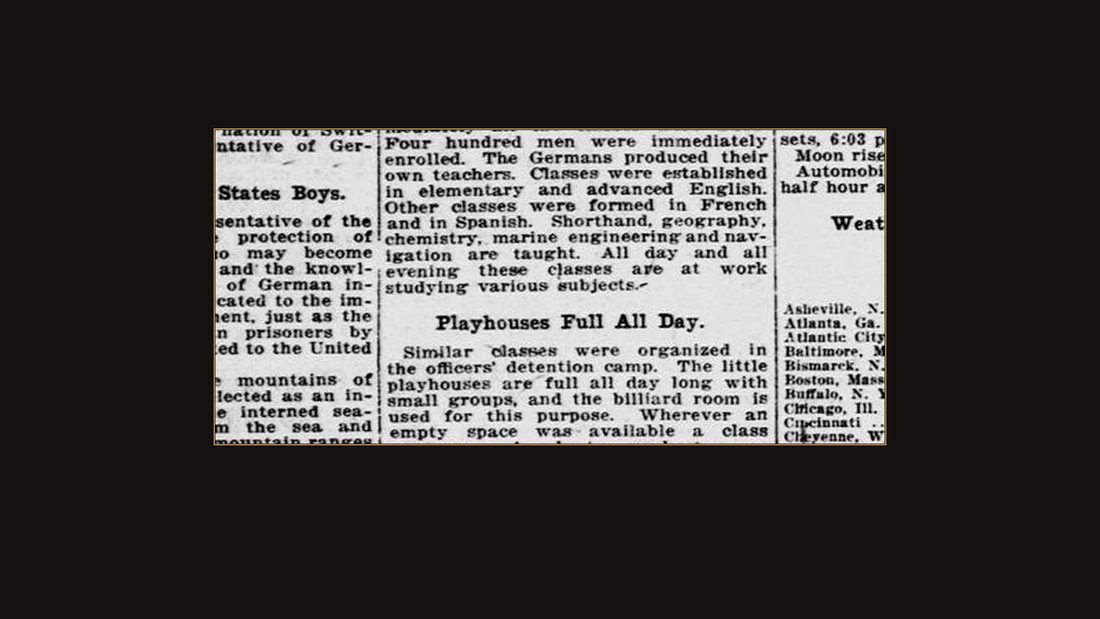
English, French, Spanish. Shorthand, chemistry, marine engineering, navigation. All day and all evening, the account says, these classes are at work.
N26
Evening Star · Washington, D.C. · Mar. 3, 1918 · p. 16. View the original.
And there was an orchestra. Forty-nine pieces, brought to the United States from a German fortress in China, interned with everybody else, and still together.
It gave Sunday afternoon and midweek concerts on the lawn, inside a stockade in Madison County, North Carolina.
Life of prisoners serene
N30
Evening Star · Washington, D.C. · Mar. 3, 1918 · p. 16. View the original.
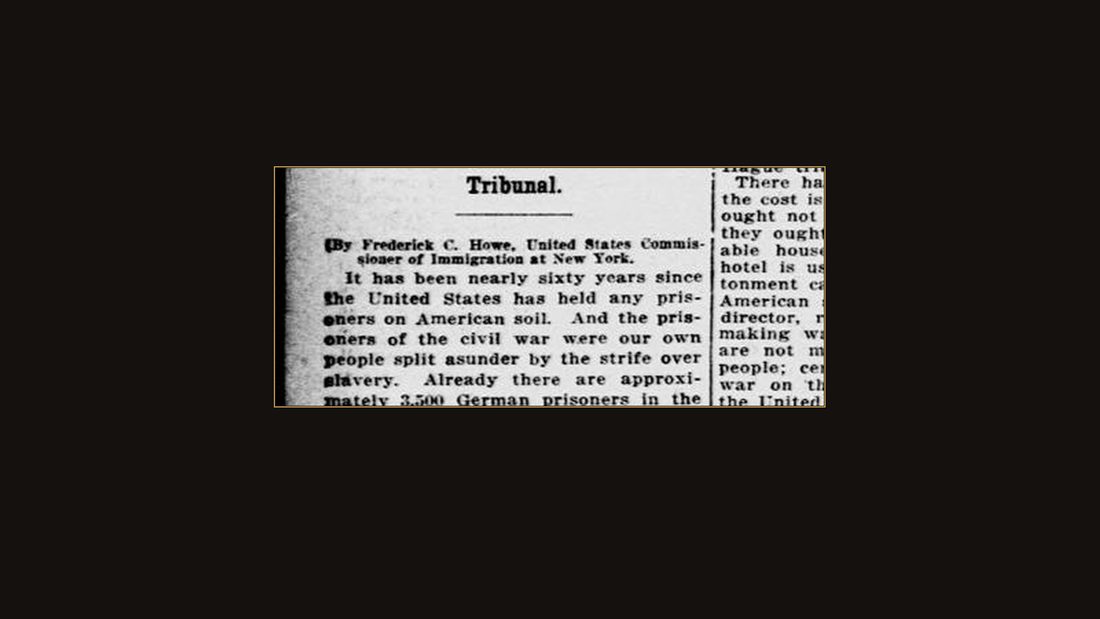
The official account of the camp ran in the Evening Star on the third of March, nineteen eighteen, under the byline of Frederick C. Howe, United States Commissioner of Immigration at New York.
N31
Evening Star · Washington, D.C. · Mar. 3, 1918 · p. 16. View the original.
The headline above it read: Life of Prisoners Serene, in Camps of Own Building. Food Good.
N32
Evening Star · Washington, D.C. · Mar. 3, 1918 · p. 16. View the original.
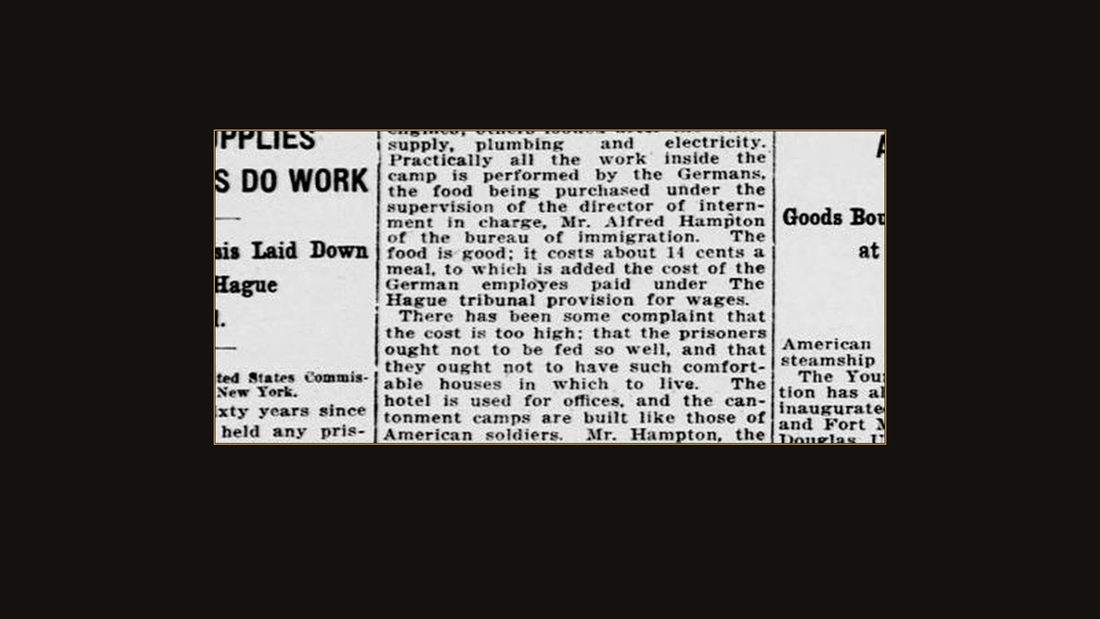
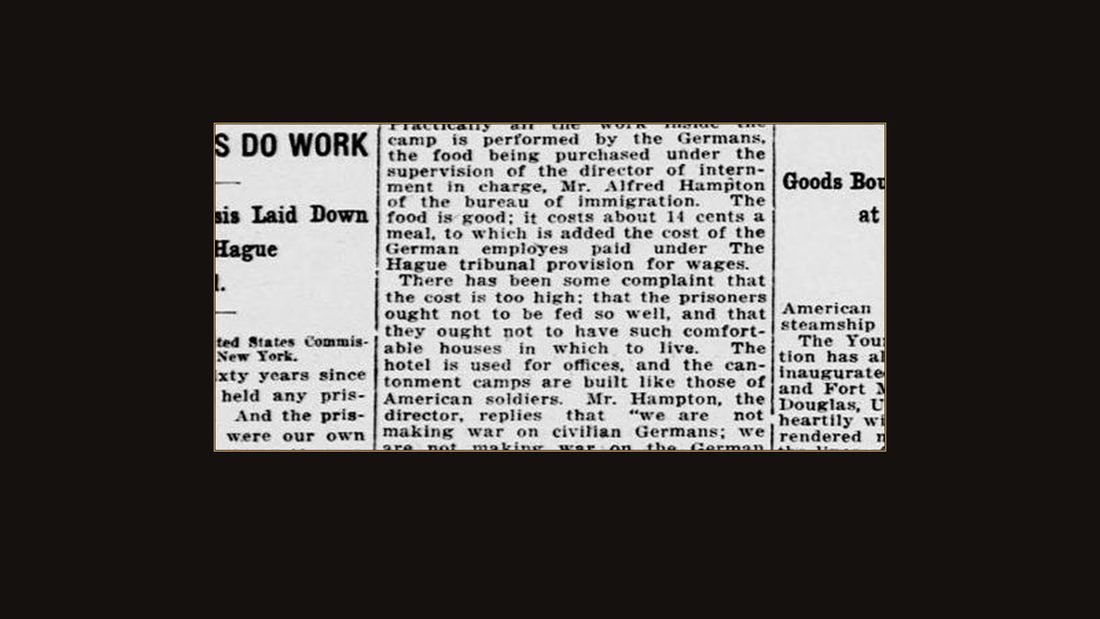
Meals cost about fourteen cents. There had been complaints, Howe wrote, that this was too much, that the prisoners ought not to be fed so well, and ought not to have such comfortable houses to live in.
The director of internment answered those complaints directly.
N33
Evening Star · Washington, D.C. · Mar. 3, 1918 · p. 16. View the original.
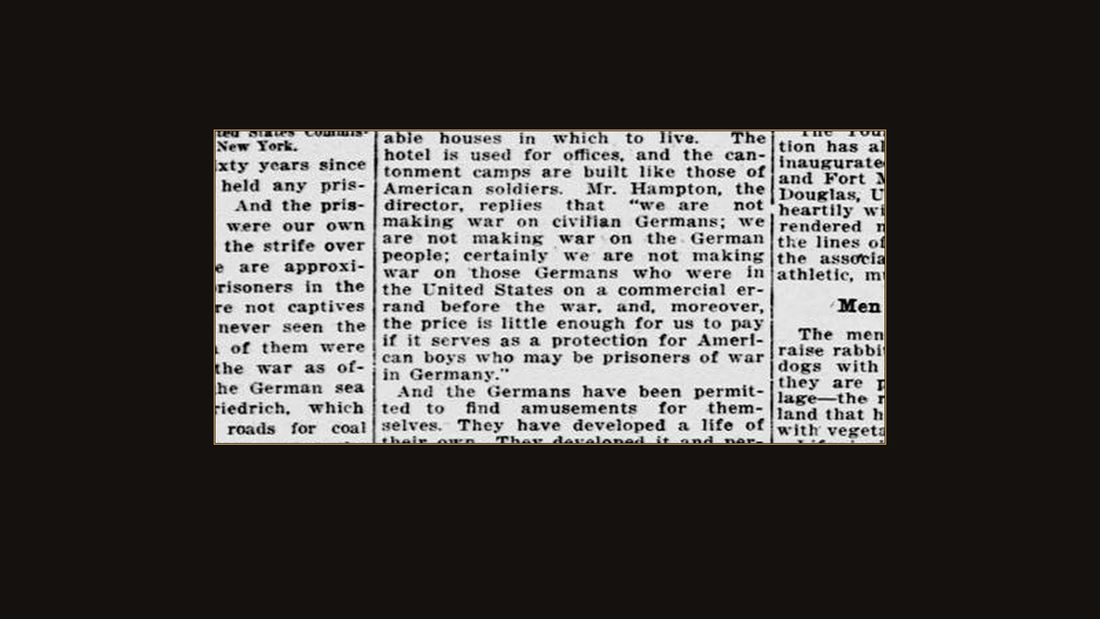
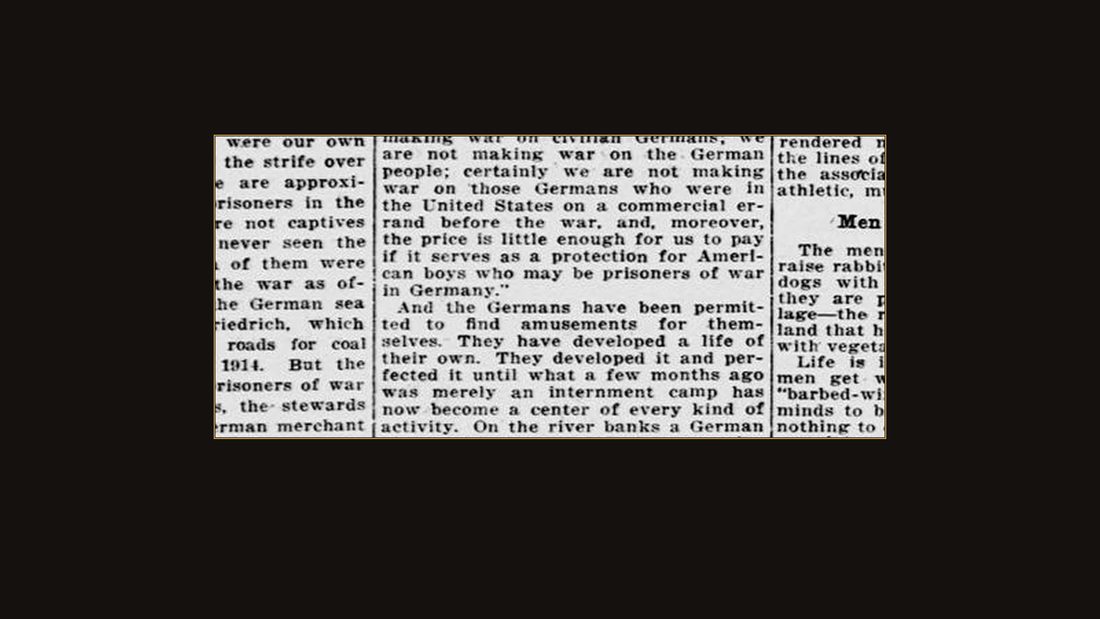
We are not making war on civilian Germans, he said. We are not making war on the German people. Certainly we are not making war on those Germans who were in the United States on a commercial errand before the war.
N34
Evening Star · Washington, D.C. · Mar. 3, 1918 · p. 16. View the original.
And, moreover, the price is little enough for us to pay if it serves as a protection for American boys who may be prisoners of war in Germany.
Not what it is cracked up to be
That was March. In June a reporter went there.
N35
Evening Star · Washington, D.C. · June 26, 1918 · p. 1. View the original.

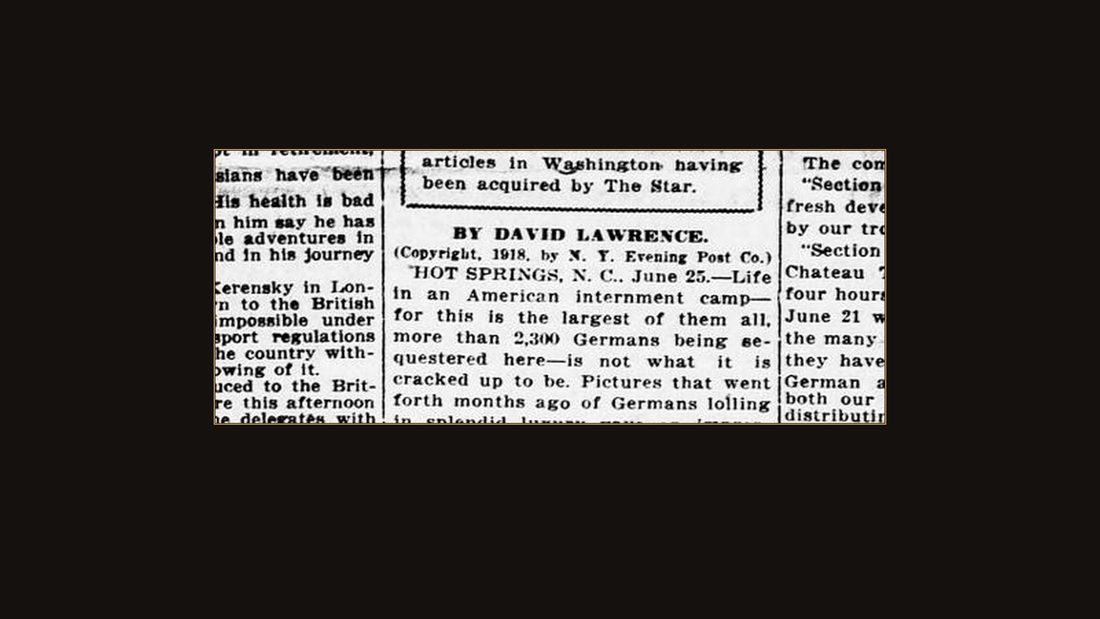
David Lawrence filed from Hot Springs on the twenty-fifth of June, nineteen eighteen. His first paragraph takes the official account apart.
N36
Evening Star · Washington, D.C. · June 26, 1918 · p. 1. View the original.
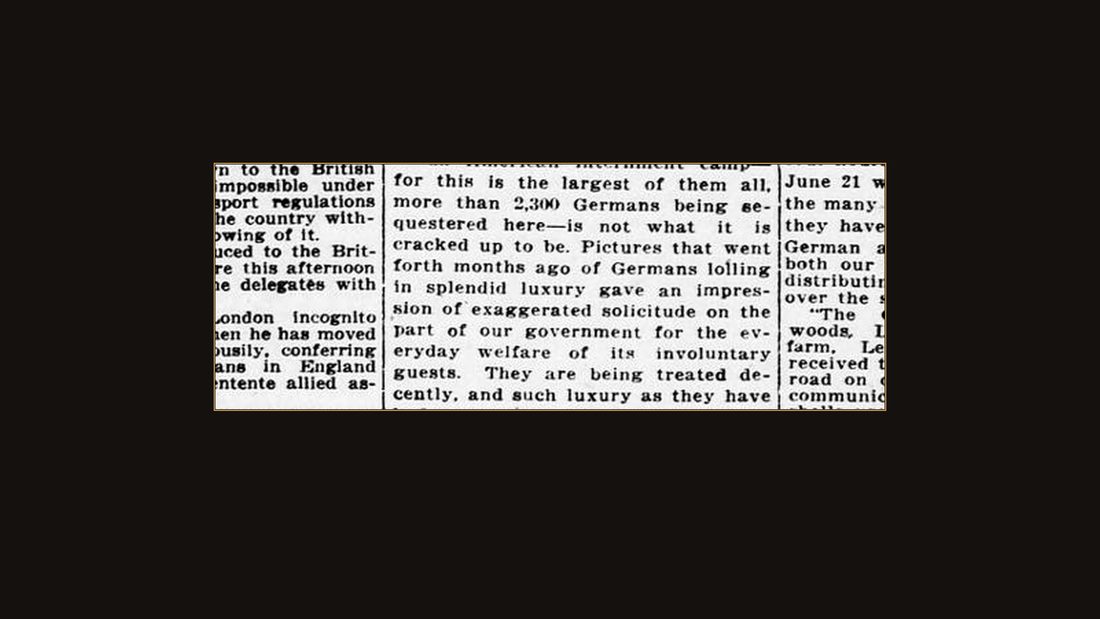
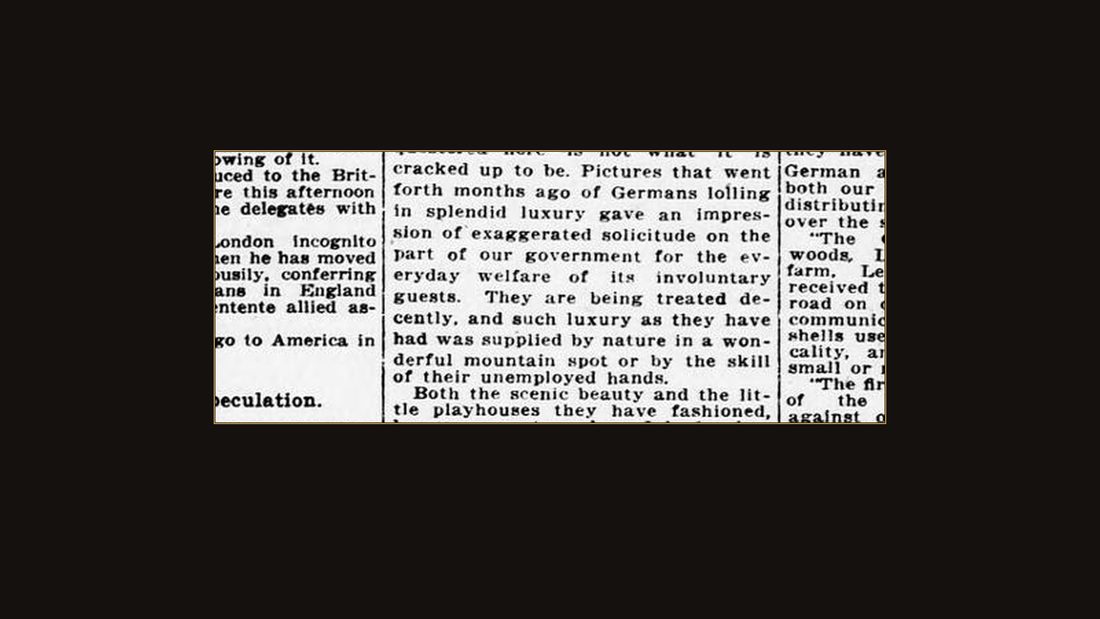
Life in an American internment camp, he wrote, and this is the largest of them all, more than two thousand three hundred Germans being sequestered here, is not what it is cracked up to be.
N37
Evening Star · Washington, D.C. · June 26, 1918 · p. 1. View the original.
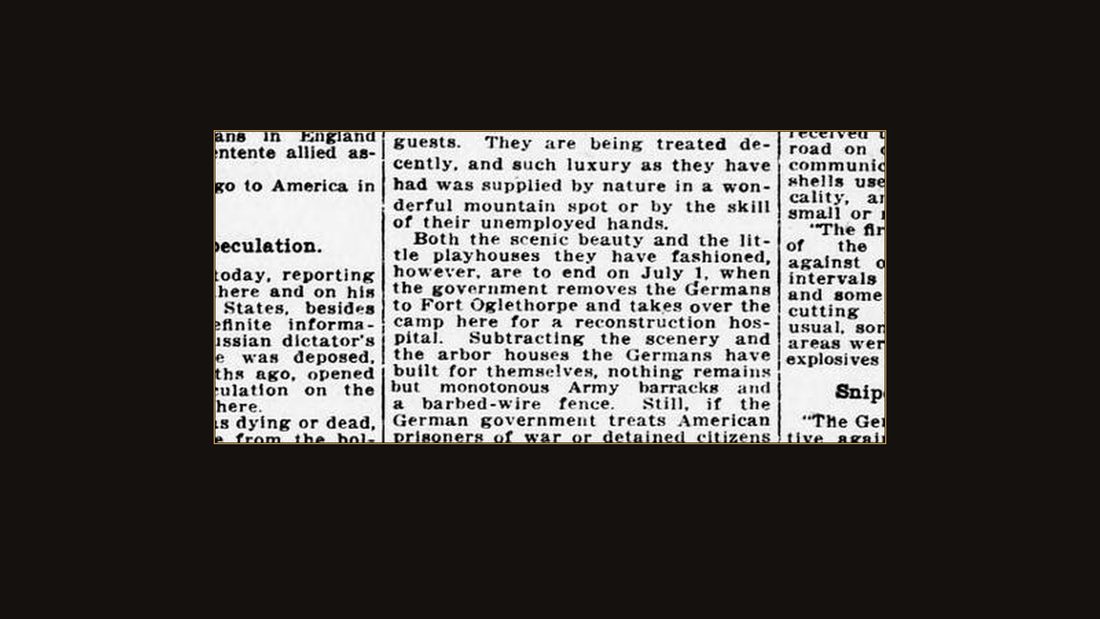
Pictures that went forth months ago of Germans lolling in splendid luxury, he went on, gave an impression of exaggerated solicitude on the part of our government.
N38
Evening Star · Washington, D.C. · June 26, 1918 · p. 1. View the original.
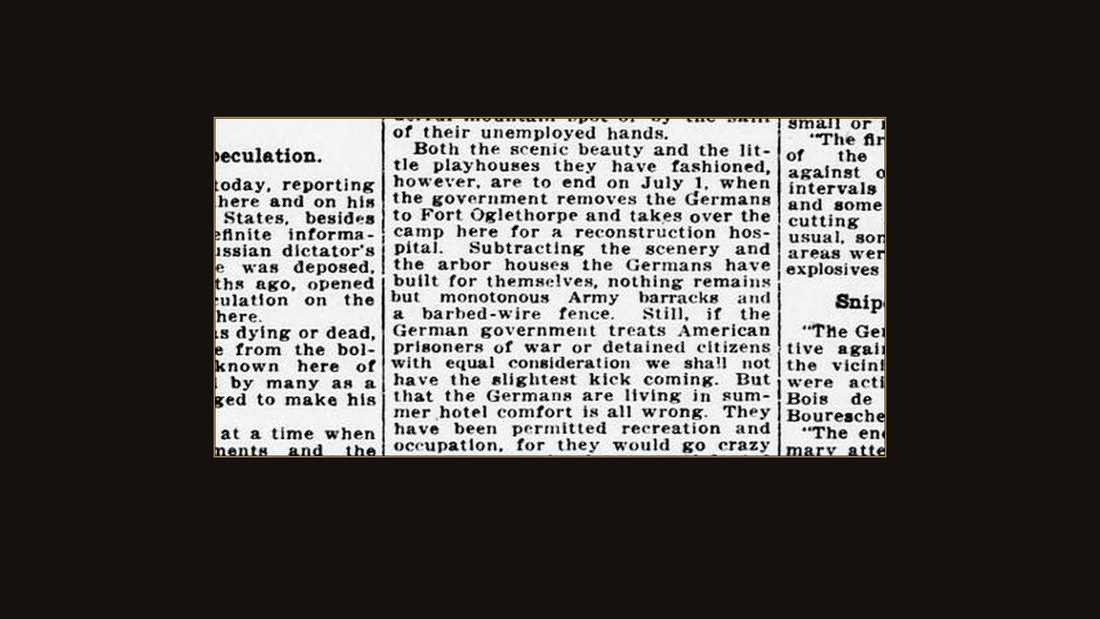
They are being treated decently, he allowed — and such luxury as they have had was supplied by nature, or by the skill of their unemployed hands.
In other words: everything worth photographing there, the prisoners had built.
N39
Evening Star · Washington, D.C. · June 26, 1918 · p. 9. View the original.

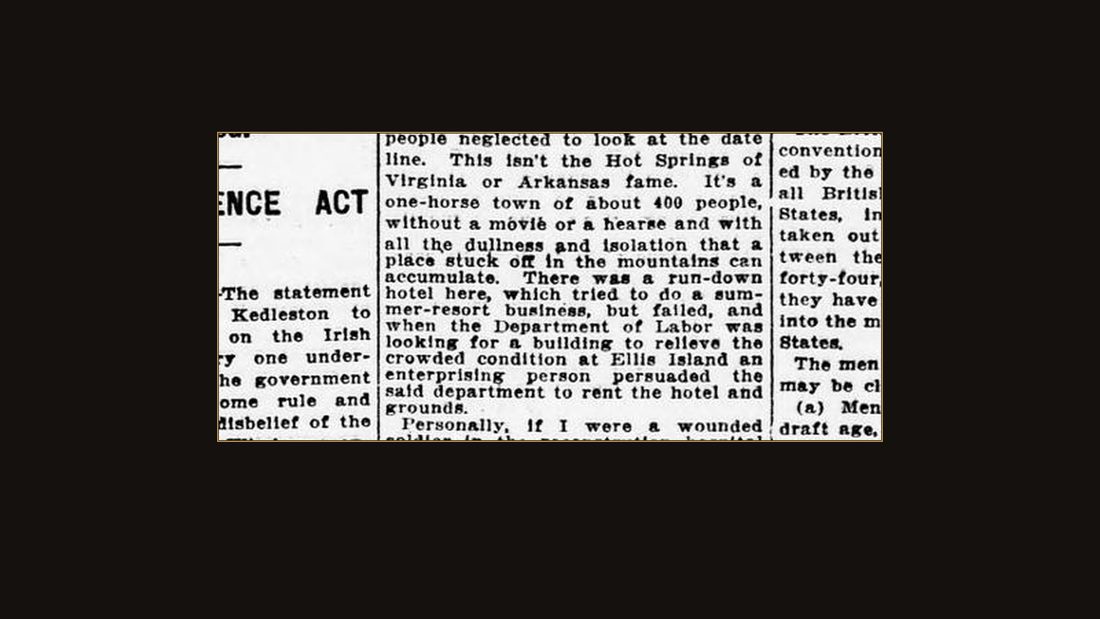
As for the town, Lawrence wrote that most people had neglected to look at the date line. This isn't the Hot Springs of Virginia or Arkansas fame. It's a one-horse town of about four hundred people, without a movie or a hearse.
N41
Evening Star · Washington, D.C. · June 26, 1918 · p. 9. View the original.
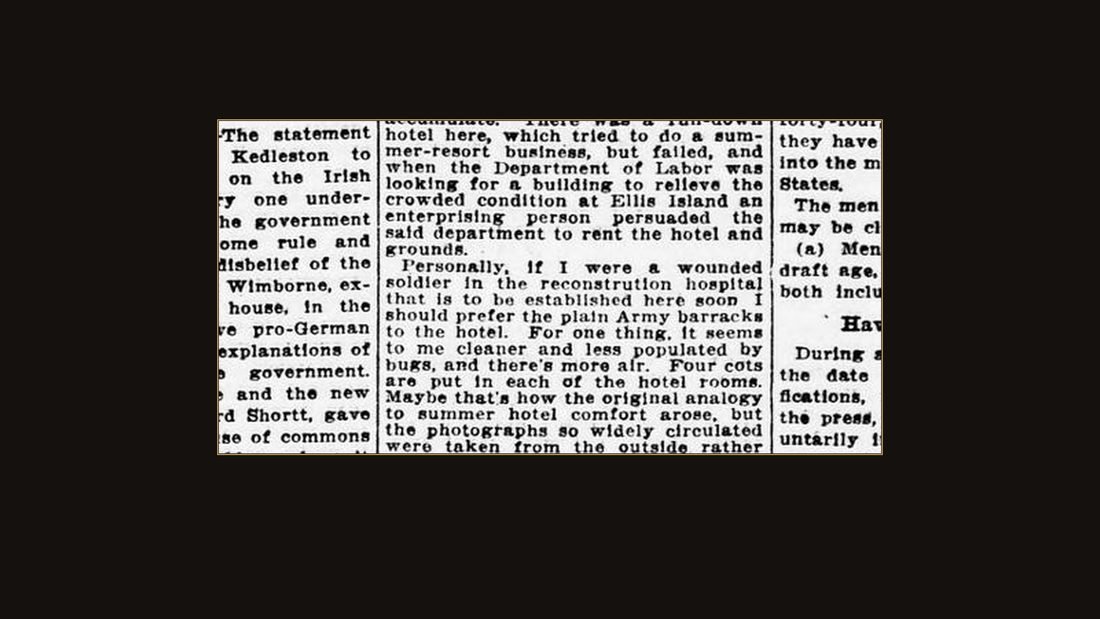
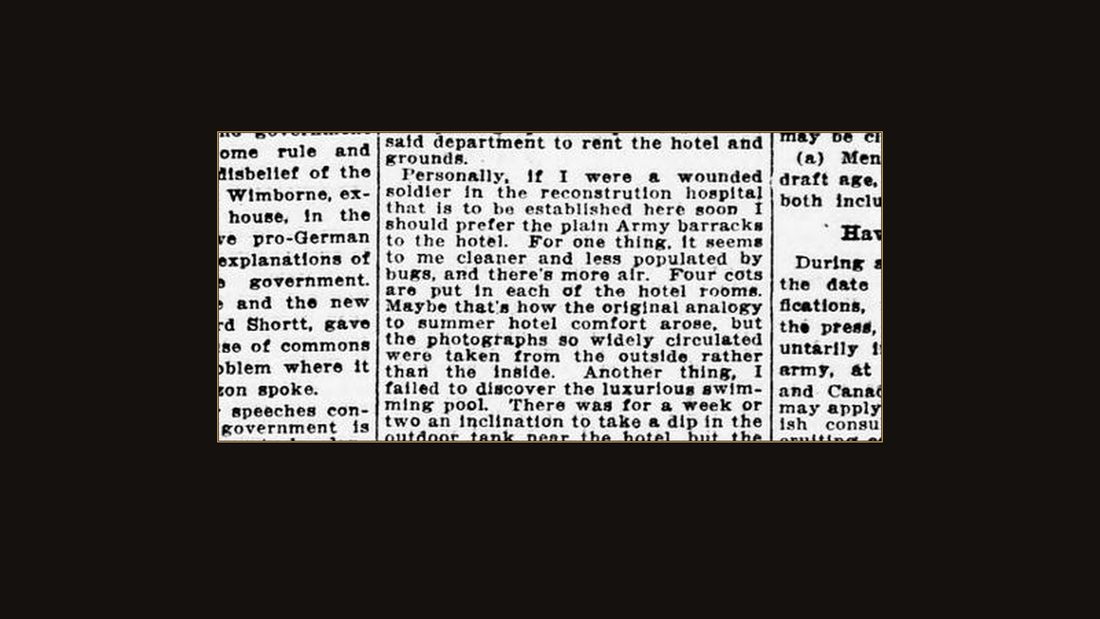
There was a run-down hotel here, he went on, which tried to do a summer-resort business, but failed, and an enterprising person persuaded the Department of Labor to rent it.
N42
Evening Star · Washington, D.C. · June 26, 1918 · p. 9. View the original.
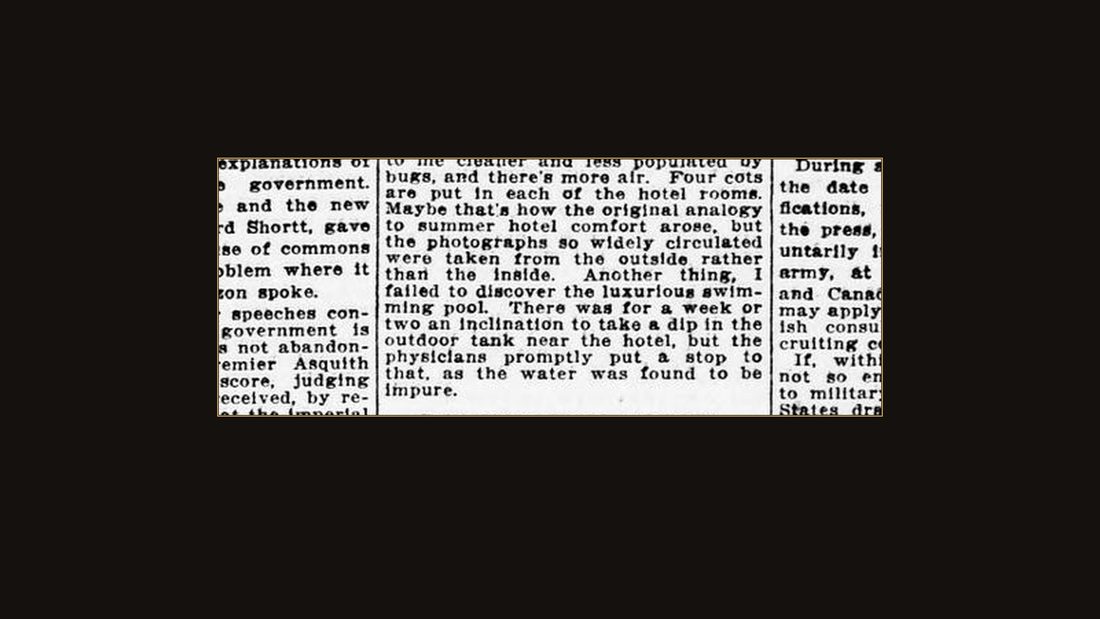
Four cots were put in each hotel room. If I were a wounded soldier in the reconstruction hospital that is to be established here, Lawrence wrote, I should prefer the plain Army barracks to the hotel.
N43
Evening Star · Washington, D.C. · June 26, 1918 · p. 9. View the original.
It seems to me cleaner, he wrote, and less populated by bugs, and there's more air. The photographs so widely circulated were taken from the outside rather than the inside.
N72
Evening Star · Washington, D.C. · June 26, 1918 · p. 9. View the original.
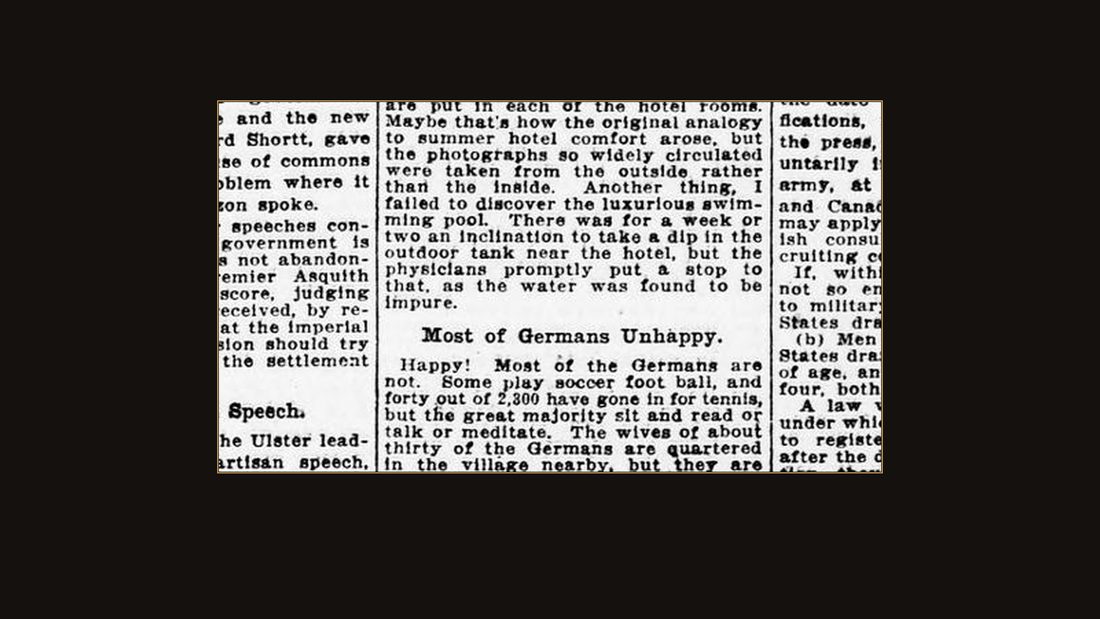
And he could not find the luxurious swimming pool at all.
N77
Evening Star · Washington, D.C. · June 26, 1918 · p. 9. View the original.
There was for a week or two an inclination to take a dip in the outdoor tank near the hotel, Lawrence wrote, but the physicians promptly put a stop to that, as the water was found to be impure.
Hold on to that sentence. It is the twenty-fifth of June, nineteen eighteen, and the water at that camp has already been found impure, by the camp's own doctors.

N76
Evening Star · Washington, D.C. · June 26, 1918 · p. 9. View the original.
The rest of what he saw is the only close description of these men anybody filed.
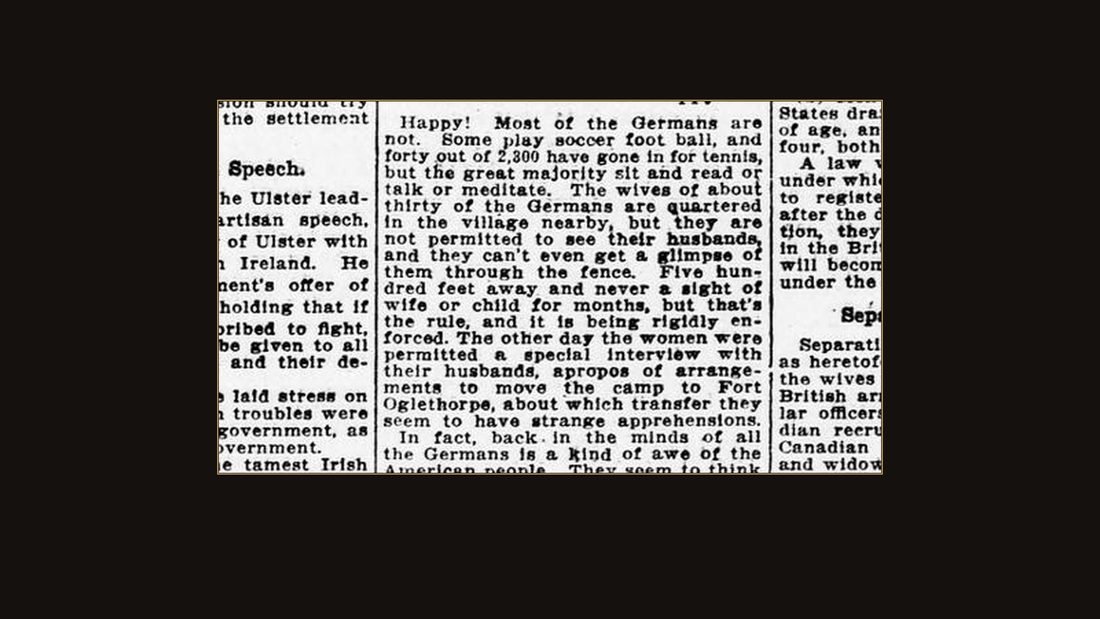
Most of the Germans are not happy, he wrote. Forty out of twenty-three hundred have gone in for tennis. The great majority sit and read, or talk, or meditate. They feel like prisoners and act like it.
N73
Evening Star · Washington, D.C. · June 26, 1918 · p. 9. View the original.
The wives of about thirty of the men were living in the village nearby. They were not permitted to see their husbands. They could not get a glimpse of them through the fence.
Five hundred feet away, Lawrence wrote, and never a sight of wife or child for months. But that's the rule, and it is being rigidly enforced.
N74
Evening Star · Washington, D.C. · June 26, 1918 · p. 9. View the original.
And one more thing, which matters more than any of it.
N75
Evening Star · Washington, D.C. · June 26, 1918 · p. 9. View the original.
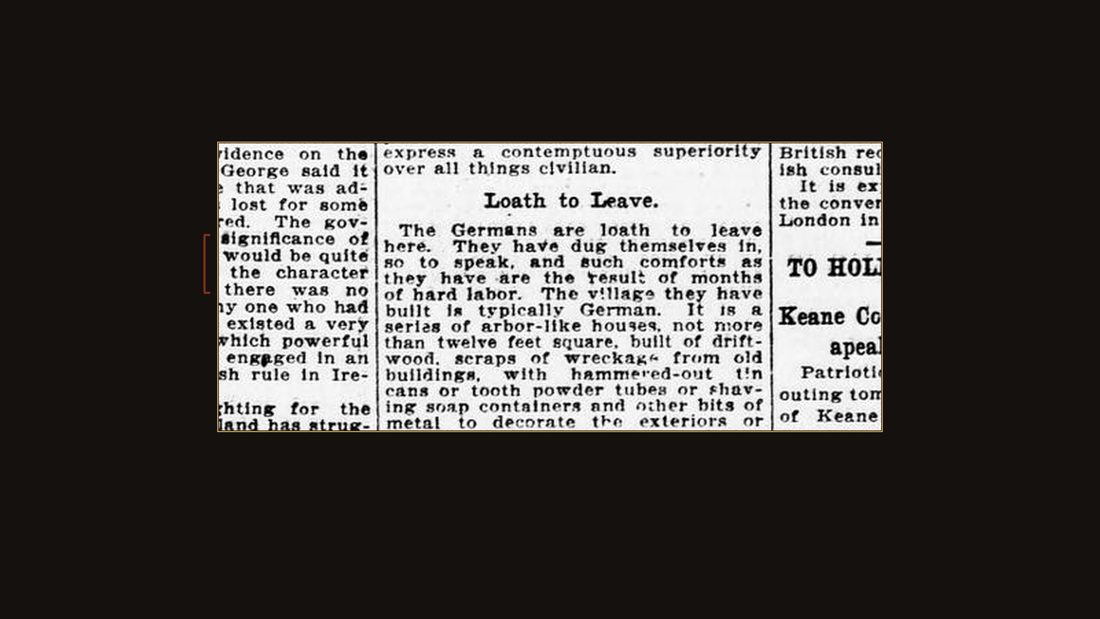
The Germans are loath to leave here, Lawrence wrote. They have dug themselves in, so to speak, and such comforts as they have are the result of months of hard labor.
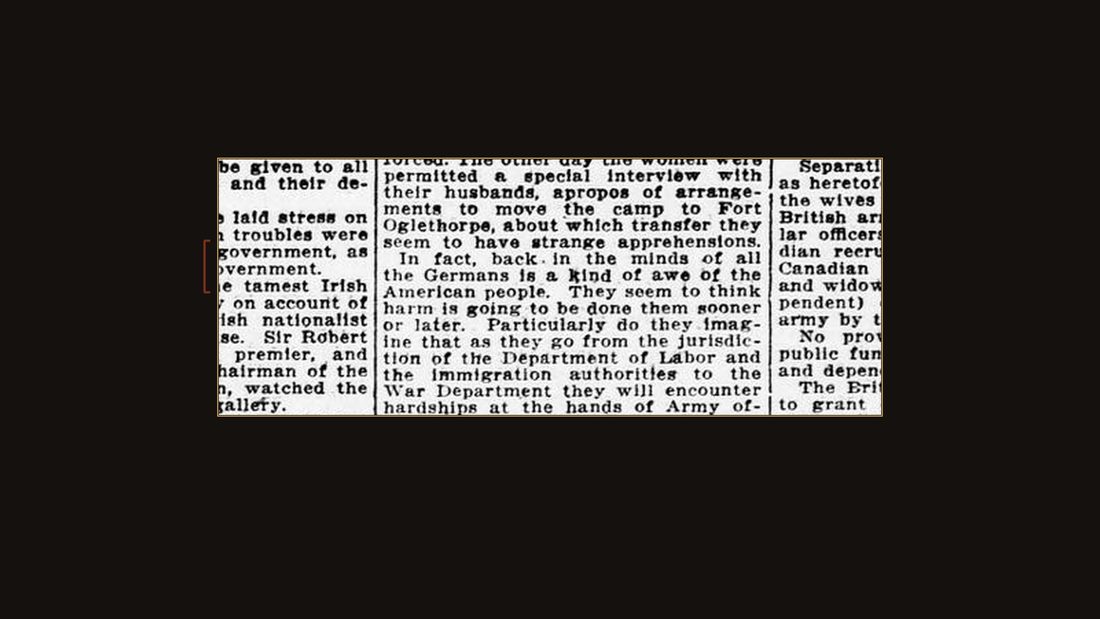
About the transfer to Fort Oglethorpe, he wrote, they seem to have strange apprehensions.
Remember that too. In seven weeks it becomes the government's explanation for an epidemic.
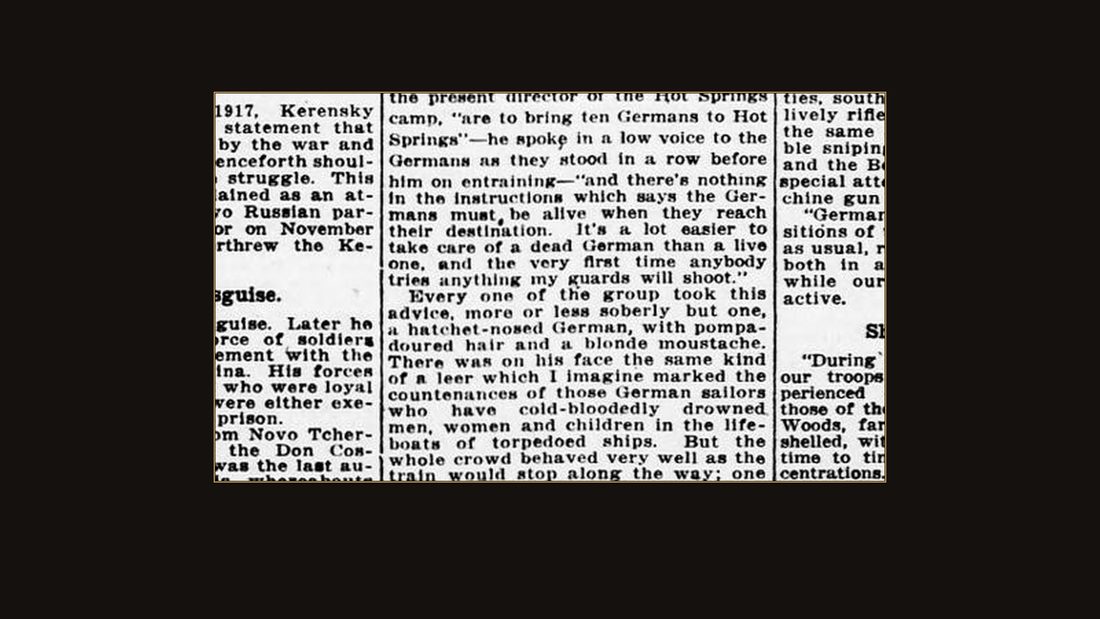
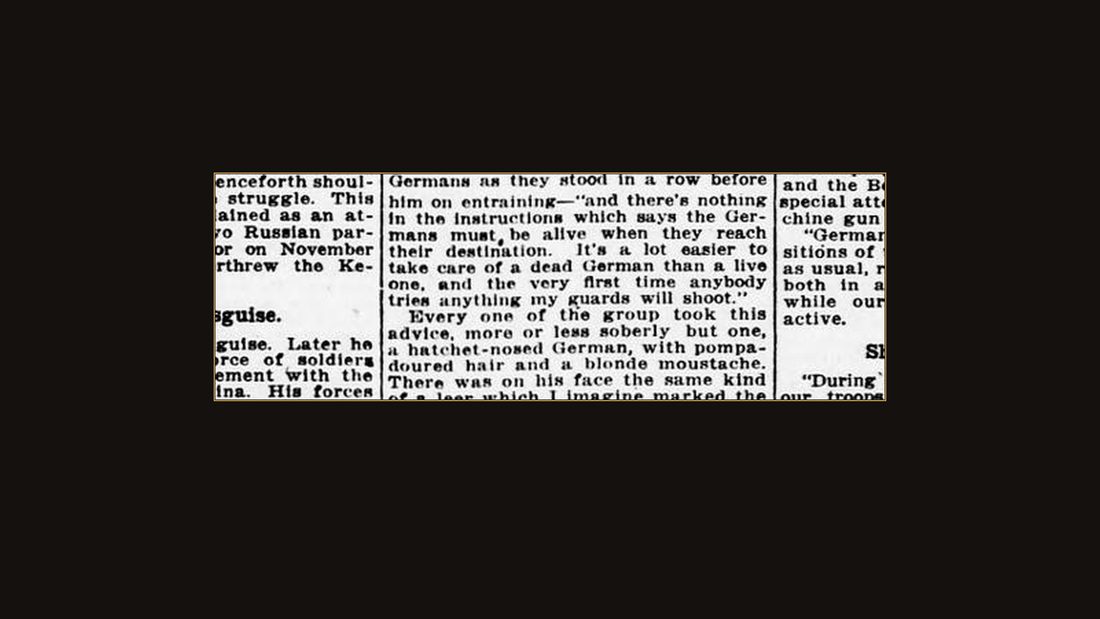
Lawrence had ridden down with a guard detail bringing ten more Germans in, and he quoted the camp's director, a young Baltimore man named J. Kemp Bartlett Junior, speaking low to the prisoners as they stood in a row at the train.
N44
Evening Star · Washington, D.C. · June 26, 1918 · p. 1. View the original.
My instructions are to bring ten Germans to Hot Springs, Bartlett said, and there's nothing in the instructions which says the Germans must be alive when they reach their destination.
N45
Evening Star · Washington, D.C. · June 26, 1918 · p. 1. View the original.
It's a lot easier to take care of a dead German than a live one, and the very first time anybody tries anything my guards will shoot.
N47
Evening Star · Washington, D.C. · June 26, 1918 · p. 1. View the original.
Lawrence also reported the end of it. On the first of July the government would move the Germans to Fort Oglethorpe in Georgia and take the camp over as a hospital for wounded American soldiers.
That was the plan. It did not happen on the first of July.
The water
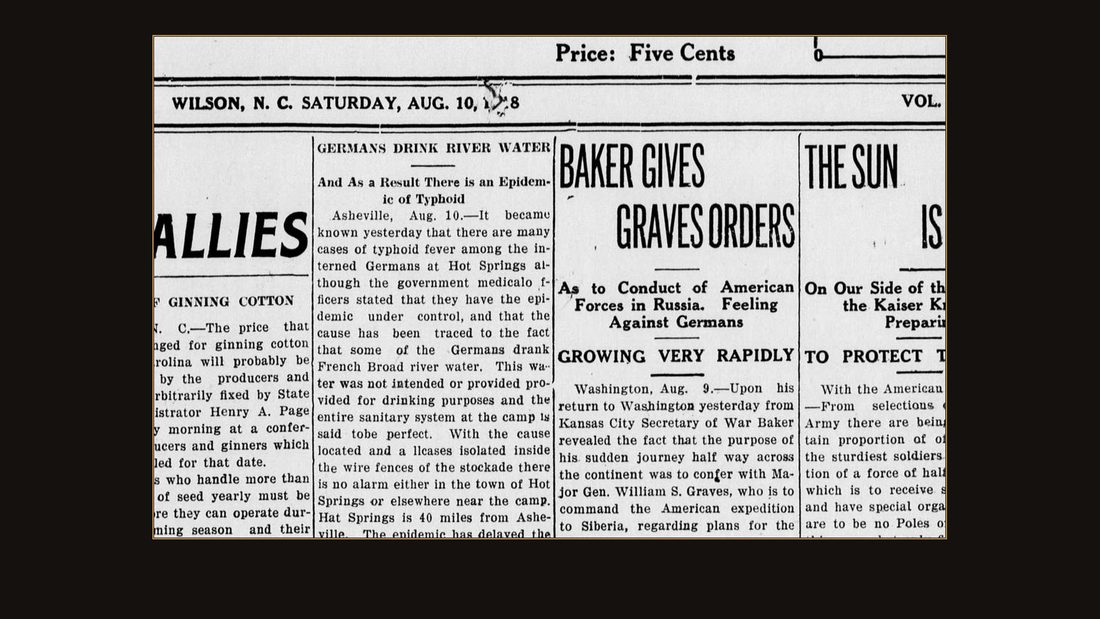
On the first of August, nineteen eighteen, the Surgeon General's office in Washington received its first report of typhoid fever at Hot Springs.
N48
The Daily Times · Wilson, N.C. · Aug. 10, 1918 · p. 1. View the original.

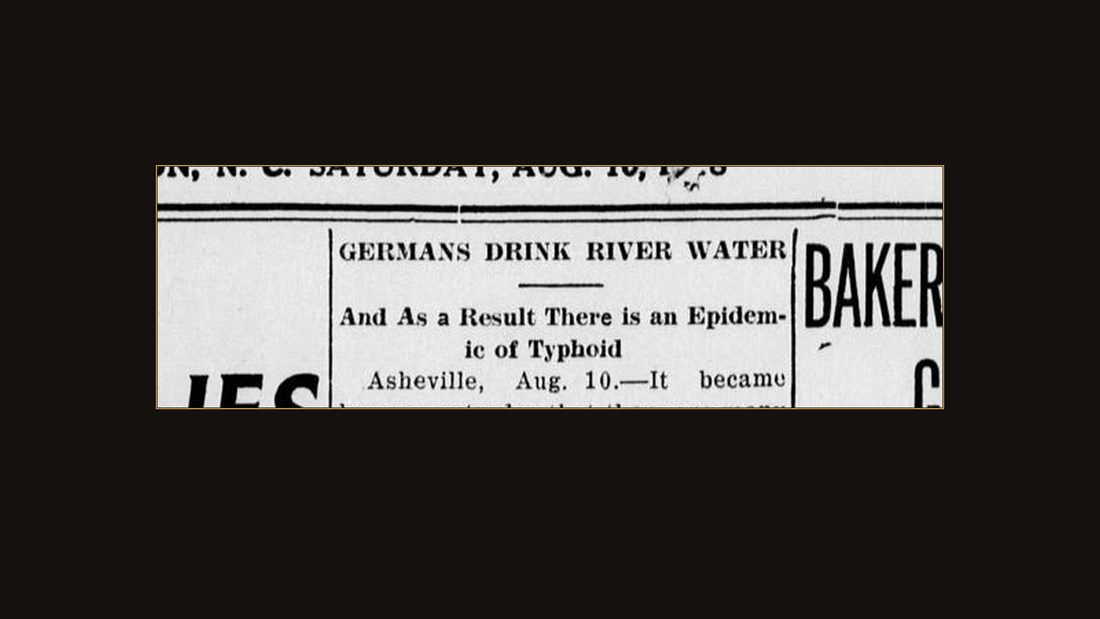
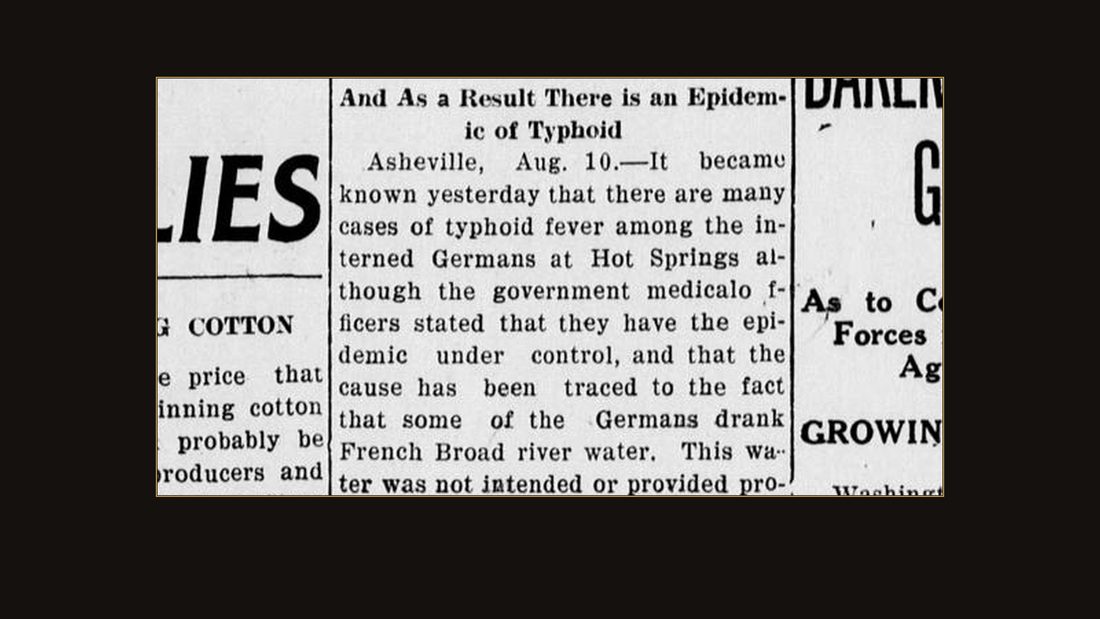
Nine days later a dispatch out of Asheville reached the papers. The Daily Times of Wilson, North Carolina, ran it on the front page under a headline that had already assigned blame.
N49
The Daily Times · Wilson, N.C. · Aug. 10, 1918 · p. 1. View the original.
Germans drink river water. And as a result there is an epidemic of typhoid.
N50
The Daily Times · Wilson, N.C. · Aug. 10, 1918 · p. 1. View the original.
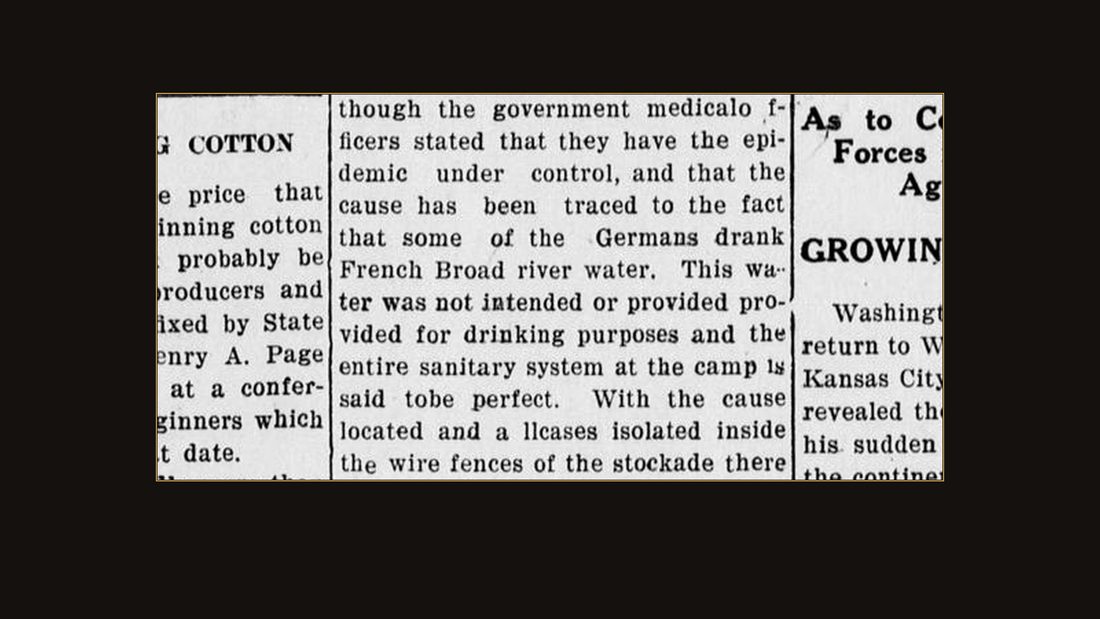
It became known yesterday, the dispatch read, that there are many cases of typhoid fever among the interned Germans at Hot Springs, although the government medical officers stated that they have the epidemic under control.
N51
The Daily Times · Wilson, N.C. · Aug. 10, 1918 · p. 1. View the original.
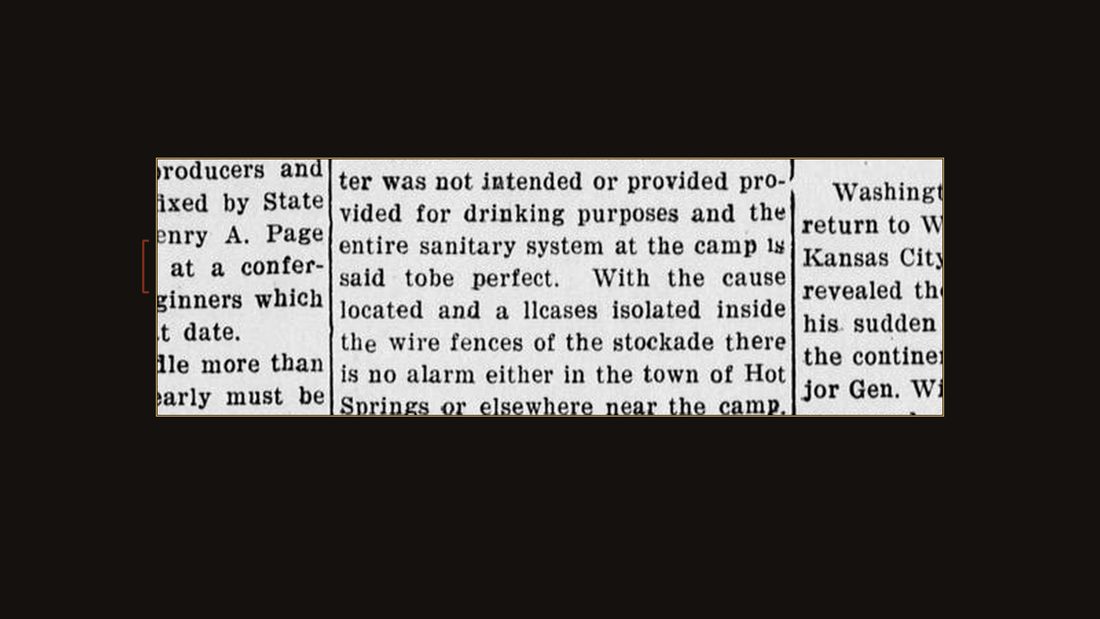
The cause has been traced to the fact that some of the Germans drank French Broad river water. This water was not intended or provided for drinking purposes.
And then one more clause, which is the reason this story is worth telling.
N52
The Daily Times · Wilson, N.C. · Aug. 10, 1918 · p. 1. View the original.
The entire sanitary system at the camp is said to be perfect.
N53
The Daily Times · Wilson, N.C. · Aug. 10, 1918 · p. 1. View the original.
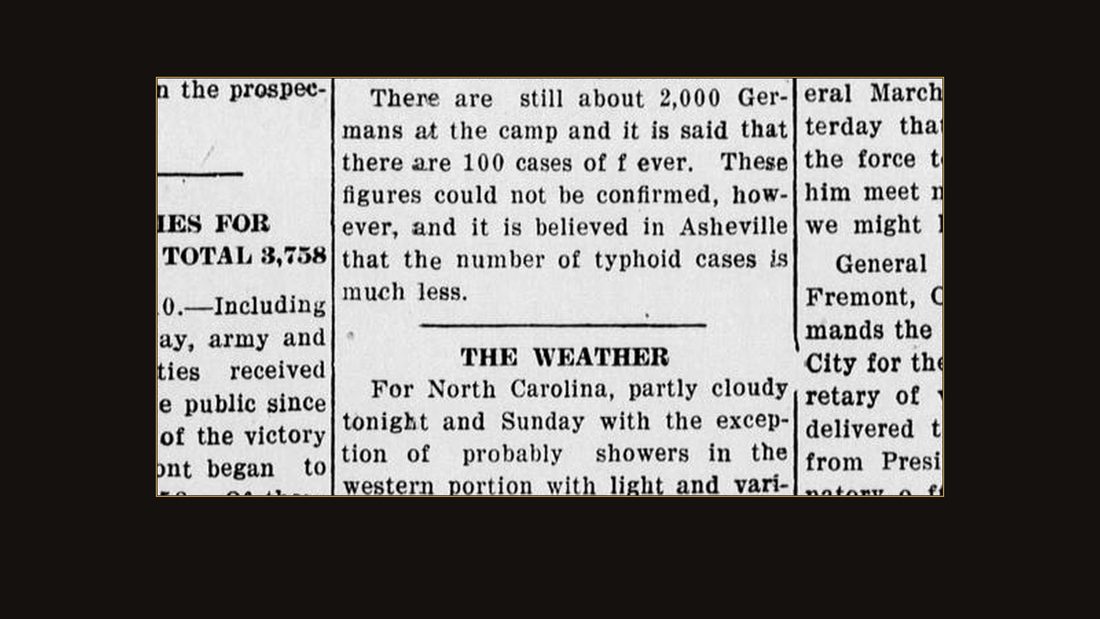
About two thousand Germans were still at the camp, the dispatch said, and it was said there were a hundred cases. Those figures could not be confirmed, however, and it was believed in Asheville that the number of typhoid cases was much less. No official statement had been made.
Six or sixty
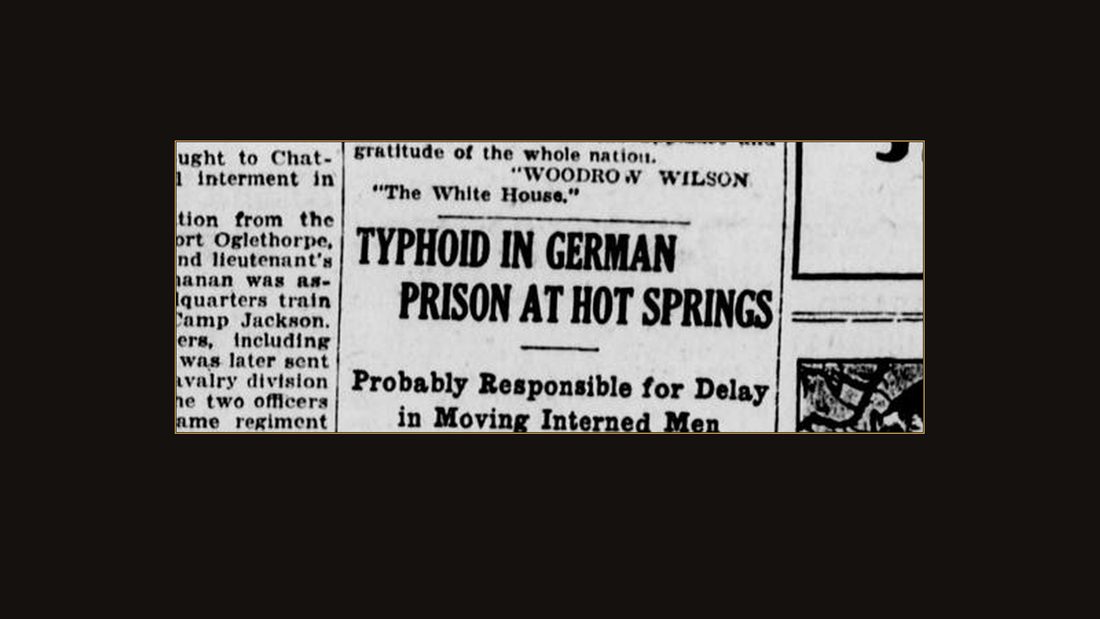
N54
The Chattanooga News · Aug. 14, 1918 · p. 5. View the original.

Four days later a second Asheville dispatch went out on the wire, and this one carried a motive.
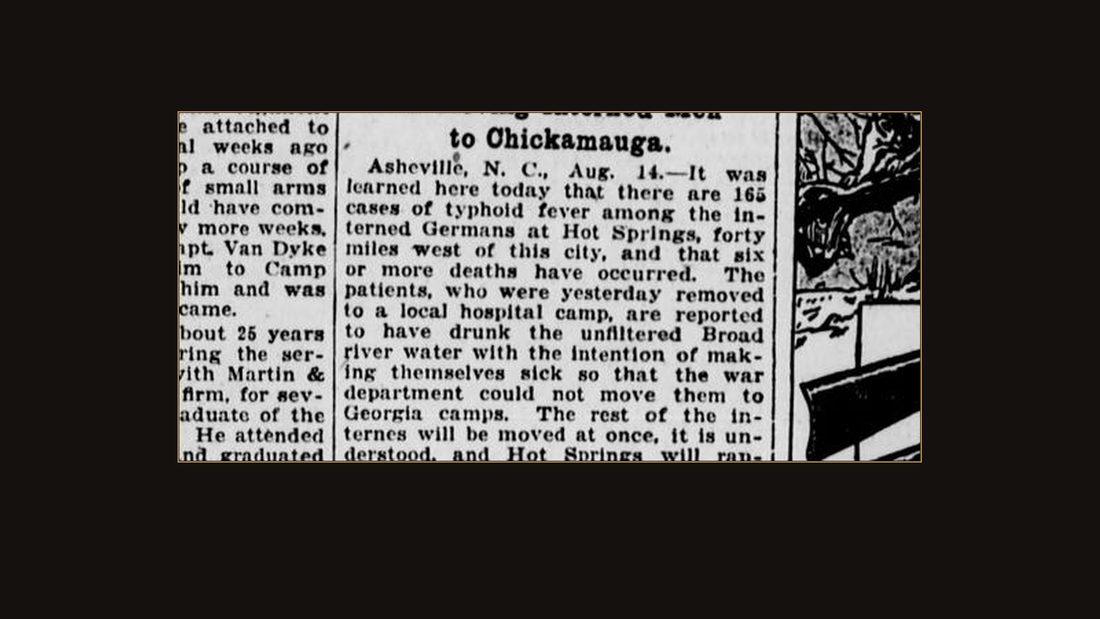
N55
The Chattanooga News · Aug. 14, 1918 · p. 5. View the original.
There were a hundred and sixty-five cases of typhoid among the interned Germans, it said, and the patients had been removed to a hospital camp the day before.
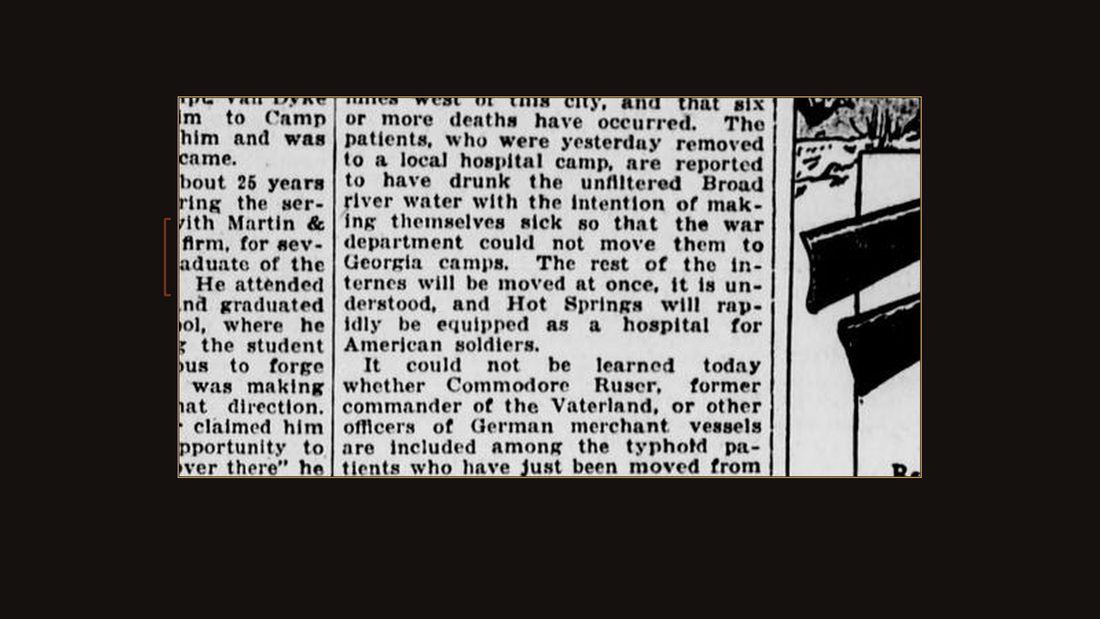
N56
The Chattanooga News · Aug. 14, 1918 · p. 5. View the original.
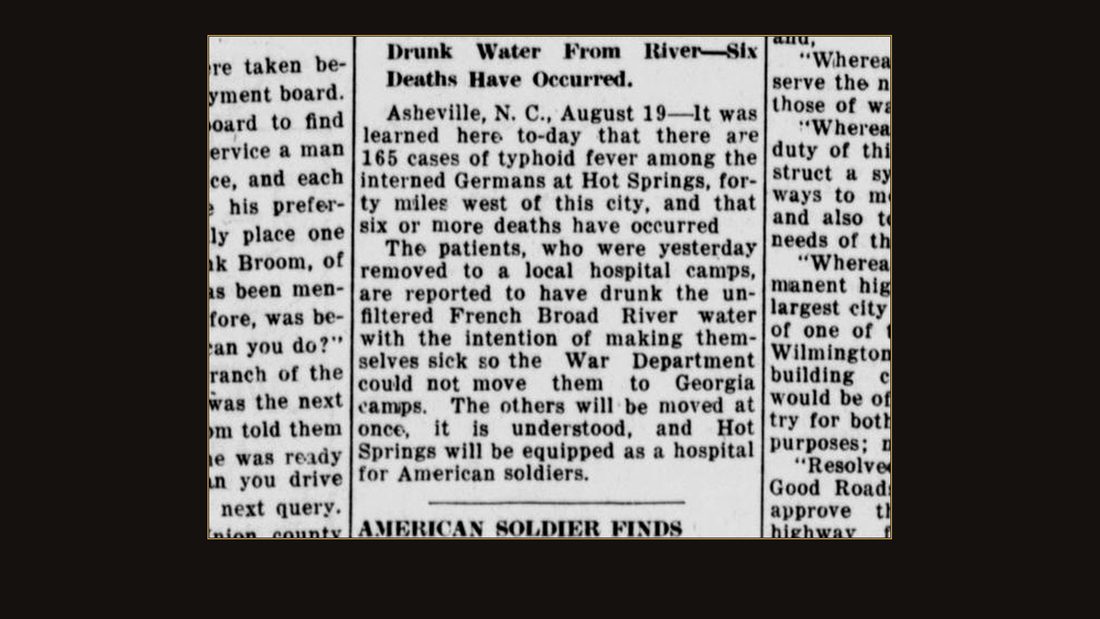
The patients, it went on, are reported to have drunk the unfiltered river water with the intention of making themselves sick, so that the War Department could not move them to the Georgia camps.
That is the accusation, and it is worth being exact about what it is. It is not a finding. It is a sentence in a wire dispatch saying the men are reported to have done it. No source is named. No official is quoted.
And it is only fair to say what supports it. Six weeks earlier a reporter standing in that camp had written that these men were loath to leave, and that they had strange apprehensions about Georgia. The motive the dispatch hands them is real, and it is documented.
What the dispatch does not mention is that the same reporter, on the same visit, had already reported that the water at that camp was impure, and that it was the camp's own physicians who found it.
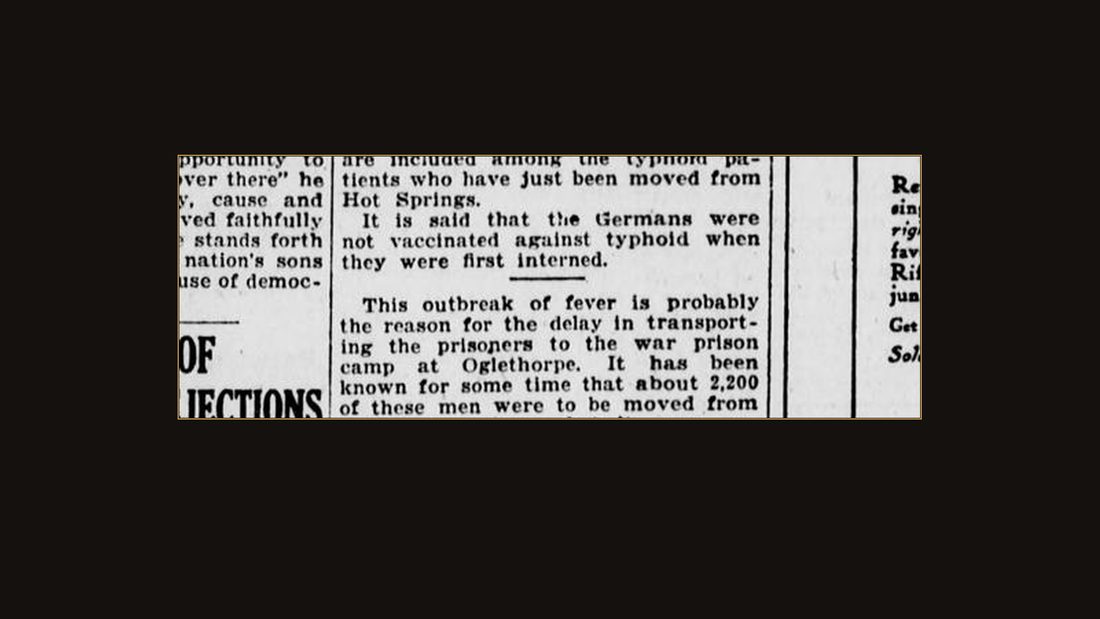
N57
The Chattanooga News · Aug. 14, 1918 · p. 5. View the original.
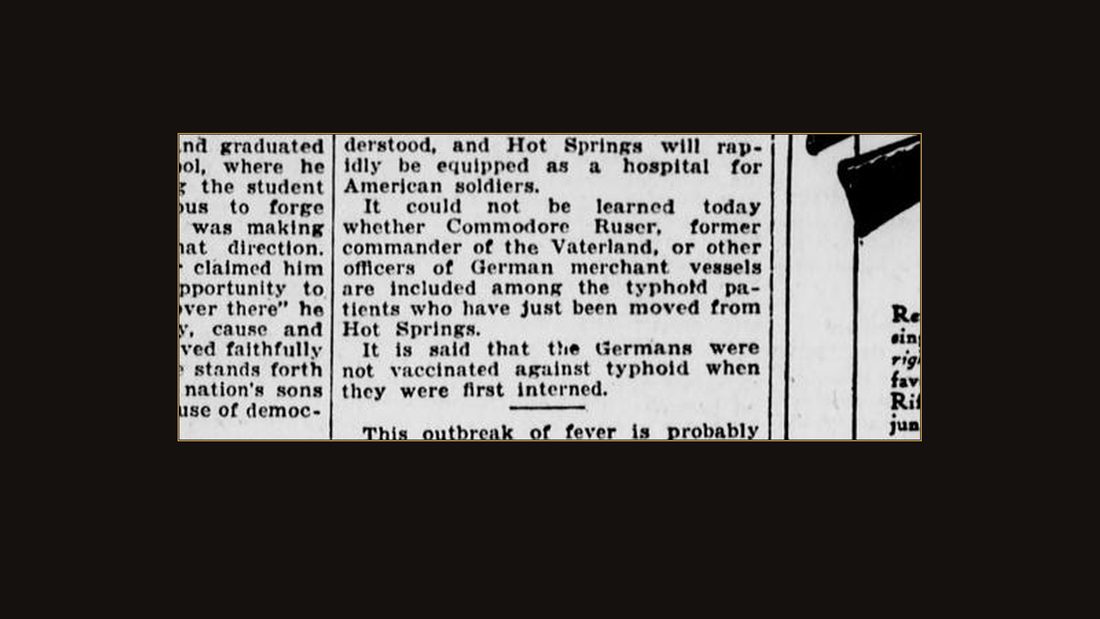
The same dispatch carried one more line. It is said that the Germans were not vaccinated against typhoid when they were first interned.
N58
The Chattanooga News · Aug. 14, 1918 · p. 5. View the original.
The Chattanooga News, running it that day, added that it could not be learned whether Commodore ROO-zer, former commander of the Vaterland, was among the patients moved out. The Vaterland had been the largest ship in the world.
N59
The Daily Times · Wilson, N.C. · Aug. 14, 1918 · p. 1. View the original.

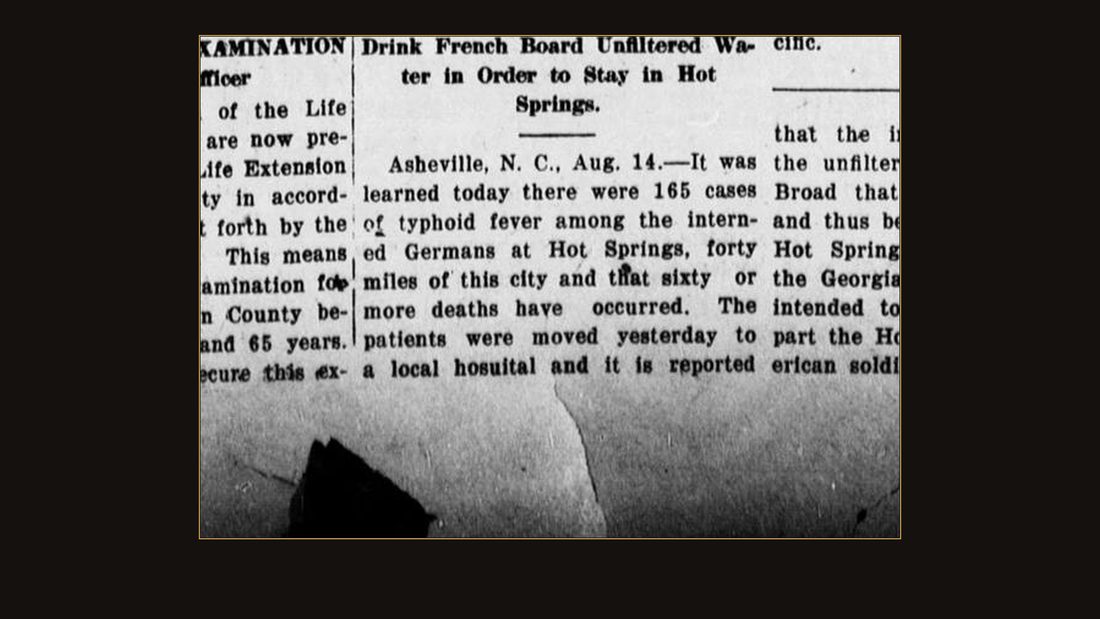
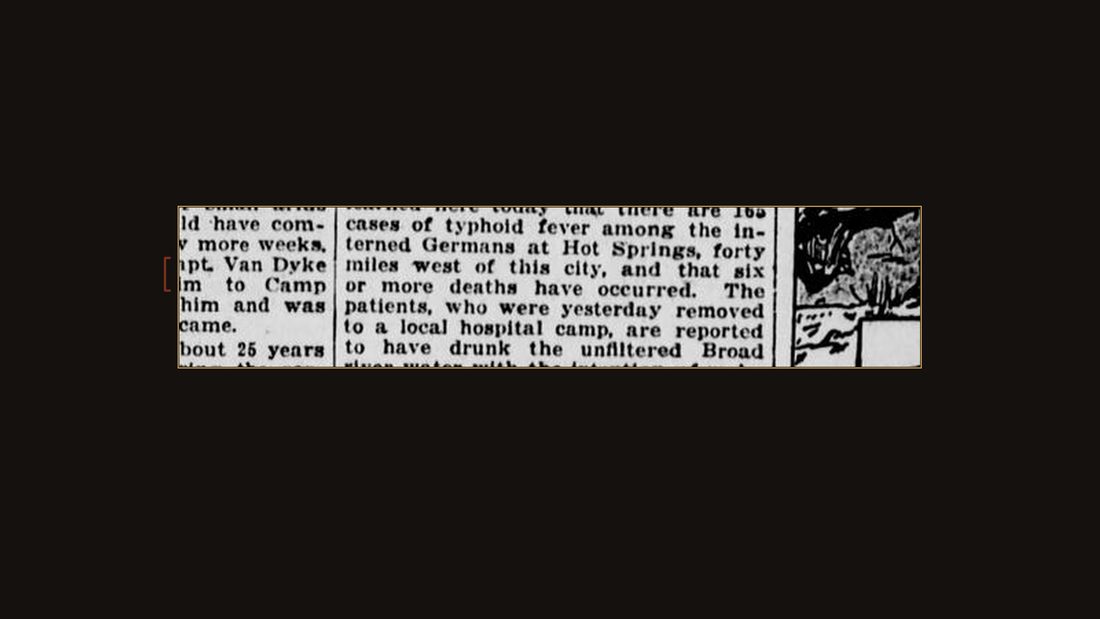
That dispatch went to papers all over the country on the fourteenth of August. And the papers did not agree on how many men were dead.
N60
The Chattanooga News · Aug. 14, 1918 · p. 5. View the original.
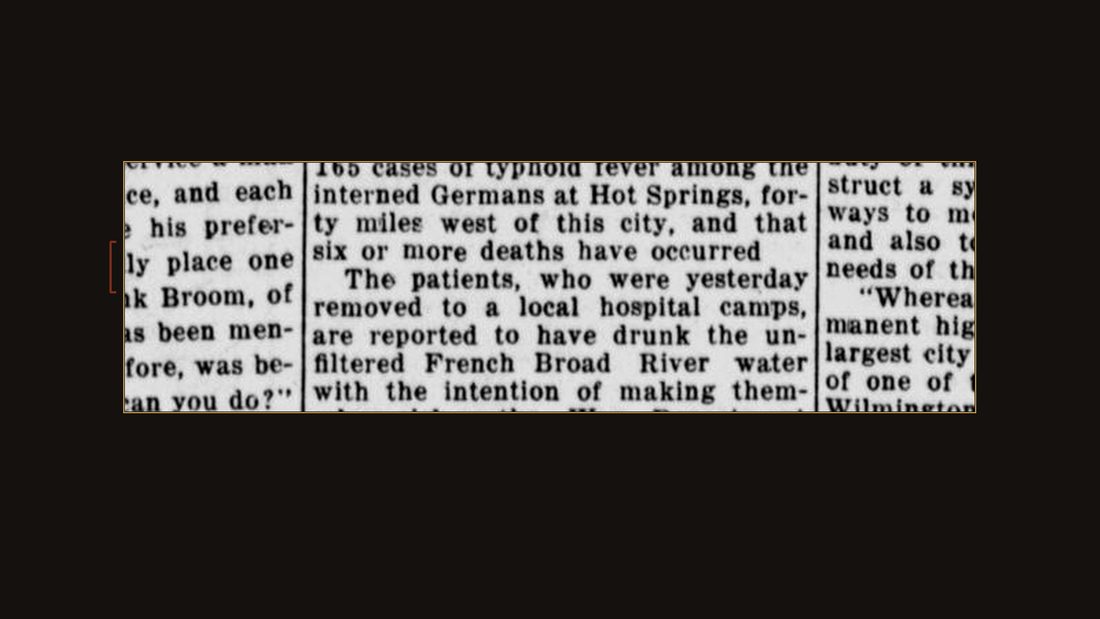
The Chattanooga News printed: six or more deaths have occurred.
N61
The Monroe Journal · Monroe, N.C. · Aug. 20, 1918 · p. 1. View the original.

The Monroe Journal, in North Carolina, printed the same dispatch a few days later. Six or more deaths have occurred.
N62
The Daily Times · Wilson, N.C. · Aug. 14, 1918 · p. 1. View the original.
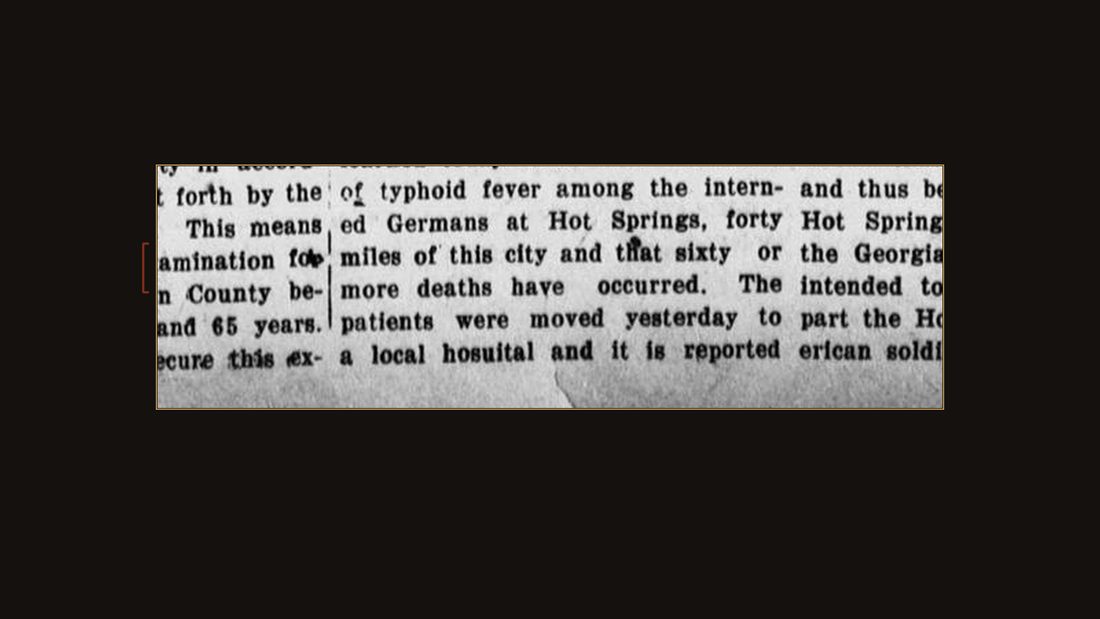
The Daily Times of Wilson printed it on the fourteenth. Sixty or more deaths have occurred.
N63
The Monroe Journal · Monroe, N.C. · Aug. 20, 1918 · p. 1. View the original.
Same dispatch. Same day. One digit. The distance between those two numbers is fifty-four men.
Nobody printed a correction. Both numbers simply sat in the record, in different towns, and the country read whichever one its paper happened to carry.
The wells
N64
The Washington Herald · Sept. 7, 1918 · p. 1. View the original.
Three weeks later the War Department settled it.
N65
Evening Star · Washington, D.C. · Sept. 7, 1918 · p. 7. View the original.

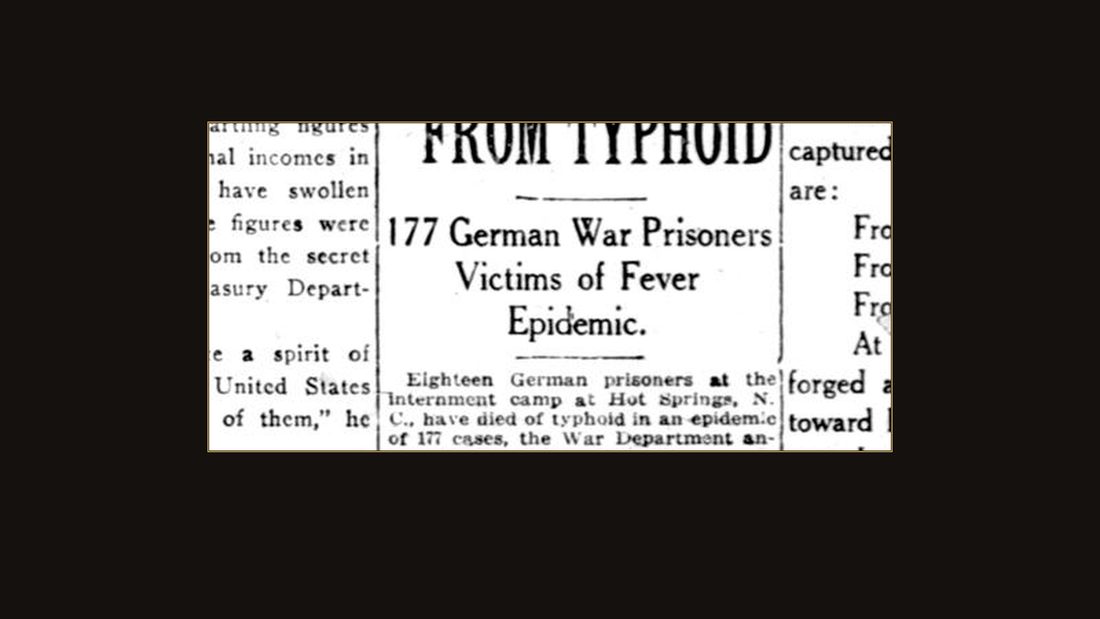
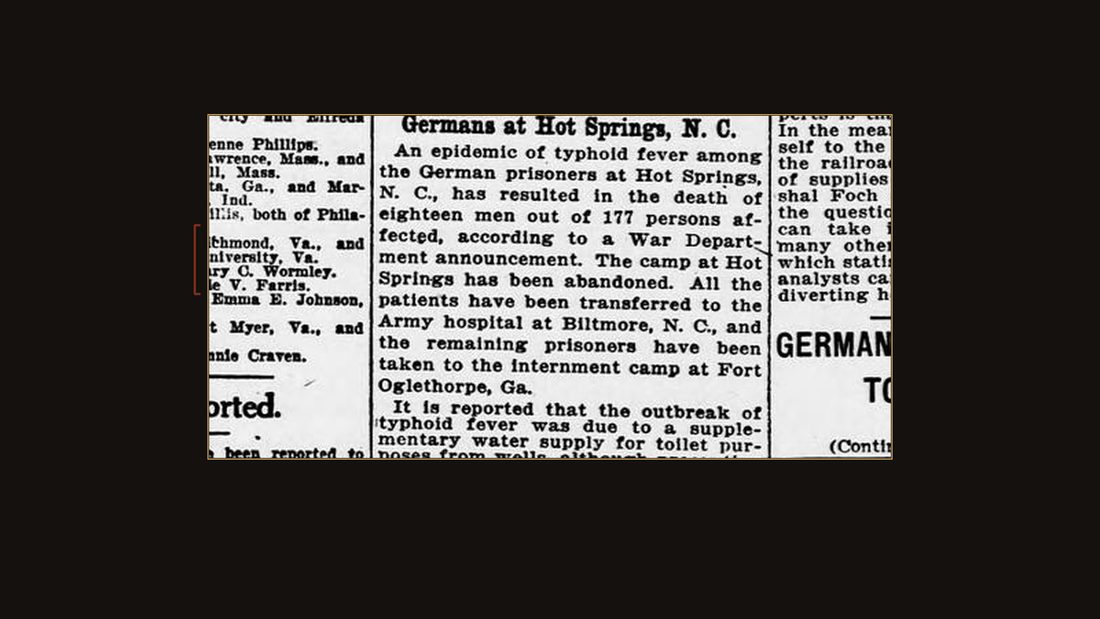
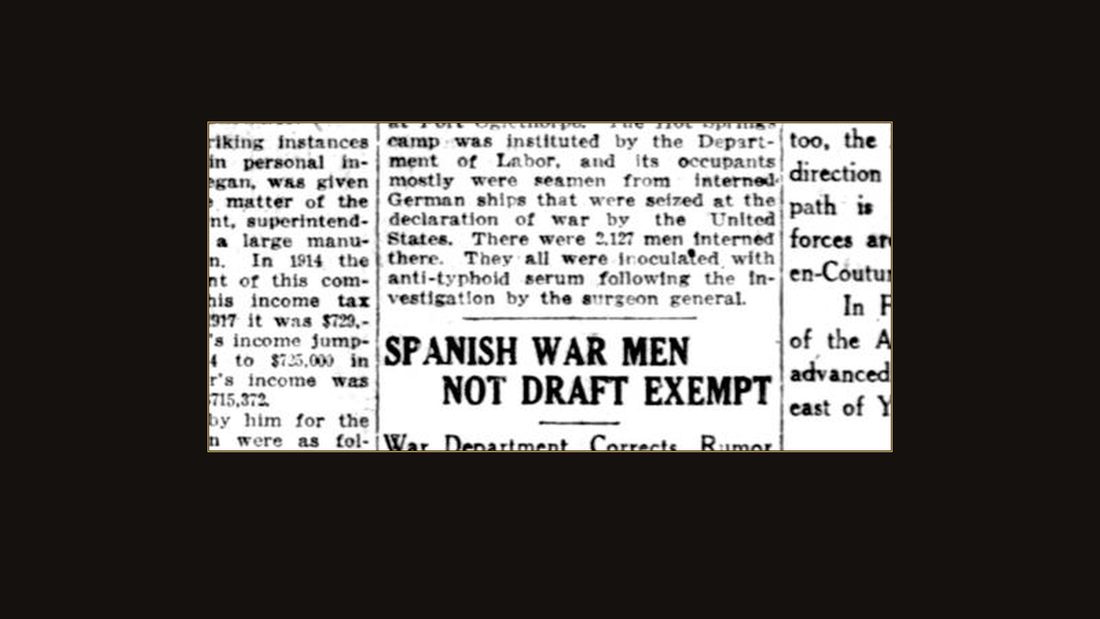
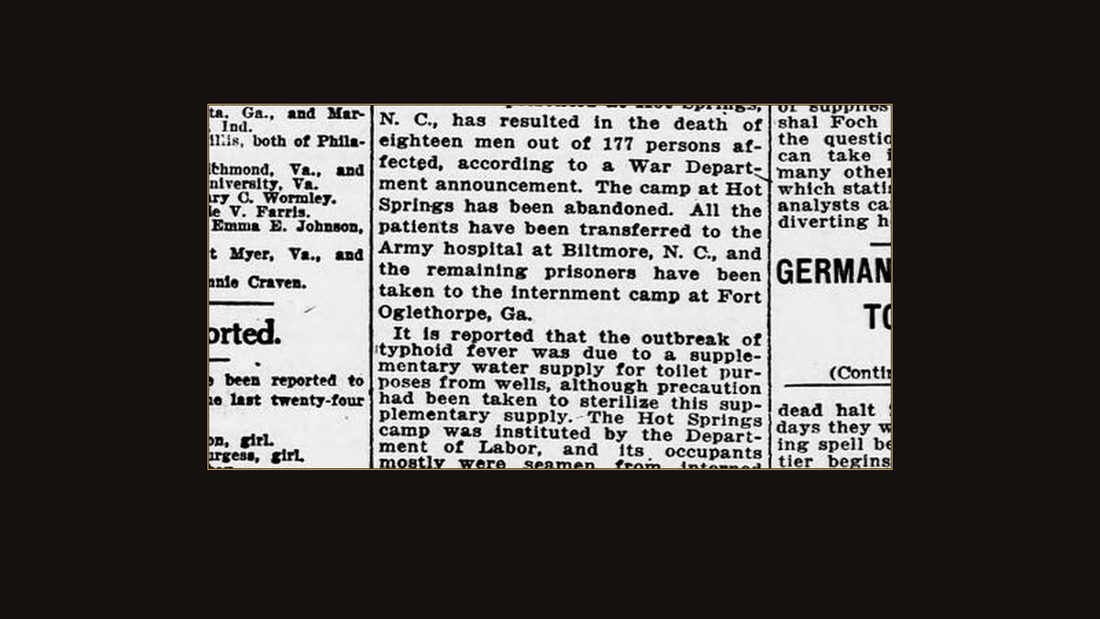
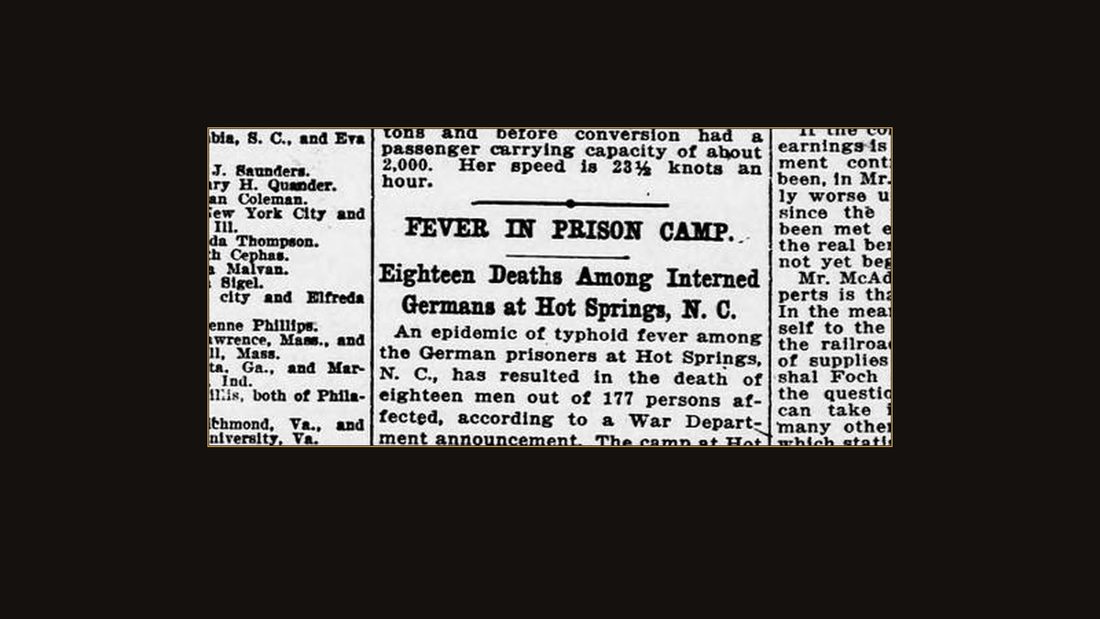
On the sixth of September, nineteen eighteen, the department announced that eighteen German prisoners at Hot Springs had died of typhoid, in an epidemic of a hundred and seventy-seven cases.
N66
The Washington Herald · Sept. 7, 1918 · p. 1. View the original.
Not six. Not sixty. Eighteen dead, out of a hundred and seventy-seven sick, out of two thousand one hundred and twenty-seven men interned there.
N67
Evening Star · Washington, D.C. · Sept. 7, 1918 · p. 7. View the original.
All the patients had been transferred to the Army hospital at Biltmore. All the remaining prisoners had gone to Fort Oglethorpe. The camp at Hot Springs was abandoned.
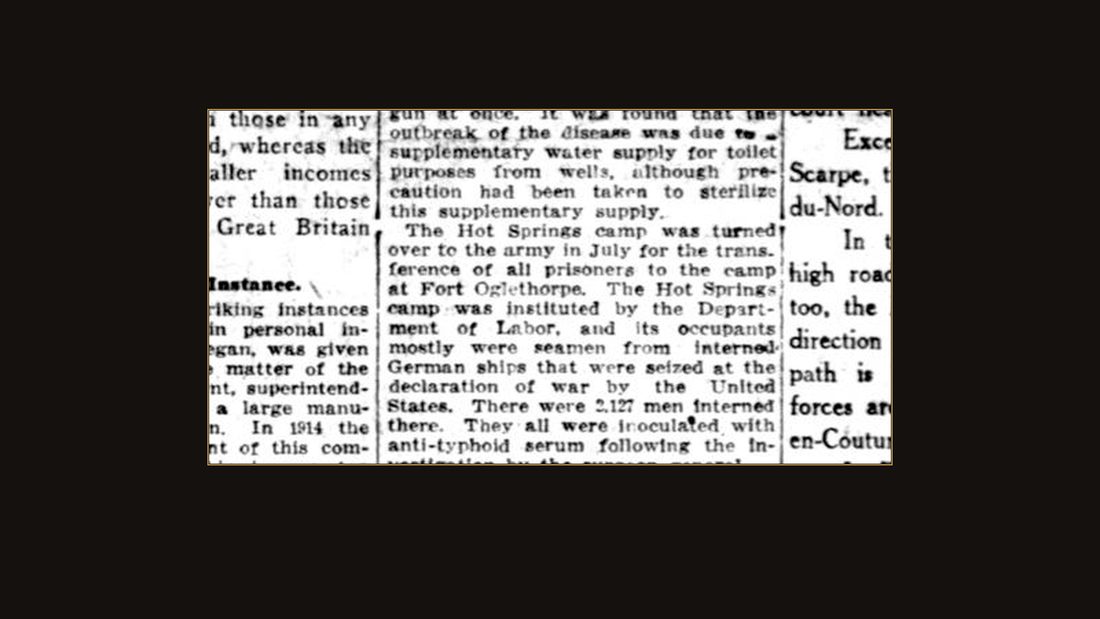
And the announcement gave a cause.
N68
The Washington Herald · Sept. 7, 1918 · p. 1. View the original.
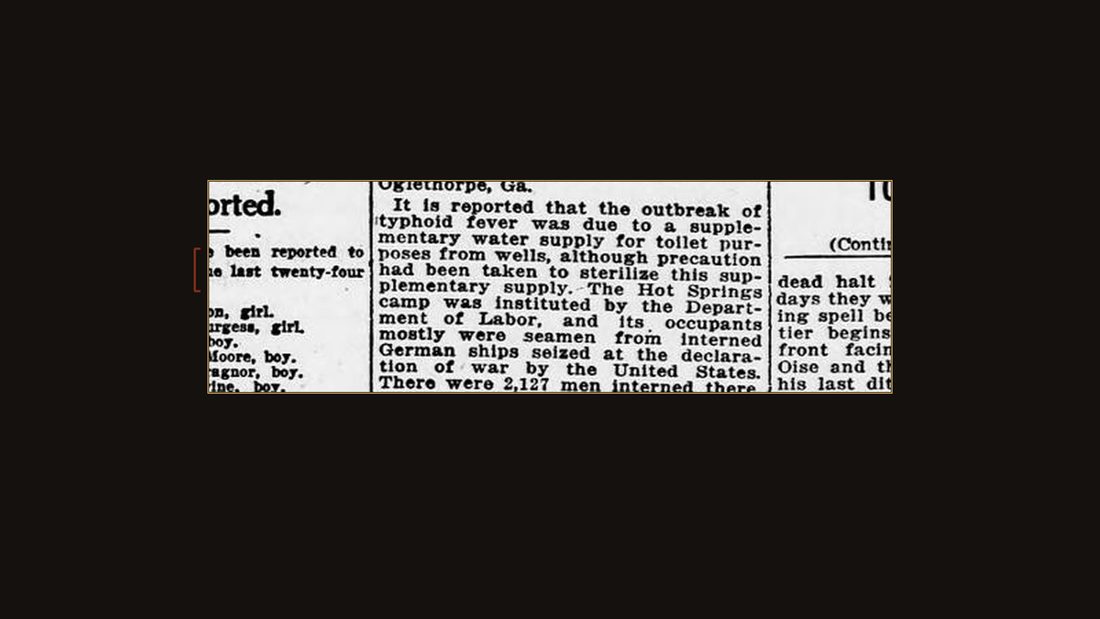
It was found that the outbreak of the disease was due to a supplementary water supply for toilet purposes from wells, although precaution had been taken to sterilize this supplementary supply.
N69
Evening Star · Washington, D.C. · Sept. 7, 1918 · p. 7. View the original.
Not the river. The camp's own wells.
N70
Evening Star · Washington, D.C. · Sept. 7, 1918 · p. 7. View the original.
The government had chosen this valley because a department of it called the place the most healthful section from the Pacific coast to Maine. It had sent a Public Health Service officer to systematize sanitation there. Its camp had told a reporter in August that the entire sanitary system was perfect. In September it concluded that its own wells had done it.
N71
The Washington Herald · Sept. 7, 1918 · p. 1. View the original.
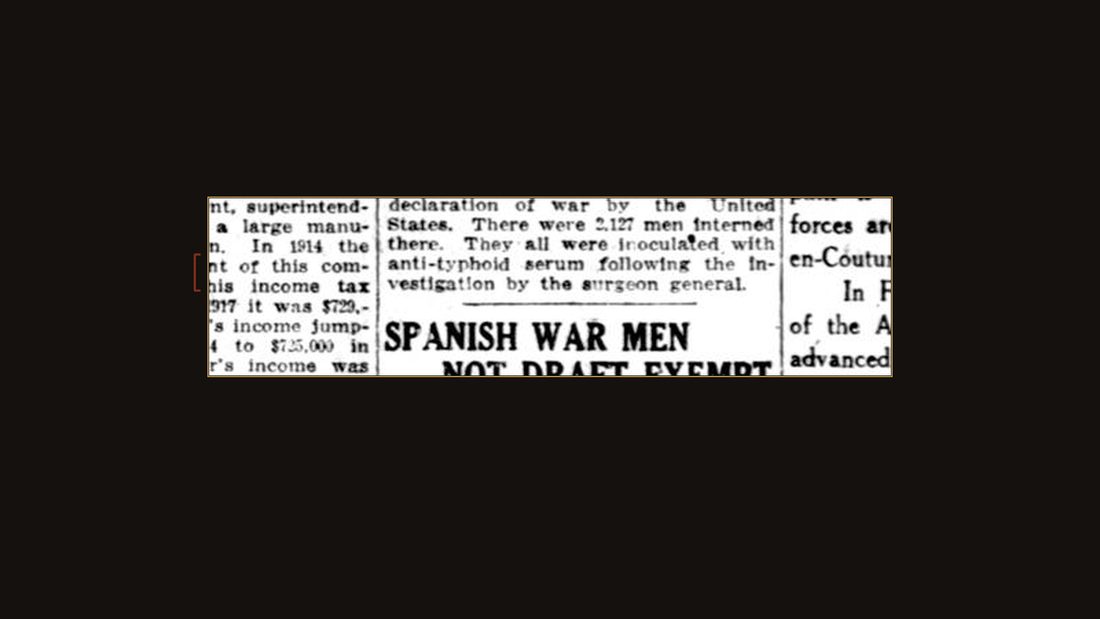
One more line in that announcement. The men were all inoculated with anti-typhoid serum following the investigation by the Surgeon General.
Following. Not before. Two thousand men held in one place for more than a year, and the typhoid shots came after eighteen of them were dead.
What is still buried
So here is what the record settles. Eighteen men died. The government's own investigation put the source in the camp's wells, not in the river. And the shots that would have prevented it were given afterward.
Here is what it does not settle. Whether any man at that camp ever drank from the French Broad on purpose. That claim was printed twice, both times as something reported, never attributed to anyone by name — and the War Department's own finding, three weeks later, pointed somewhere else entirely.
It does not settle how six became sixty, in the same dispatch, on the same day, in two different towns.
And it does not give us a single name. Not one of these papers printed the name of any of the eighteen. They were counted, moved, announced, and left in the sentence as a number.
The camp became a hospital for American wounded, and then nothing. Hot Springs went back to being a town of four hundred people.
If your people were in Madison County then, or anywhere along the French Broad, some of them watched this happen. Somebody's grandfather guarded that fence. Somebody's grandmother sold bread to a camp full of German sailors.
If you have heard that story at a kitchen table, leave it in the comments. That is usually where the part the papers left out turns up.
Sources
- [S1] *French Broad Hustler*, Hendersonville, N.C., May 31, 1917, p. 1 — Washington dispatch on Secretary of Labor William B. Wilson's decision to lease the Mountain Park Hotel at Hot Springs, with his statement in full and the collapse of the earlier Lake Kanuga lease. https://www.loc.gov/resource/sn91068161/1917-05-31/ed-1/?sp=1
- [S2] *Evening Star*, Washington, D.C., July 15, 1917, p. 34 — Sunday feature on the plan to work interned Germans on roads in the Pisgah forest reserve, with a photograph of the Public Health Service officer sent to the camp. https://www.loc.gov/resource/sn83045462/1917-07-15/ed-1/?sp=34
- [S3] *Evening Star*, Washington, D.C., Mar. 3, 1918, p. 16 — signed account by Frederick C. Howe, United States Commissioner of Immigration at New York, under the headline "Life of Prisoners Serene in Camps of Own Building. Food Good." https://www.loc.gov/resource/sn83045462/1918-03-03/ed-1/?sp=16
- [S4] *Evening Star*, Washington, D.C., June 26, 1918, p. 1 — David Lawrence's dispatch from Hot Springs dated June 25, 1918, syndicated from the *New York Evening Post*. https://www.loc.gov/resource/sn83045462/1918-06-26/ed-1/?sp=1
- [S5] *Evening Star*, Washington, D.C., June 26, 1918, p. 9 — the jump page of the Lawrence dispatch. https://www.loc.gov/resource/sn83045462/1918-06-26/ed-1/?sp=9
- [S6] *The Daily Times*, Wilson, N.C., Aug. 10, 1918, p. 1 — first published report of the outbreak, Asheville dateline, under the headline "GERMANS DRINK RIVER WATER". https://www.loc.gov/resource/sn92073954/1918-08-10/ed-1/?sp=1
- [S7] *The Chattanooga News*, Aug. 14, 1918, p. 5 — the second Asheville dispatch. https://www.loc.gov/resource/sn85038531/1918-08-14/ed-1/?sp=5
- [S8] *The Daily Times*, Wilson, N.C., Aug. 14, 1918, p. 1 — the same dispatch, same day. https://www.loc.gov/resource/sn92073954/1918-08-14/ed-1/?sp=1
- [S9] *The Monroe Journal*, Monroe, N.C., Aug. 20, 1918, p. 1 — the same dispatch again. https://www.loc.gov/resource/sn91068476/1918-08-20/ed-1/?sp=1
- [S10] *The Washington Herald*, Sept. 7, 1918, p. 1 — the War Department announcement, front page. https://www.loc.gov/resource/sn83045433/1918-09-07/ed-1/?sp=1
- [S11] *Evening Star*, Washington, D.C., Sept. 7, 1918, p. 7 — the same War Department announcement, carrying the detail that the camp was abandoned and where everyone went. https://www.loc.gov/resource/sn83045462/1918-09-07/ed-1/?sp=7
- Six or sixty. The Aug. 14, 1918 Asheville dispatch appears in *The Chattanooga News* (p. 5) as "six or more deaths have occurred" and in *The Daily Times* of Wilson, N.C. (p. 1) as "sixty or more deaths have occurred", on the same day. *The Monroe Journal* carried "six" on Aug. 20. No correction was printed in any of the three. The episode shows all three and does not resolve which the wire actually moved.
- The case count moved too. ~100 cases (Aug. 10, unconfirmed — and Asheville thought the true number was *lower*), 165 (Aug. 14), 177 (War Department, Sept. 6). The episode gives all three in order rather than averaging them.
- The deliberate-infection claim is unsourced. Both Aug. 10 and Aug. 14 printings say the men "are reported to" have drunk river water on purpose. No official is quoted and no source is named in either. Three weeks later the War Department attributed the outbreak to wells inside the camp. The episode states the claim, states its hedging, and states that the government's own finding pointed elsewhere. It does not assert that no one ever drank from the river.
- The motive in that claim is independently documented, and the episode says so. Lawrence reported from the camp on June 25, 1918 that the men were "loath to leave" and had "strange apprehensions" about the Fort Oglethorpe transfer [S4]. That is the strongest evidence supporting the August accusation, and it is shown on screen.
- Against it, from the same reporter on the same visit: the camp's physicians had already stopped the men bathing in the outdoor tank because the water "was found to be impure" [S4] — six weeks before the first typhoid report reached the Surgeon General. The episode presents both and resolves neither.
- No names. None of these eleven pages names any of the eighteen men who died. The episode says so rather than estimating or filling in.
- Total interned. 3,000+ planned (May 1917), 1,600 barracks capacity (March 1918), "more than 2,300" (June 1918), 2,127 (War Department, September 1918). These are different measures taken at different times and are presented as such.
- Hot Springs, N.C. is not Hot Springs, Ark. or Hot Springs, Va. Lawrence's dispatch makes the point explicitly because papers were already confusing them in 1918.
- The camp's later history — what became of the buildings, the German village, and the graves — is outside these twelve pages and is not asserted in the narration.