He Named His Killer From the Gallows and Predicted the Acquittal | 1899
Sevier County, Tennessee — the county that is now Gatlinburg and Pigeon Forge. In the 1890s a masked organization called the White Caps ran it. They started around 1891 by whipping women whose reputations they disapproved of.
Transcript
Cold open
On the fifth of July, eighteen ninety-nine, a man stood on a scaffold in Se-VEER-ville, Tennessee, and told the crowd what was going to happen next.
N42
Maryville Times, July 8, 1899, p. 1. View the original.

He said the man who had paid for the murder would turn himself in. He said the man would be tried. And he said the result would be an acquittal.
Then they hanged him.
N54
News & Observer, Raleigh, Apr. 10, 1904, p. 9. View the original.

It took four years and nine months. It took five separate trials. And it happened exactly the way he said it would.
The promise
N6
Rock Island Argus, Apr. 30, 1897, p. 2. View the original.

This is the story of the Se-VEER County White Caps — who they were, what they did, and the one question the record actually answers.
N31
New-York Tribune, July 4, 1899, p. 1. View the original.

Not who fired the shots. Two men confessed to that and both of them hanged for it. The question is who paid. And what it cost him.
The county
Se-VEER County sits on the Tennessee side of the Great Smoky Mountains. Today it is Gatlinburg and Pigeon Forge and eleven million visitors a year.
In eighteen ninety it was farms in coves, a courthouse town of a few hundred people, and roads that turned to mud for four months of the year.
How it started
N8
Rock Island Argus, Apr. 30, 1897, p. 2. View the original.
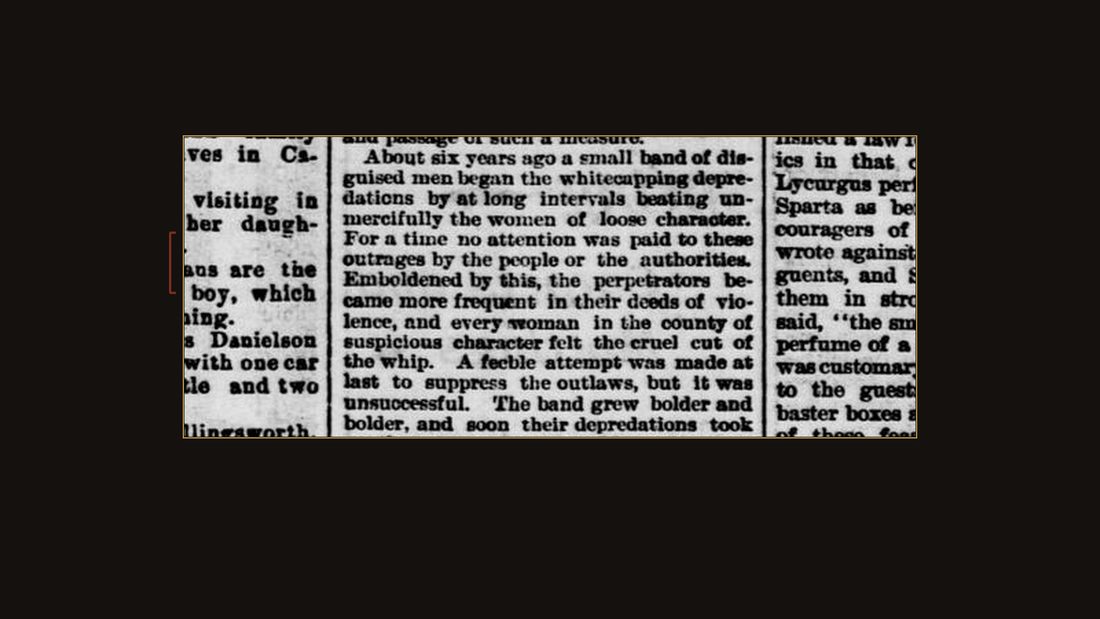
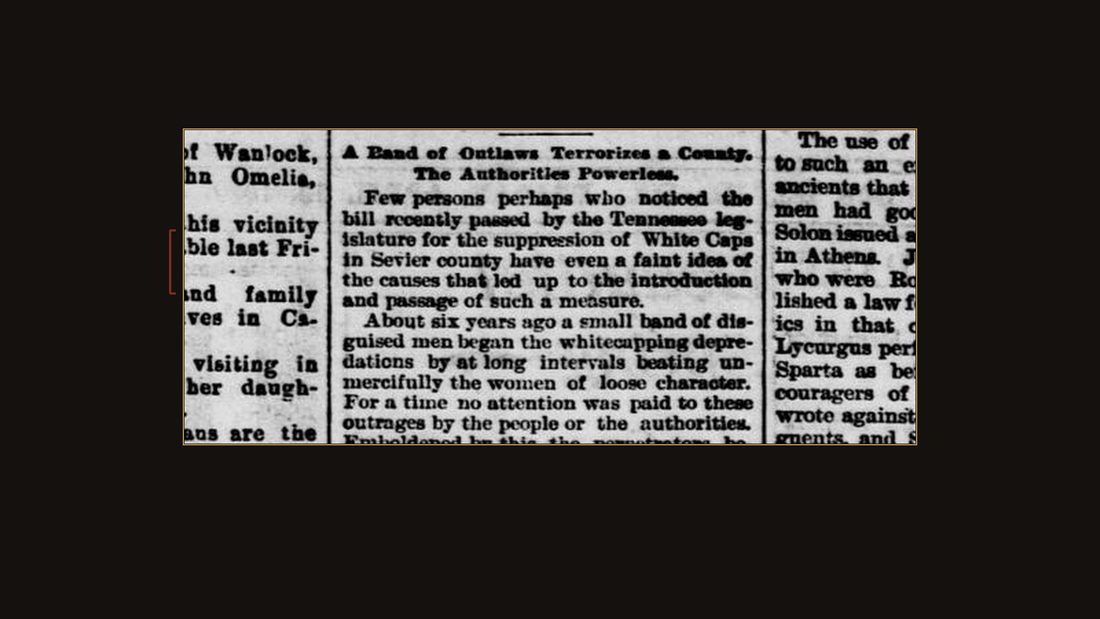
Something started there around eighteen ninety-one. A newspaper account written six years later described the beginning plainly.
A small band of disguised men began, in the paper's words, at long intervals beating unmercifully the women of loose character.
That is the language of eighteen ninety-seven, and it is worth sitting with for a second. These were men in masks whipping women, and the charge against the women was their reputation.
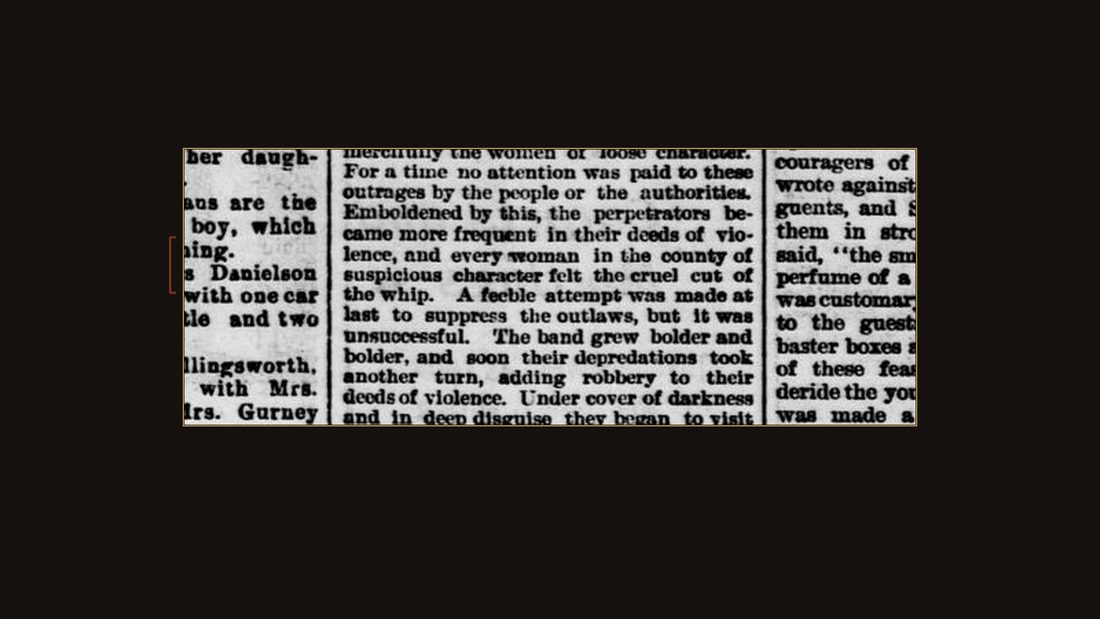
For a time, the same account says, no attention was paid to these outrages by the people or the authorities.
That sentence is the hinge of the whole story. Nobody stopped it, because of who it was happening to.
N9
Rock Island Argus, Apr. 30, 1897, p. 2. View the original.
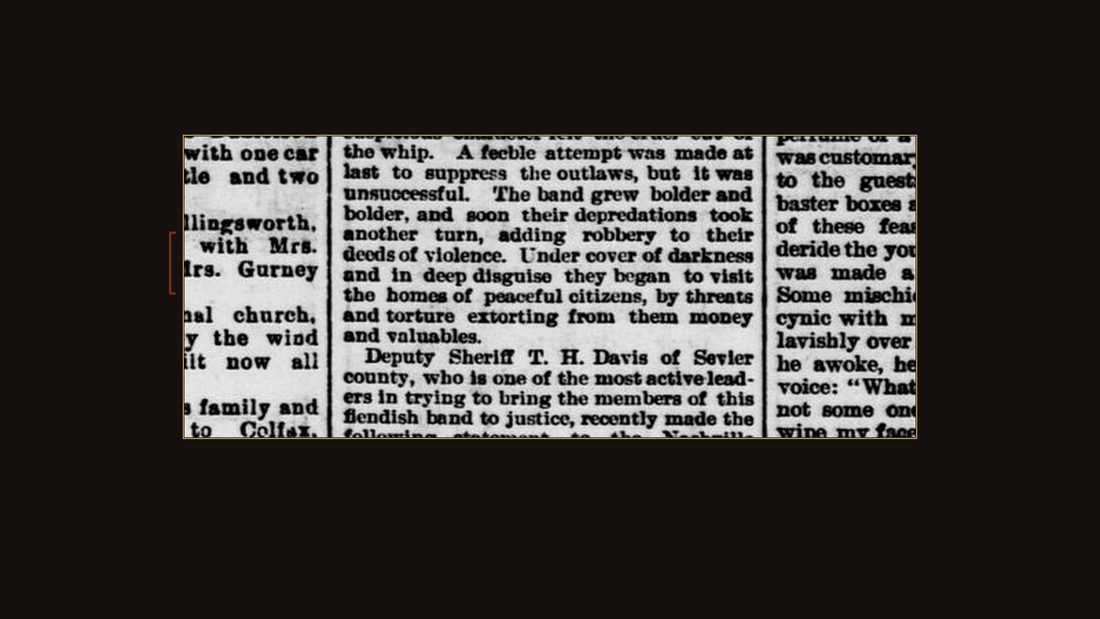
Emboldened by this, the paper goes on, the perpetrators became more frequent in their deeds of violence, and every woman in the county of suspicious character felt the cruel cut of the whip.
N10
Rock Island Argus, Apr. 30, 1897, p. 2. View the original.
Under cover of darkness and in deep disguise, the account continues, they began to visit the homes of peaceful citizens, by threat and torture extorting from them money and valuables.
N6
Rock Island Argus, Apr. 30, 1897, p. 2. View the original.
What made Se-VEER County different was how completely they won. For most of a decade nobody could convict them, because nobody in the county would testify.
The notices
The method was a written notice. It came at night, and it named a deadline.
N1
Maryville Times, Feb. 27, 1897, p. 1. View the original.

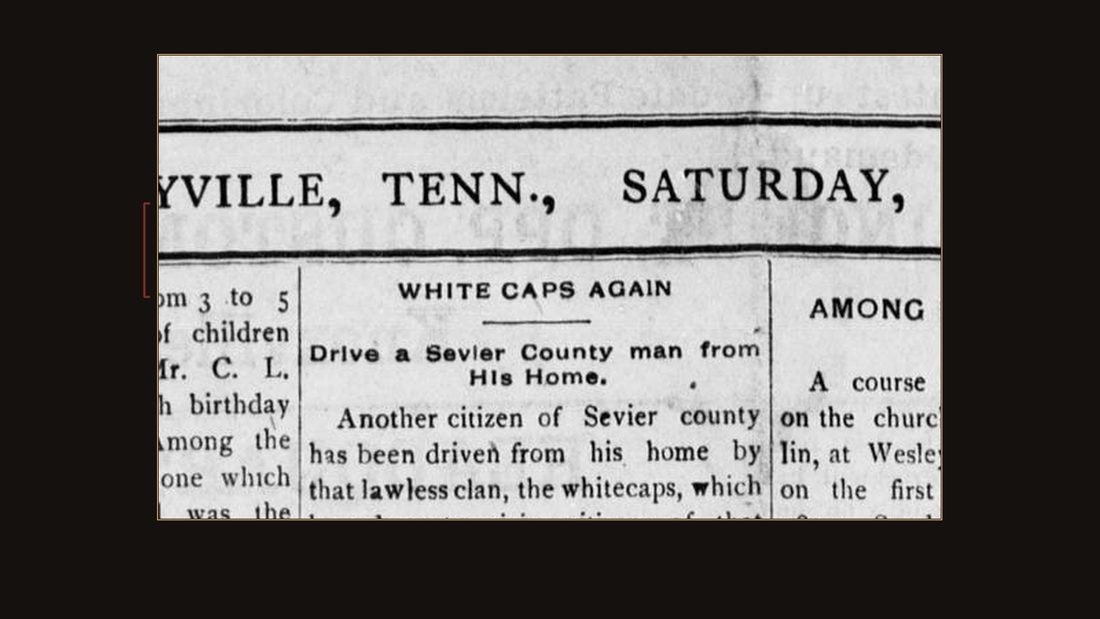
In February eighteen ninety-seven the Maryville Times, published one county west, ran an account of what happened to a farmer named Bob Lowe.
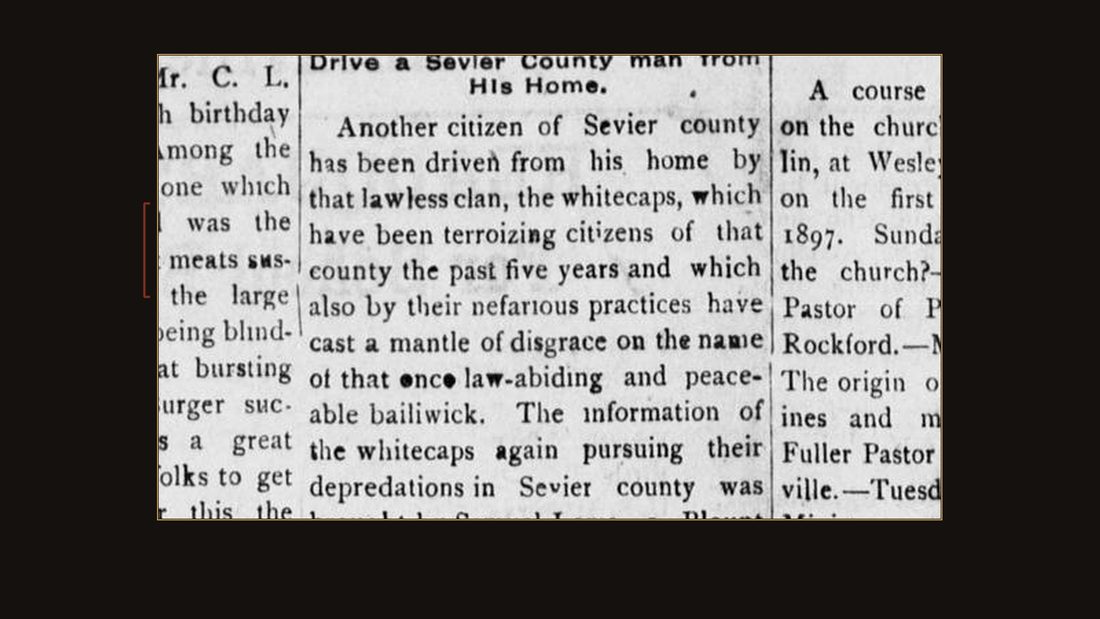
N2
Maryville Times, Feb. 27, 1897, p. 1. View the original.
The paper called them that lawless clan, the whitecaps, who have been terrorizing citizens of that county the past five years.
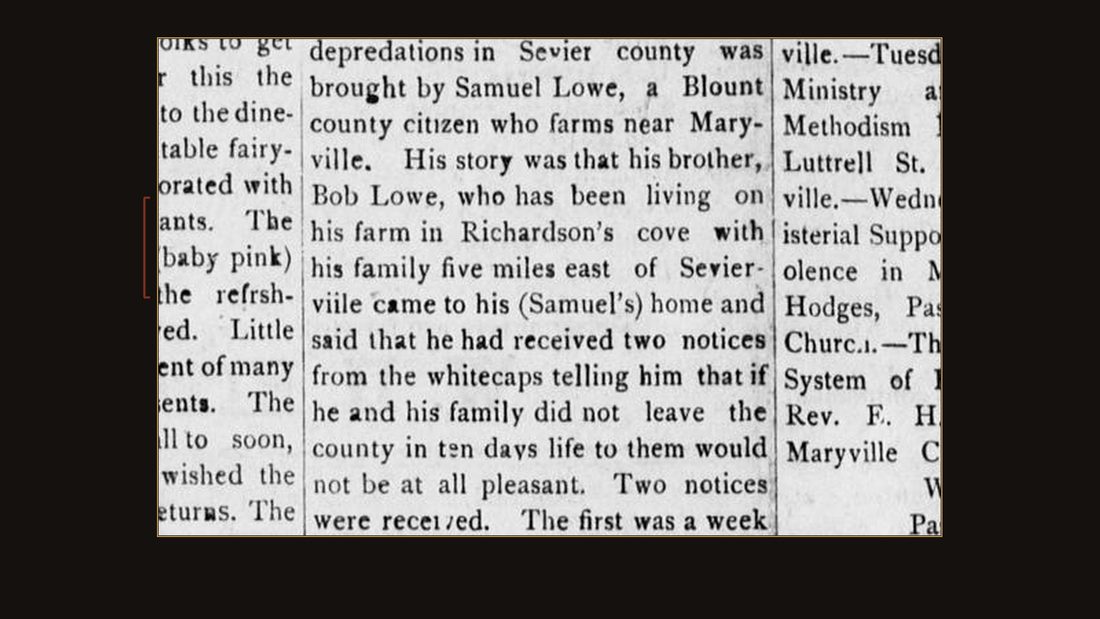
N3
Maryville Times, Feb. 27, 1897, p. 1. View the original.
Lowe farmed in Richardson's Cove, five miles east of Se-VEER-ville. He received two notices telling him that if he and his family did not leave the county in ten days, life to them would not be at all pleasant.
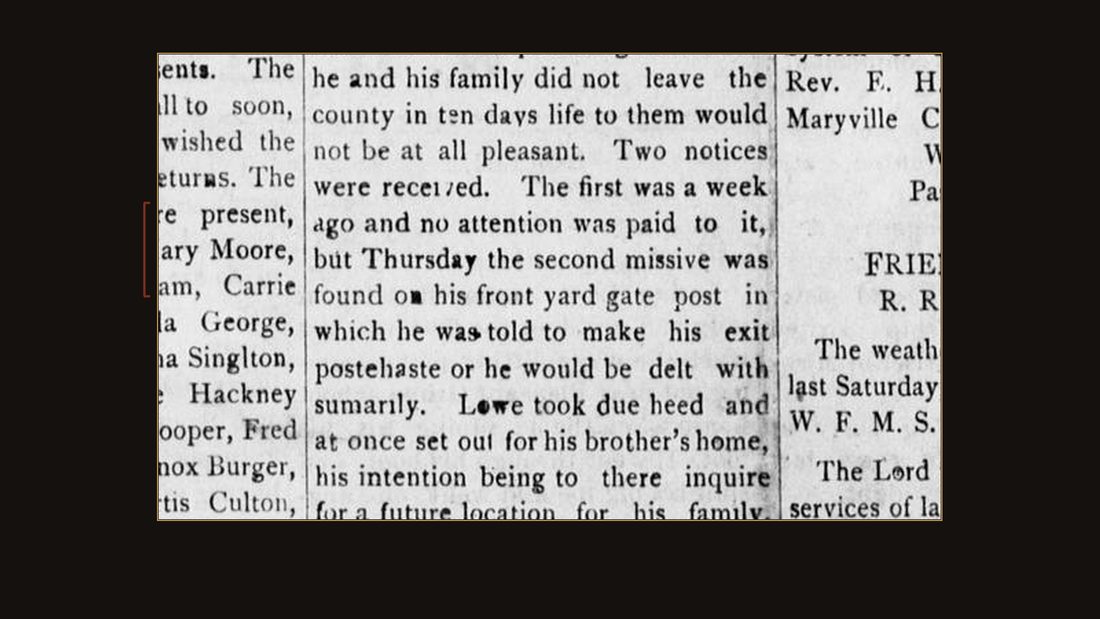
N4
Maryville Times, Feb. 27, 1897, p. 1. View the original.
The first came a week earlier and he ignored it. The second was found on his front yard gate post. It told him to make his exit posthaste, or he would be dealt with summarily.
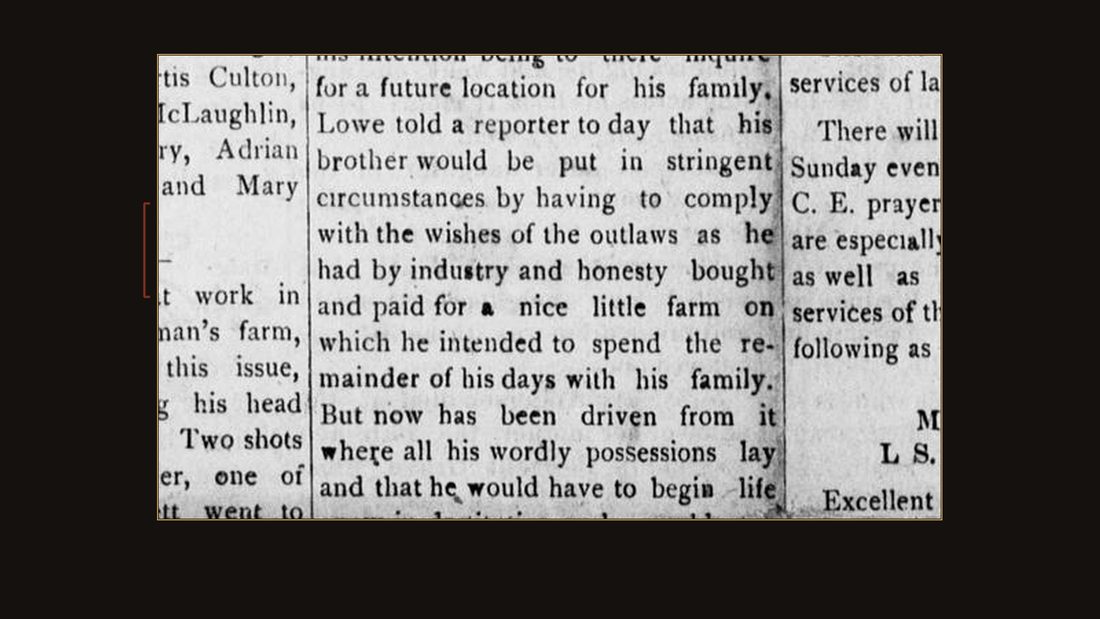
N5
Maryville Times, Feb. 27, 1897, p. 1. View the original.
He left. His brother told the reporter that Lowe had by industry and honesty bought and paid for a nice little farm on which he intended to spend the remainder of his days with his family.
No crime was alleged against him. No court was involved. A piece of paper on a gate post moved a family off land they owned.
A law for one county
N7
Rock Island Argus, Apr. 30, 1897, p. 2. View the original.
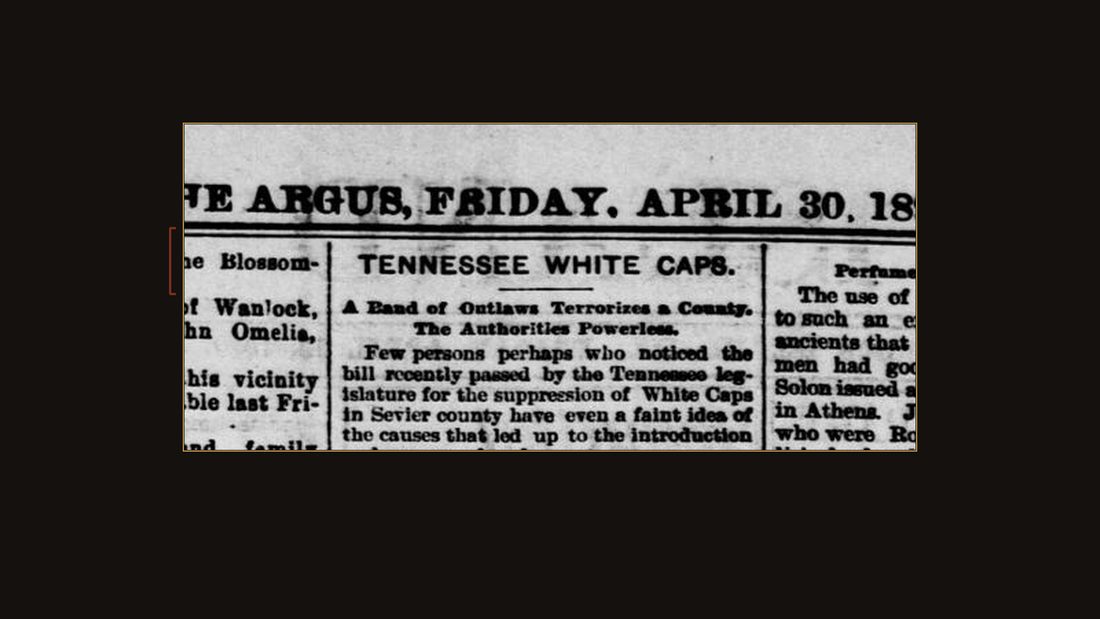
By eighteen ninety-seven this had gone on long enough that the Tennessee legislature passed a bill for the suppression of White Caps in Se-VEER County.
Read that again. The state of Tennessee wrote a criminal statute aimed at a single county, because the ordinary law was not working there.
Henderson Springs
Three years before that law, some men in the county had already stopped waiting for it.
N12
Indianapolis Journal, Oct. 27, 1894, p. 5. View the original.

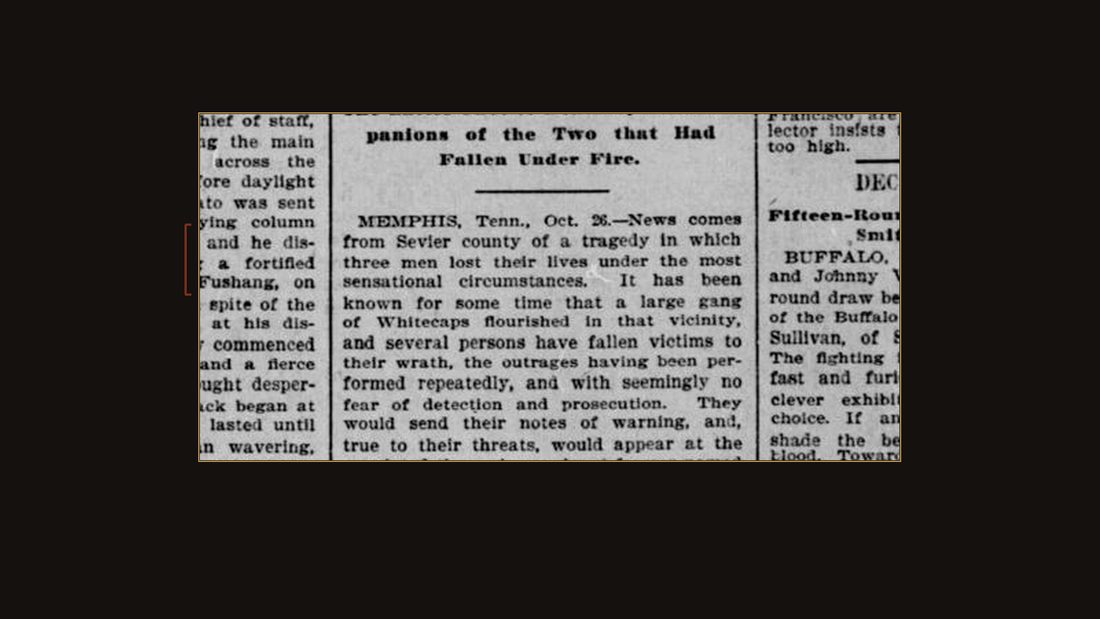
On the night of October twenty-fifth, eighteen ninety-four, a farmer named Rader, living near Henderson Springs, received a notice that the White Caps would visit him that night.
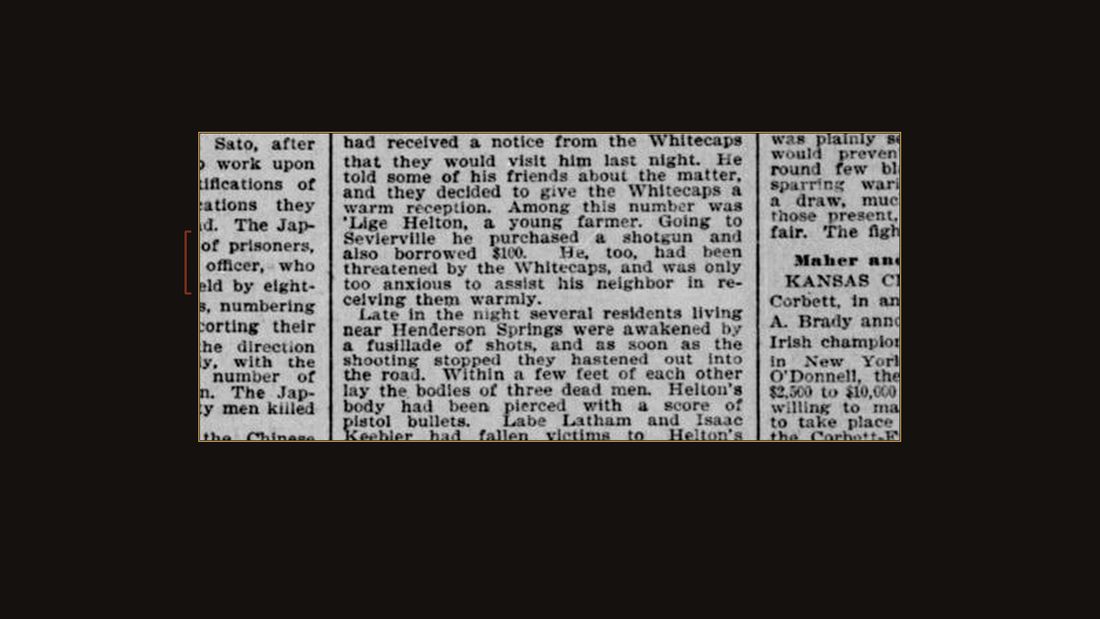
Rader told his friends. They decided, in the wire report's phrase, to give the Whitecaps a warm reception.
N13
Indianapolis Journal, Oct. 27, 1894, p. 5. View the original.
Among them was a young farmer named 'Lige Helton. He had been threatened himself. He rode into Se-VEER-ville, bought a shotgun, and borrowed a hundred dollars.
N11
Indianapolis Journal, Oct. 27, 1894, p. 5. View the original.
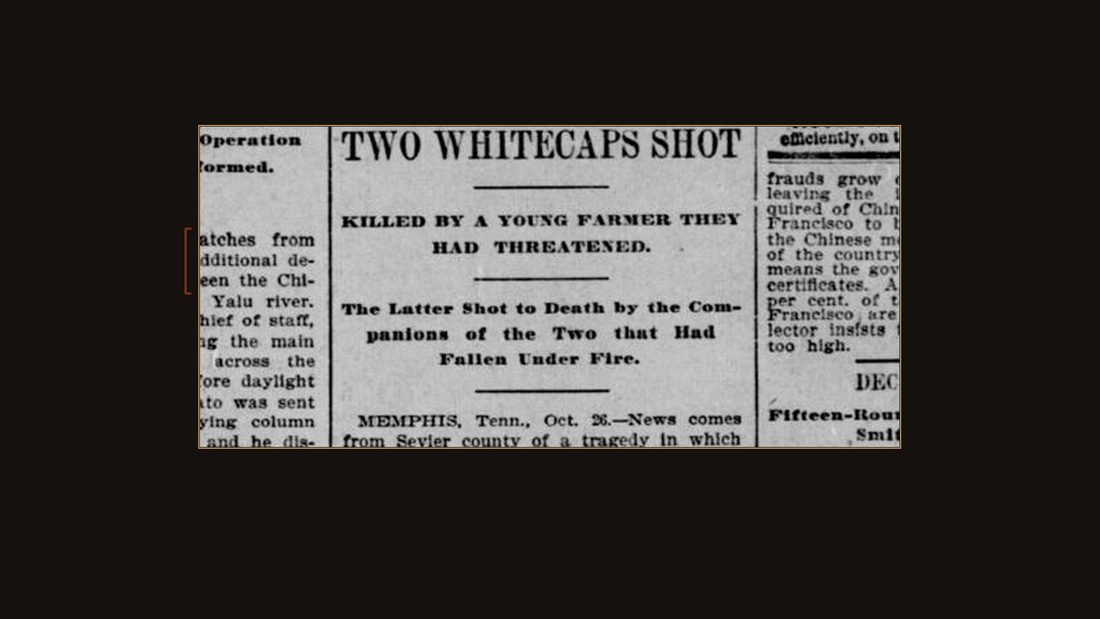
The headline the Indianapolis Journal put on it two days later gave the whole shape of the thing in ten words. Killed by a young farmer they had threatened.
N14
Indianapolis Journal, Oct. 27, 1894, p. 5. View the original.
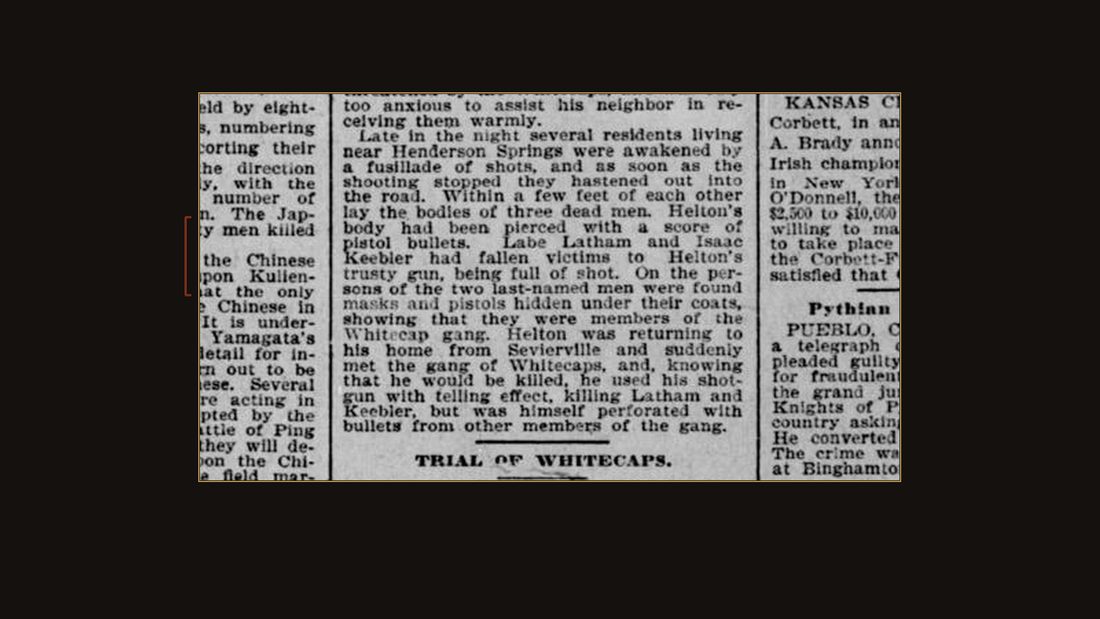
Late that night people living near Henderson Springs were woken by a fusillade of shots. When it stopped they went out into the road.
Within a few feet of each other lay the bodies of three dead men.
Helton had been hit by a score of pistol bullets. Two other men, Labe Latham and Isaac Keebler, had been killed by his shotgun.
On the bodies of Latham and Keebler, under their coats, the neighbors found masks and pistols.
Three men dead in a road, and the only thing anybody could prove was what was in two dead men's pockets. Nobody was charged.
The Whaleys
Two years and two months later, on the night of December twenty-eighth, eighteen ninety-six, two men walked up to a farmhouse two miles outside Se-VEER-ville.
N15
Morning Times, Washington, Dec. 30, 1896, p. 1. View the original.

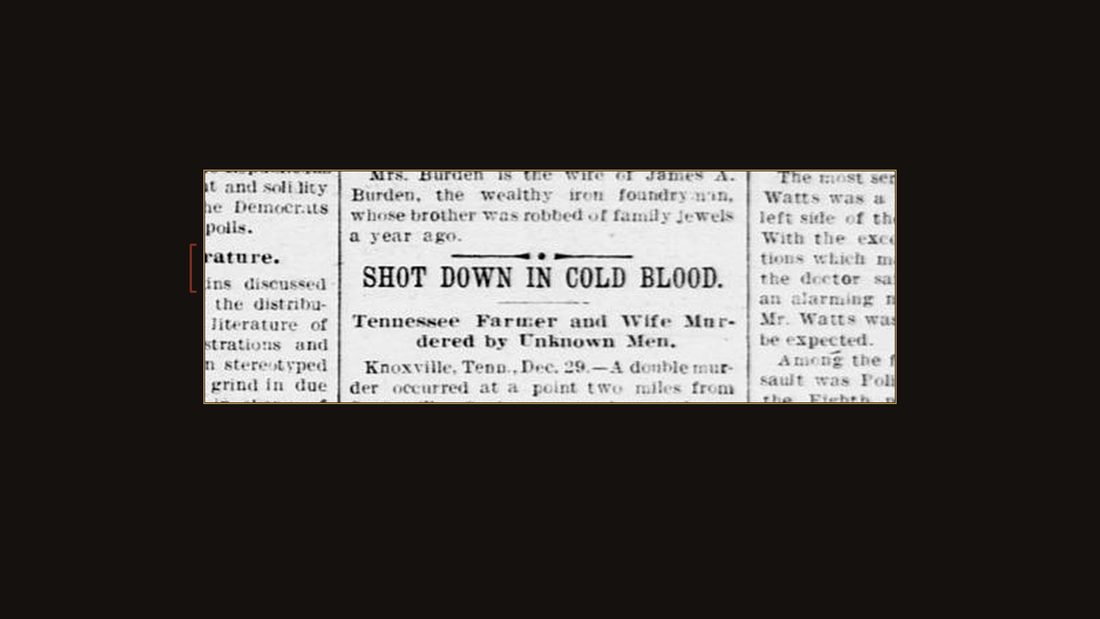
The first wire report reached Washington the next morning. Shot down in cold blood. Tennessee farmer and wife murdered by unknown men.
N16
Morning Times, Washington, Dec. 30, 1896, p. 1. View the original.
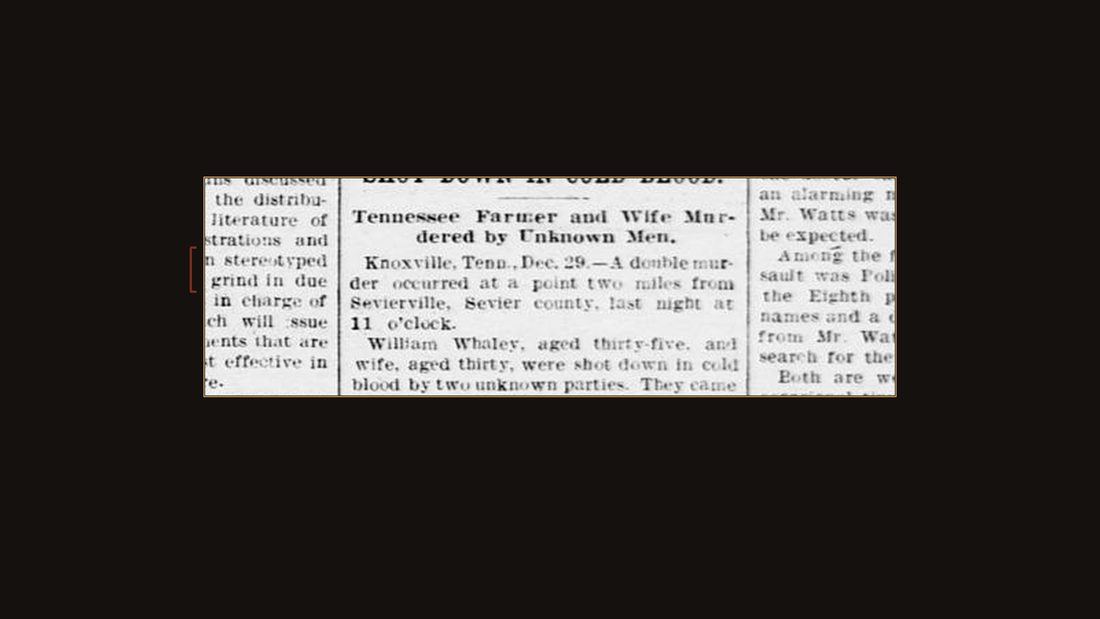
A double murder occurred at a point two miles from Se-VEER-ville, Se-VEER County, last night at eleven o'clock.
N17
Morning Times, Washington, Dec. 30, 1896, p. 1. View the original.
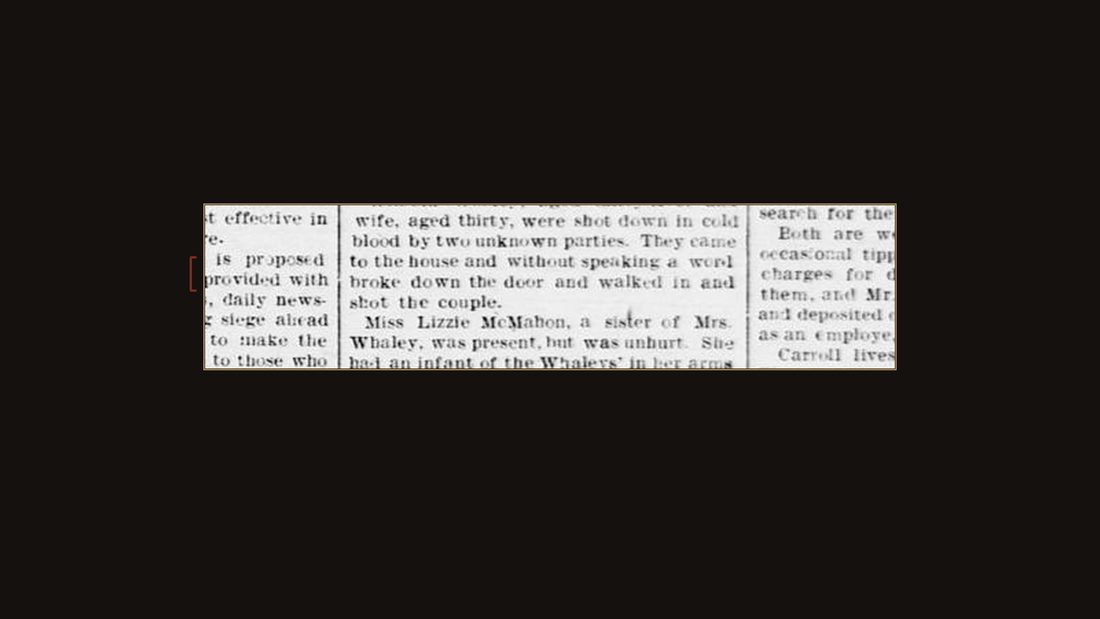
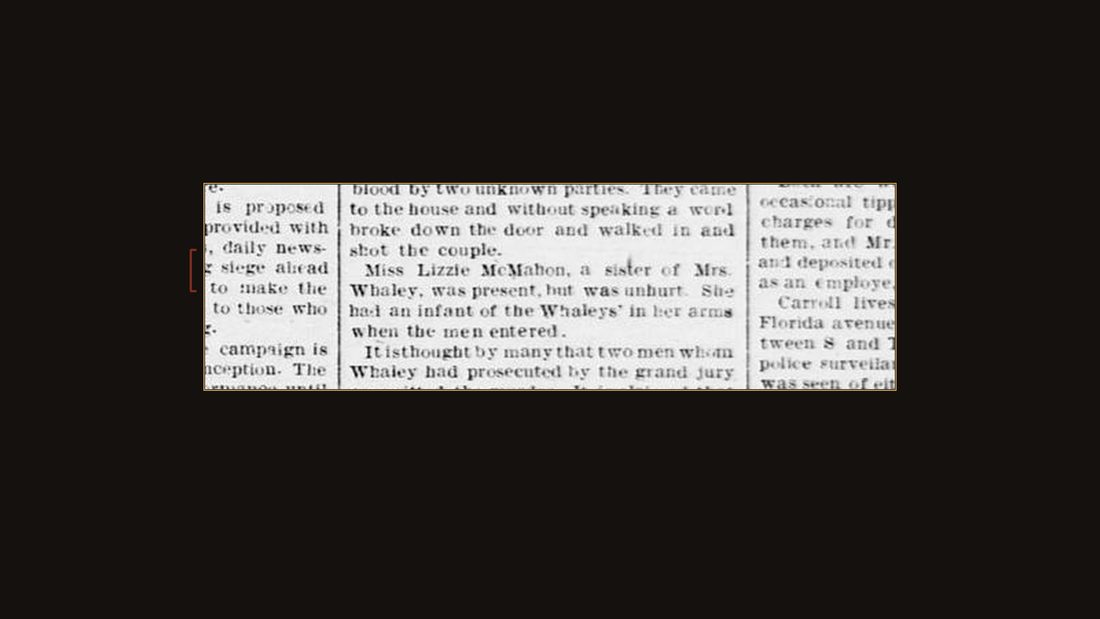
William Whaley and his wife were shot down in cold blood by two unknown parties. They came to the house and without speaking a word broke down the door and walked in and shot the couple.
N18
Morning Times, Washington, Dec. 30, 1896, p. 1. View the original.
There was a witness. A woman the report names as Miss Lizzie McMahon, a sister of Mrs. Whaley, was present, but was unhurt.
She had an infant of the Whaleys' in her arms when the men entered.
N19
Morning Times, Washington, Dec. 30, 1896, p. 1. View the original.
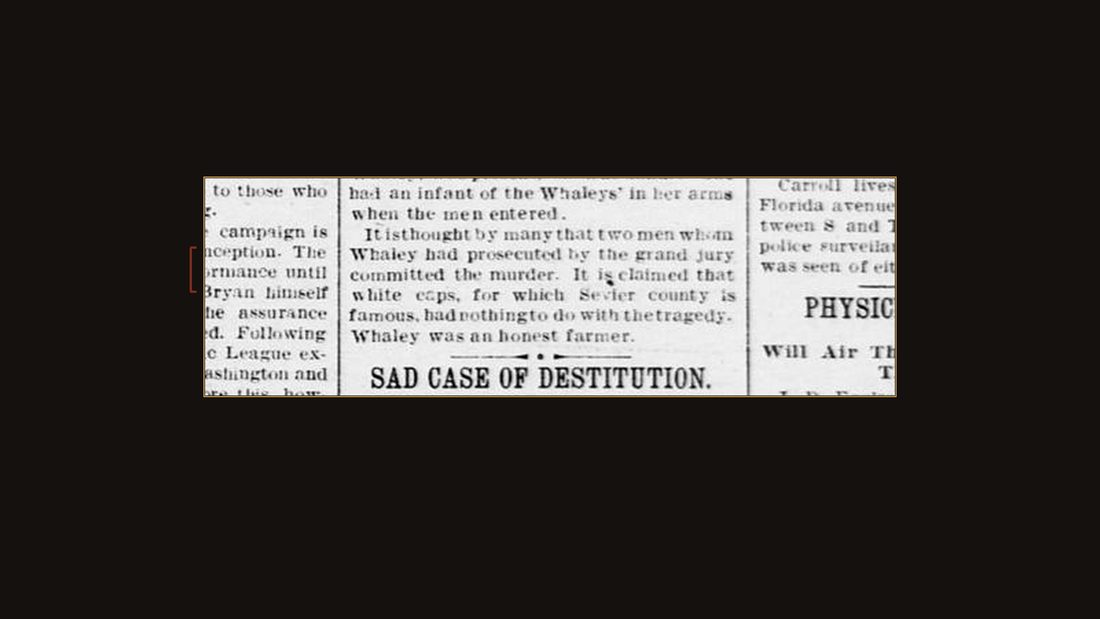
It is thought by many, the report says, that two men whom Whaley had prosecuted by the grand jury committed the murder.
And then: It is claimed that white caps, for which Se-VEER County is famous, had nothing to do with the tragedy. Whaley was an honest farmer.
Why
N31
New-York Tribune, July 4, 1899, p. 1. View the original.
They were. Both men who did it confessed, and both of them said the same thing about why.
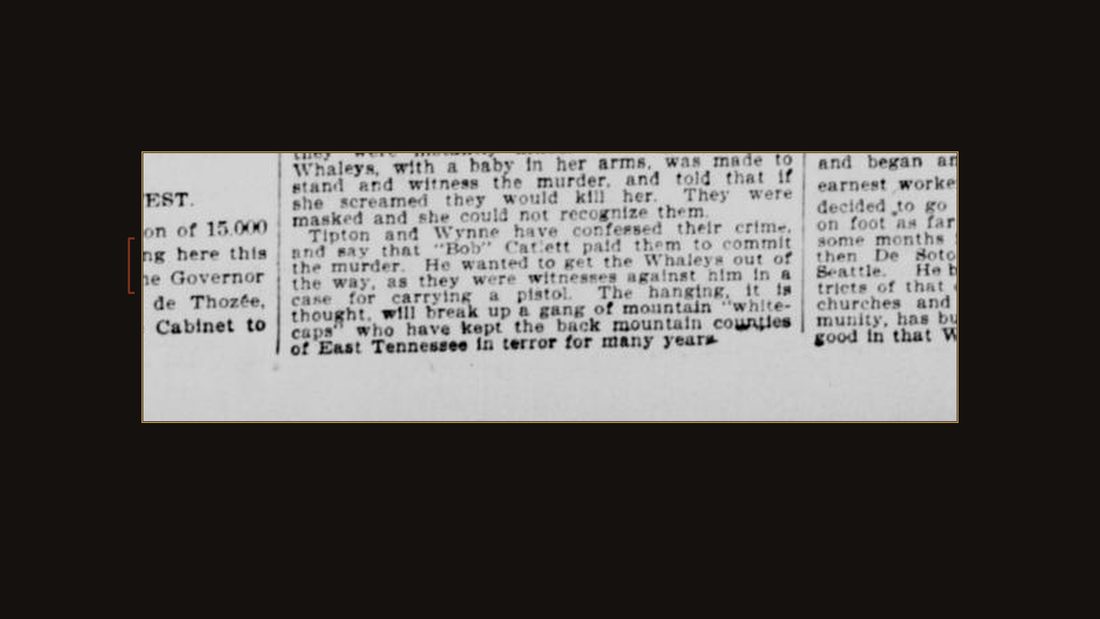
The Whaleys were witnesses. There was a case pending against a man named Bob Catlett. The charge in that case was carrying a pistol.
Two people were shot dead in their own house, in front of a woman holding their baby, to break a witness list in a concealed weapons case.
N50
News & Observer, Raleigh, Nov. 9, 1901, p. 1. View the original.

Catlett was not a drifter. He was, as several papers put it over the following years, one of the wealthiest men in Se-VEER County.
What does not line up
Before we go on: several things in this record do not line up, and this channel does not paper over that.
N29
New-York Tribune, July 4, 1899, p. 1. View the original.
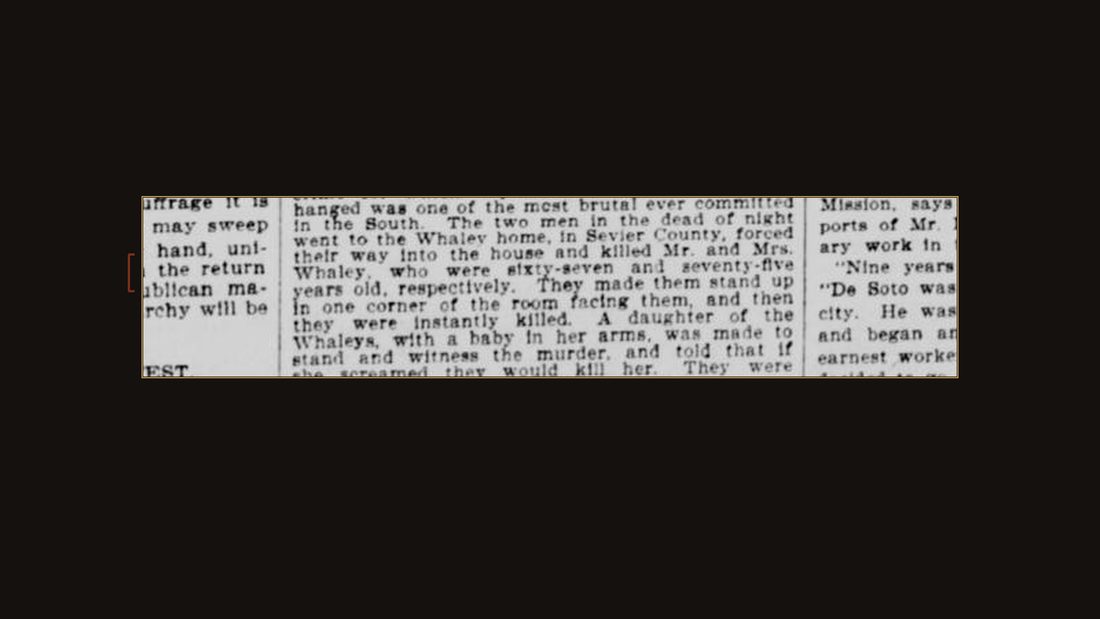
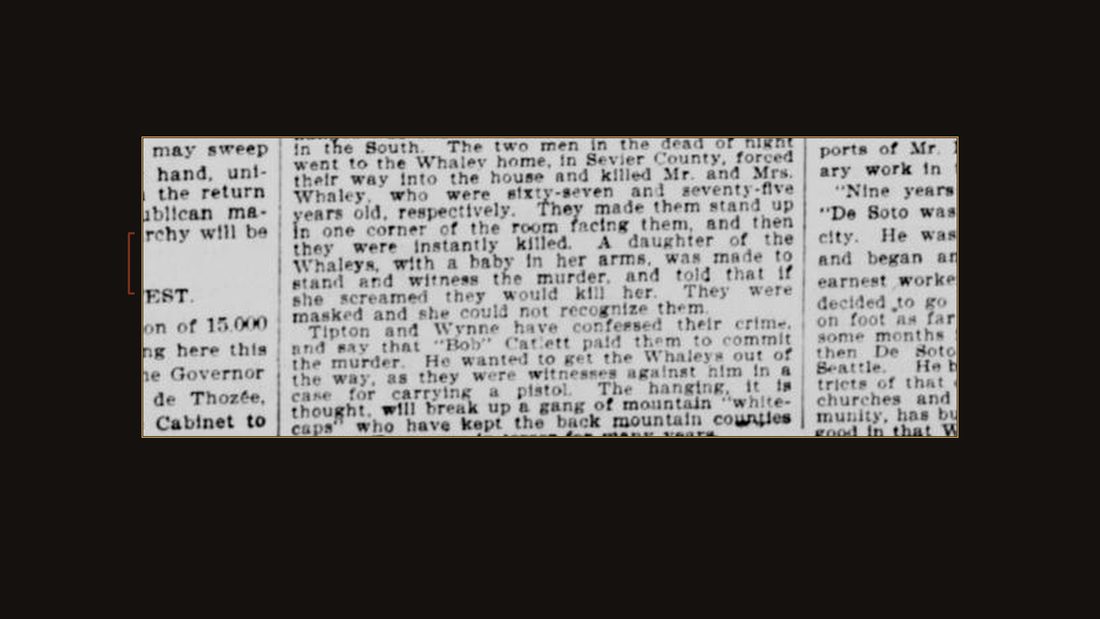
The first report says William Whaley was thirty-five and his wife thirty. Two and a half years later the New-York Tribune called them sixty-seven and seventy-five.
N30
New-York Tribune, July 4, 1899, p. 1. View the original.
The first report says the witness was Lizzie McMahon, the wife's sister. The Tribune says it was a daughter of the Whaleys. Both agree she was holding a baby.
N34
Maryville Times, July 8, 1899, p. 1. View the original.
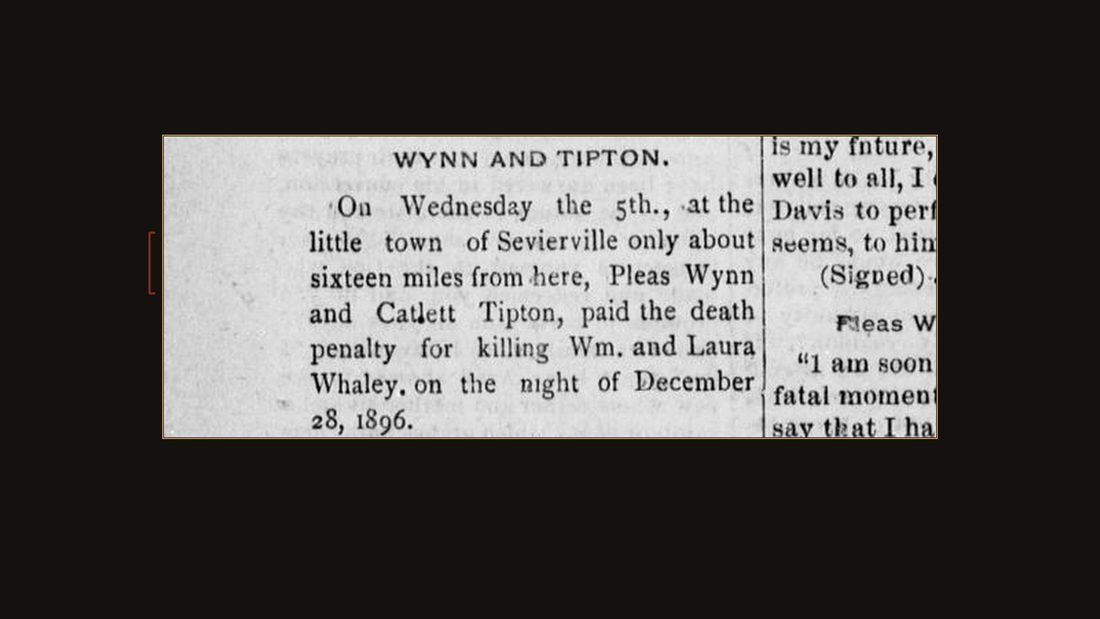
The wire services also placed the murder in eighteen ninety-seven, and later in January eighteen ninety-six. The Maryville Times, sixteen miles from the house, gives the night of December twenty-eighth, eighteen ninety-six. That is the date this episode uses.
The county comes apart
What happened in the county over the next eighteen months is the part that usually gets left out.
N24
The Comet, Johnson City, Dec. 2, 1897, p. 1. View the original.

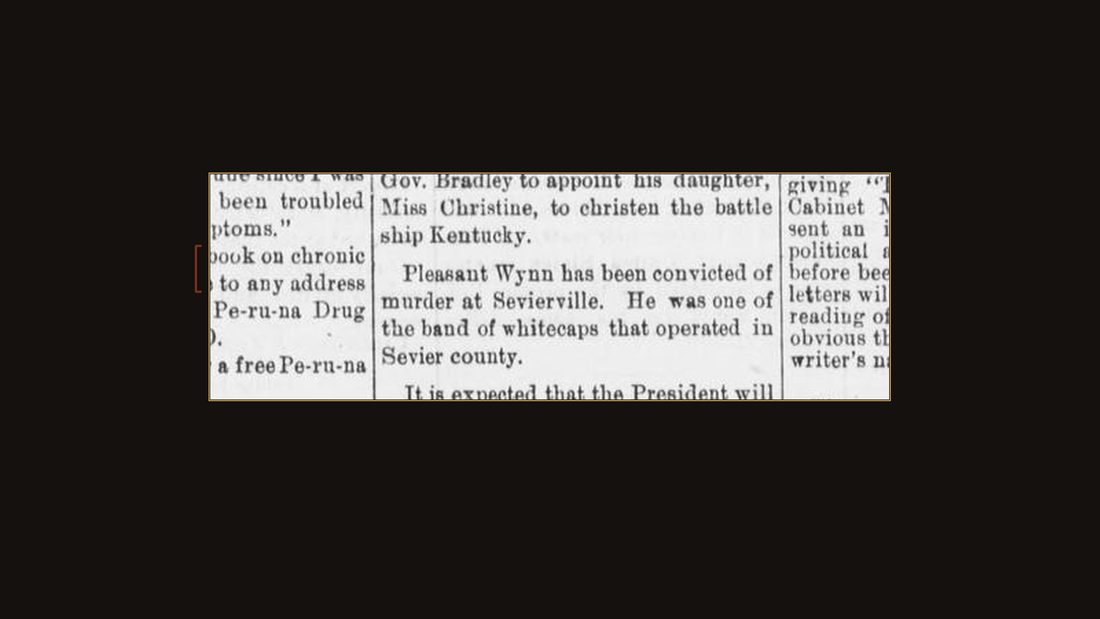
Arrests came. So did trials. In December eighteen ninety-seven a Tennessee paper reported that Pleasant Wynn had been convicted of murder at Se-VEER-ville, and that he belonged to the band of whitecaps that operated in Se-VEER County.
A state of siege
N22
Savannah Morning News, Apr. 7, 1898, p. 5. View the original.

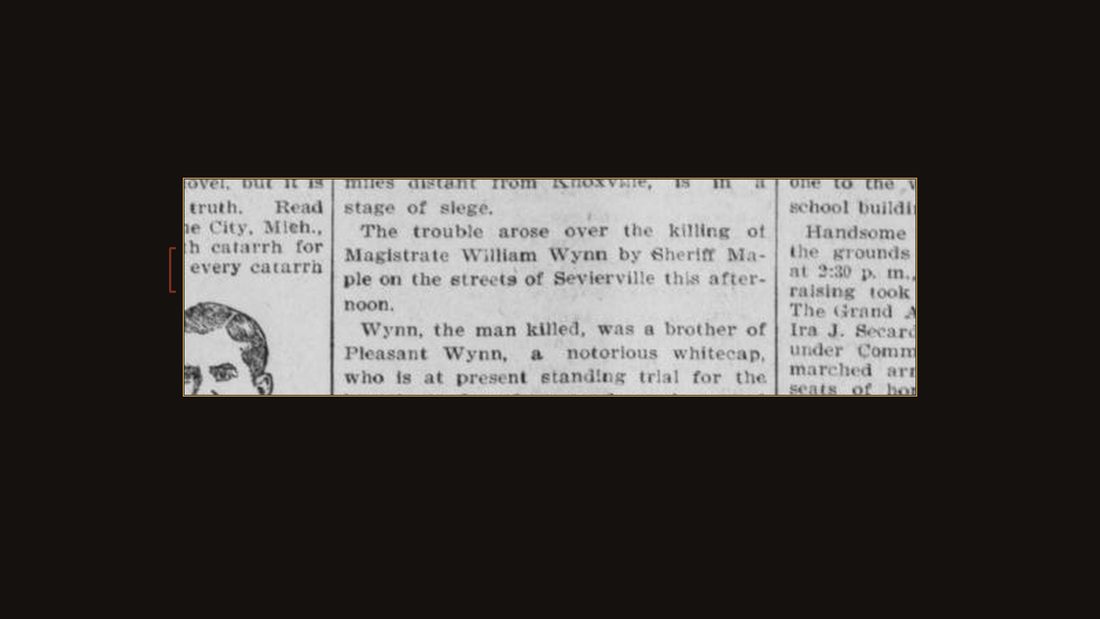
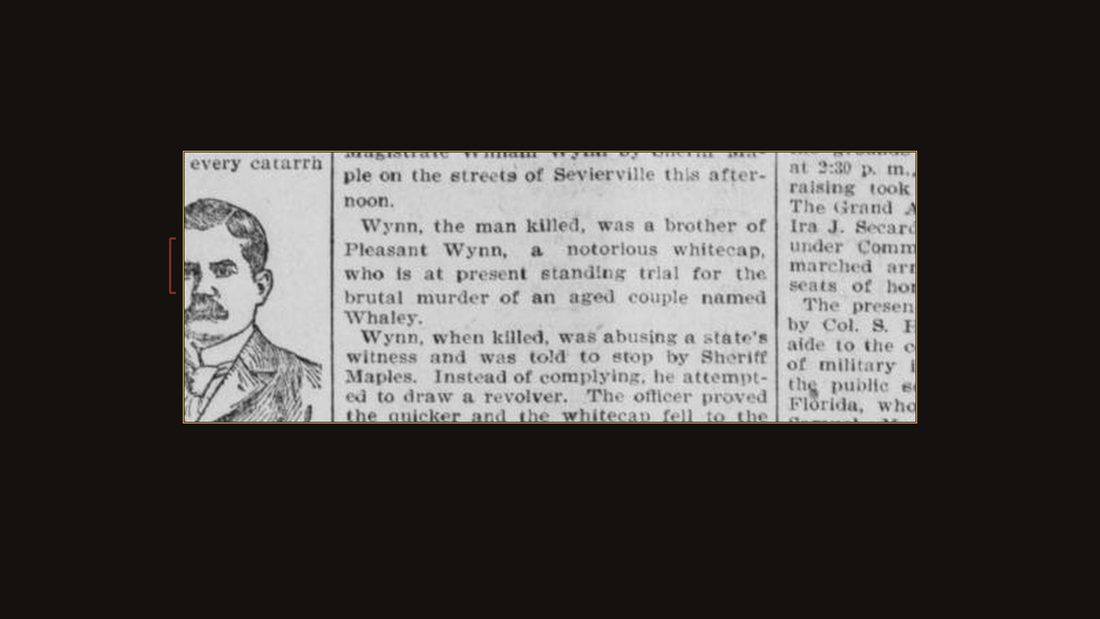
On the afternoon of April sixth, eighteen ninety-eight, while that second trial was going on, the sheriff of Se-VEER County shot a county magistrate dead on the main street of Se-VEER-ville.
N23
Savannah Morning News, Apr. 7, 1898, p. 5. View the original.
The magistrate's name was William Wynn. He was the brother of Pleasant Wynn, the man on trial for the Whaley murders.
According to the wire report, Wynn was abusing a state's witness. Sheriff Maples told him to stop. Instead of complying, Wynn attempted to draw a pistol.
N20
Savannah Morning News, Apr. 7, 1898, p. 5. View the original.
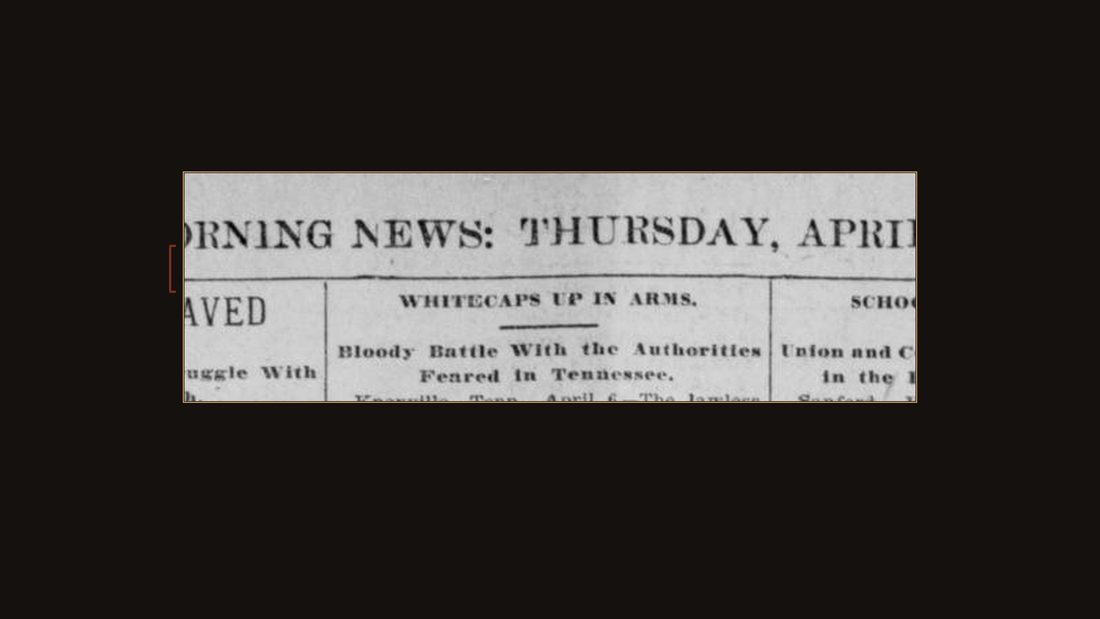
The next morning's headline read: Whitecaps up in arms. Bloody battle with the authorities feared in Tennessee.
N21
Savannah Morning News, Apr. 7, 1898, p. 5. View the original.
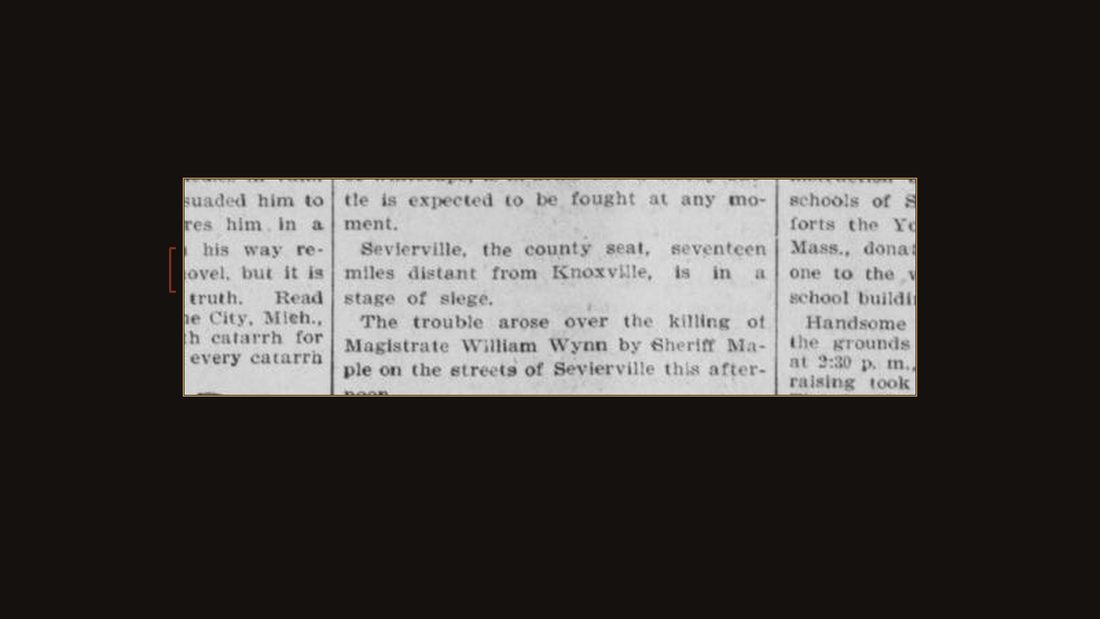
The lawless element of Se-VEER County, the report said, which for several years has organized itself into a band of whitecaps, is in arms, and a bloody battle is expected to be fought at any moment.
Se-VEER-ville, the county seat, seventeen miles distant from Knoxville, is in a state of siege.
The man who paid
N25
Maryville Times, Feb. 11, 1899, p. 1. View the original.

By February eighteen ninety-nine the state had two convicted men and was going after the third.
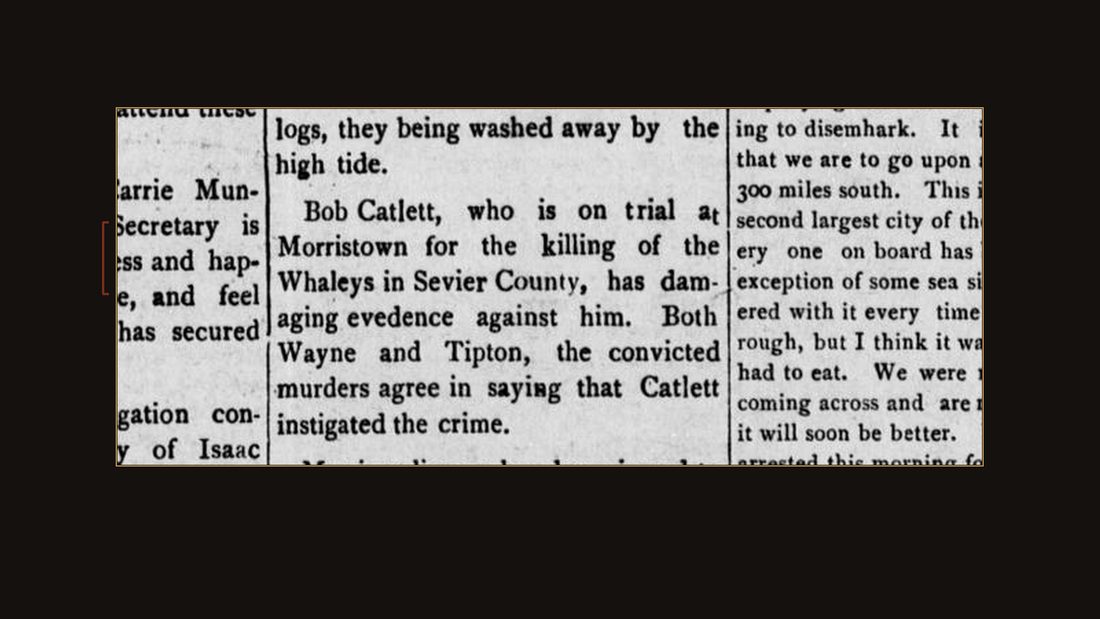
Bob Catlett went on trial for the killing of the Whaleys — not in Se-VEER County, but in Morristown, sixty miles away, because a Se-VEER County jury was not something the state was willing to try.
The Maryville Times reported that both Wynn and Tipton, the convicted murderers, agreed in saying that Catlett instigated the crime.
In April eighteen ninety-nine, Bob Catlett was turned loose.
July 5, 1899
N26
New-York Tribune, July 4, 1899, p. 1. View the original.
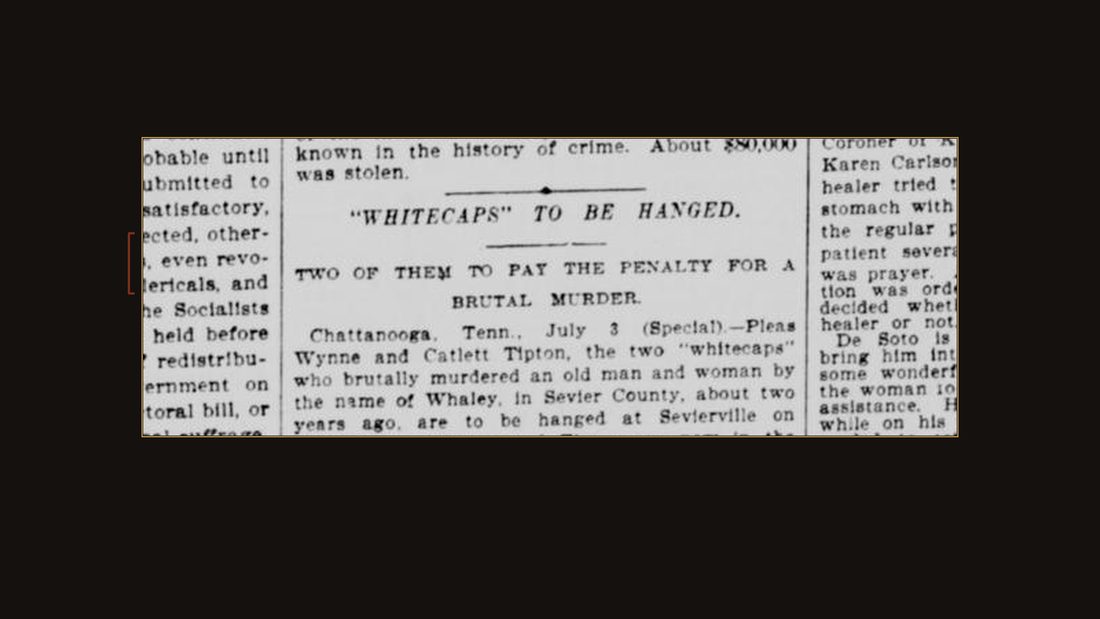
Three months later the state of Tennessee hanged the two men who had named him.
On the third of July the New-York Tribune carried it on the front page. Whitecaps to be hanged. Two of them to pay the penalty for a brutal murder.
N27
New-York Tribune, July 4, 1899, p. 1. View the original.
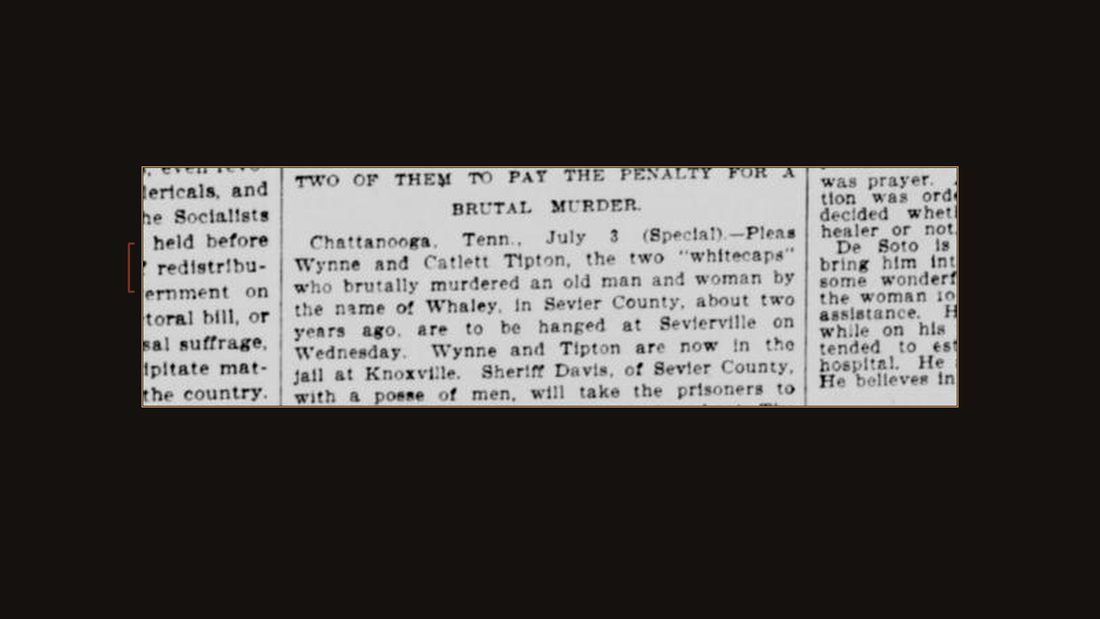
Pleas Wynn, and Catlett Tipton, the two whitecaps who brutally murdered an old man and woman by the name of Whaley, in Se-VEER County, about two years ago, are to be hanged at Se-VEER-ville on Wednesday.
N28
New-York Tribune, July 4, 1899, p. 1. View the original.
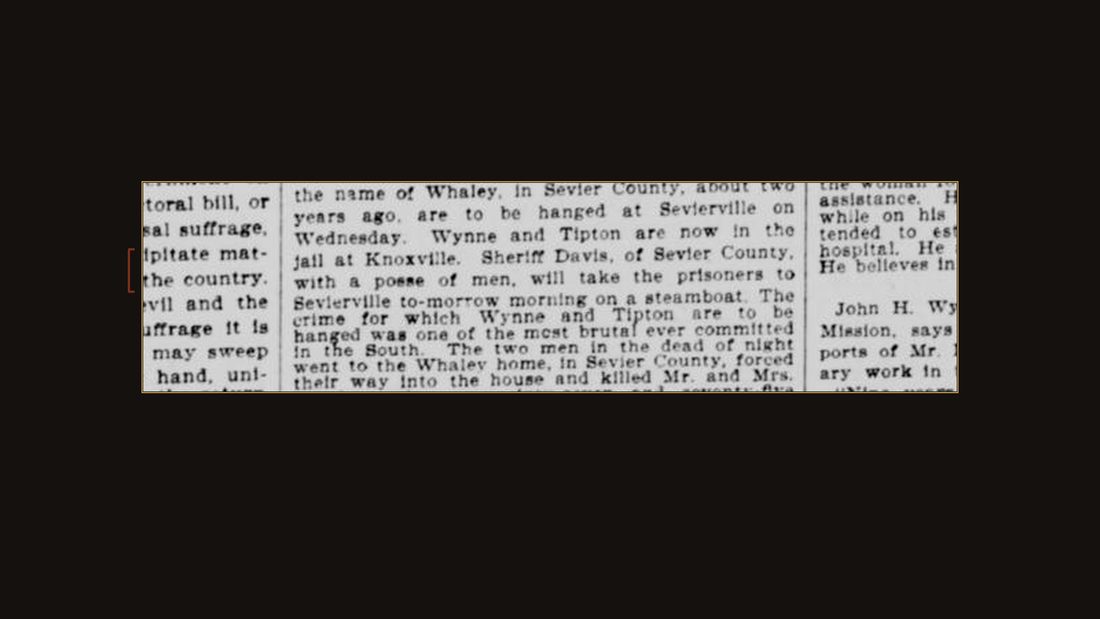
The two men were being held in the jail at Knoxville. The sheriff of the county, a man named Davis, took them upriver by steamboat, with a posse.
N30
New-York Tribune, July 4, 1899, p. 1. View the original.
The Tribune's account of the murder itself adds a detail the first report did not have. The two men made the Whaleys stand up in one corner of the room facing them, and then they were instantly killed.
The woman with the baby was made to stand and witness the murder, and told that if she screamed they would kill her. They were masked and she could not recognize them.
N32
New-York Tribune, July 4, 1899, p. 1. View the original.
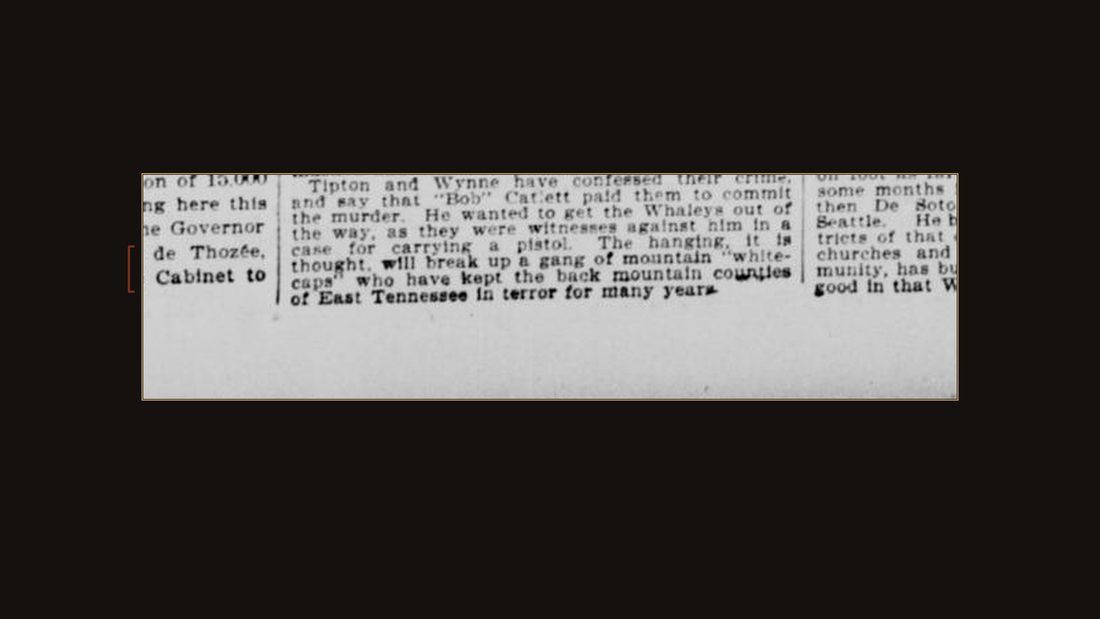
The Tribune's reporter closed on what the state thought it was buying. The hanging, it is thought, will break up a gang of mountain whitecaps who have kept the back mountain counties of East Tennessee in terror for many years.
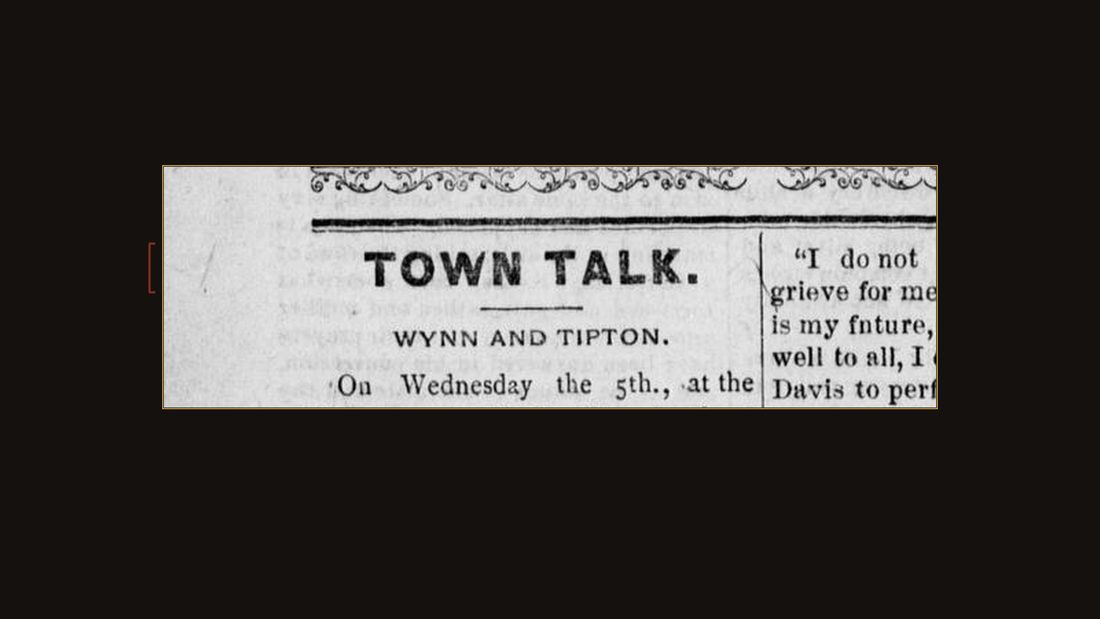
N33
Maryville Times, July 8, 1899, p. 1. View the original.
The hanging drew a crowd. The Maryville Times, sixteen miles away, printed both men's final written statements in full the following Saturday.
N34
Maryville Times, July 8, 1899, p. 1. View the original.
Wynn and Tipton, it wrote, paid the death penalty for killing William and Laura Whaley, on the night of December twenty-eighth, eighteen ninety-six.
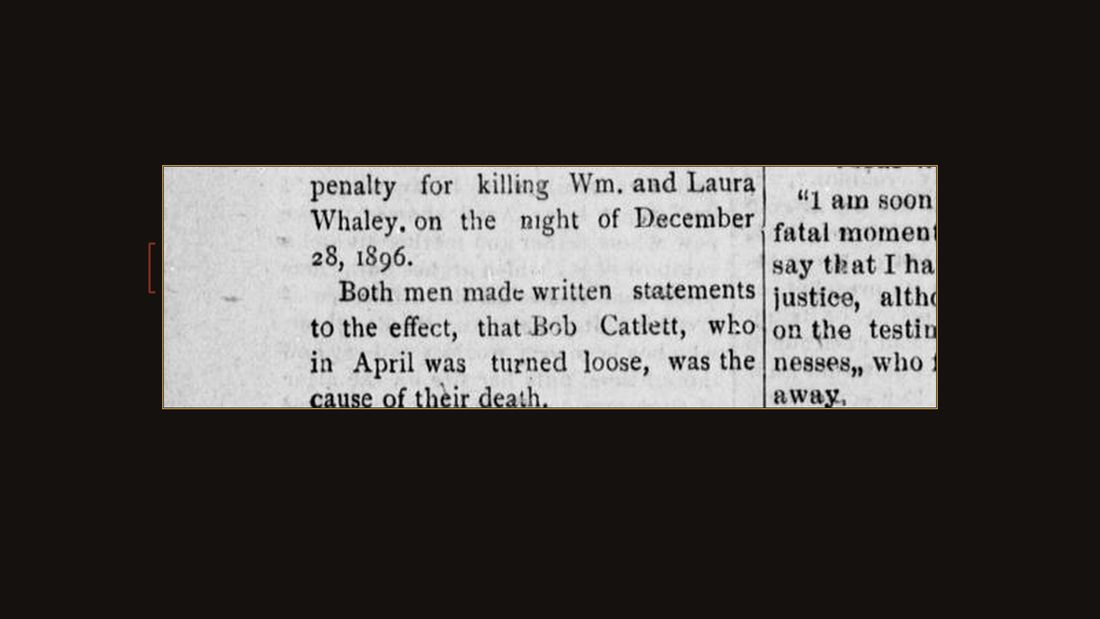
N35
Maryville Times, July 8, 1899, p. 1. View the original.
Both men made written statements to the effect that Bob Catlett, who in April was turned loose, was the cause of their death.
The statements
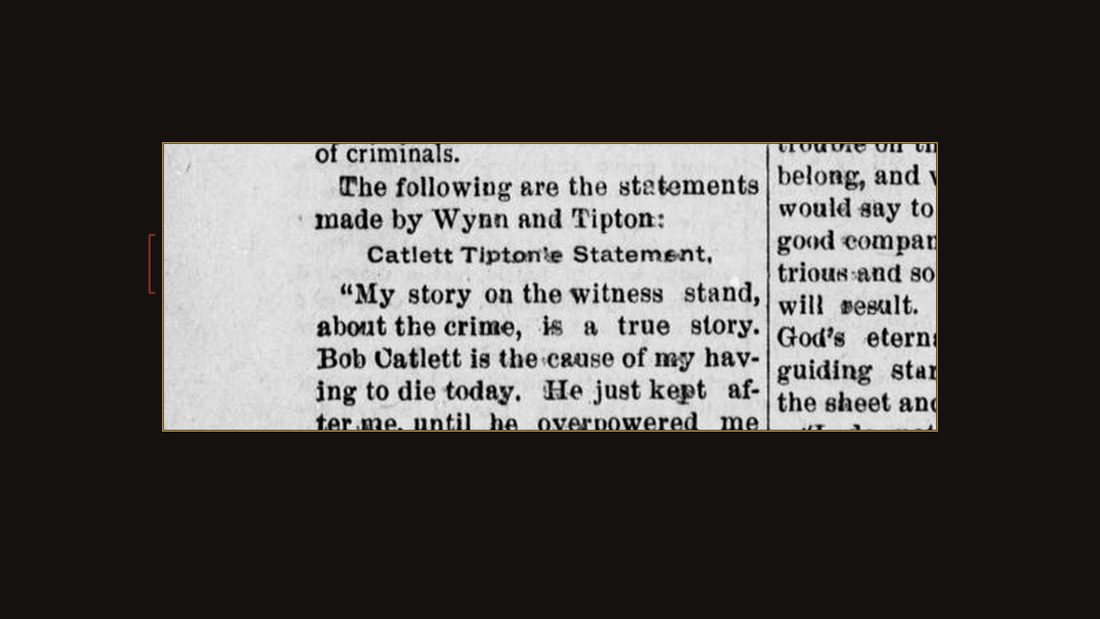
N38
Maryville Times, July 8, 1899, p. 1. View the original.
Catlett Tipton's statement begins: My story on the witness stand, about the crime, is a true story. Bob Catlett is the cause of my having to die today. He just kept after me, until he overpowered me.
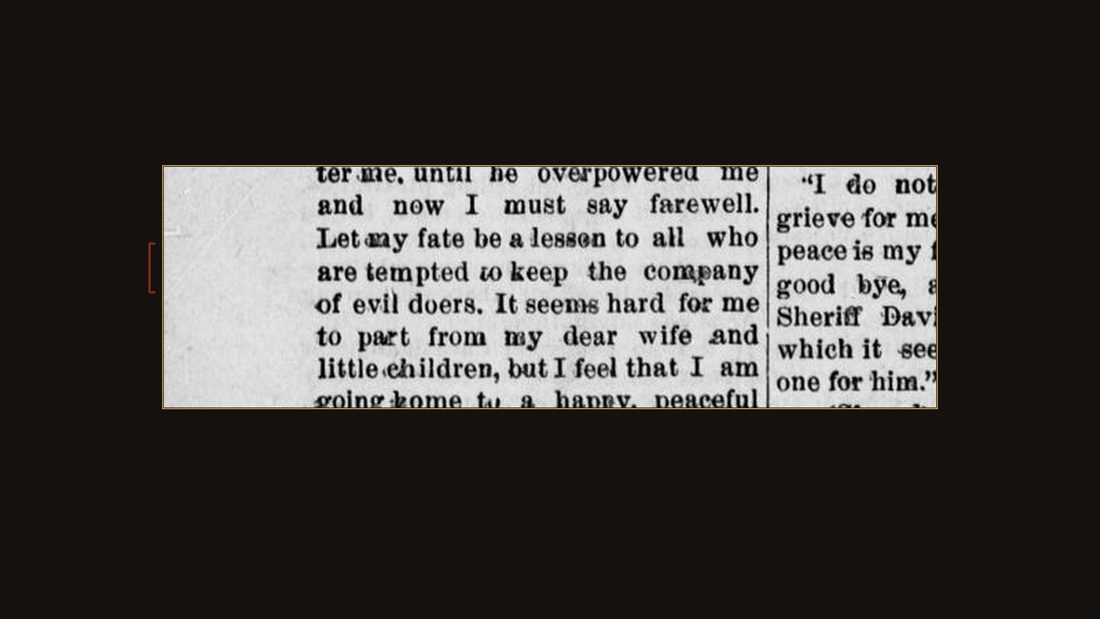
N39
Maryville Times, July 8, 1899, p. 1. View the original.
Let my fate be a lesson to all who are tempted to keep the company of evil doers. It seems hard for me to part from my dear wife and little children.
N40
Maryville Times, July 8, 1899, p. 1. View the original.
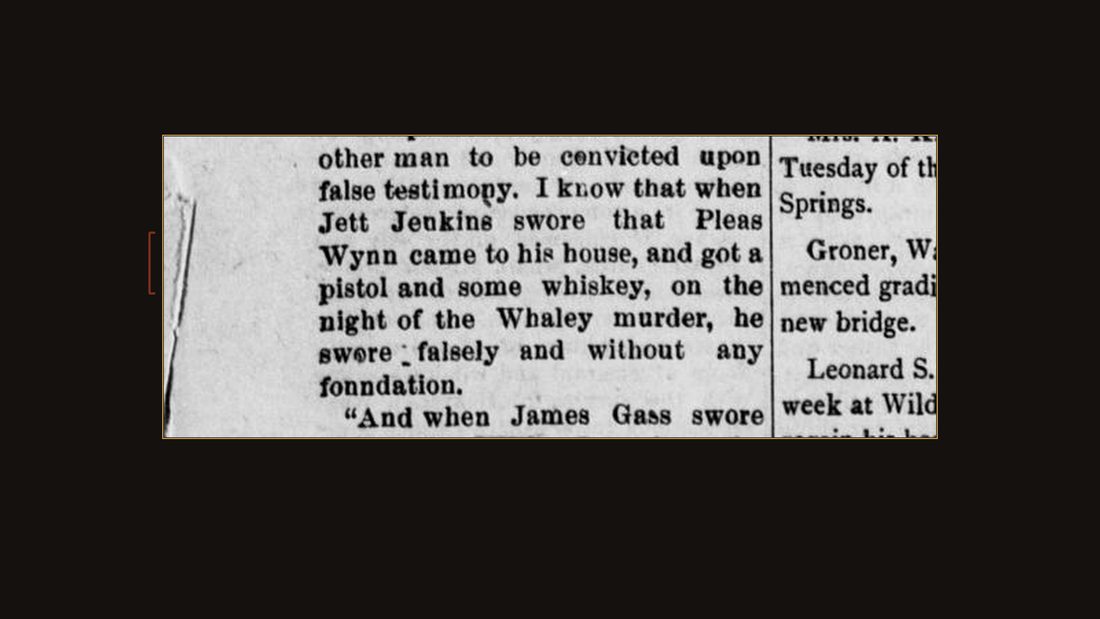
He then went at the trial itself. When Jett Jenkins swore that Pleas Wynn came to his house and got a pistol and some whiskey on the night of the Whaley murder, Tipton said, he swore falsely and without any foundation.
N41
Maryville Times, July 8, 1899, p. 1. View the original.
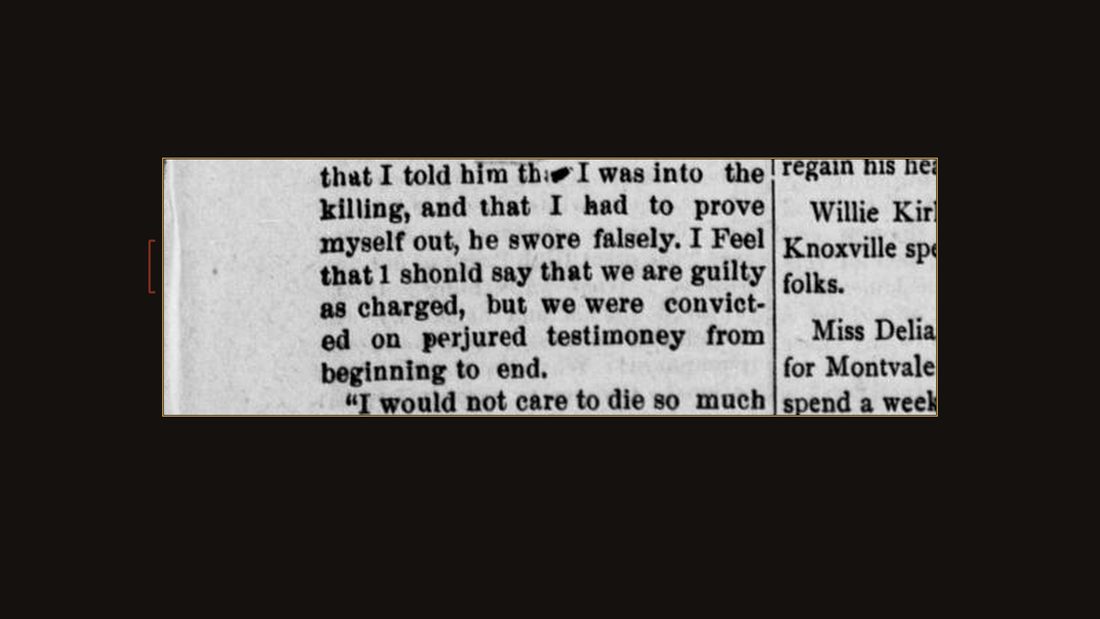
And then the line that a jury cannot do anything with, and that a viewer can. I feel that I should say that we are guilty as charged, but we were convicted on perjured testimony from beginning to end.
Guilty, and convicted on false evidence. Both at once. That is a harder thing to say from a scaffold than a simple denial would have been.
N42
Maryville Times, July 8, 1899, p. 1. View the original.
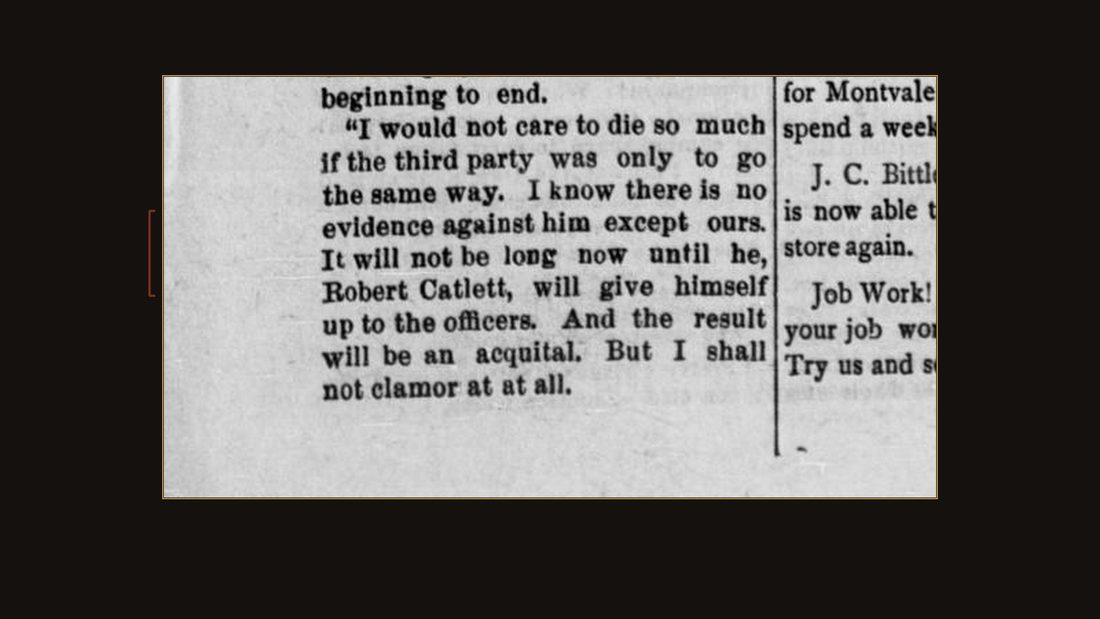
Then the prediction.
I would not care to die so much if the third party was only to go the same way. I know there is no evidence against him except ours.
It will not be long now until he, Robert Catlett, will give himself up to the officers. And the result will be an acquittal. But I shall not clamor at all.
N47
Maryville Times, July 8, 1899, p. 1. View the original.
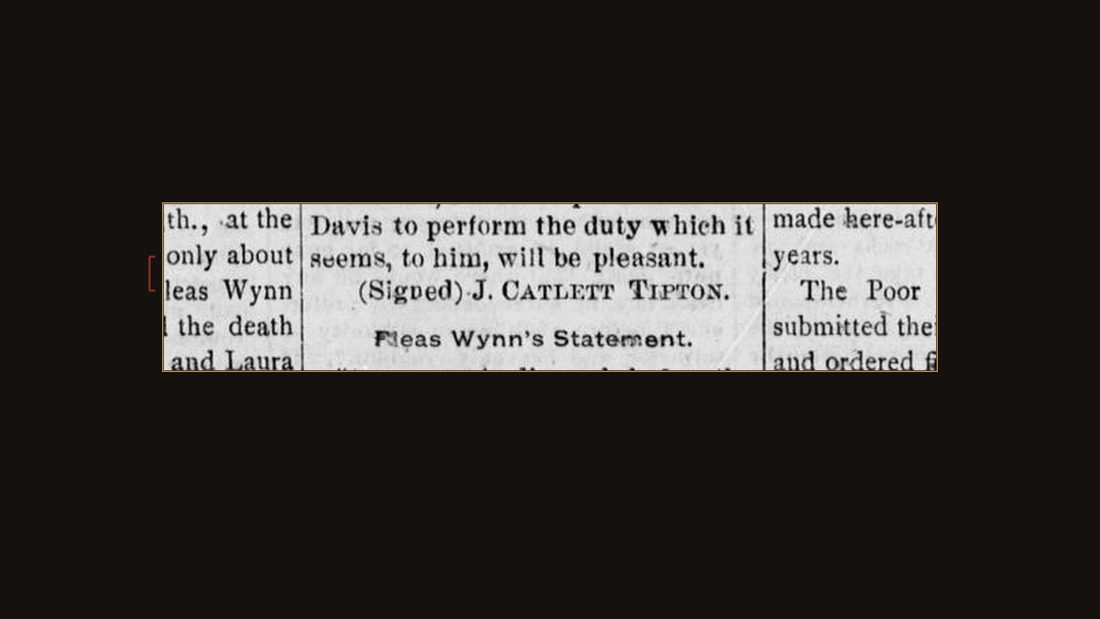
Signed, J. Catlett Tipton.
N43
Maryville Times, July 8, 1899, p. 1. View the original.
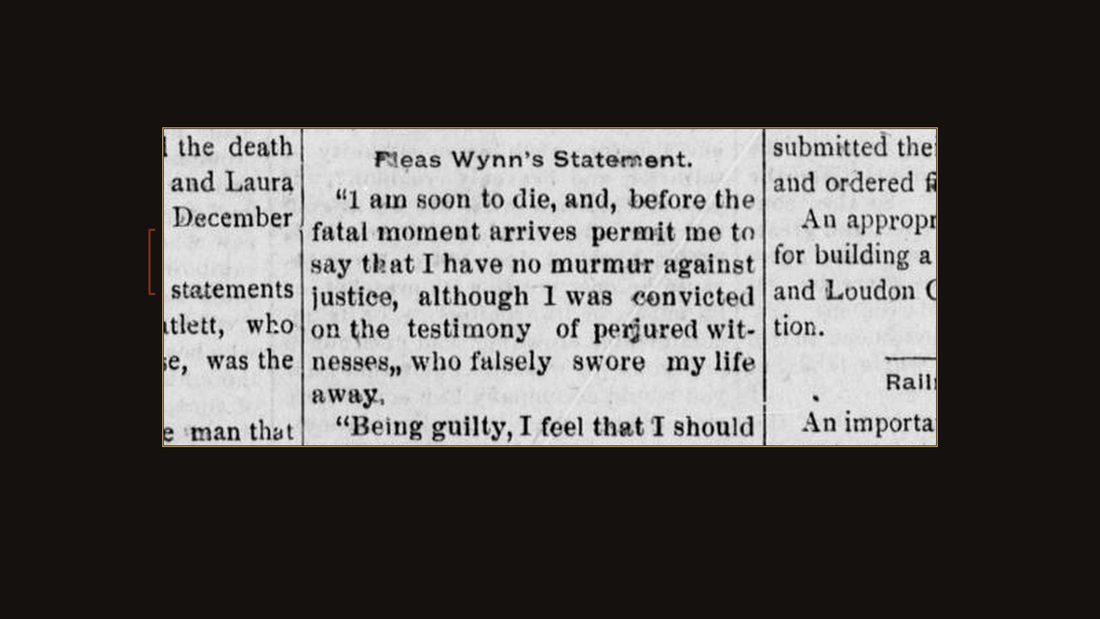
Pleas Wynn's statement, printed in the next column, opens the same way and lands harder.
I am soon to die, and, before the fatal moment arrives, permit me to say that I have no murmur against justice, although I was convicted on the testimony of perjured witnesses, who falsely swore my life away.
N44
Maryville Times, July 8, 1899, p. 1. View the original.
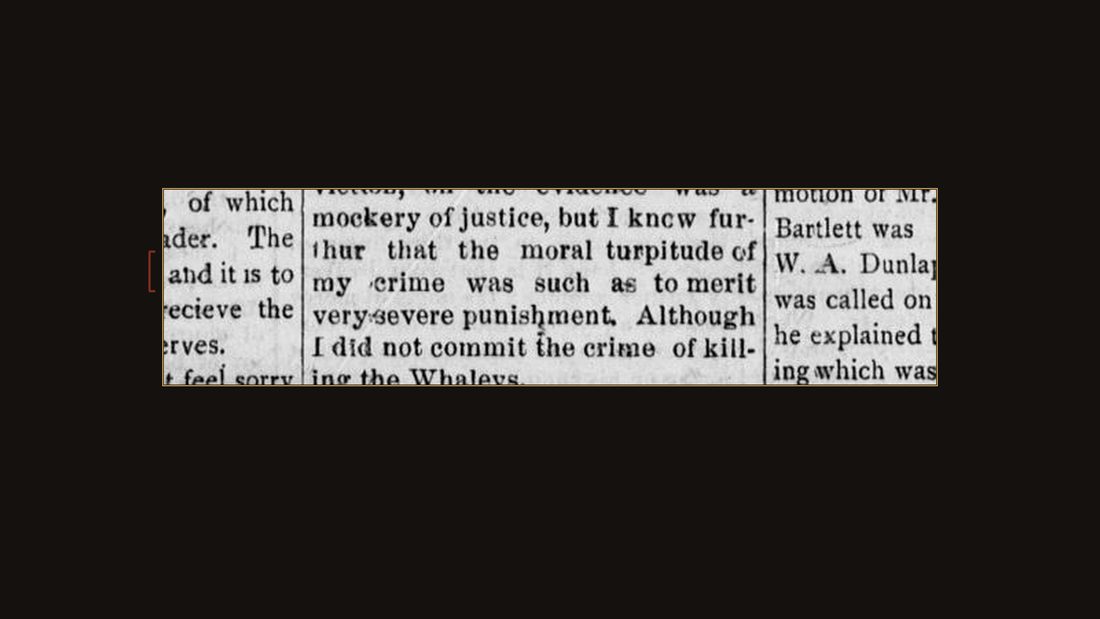
I know that my conviction, on the evidence, was a mockery of justice, but I know further that the moral turpitude of my crime was such as to merit very severe punishment. Although I did not commit the crime of killing the Whaleys.
N45
Maryville Times, July 8, 1899, p. 1. View the original.
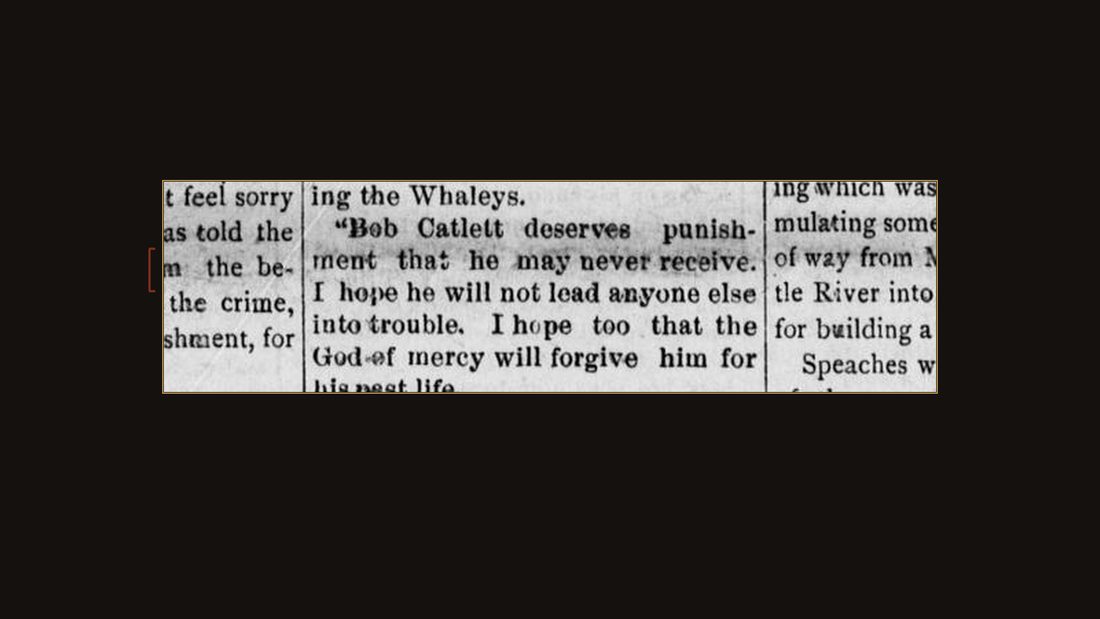
And then, of the man who paid: Bob Catlett deserves punishment that he may never receive. I hope he will not lead anyone else into trouble.
N46
Maryville Times, July 8, 1899, p. 1. View the original.
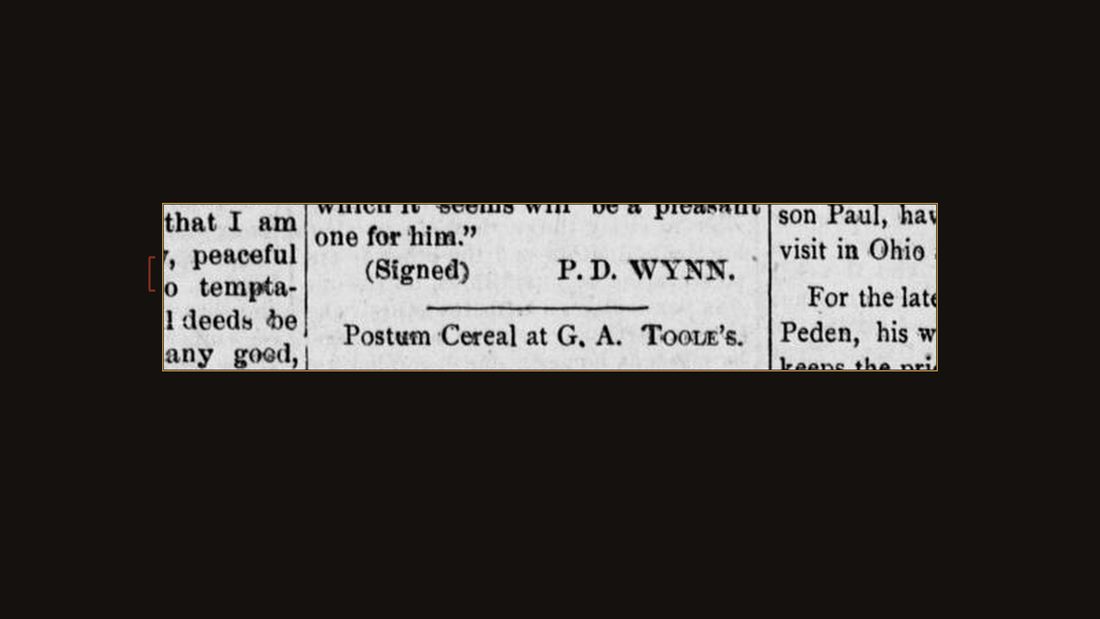
It was signed P. D. Wynn.
N37
Maryville Times, July 8, 1899, p. 1. View the original.
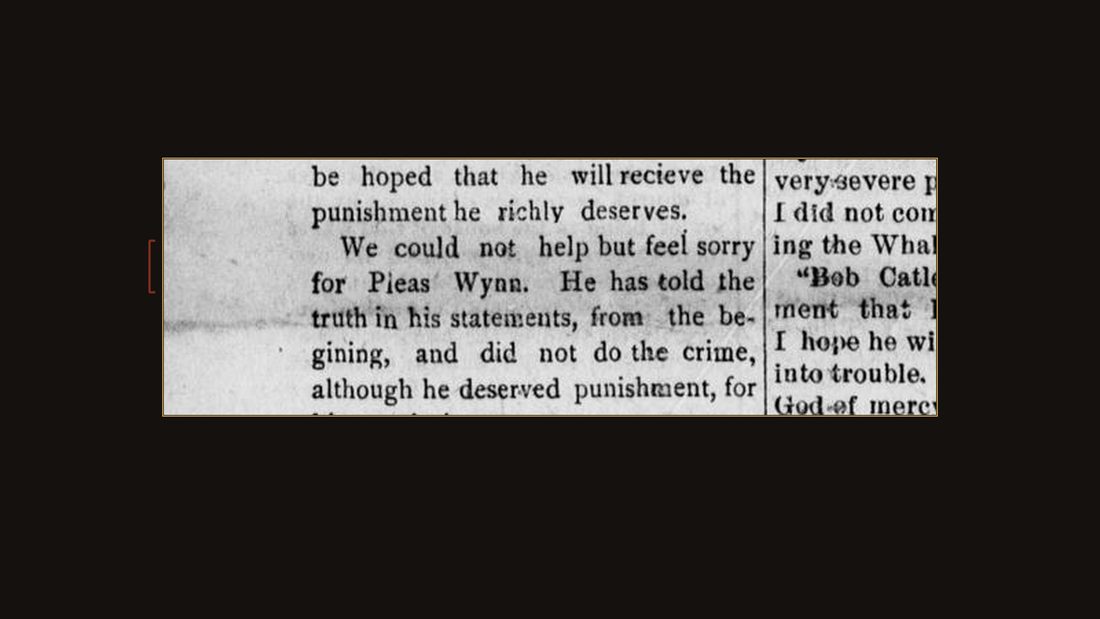
The Maryville Times, a paper with no reason to defend either man, printed its own verdict directly above the statements. We could not help but feel sorry for Pleas Wynn. He has told the truth in his statements, from the beginning, and did not do the crime, although he deserved punishment for his part in it.
N36
Maryville Times, July 8, 1899, p. 1. View the original.
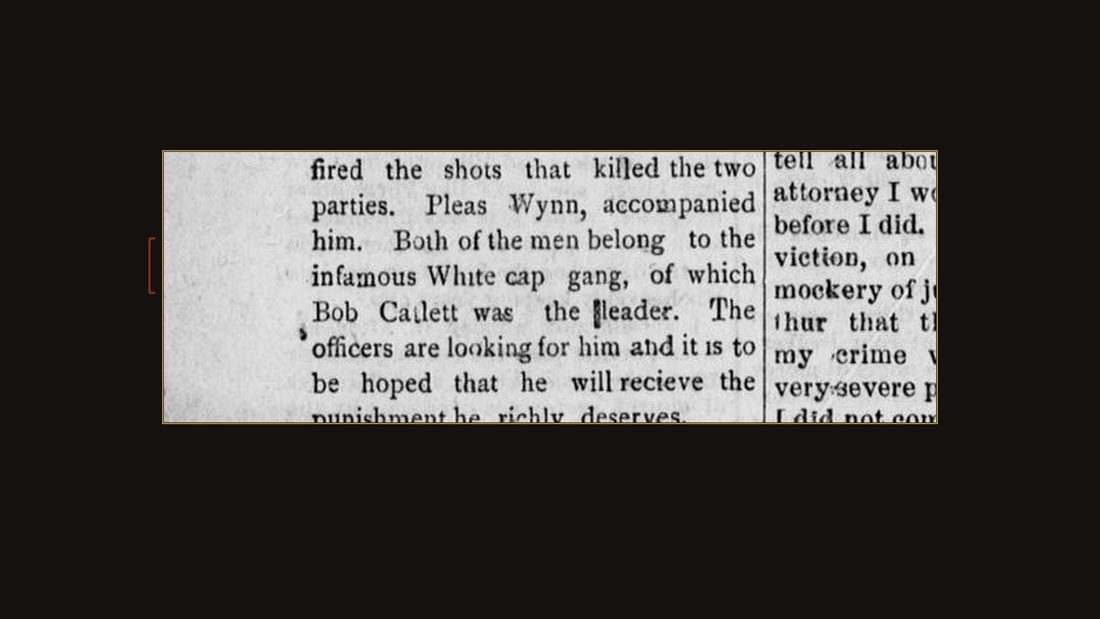
The same paper noted that Bob Catlett was the leader of the gang, that the officers were looking for him, and that it was to be hoped he would receive the punishment he richly deserves.
The prediction
N48
News & Observer, Raleigh, Nov. 9, 1901, p. 1. View the original.
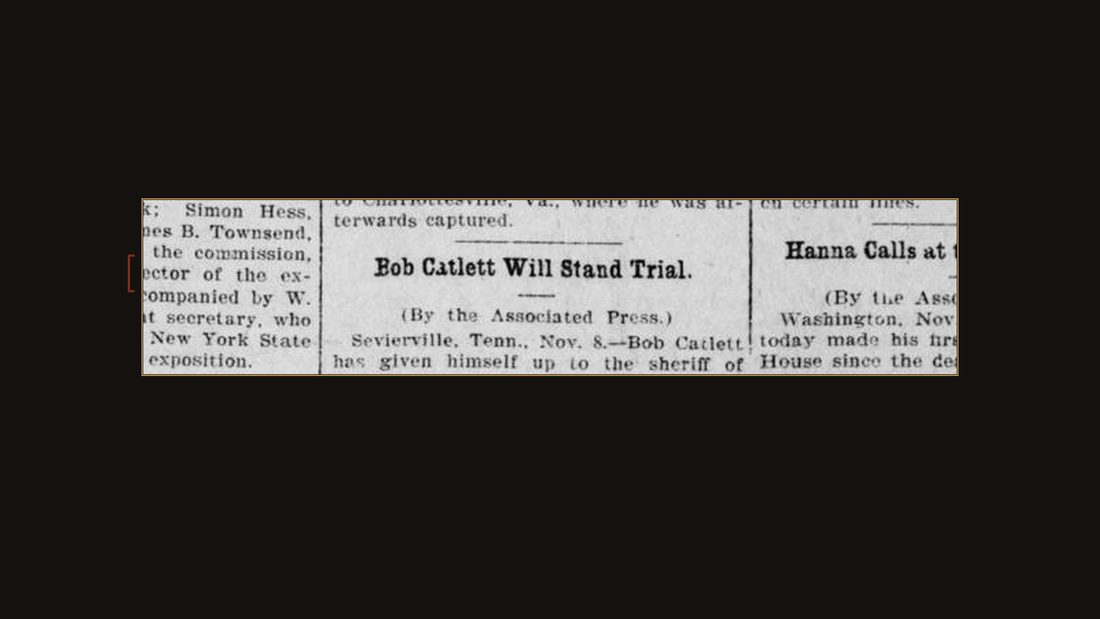
Two years and four months later, on the eighth of November nineteen oh one, Bob Catlett walked into the sheriff's office in Se-VEER-ville and gave himself up.
N49
News & Observer, Raleigh, Nov. 9, 1901, p. 1. View the original.
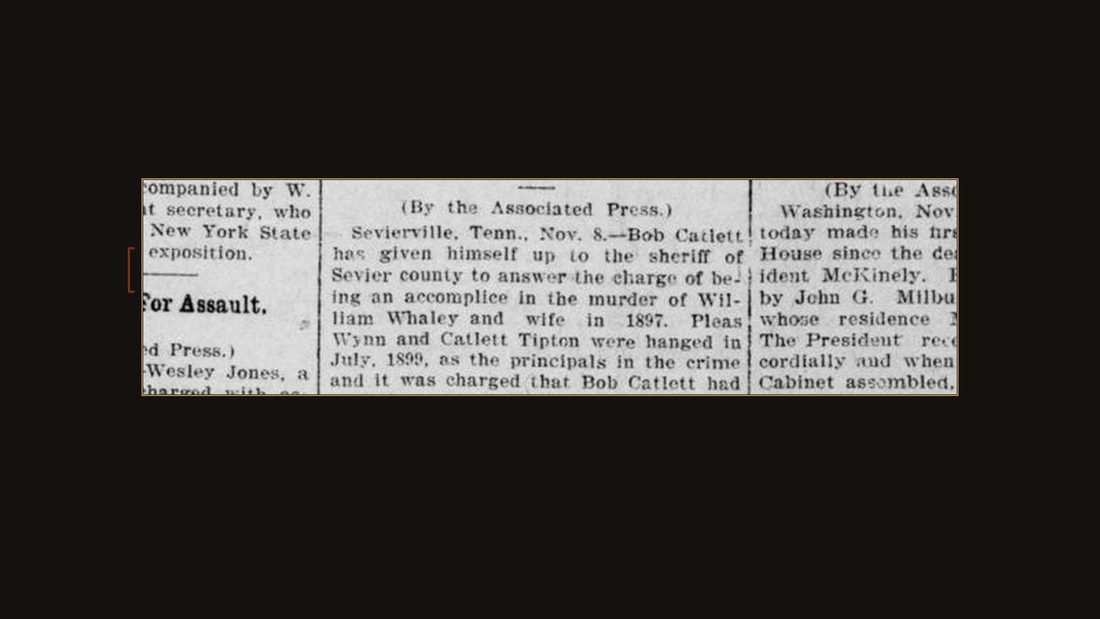
The Associated Press moved it that night. Bob Catlett has given himself up to the sheriff of Se-VEER County to answer the charge of being an accomplice in the murder of William Whaley and wife.
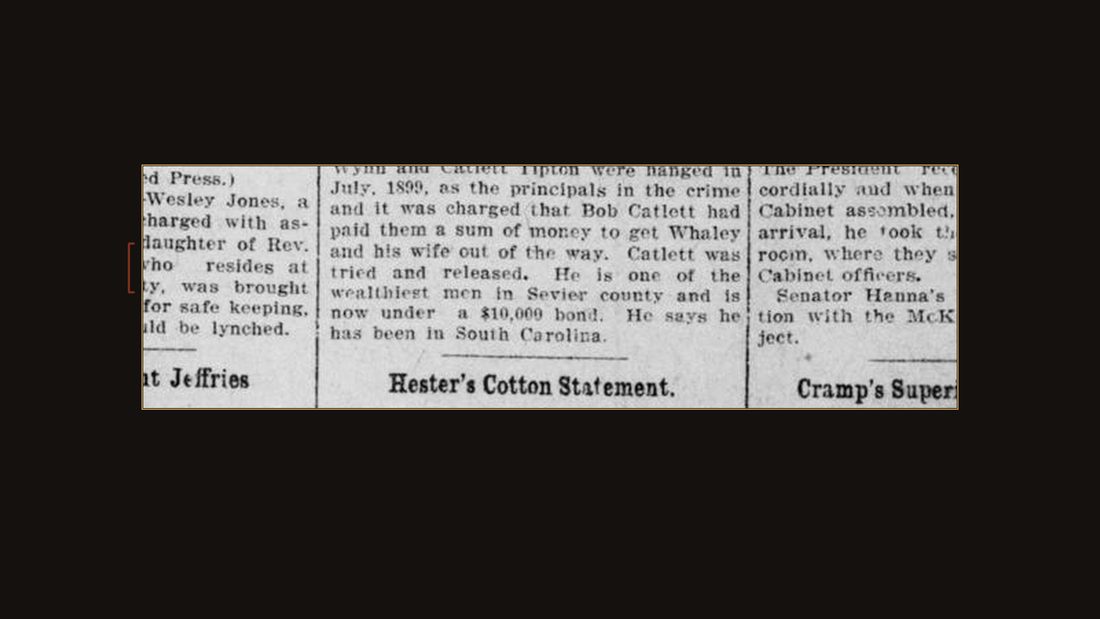
Pleas Wynn and Catlett Tipton were hanged in July eighteen ninety-nine as the principals in the crime, and it was charged that Bob Catlett paid them a sum of money to get Whaley and his wife out of the way.
N50
News & Observer, Raleigh, Nov. 9, 1901, p. 1. View the original.
Catlett was tried and released. He is one of the wealthiest men in Se-VEER County, and is now under a ten thousand dollar bond. He says he has been in South Carolina.
N52
Atlanta Constitution, Nov. 2, 1903, p. 10. View the original.

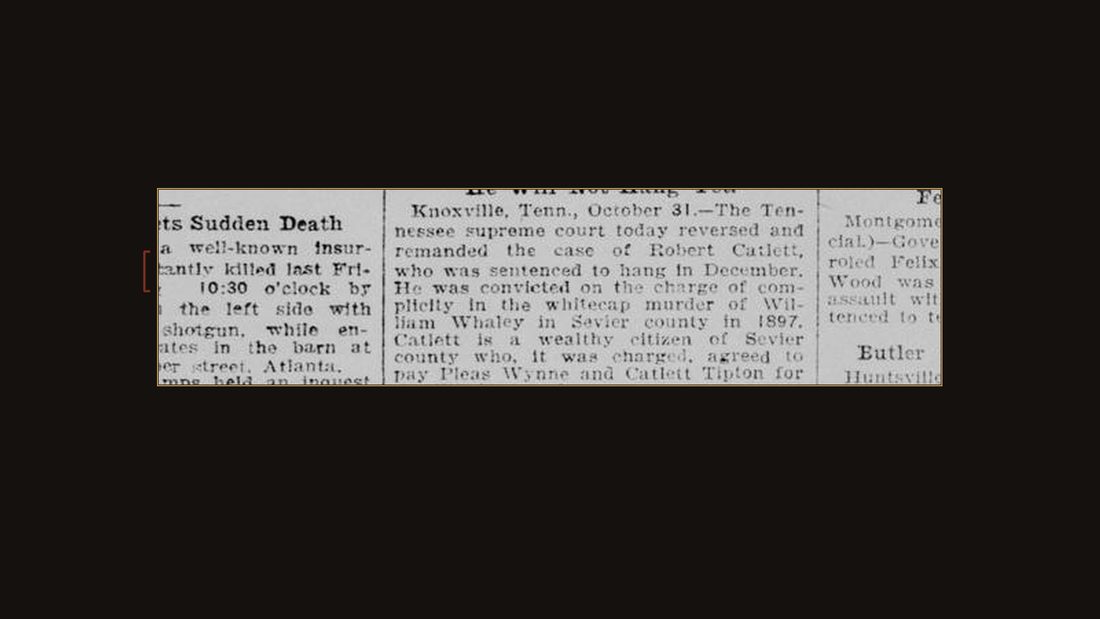
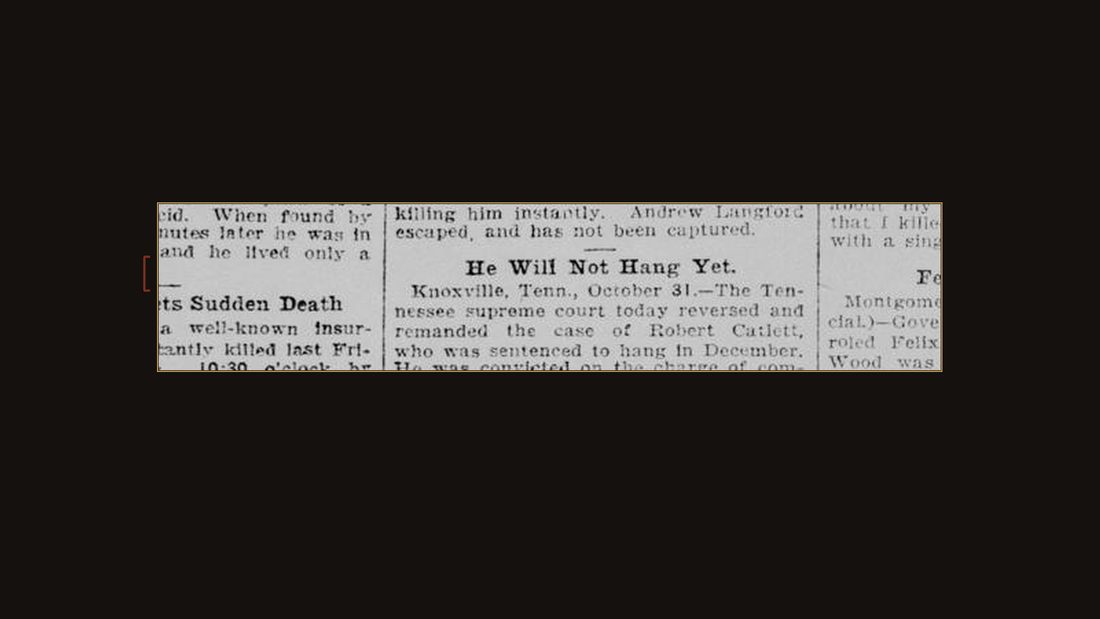
On the thirty-first of October, nineteen oh three, the Tennessee supreme court reversed and remanded the case of Robert Catlett.
N51
Atlanta Constitution, Nov. 2, 1903, p. 10. View the original.
The headline in Atlanta the next morning was three words longer than it needed to be. He will not hang yet.
N53
Atlanta Constitution, Nov. 2, 1903, p. 10. View the original.
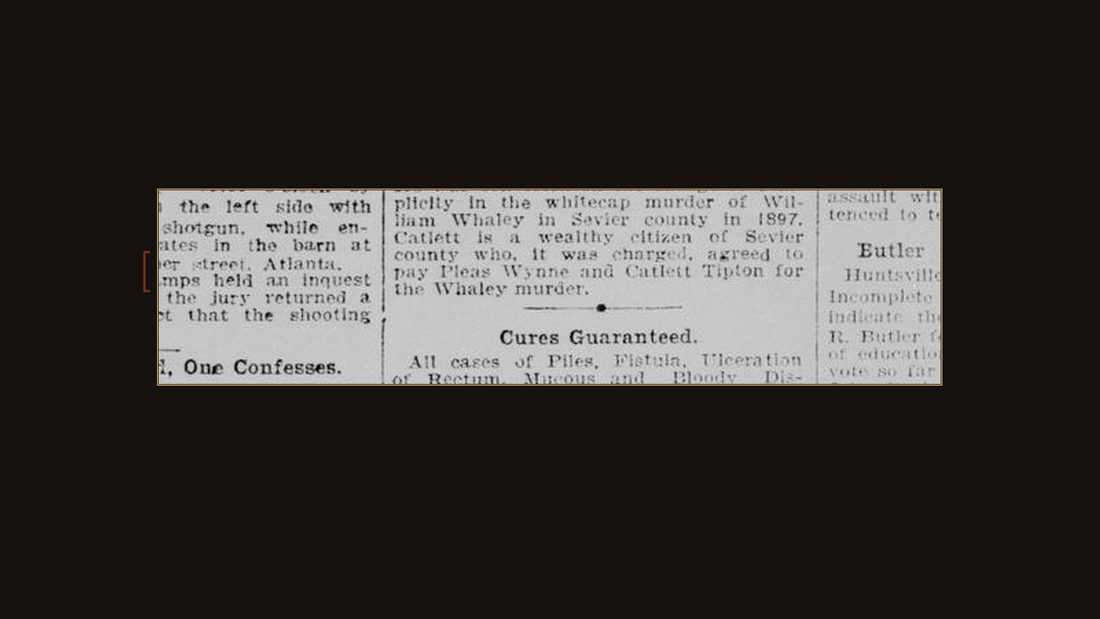
Catlett is a wealthy citizen of Se-VEER County who, it was charged, agreed to pay Pleas Wynn and Catlett Tipton for the Whaley murder.
Acquitted
N54
News & Observer, Raleigh, Apr. 10, 1904, p. 9. View the original.
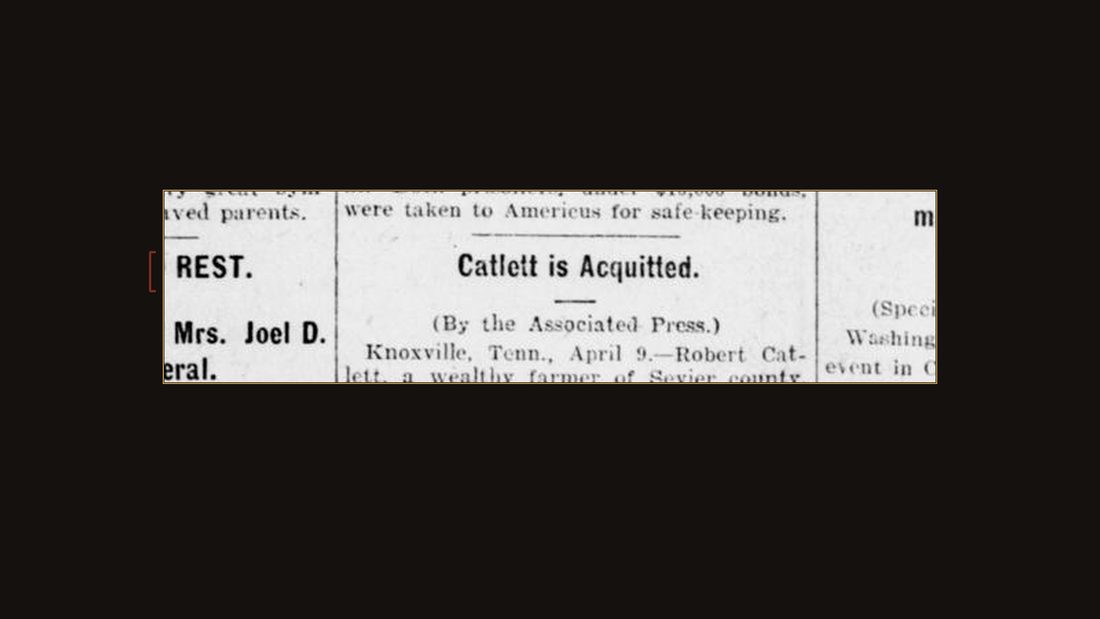
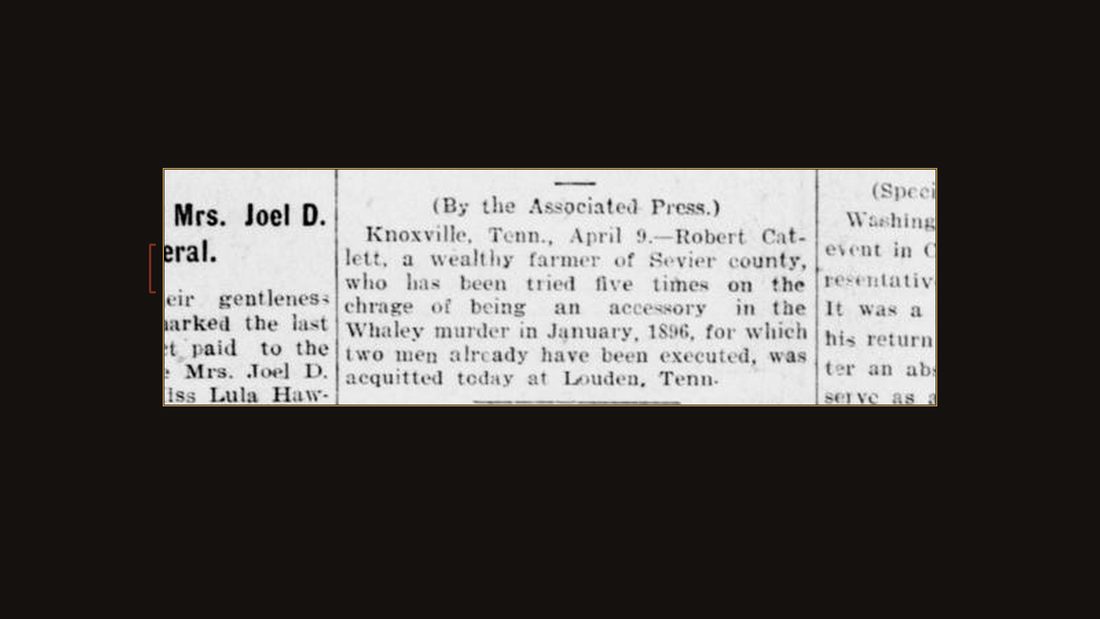
They tried him again. On the ninth of April, nineteen oh four, in a borrowed courtroom in Loudon, Tennessee, a jury acquitted him.
N55
News & Observer, Raleigh, Apr. 10, 1904, p. 9. View the original.
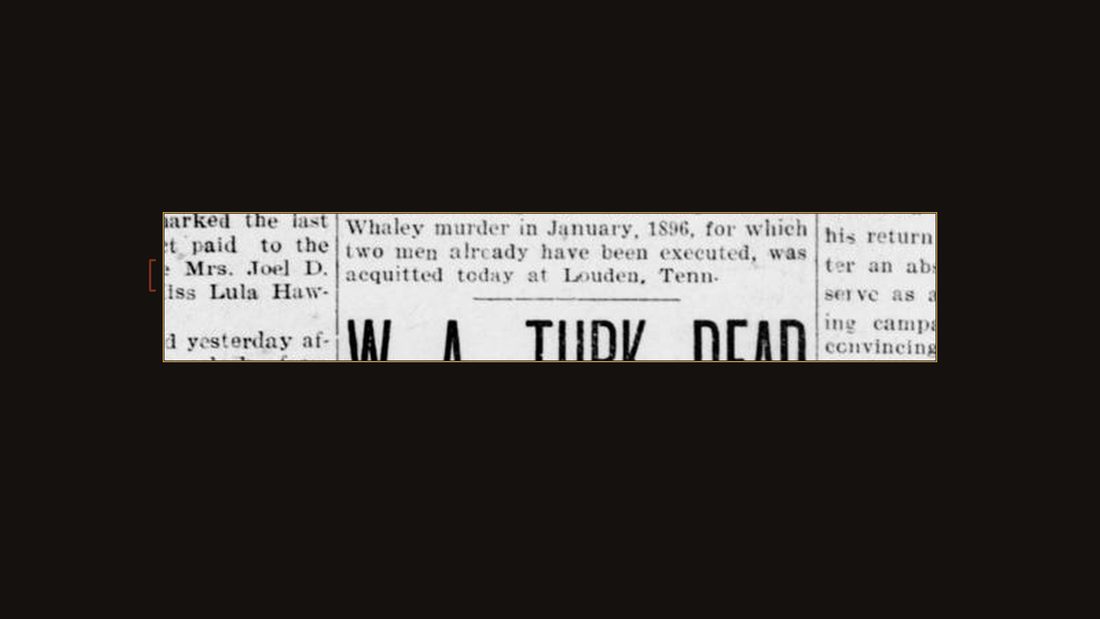
Robert Catlett, a wealthy farmer of Se-VEER County, who has been tried five times on the charge of being an accessory in the Whaley murder, for which two men have already been executed, was acquitted today at Loudon, Tennessee.
N56
News & Observer, Raleigh, Apr. 10, 1904, p. 9. View the original.
Five trials. Two hangings. One acquittal.
N42
Maryville Times, July 8, 1899, p. 1. View the original.
Catlett Tipton had called it from the scaffold four years and nine months earlier, and he had called it for the right reason. I know there is no evidence against him except ours.
The state's whole case against the man who paid rested on the word of two men it had already hanged. Every time a jury looked at that, it balked.
What is still buried
Here is what is still buried.
N8
Rock Island Argus, Apr. 30, 1897, p. 2. View the original.
Nobody knows how many people the White Caps whipped in that county. There was no count kept, because for the first several years there was no one keeping it.
N9
Rock Island Argus, Apr. 30, 1897, p. 2. View the original.
The women who were beaten in the early nineties do not appear in the record by name. They appear as a category, in a phrase a reporter thought was descriptive.
N55
News & Observer, Raleigh, Apr. 10, 1904, p. 9. View the original.
And we do not know whether the jury at Loudon in nineteen oh four got it right or got it wrong. That is the honest answer. A confession bought with a hanging is not a strong thing to build on.
N50
News & Observer, Raleigh, Nov. 9, 1901, p. 1. View the original.
What the record does settle is smaller and harder. Two men hanged. The man they both named — described in every account as one of the wealthiest in the county — walked out of a courthouse acquitted.
If your people were in the Smokies then, some of them knew these families. Se-VEER County. Blount County. Jefferson County. Some of them may still have the stories, and I would like to hear them.
Sources
- [S1] *The Maryville Times* (Maryville, Tenn.), July 8, 1899, p. 1 — "Town Talk: Wynn and Tipton," carrying the paper's account of the July 5 hanging at Sevierville and the full written statements of Catlett Tipton and Pleas Wynn. https://www.loc.gov/resource/sn89058370/1899-07-08/ed-1/?sp=1
- [S2] *The News & Observer* (Raleigh, N.C.), April 10, 1904, p. 9 (Editorial Section) — Associated Press, "Catlett is Acquitted." https://www.loc.gov/resource/sn85042104/1904-04-10/ed-1/?sp=9
- [S3] *Rock Island Argus* (Rock Island, Ill.), April 30, 1897, p. 2 — "Tennessee White Caps: A Band of Outlaws Terrorizes a County — The Authorities Powerless." https://www.loc.gov/resource/sn92053934/1897-04-30/ed-1/?sp=2
- [S4] *New-York Tribune* (New York, N.Y.), July 4, 1899, p. 1 — "'Whitecaps' to Be Hanged: Two of Them to Pay the Penalty for a Brutal Murder," Chattanooga special. https://www.loc.gov/resource/sn83030214/1899-07-04/ed-1/?sp=1
- [S5] *The Morning News* (Savannah, Ga.), April 7, 1898, p. 5 — "Whitecaps Up in Arms: Bloody Battle With the Authorities Feared in Tennessee," Knoxville dispatch. https://www.loc.gov/resource/sn86063034/1898-04-07/ed-1/?sp=5
- [S6] *The Maryville Times* (Maryville, Tenn.), Feb. 27, 1897, p. 1 — "White Caps Again: Drive a Sevier County Man From His Home." https://www.loc.gov/resource/sn89058370/1897-02-27/ed-1/?sp=1
- [S7] *The Indianapolis Journal* (Indianapolis, Ind.), Oct. 27, 1894, p. 5 — Memphis dispatch on the Henderson Springs killings. https://www.loc.gov/resource/sn82015679/1894-10-27/ed-1/?sp=5
- [S8] *The Morning Times* (Washington, D.C.), Dec. 30, 1896, p. 1 — "Shot Down in Cold Blood: Tennessee Farmer and Wife Murdered by Unknown Men," Knoxville dispatch dated Dec. 29. https://www.loc.gov/resource/sn84024442/1896-12-30/ed-1/?sp=1
- [S9] *The Comet* (Johnson City, Tenn.), Dec. 2, 1897, p. 1 — state news column. https://www.loc.gov/resource/sn89058128/1897-12-02/ed-1/?sp=1
- [S10] *The Maryville Times* (Maryville, Tenn.), Feb. 11, 1899, p. 1 — county news column. https://www.loc.gov/resource/sn89058370/1899-02-11/ed-1/?sp=1
- [S11] *The News & Observer* (Raleigh, N.C.), Nov. 9, 1901, p. 1 — Associated Press, "Bob Catlett Will Stand Trial," Sevierville, Nov. 8. https://www.loc.gov/resource/sn85042104/1901-11-09/ed-1/?sp=1
- [S12] *The Atlanta Constitution* (Atlanta, Ga.), Nov. 2, 1903, p. 10 — "He Will Not Hang Yet," Knoxville, Oct. 31. https://www.loc.gov/resource/sn89053706/1903-11-02/ed-1/?sp=10